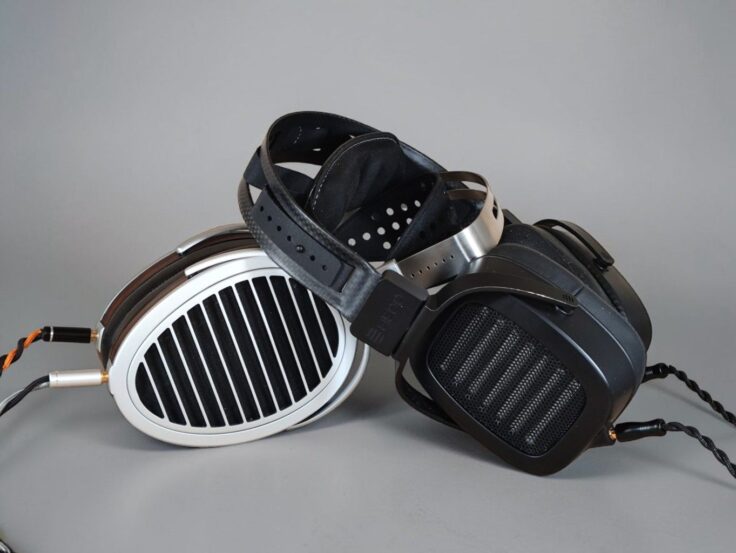

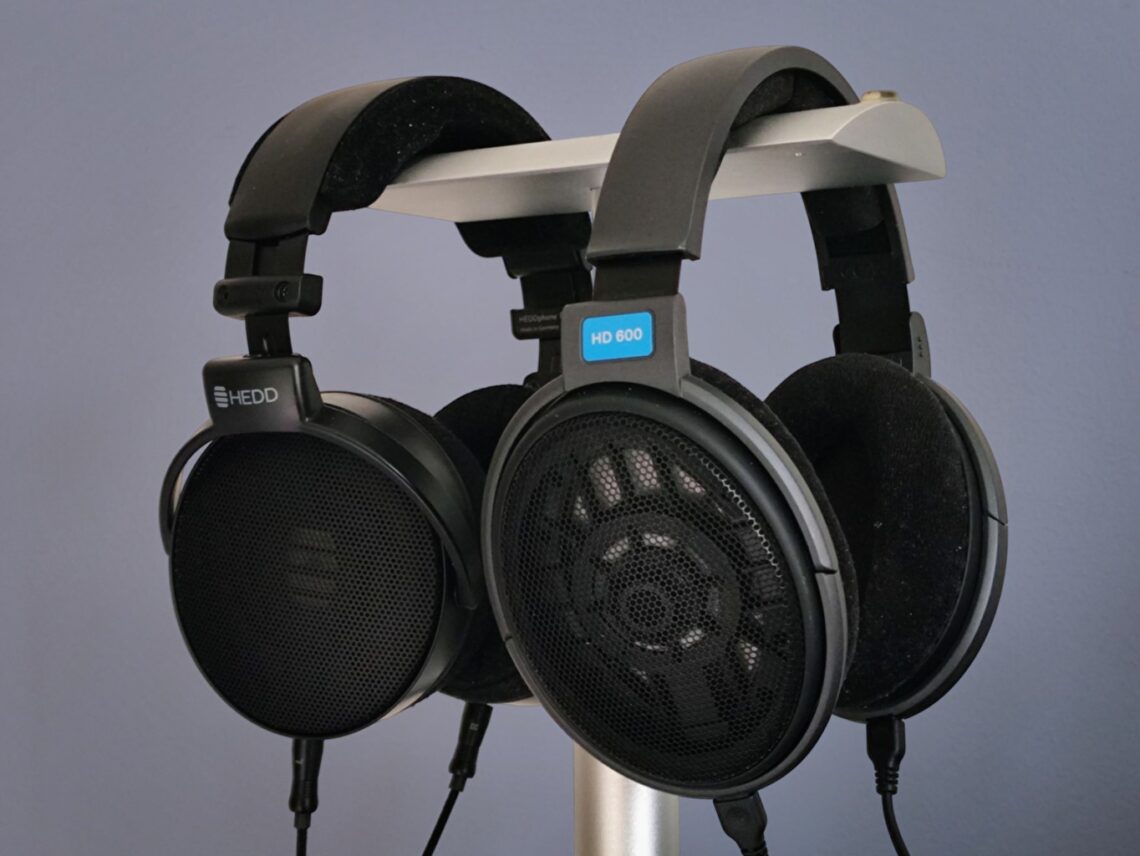
The Sennheiser HD 600 is a true legend in both professional and audiophile circles and hardly needs an introduction. Since its release in 1997, it has remained a reference headphone — an impressive achievement in itself. Like all Sennheiser headphones, it’s built around a dynamic driver.
The HEDD D1, launched in late 2025, is the company’s first dynamic headphone. HEDD is already well-known for its AMT ribbon driver models, the HEDDphone and HEDDphone TWO, but the brand’s main reputation stems from its active studio monitors designed for professional use.
Even though the list price is $499, the HD 600 can often be purchased for around $300. This is less than half of the launch price of the D1. Let’s see how they compare.
SENNHEISER HD 600 SPECIFICATIONS
- Type: Over ear, open
- Dynamic driver with 38 mm diaphragm
- Driver unit size: 42 mm
- Nominal impedance: 300 Ohms
- Sensitivity: 97 dB/mW
- Frequency response: 12 – 39000 Hz
- THD, total harmonic distortion: 0,1 %
- Detachable cable
- Termination plug: 3.5 mm with 6.35mm adapter
- Cable length: 3 m
- Weight w/o cable: 260 g
Current price and availability:
- Amazon: HD600
HEDD D1 SPECIFICATIONS
- Driver: Dynamic TPCD driver
- Impedance: 32 Ohms
- Sensitivity: 100 dB
- Cable: 2 m detachable
- Cable headphone connectors: dual 3.5 mm
- Cable termination: 3.5 mm jack with screw on adaptor
- Semi-circular detachable pads “lip style”
- Modular design with replaceable parts
- 5 year warranty
- Weight: 356 g (measured)
Price at launch: $799 (excl.tax), €699 (incl. VAT), and £599 (incl. VAT).
- HEDD Audio: HEDDphone D1
- Audio46: HEDDphone D1
BUILD AND COMFORT
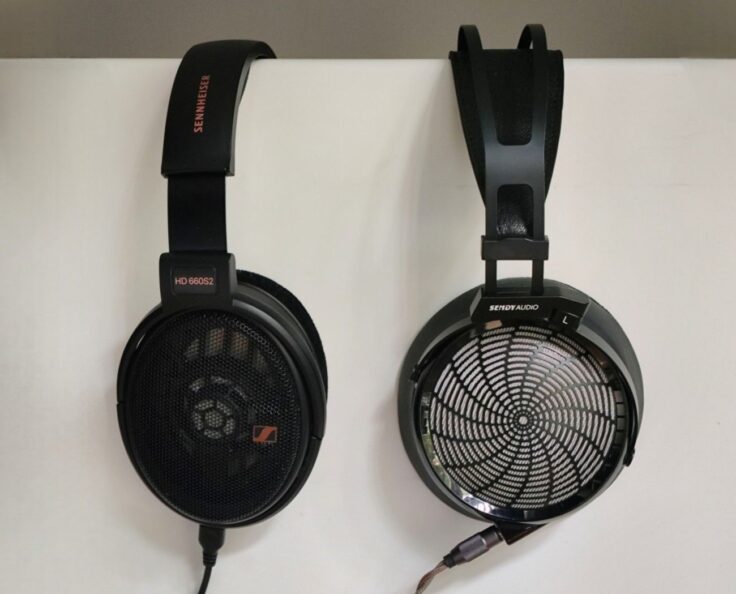
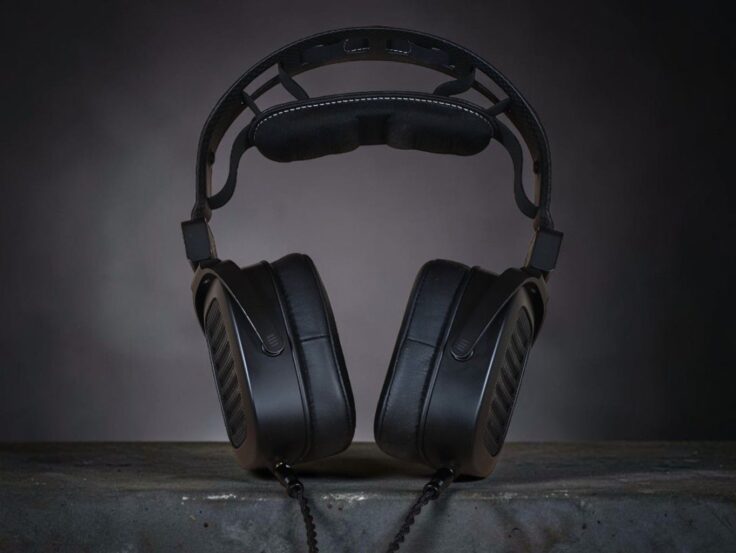
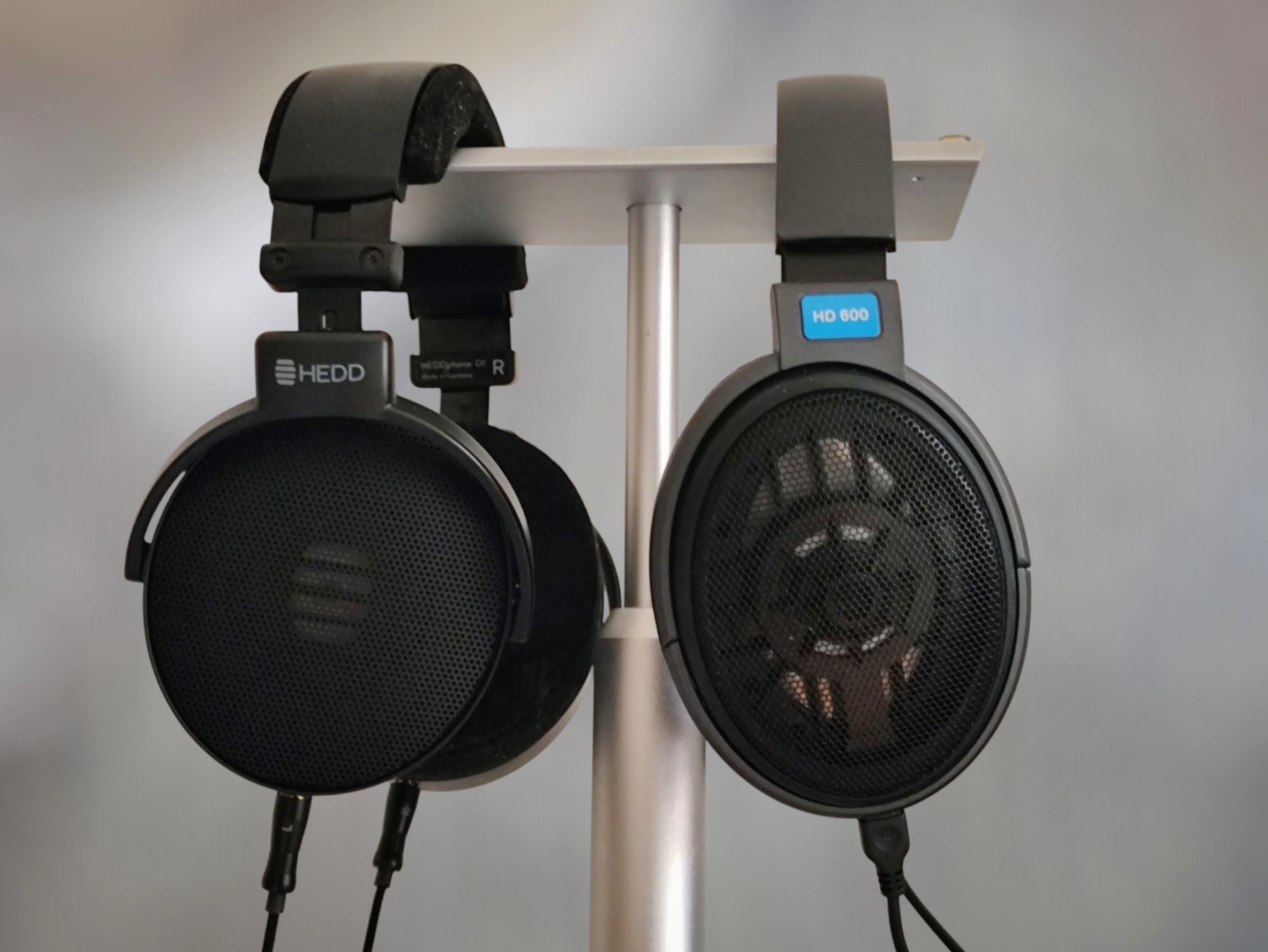
Both headphones look utilitarian; there’s nothing flashy about them. They feature padded headbands, and both have replaceable ear pads, but the attachment methods differ: the HD600 uses a proprietary system, while the D1 employs the widely used lip-and-groove design, making the choice of pad replacements larger. That said, there is a wide selection of third-party pads for the HD600 series.
Both have decent swivel action on the cups, but neither are foldable.
Both headphones have detachable cables connecting to both earcups. The HD600 uses proprietary 2-pin connectors, while the D1 employs the commonly used 3.5 mm connectors, making cable swapping much more convenient.
COMPARISONS
Associated equipment:
- Amplifier: Topping A90
- DAC: RME ADI-2 DAC FS
Rambling Man by Laura Marling
Vocals are excellent on the HD600, which is expected. The presentation is a bit mid-centeric yet still feels well balanced. The D1 offers a similar overall delivery, but vocals are not quite as smooth. On the other hand, it provides better detail and separation.
Sunrise by Norah Jones
They sound very similar. The D1 comes very close to matching the HD600’s naturally engaging vocals while offering better separation and detail.
Alt e bra by Building Instrument
This dreamy track has a very catchy theme, and it also showcases the treble characteristics of your gear nicely. With the D1 the balance is excellent, and the bright percussion is detailed yet rounded rather than overly sharp. The treble on the HD600 is a bit more polite and less detailed, the mids are quite similar between the two, and the D1 delivers noticeably stronger bass presence.
Sonata Facile, Mozart by a Lang Lang
This solo piano piece can be challenging for some earphones at higher volumes. There is no sign of distortion with either the D1 or the HD600. However, the D1 sounds cleaner and clearer, with a blacker background and better articulation, even though the overall tonality is quite similar.
Train to Kyoto by Vega Trails
The standing bass and dreamy saxophone are well balanced and nicely presented with the D1, and the background details are easy to pick out. It is a very neutral and natural-sounding presentation. The HD600 is not dramatically different, but the bass rolls off and the treble is a bit softer, as expected.
På Nye Eventyr by Maridalen
The HD600 presents the standing bass and two saxophones in a very natural and pleasant way. The D1 sounds similar, but with better separation. The bass is not necessarily stronger, yet it is less rolled off. The D1 comes across as a straightforward upgrade, keeping the strengths of the HD600 while adding cleaner highs and tighter, deeper bass.
Vicarious by Tool
The D1 sounds well balanced, with every frequency nicely weighted, and it remains clear and clean without ever becoming crisp or overly bright. The HD600 is more midrange focused, with softer lows and highs and weaker overall detail and articulation.
Young Vivaldi by Modo Antiquo
The HD600 sounds very natural, smooth and delicate. The D1 is not far off, but it is tighter and cleaner, with less rounded smoothness while still avoiding any sharpness.
Summer 3 Vivaldi Recomposed by Max Richter
The tonality is quite similar, but the D1 is cleaner and offers more detail and articulation.
Maple Noise by Greene Serene
The HD600 sounds good, but with the D1, everything becomes cleaner, with greater dynamic contrast and more space between instruments.
WRAPPING IT UP
Sound Signature
The sound signature of the HD600 and D1 is quite similar, but the HD600 is famously midrange centric, with soft highs and rolled-off bass. The D1 has similar mids, but offers slightly more articulate highs and a significantly more linear bass response.
Treble
Both have relatively polite, fatigue-friendly treble with good detail, but the D1 is a step above the HD600 in articulation and clarity.
Midrange
The midrange is great on both and very similar in tonality and timbre, but the D1 comes across as slightly less smooth, more detailed and a bit more upfront, while still remaining smooth in absolute terms.
Bass
The HD600 famously rolls off gradually in the lower end. The D1 delivers a significantly more linear bass, while also offering a tighter delivery with greater detail.
Soundstage and Imaging
The soundstage size feels similar, but the D1 offers better imaging, with more space between instruments and a generally blacker background.
Detail, Dynamics, and Timbre
The D1 offers better detail and articulation across the entire frequency spectrum, along with improved dynamics. In terms of timbre, the HD600’s midrange will always sound magical, but the D1 comes very close. Its bass and treble timbre feel more accurate and neutral on the D1.
CONCLUSION
The HD600 has long been celebrated as an exceptional tool for professionals, particularly for vocals, and remains a favorite among audiophiles thanks to its renowned midrange.
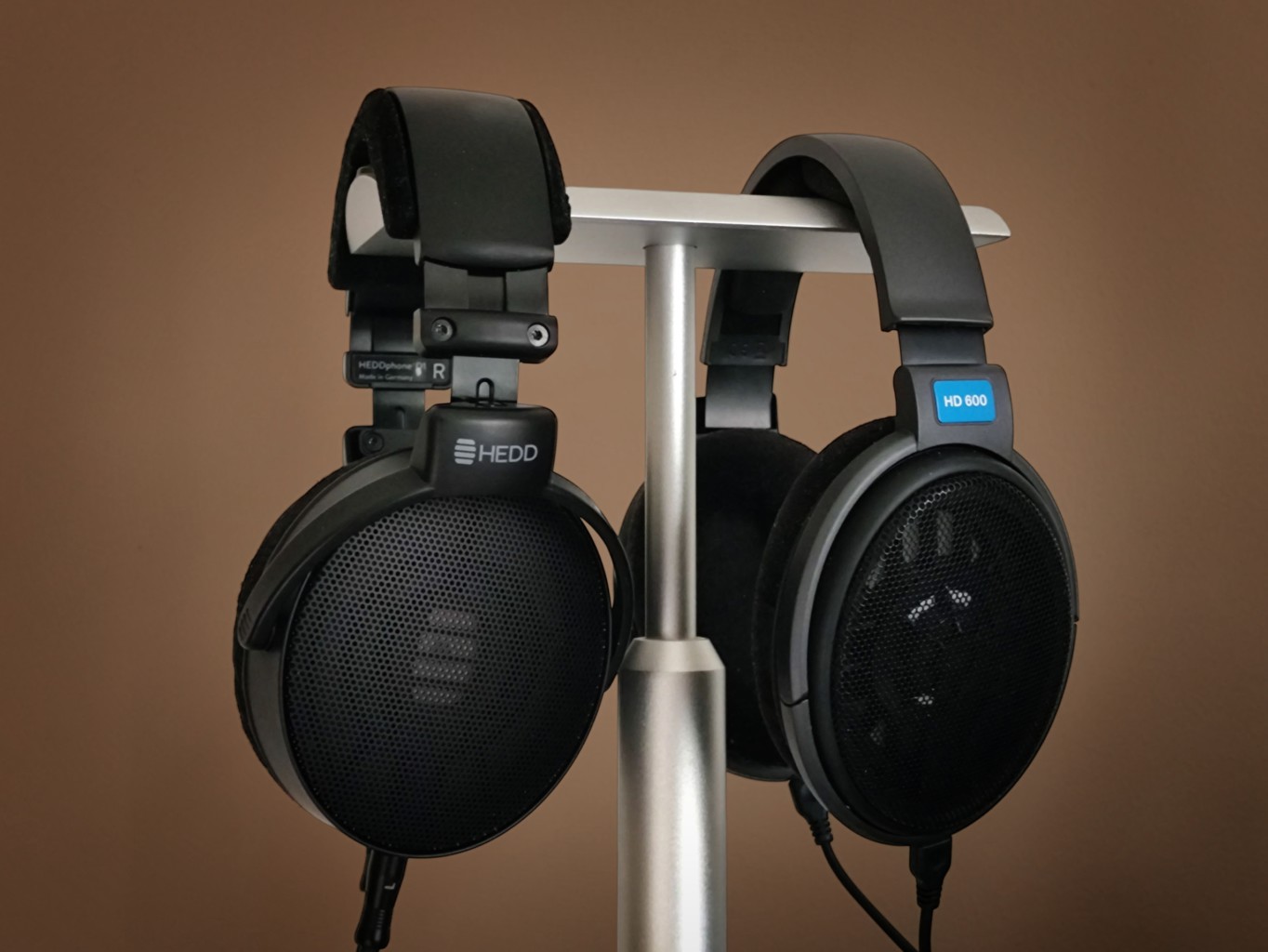
The D1 delivers a similar midrange while enhancing clarity, bass linearity, and treble articulation, making it sound very close to a straight-up improved version of the HD600.
Thanks for reading. You can support us by purchasing anything using any of our affiliate links.
- HEDD Audio: HEDDphone D1
- Audio46: HEDDphone D1
- Amazon: HD600
Any purchase you make on Amazon, Linsoul , AliExpress or Audio46 with any of our affiliate links will give us a small provision at no cost to you.
We only get a provision for items that are not returned, so there’s no incentive for us to recommend something that’s not good.
Linsoul : Headphones, Earbuds, Wireless Earbuds, Desktop DAC/AMP, Portable DAC/AMP, Digital Audio Players,
Amazon: Headphones, IEMs, Headphone Amplifiers, Home Audio or Anything else.
.
If you enjoyed this article or other content on The Headphoneer, you might consider leaving a small donation to keep this website up and running. No donation is too small. Thanks for supporting us!

If you like our work please follow us on Instagram, Facebook and Twitter , it will help us grow. Sharing is caring 🙂