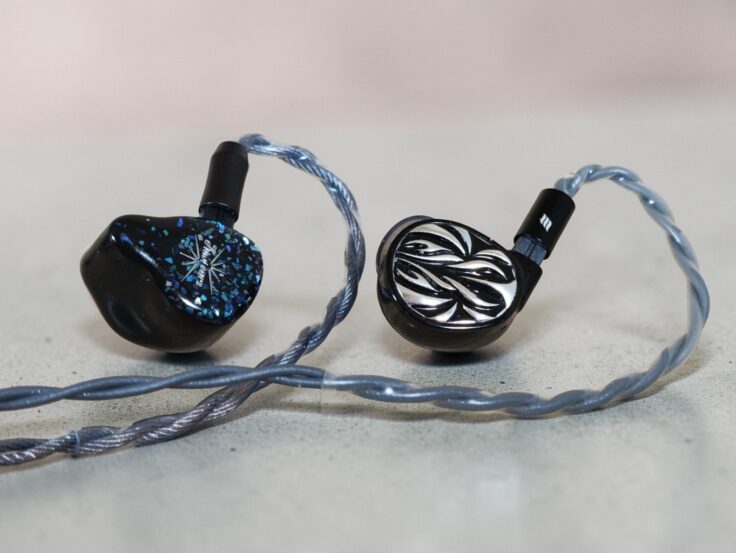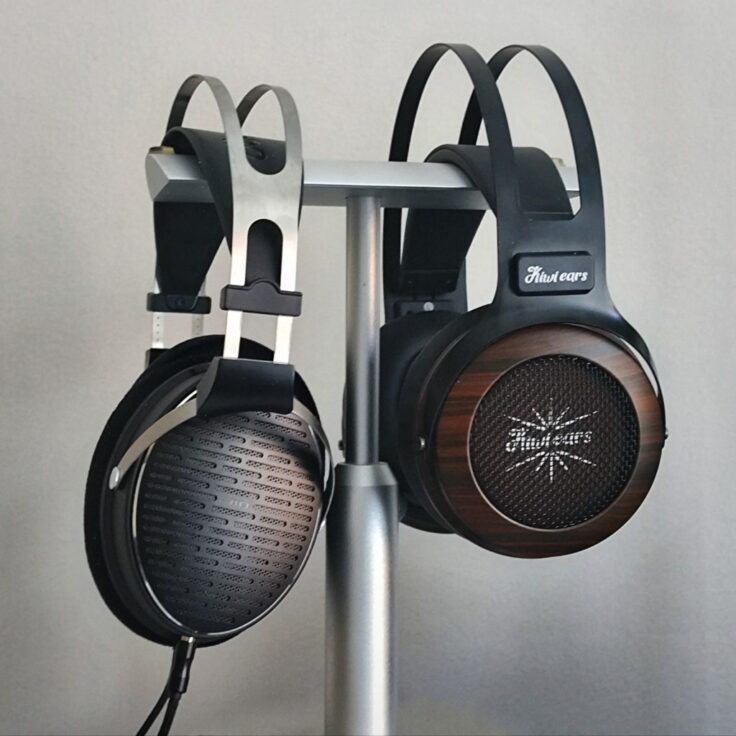


The Astral is a new 7-driver hybrid IEM priced at 299 USD / €260 (excluding tax). Kiwi Ears ambitiously markets it as a professional-grade in-ear monitor, “engineered for music professionals and audiophiles alike, with a focus on high resolution and a neutral tonal balance.” That certainly sounds promising—let’s see if it lives up to the claim.
The Astral features seven drivers of two types: dynamic and balanced armature. A custom 10mm dynamic driver handles the bass, with a roll-off at 300 Hz. From there, two dual balanced armature drivers manage the mids up to 2.8 kHz, while a dual modified Knowles SWFK tweeter takes over for the treble.

KIWI EARS ASTRAL SPECIFICATIONS
- Drivers: 1 Dynamic Driver + 6 Balanced Armatures
- Impedance 23 Ohms
- Sensitivity,: 105dB
- Distortion: THD <1%
- Frequency Response: 10Hz – 22kHz
- Cable 1.2 Meter Detachable Cable
- Connectors: 0.78 mm 2-pin
- Cable termination jack: 3.5mm and 4.4mm interchangable
Current price and availability:
- Linsoul: Kiwi Astral
- Amazon: Kiwi Astral
- Kiwi Ears: Astral
Disclaimer: the review item was sent to us by Kiwi Ears for the purpose of an unbiased and honest review.

BUILD AND COMFORT
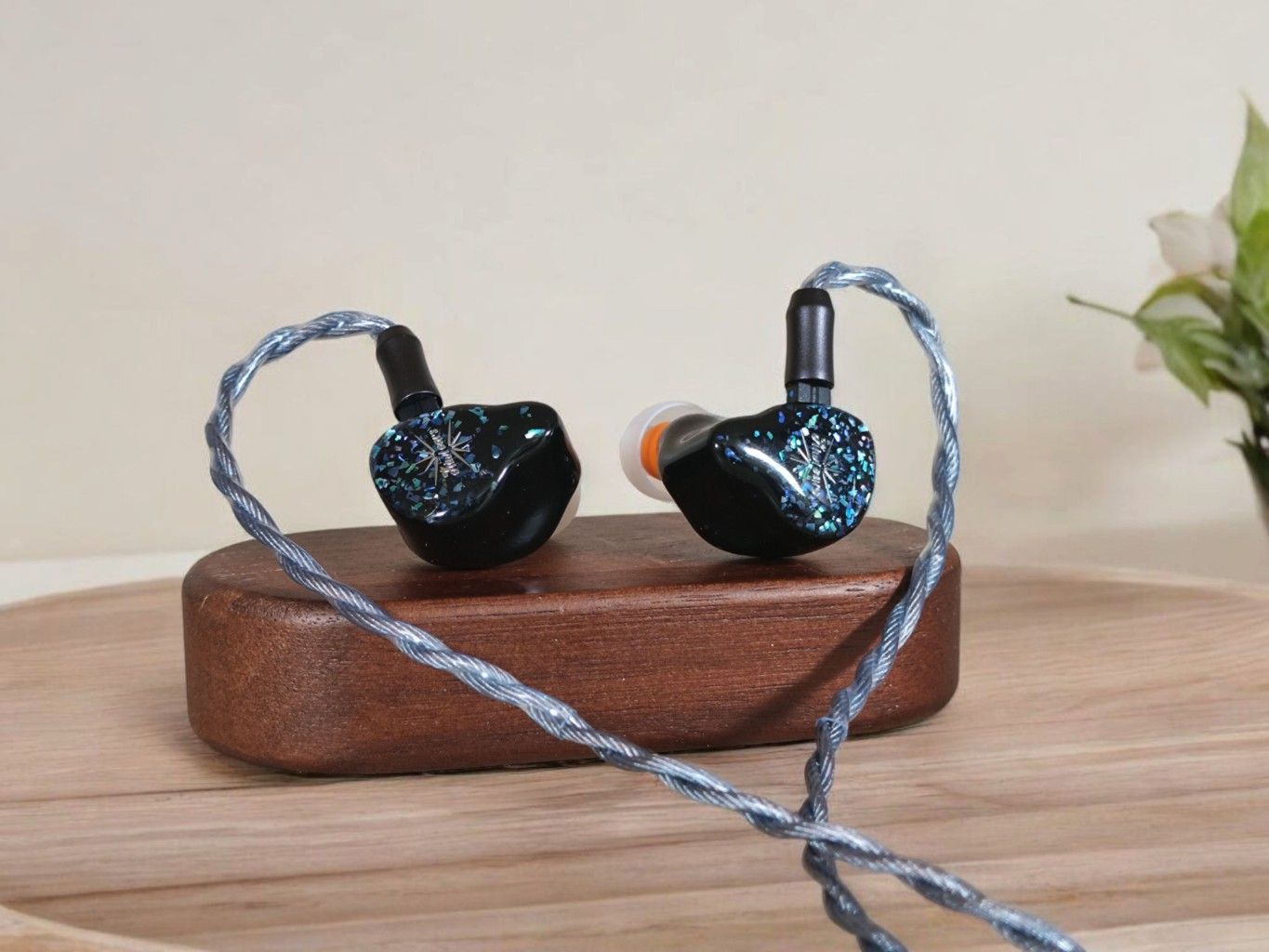
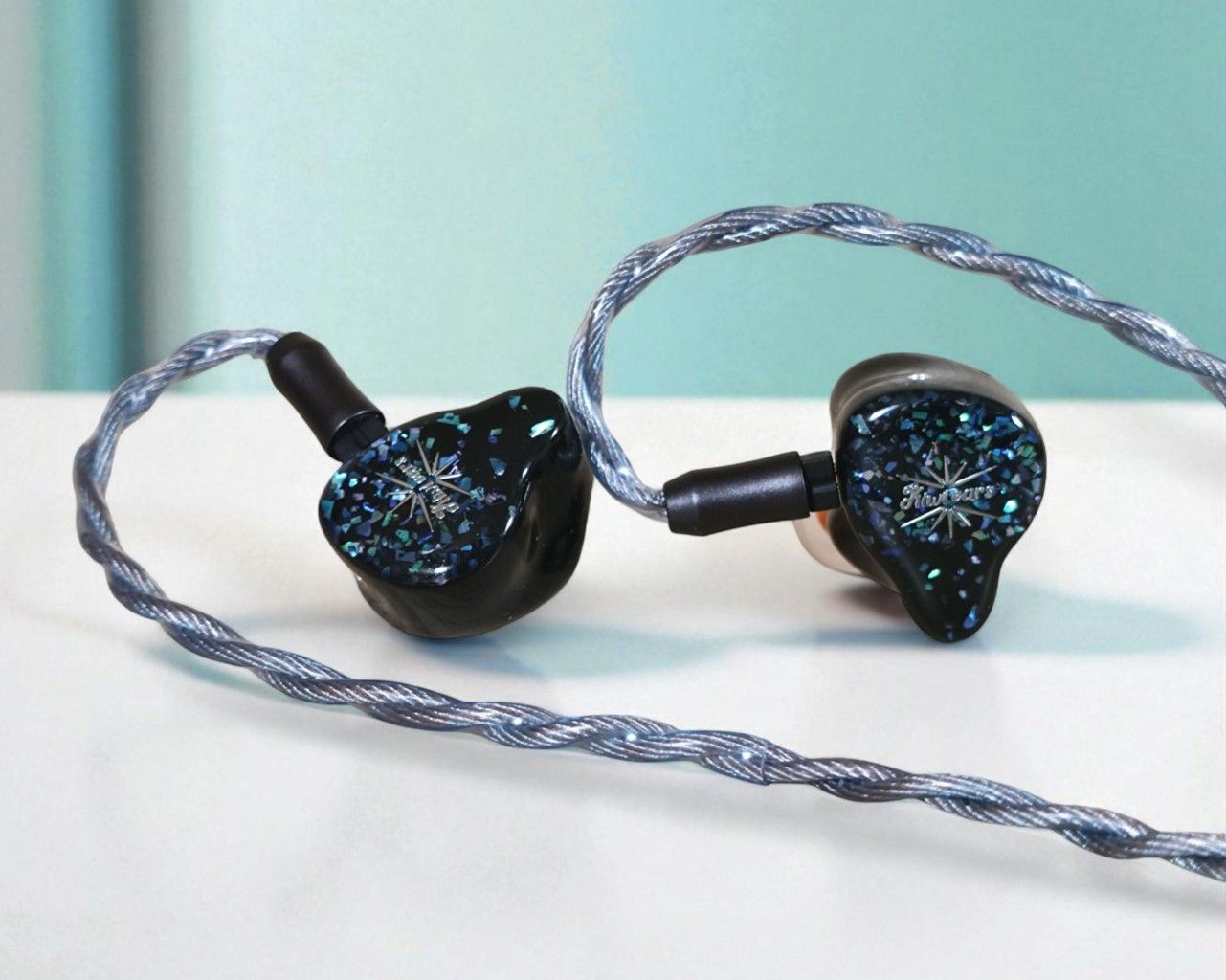
The Astral features universally fitting custom-style resin shells with integrated faceplate designs and a metal nozzle equipped with a wax guard. While the shells aren’t especially compact, they remain very comfortable to wear. The cable is of high quality—neither too thin nor flimsy—yet light, flexible, and offers just the right amount of grip. It also includes Kiwi Ears’ new interchangeable termination plugs (3.5mm and 4.4mm). There’s a straightforward zippered semi-soft carrying case included.

LISTENING IMPRESSIONS
Associated equipment:
- Amplifier: Topping A90
- DAC: RME ADI-2 DAC FS
Jambi by Tool
Wow, this is excellent. The bass drums hit with punch and fullness, guitar riffs are bold, rich, and textured, and the vocals stand out clearly in the mix. The bass is full-bodied and tactile with impressive texture, and instrument separation is outstanding. Sibilants are soft and non-offensive—truly as good as it gets.
Smile by Pearl Jam
Very spacious, yet rich and warm in character. Instrument separation is excellent, and vocals sound warm and natural. Sibilants remain soft and unobtrusive.
Almost Like The Blues by Leonard Cohen
Excellent, well-balanced bass—rounded with tactile definition. Vocals are truly stunning, rich and nuanced. Instrument separation and imaging are both outstanding.
Black Crow by Cassandra Wilson
Bass could be more defined and leans slightly boomy, but instrument separation and imaging are excellent. Vocals stand out beautifully, with both strong definition and inviting warmth.
Some Day My Prince Will Come by Coryell Miroslav Quartet
The double bass is powerful, the electric guitar warm and delicate-sounding.
Bored by Deftones
Textured, rich guitars with vocals that stand out and sound very natural. Excellent dynamics.
Desert Island Disk by Radiohead
Dynamic, rich, warm and with excellent instrument separation.
As Before by Olga Konkova
Excellent punchy cajôn drum. Crisp and clear piano. Vocals are smooth and nuanced. Generally very dynamic and warm leaning delivery.
It Could Be Sweet by Portishead
Very powerful bass, some might say a notch too much. Excellent vocals: They’re smooth, silky, and nuanced with soft sibiliants.
Escape Route by Boris Blank
Full-bodied bass, excellent dynamics and instrument separation, all wrapped in a generally warm, lush presentation.
Spontanious Compositorius by Thomas Agergaard + Reed 5
Lush saxophone, with percussion that showcases a delicate, non-piercing treble. The double bass is full-bodied. The overall presentation is pleasant and dynamic, though I’ve heard earphones deliver this track with greater air and openness.
Mahler’s Symphony No 2 III by Paavo Järvi
The presentation is smooth, lush, delicate, and dynamic. The strings and other instruments have a rounded timbre, resulting in a warm and non-offensive sound—though it’s not the most airy or highly textured presentation.
Young Vivaldi by Modo Antiquo
The strings have an excellent timbre. The music is delivered with warmth and lushness, yet is still energetic and dynamic sounding. However, it could benefit from a bit more sense of air.
Maple Noise by Greene Serene
There’s rich, full-bodied bass, a warm-sounding trumpet, excellent dynamics, and snappy percussion. The sound is free of harshness, with a slightly laid-back upper end that may lack some treble air.
Midnight City by M83
It sounds warm, lush, and dynamic, with great instrument separation and a very pleasant, cohesive delivery.
Sunrise by Norah Jones
Powerful bass, warm and rich vocals.
Rambling Man by Laura Marling
Vocals stand out nicely—warm, rich, yet nuanced. The guitar sounds very warm and pleasant. When the band enters, everything feels dynamic and cohesive.
Limit to Your Love by James Blake
Excellent vocals—neither too crisp nor too warm. The bass is well-controlled, powerful without distortion, and stays on the right side of too much in terms of quantity.
Mango Drive by Rhythm and Sound
The very challenging bass track is handled well with no issues.
Take On Me – Unplugged by a-ha
This brilliant, toned-down and very emotional version of the ’80s classic sounds fantastic. Harket’s vocals are absolutely stunning, and the Astral delivers this song beautifully—warm, delicate, and nuanced.

WRAPPING IT UP
Sound Signature
The Astral has a rich and powerful bass, present, warm mids, and smooth slightly laid back treble, yet it’s all very articulate and detailed sounding.
Treble
The treble is detailed and smooth, never sharp or piercing. It’s on the polite side, and while I rarely miss more treble energy, there are moments where it lacks the airiness found in some brighter competitors. There’s always a trade-off.
Midrange
The midrange is very present. It’s warm and full-bodied, yet still very nuanced.
Bass
The bass is quite powerful—mostly in a good way, though it can occasionally feel a bit much. Bass sweeps reveal a very even sounding frequency response, with no noticeable drop in intensity as the frequencies go lower. The quality is excellent, with good tactility and detail.
Soundstage and Imaging
The soundstage is solid—typical for IEMs in this price range and for good IEMs in general. Imaging is excellent, offering a strong sense of three-dimensionality, particularly in depth.
Detail, Dynamics, and Timbre
The detail level is high, even without exaggerated treble to boost perceived clarity. Dynamics are stunning—macrodynamics are exceptionally strong. Microdynamics and articulation are also good, though less striking, with a smoothness to the finer nuances. Timbre is excellent, balancing a naturally smooth character with a high detail level and satisfying articulation.
COMPARISONS
Associated equipment:
- Amplifier: Topping A90
- DAC: RME ADI-2 DAC FS

KIWI EARS SEPTET vs. ASTRAL
As the Astral, the Septet is a new 7-driver IEMs from Kiwi Ears, but driver setup is quite different. The Septet is an open-back IEM with four different driver types: a 10mm dynamic driver for the bass, four balanced armatures handling the low mids to the mid-treble range, and a planar magnetic and a piezoelectric tweeter.
They are similarly tuned, with essentially identical, powerful yet controlled bass, present mids, and non-excessive highs. However, in comparison, the Septet offers more texture and a crisper sound in the midrange and treble. Both are excellent-sounding earphones that rank among my favorites in the category.
Read more: Kiwi Ears Septet vs Astral Comparison Review
Current price and availability
- Linsoul: Kiwi Septet
- Amazon: Kiwi Septet
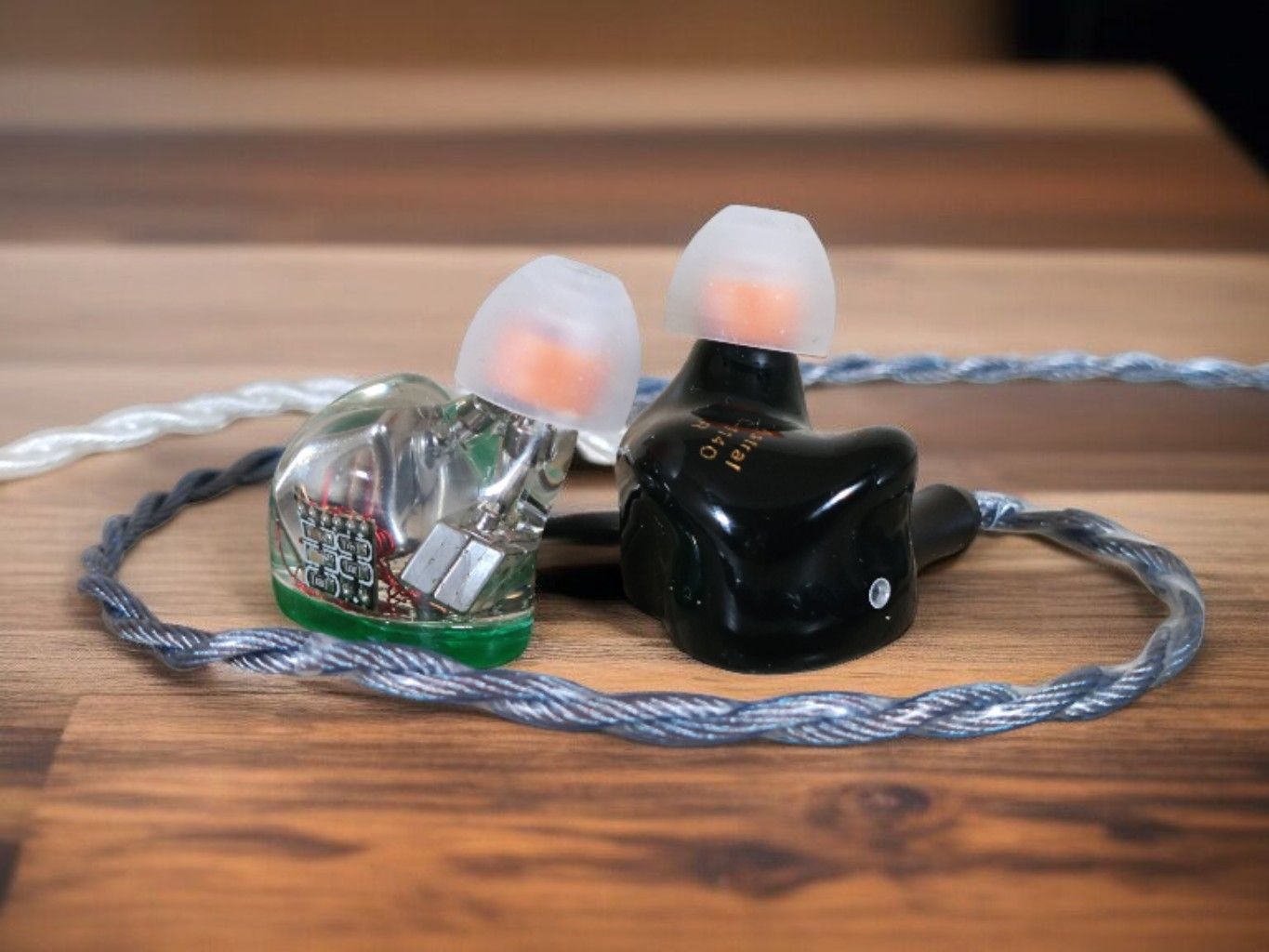
KIWI EARS ORCHESTRA LITE vs. ASTRAL
The Orchestra Lite is not a hybrid. It features 8 custom-balanced armature drivers which are set up like this: Two ultra tweeters for the treble, four midrange balanced armature drivers for the mids, and two subwoofer drivers for the lows.
In direct comparison, the Astral and the Orchestra Lite frequently sound very similar, with slight variations depending on the music. The Astral more often has more bass, while the Orchestra Lite has more energetic upper mids. Further, the Astral offers slightly better resolution, but the difference is often very small.
Read more: Kiwi Ears Orchestra Lite vs Astral Comparison Review
Current price and availability
- Linsoul: Orchestra Lite
- Amazon: Orchestra Lite
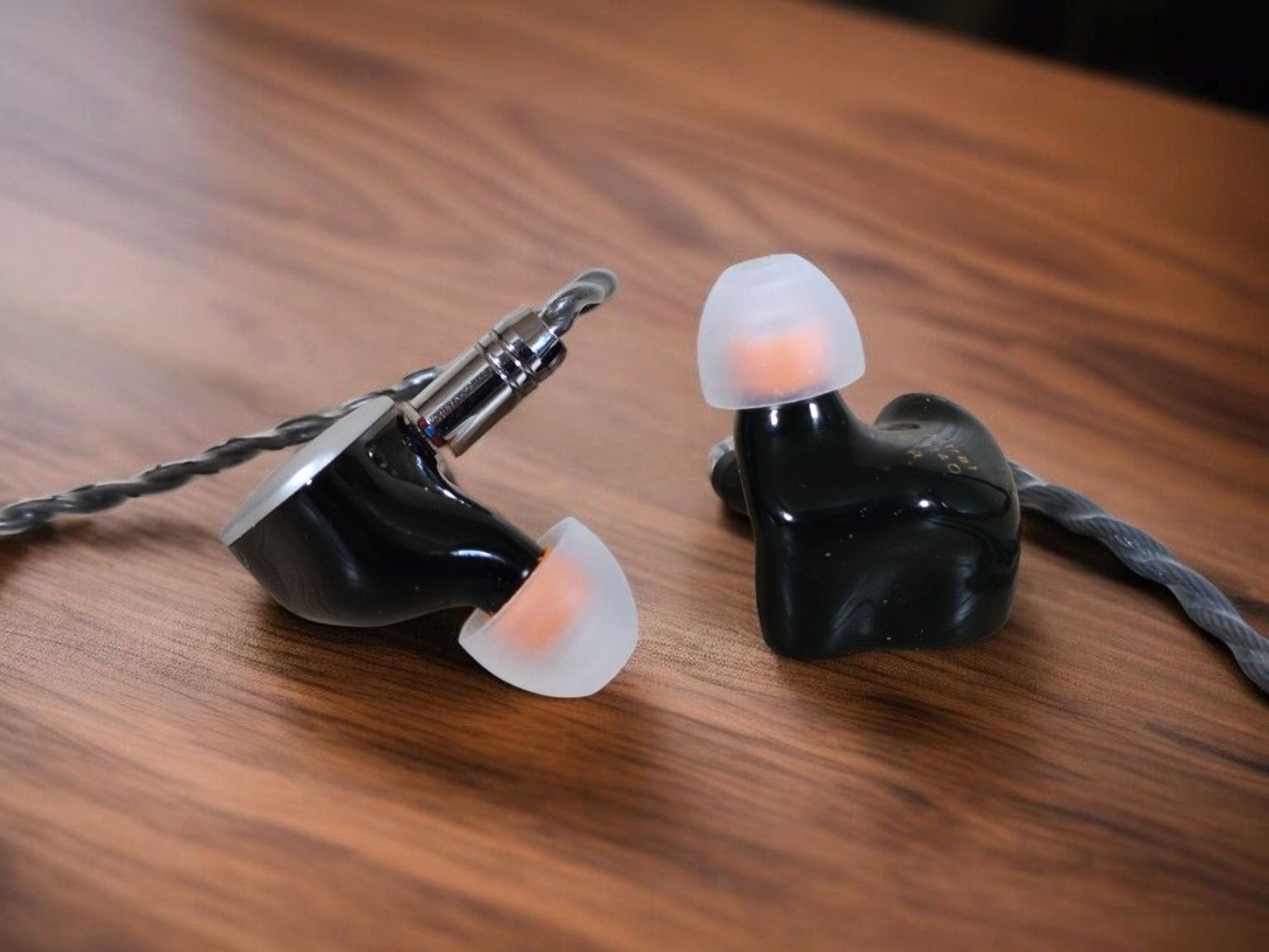
KIWI EARS QUINTET vs. ASTRAL
The Quintet is a five-driverquadbrid IEM and has been a reference in its price class since its launch in 2023. The Quintet combines a single dynamic driver with two balanced armatures, a planar magnetic driver, and a piezoelectric bone conductor.
When comparing them, both the Quintet and the Astral deliver excellent, natural sound with strong dynamics. The Quintet is brighter, crisper, drier, and more textured, while the Astral is warmer, smoother, and more rounded. They’re not miles apart, but variations on a similar tuning.
Read more: Kiwi Ears Quintet vs Astral Comparison Review
Current price and availability
- Linsoul: Kiwi Quintet
- Amazon: Kiwi Quintet
AMPLIFICATION
Amps matter. My go-to for testing is the Topping A90 desktop amp, because it’s a great all-rounder: powerful, silent, and neutral. And I have two, which makes comparisons a lot easier to do with consistent results. However, most readers are probably interested in using more modest and portable options. Here are my findings running the Astral with my dongles and portables:
Starting with my POCO F5 phone’s headphone output, the Astral already sounds very good. The tiny Jade/FiiO JA11 dongle sounds very similar.
Kiwi Ears’ own Allegro Mini sounds a bit brighter, crisper, and clearer. The Allegro Pro is very similar. Both are brighter sounding than my desktop rig. The Letshuoer DT03 works very well with the Astral too. Usually it offers a slightly warmer tonality, but not with the Astral. It’s very close to the Kiwi Allegros.
The xDuoo Link2 Bal2 sounds a bit smoother but does not lose detail. It has an extra level of refinement and dynamics, and I feel it’s the best so far. The THX Onyx is more expensive and sounds good, but doesn’t offer anything more than the xDuuo.
The Dragonfly Cobalt performs great with the Astral, neutral, clean, refined and subtle. It reminds me of the xDuuo, but it’s a step up.
Finally, the Chord Mojo is always great with IEMs. It’s a bit darker and lusher-sounding than the Cobalt but just as detailed and maybe even more dynamic.
In conclusion, the Astral sounds great with every single source I tried. That’s quite unusual. The Astral does scale with better sources, and there are small differences in the tonal character, but the Astral remains impressively consistent. As far as I have experienced, there’s nothing to gain from running the Astral out of expensive desktop rigs.
CONCLUSION
The Kiwi Ears Astral is a natural-sounding IEM with prominent bass, warm, lush mids, and politely tuned highs. Dynamics are excellent, and resolution is strong, with detail delivered in a slightly smooth manner. While not overtly colored, it doesn’t come across as fully neutral—bass is a bit elevated, and the highs are notably smooth. The amplifier used may influence its tonal character to some extent.
Personally, I find the Astral to be an excellent IEM, and it has become one of my absolute favorites at the $300 price point.
Thanks for reading. You can support us by purchasing anything using any of our affiliate links.
- Linsoul: Kiwi Astral
- Amazon: Kiwi Astral
- Kiwi Ears: Astral
Any purchase you make on Amazon or Linsoul with any of our affiliate links will give us a small provision at no cost to you.
We only get a provision for items that are not returned, so there’s no incentive for us to recommend something that’s not good.
Linsoul : Headphones, Earbuds, Wireless Earbuds, Desktop DAC/AMP, Portable DAC/AMP, Digital Audio Players,
Amazon: Headphones, IEMs, Headphone Amplifiers, Home Audio or Anything else.
.
If you enjoyed this article or other content on The Headphoneer, you might consider leaving a small donation to keep this website up and running. No donation is too small. Thanks for supporting us!

If you like our work please follow us on Instagram, Facebook and Twitter , it will help us grow. Sharing is caring 🙂