
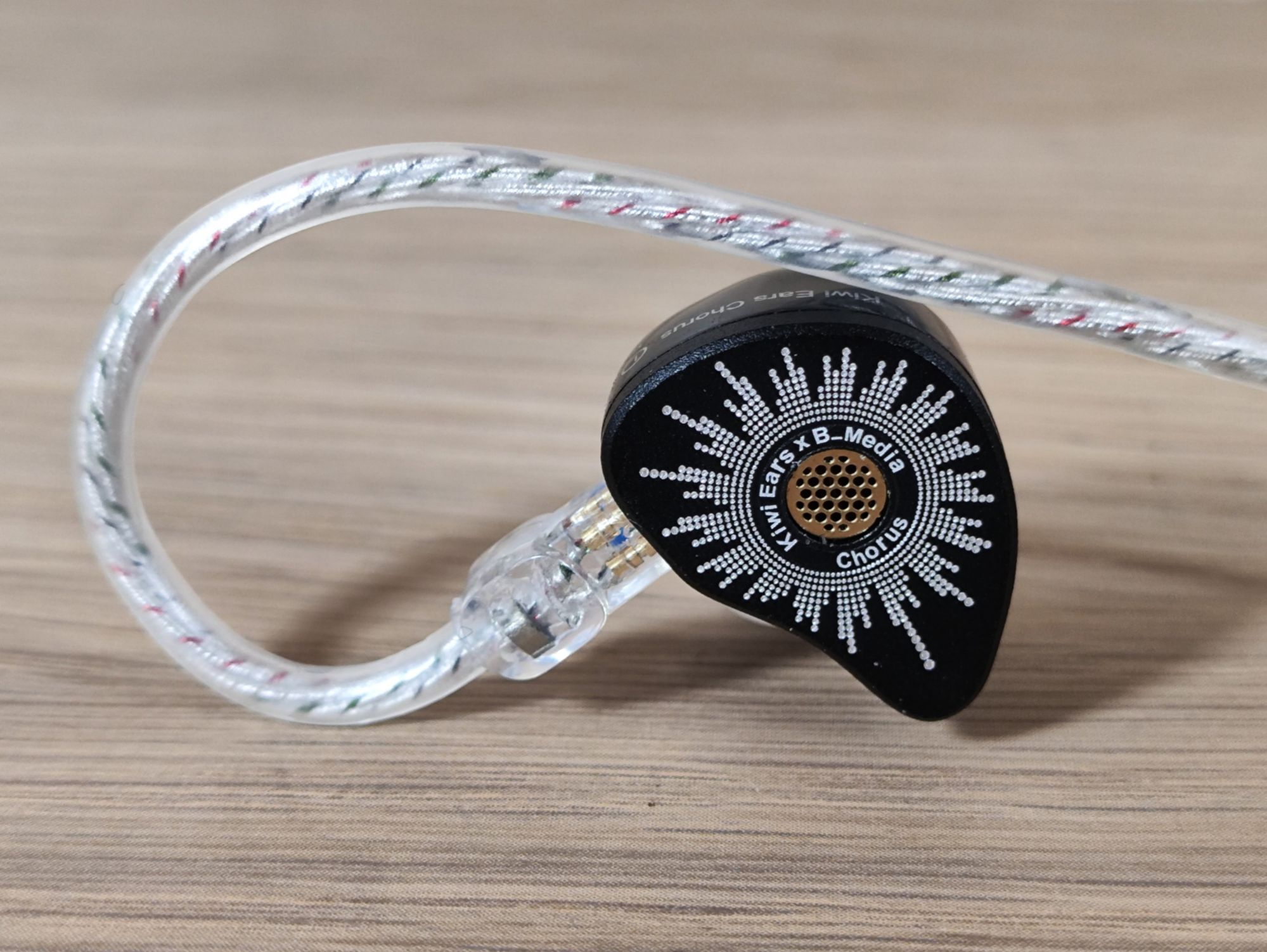
The Kiwi Ears x B_Media Chorus is a single dynamic driver in-ear monitor. The driver is made of Diamond-Like Carbon (DLC). Driver size is not specified, but it is presumably 10 mm. The Chorus is very similar to the Kiwi Ears Belle, with the main distinction being that the Belle is closed back and the Chorus is open, which is very noticeable when it comes to sound isolation.
There are three cable options available: standard 3.5 mm, 3.5 mm with mic, and a USB-C cable with mic. Prices vary from 39 to 45 USD.
MAIN TAKEAWAY
- Excellent sound
- Open-back design
- Essentially an open Belle
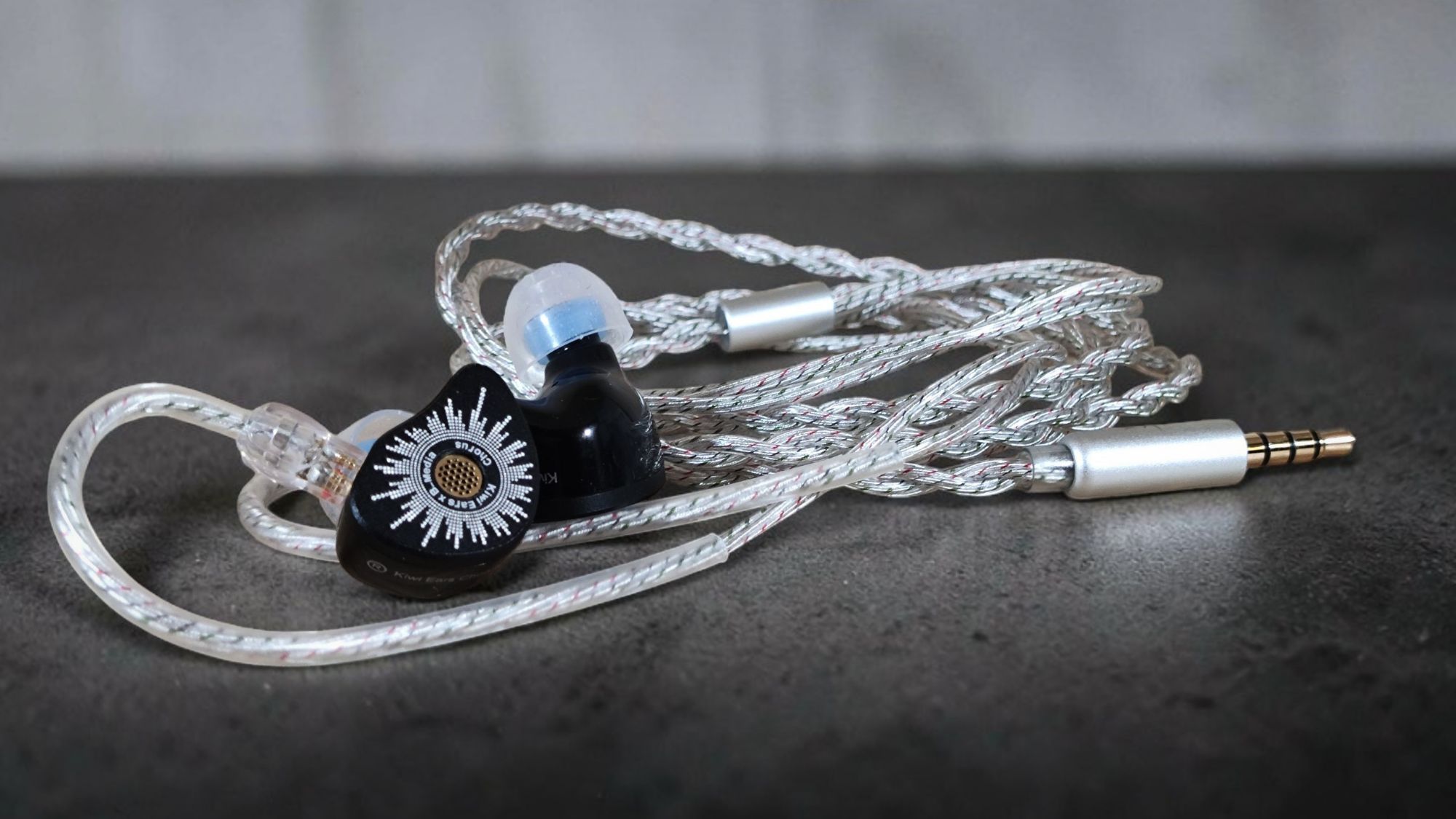
KIWI EARS x B_Media CHORUS SPECIFICATIONS
- Type: single driver IEM
- Driver: DLC dynamic driver
- Driver size: 10 mm (?)
- Impedance: 32 ohms
- Sensitivity: 103 dB/mW
- Cable length: 1.2m
- Cable material: silver plated copper
- Cable termination alternatives:
- 3.5 mm standard
- 3.5 mm with mic
- USB-C with mic
- Cable connectors: 0.78 mm 2-pin
- Tips included
Disclaimer: the review unit was supplied in exchange for an honest review.
Current price and availability:
- Amazon: Kiwi Ears Chorus
- Kiwi Ears: Chorus
- Linsoul: Kiwi Ears Chorus
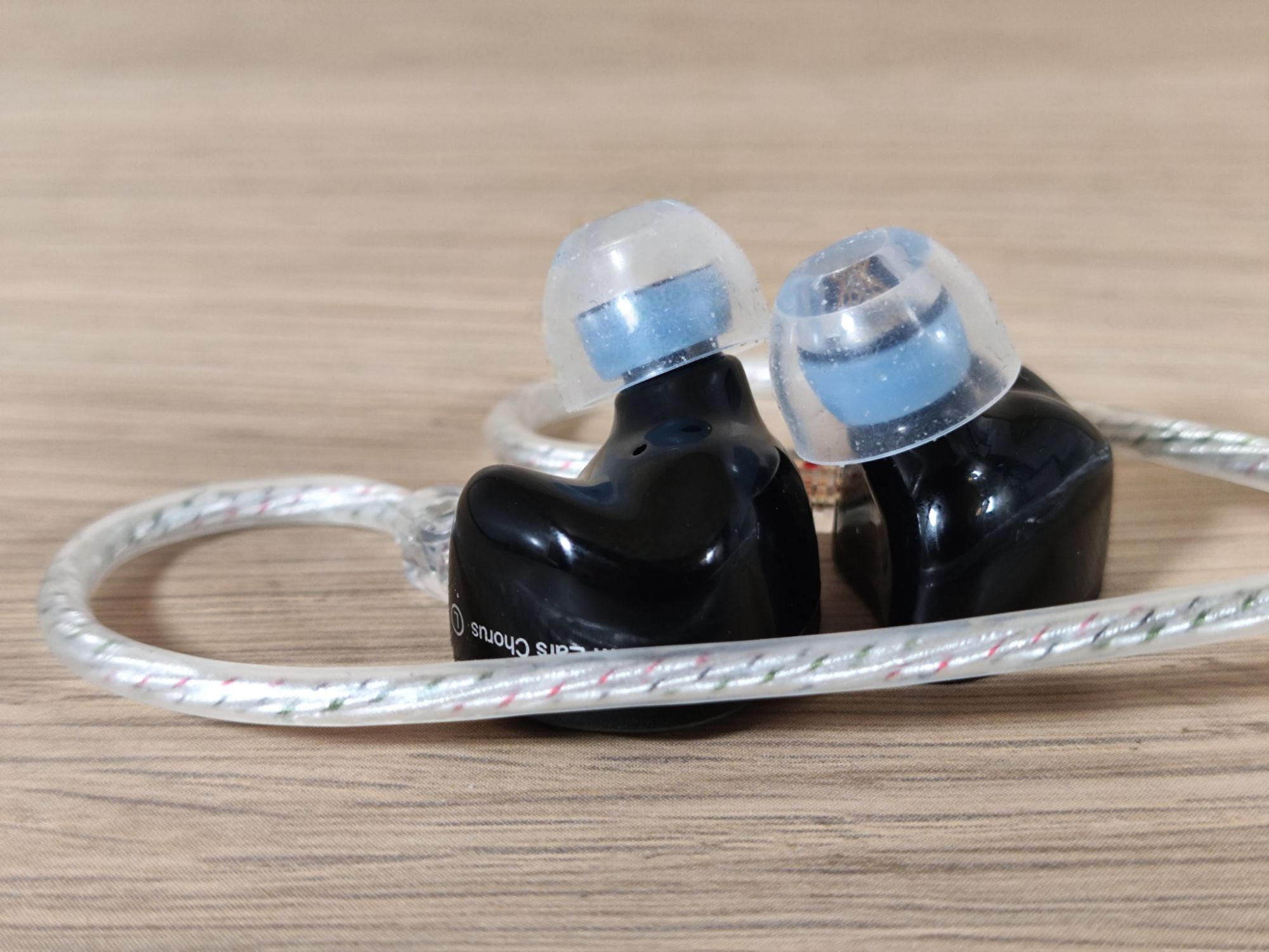
BUILD AND DESIGN
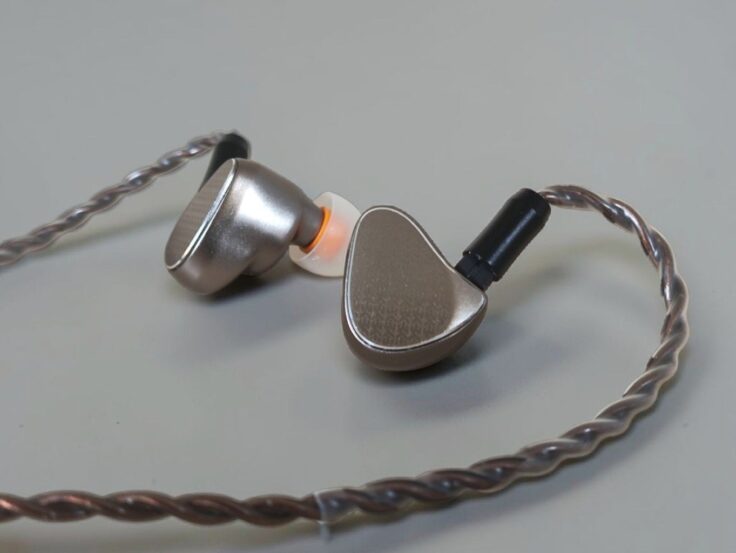
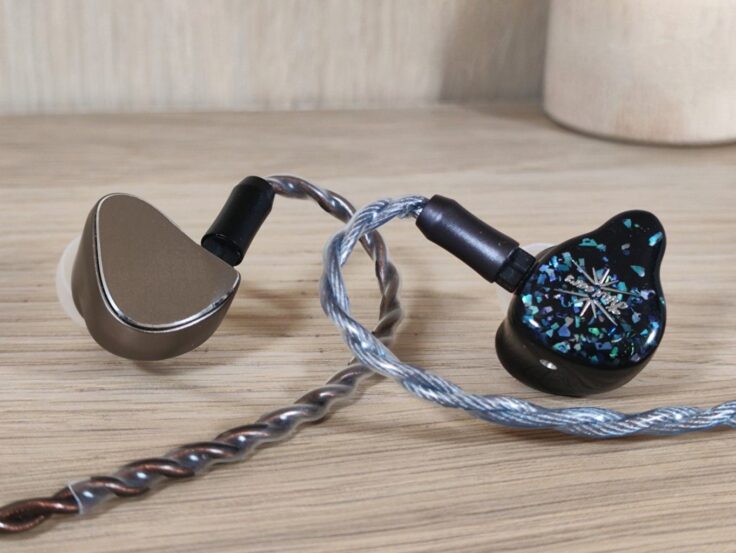
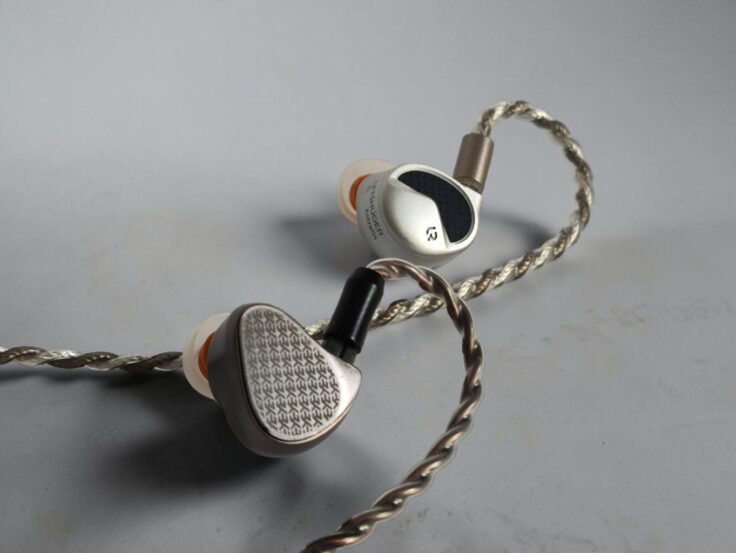
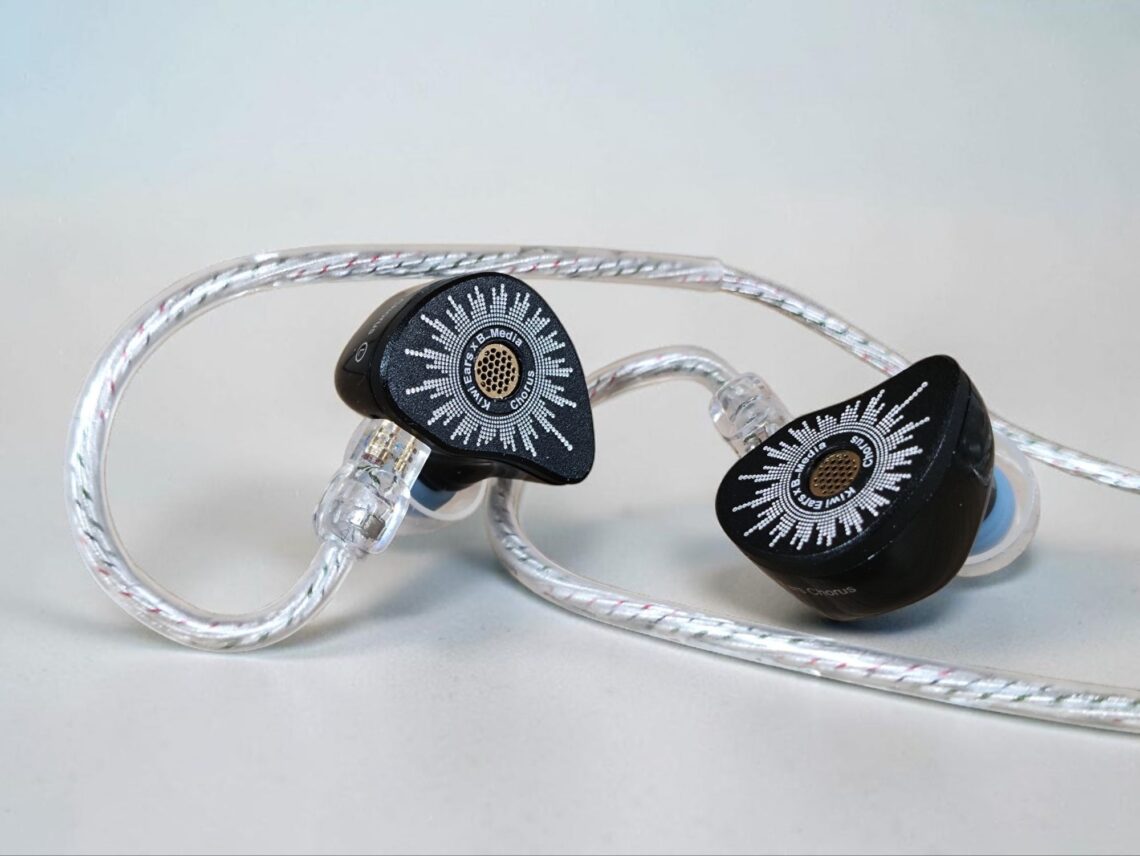
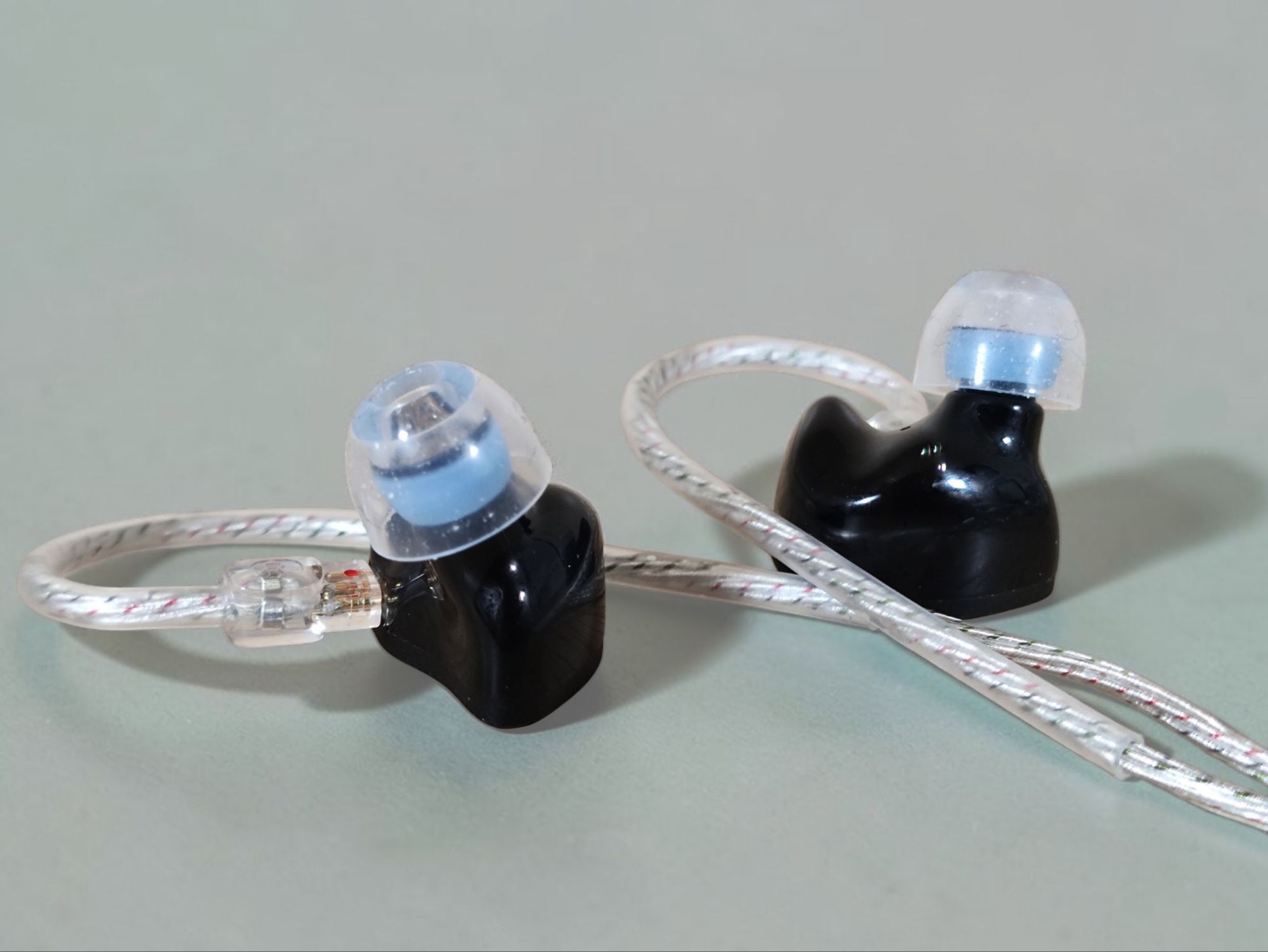
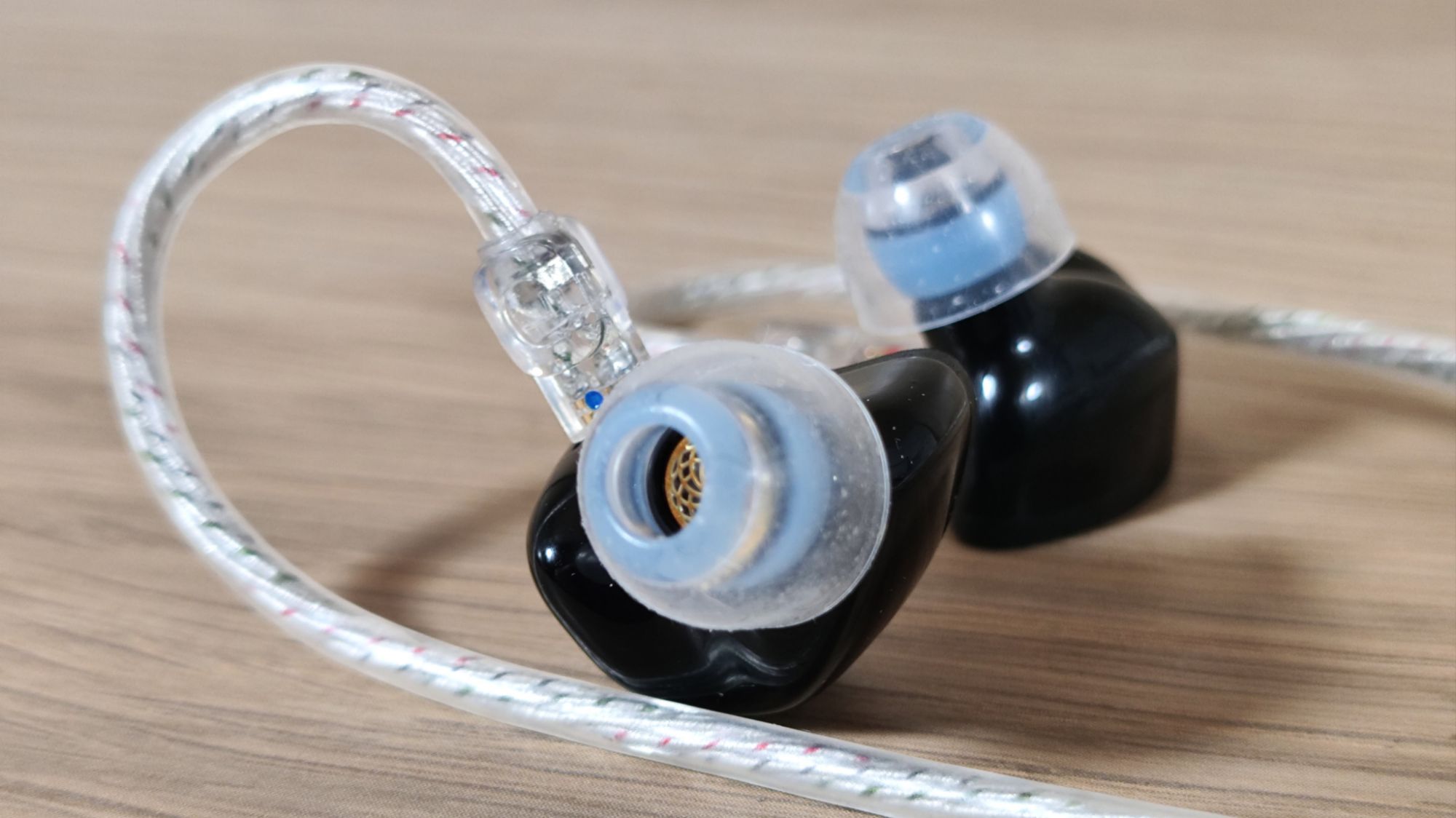
The shells are very compact and very similar to those of the excellent Kiwi Ears Belle, previously tested. Basically, the Chorus looks and feels like the Belle with a grille on the faceplate. I assume that’s what it is: a slightly modified and slightly retuned version of the Belle.
The Chorus is, as mentioned, a very compact and small IEM that should work well with small ears. The shells are made of resin and are exceptionally light.
There is, as mentioned, a ventilation grille on the faceplate which leaks sound and affects the tuning to some degree.
The cable connects with 0.78 mm 2-pin connectors. You can choose between a standard 3.5 mm cable, a 3.5 mm cable with mic, and a USB-C cable with mic.
There are tips included but no carrying case.
LISTENING IMPRESSIONS
Associated equipment:
- Amplifier: Topping A90
- DAC/Amp: Ferrum Erco mk2
Sandermosen by Maridalen
Powerful but not overpowering bass, natural-sounding saxophones, airy presentation. Slightly V-shaped feel in a nice way.
Sujet Tabou by Renaudin and Cahours
Very airy and spacious, percussion is snappy, slightly warm-bright tint.
How Deep by John Schofield
Airy, distinct, detailed. Pronounced bass, slightly polite mids.
Outlaws by Bill Frisell
There is a nice warm bass, airy and slightly bright percussion, and natural but not excessively forward-sounding mids.
Seven Nation Army Live by The White Stripes
Very detailed. Wide soundstage. Powerful bass.
Yours by Bull Laurence
Powerful acoustic bass, gentle piano, snappy percussion. Great sense of detail.
Fata Morgana by Spiritbox
Textured in a smooth way. Nice bass drum punch. Clean vocals.
Mango Drive by Rhythm and Sound
This demanding bass track is handled impressively.
The Hidden Camera by Photek
Warm, rich bass, crisp but neither sharp nor dry-sounding percussion. Very nice.
Vicarious by Tool
Quite bassy but not too much so, and it suits this track very well. Vocals are not pushed forward but are decently separated in the mix. Percussion is maybe a tad crisp. This is a complex track, and not many get it perfect, at any price.
Summer 3 Vivaldi Recomposed by Max Richter
Very nicely balanced. There is warmth from the bass and lots of detail without unnecessary sharpness.
Young Vivaldi by Modo Antiquo
Great string timbre. Both a tad warm and suitably crisp.
Sunrise by Norah Jones
Powerful bass, textured and clear vocals.
Rambling Man by Laura Marling
Nicely balanced. The vocals aren’t pushed as much up front as they can be – the mids are generally a bit polite.
WRAPPING IT UP
Sound Signature
The sound signature is moderately V-shaped but more bassy than bright. The midrange is slightly recessed, but all in all it still feels coherent.
Treble
The treble is bright and clear. It is not laid back and not sharp. It is on the brighter side, but in a nicely detailed and, to me, non-fatiguing way.
Midrange
I find the midrange very detailed with lots of texture, but it feels moderately recessed compared to the bass and treble.
Bass
The bass is excellent. There is a nice bass shelf, which sounds good on every track I have listened to.
There is a great sense of control and detail combined with delicious richness, which adds some warmth to the mix.
Soundstage and Imaging
The soundstage is open and large. The imaging is very good for the price.
Detail, Dynamics, and Timbre
The detail level is excellent at this price point.
Dynamics are great, especially whenever there is some bass included in the mix.

COMPARISONS
Associated equipment:
- Amplifier: Topping A90
- DAC/Amp: Ferrum Erco mk2
KIWI EARS BELLE vs CHORUS
The Belle and the Chorus sound extremely similar. The difference between them is audible on certain tracks, but mostly they sound the same.
They are not different flavors, they are different nuances of the same flavor. If anything, the Chorus is a bit more airy, which makes sense given the large grille on the faceplate.
As I see it, the only significant difference between the two, except for the design of the faceplate, is isolation and sound leakage. The Belle has significantly better isolation than the Chorus. So, in my book, this should be the differentiator. Think of the Chorus as an open-back Belle: if you want to be more aware of your surroundings, choose the Chorus. If you want maximum isolation, choose the Belle.
If you are curious about how the Chorus compares to other IEMs, you can check out my Belle review, where I compare the (as good as identical sounding) Belle to the Kiwi Ears Cadenza, Cadenza II, KBEAR KB02, and NiceHCK Yuandao.
Read more here:
Kiwi Ears Belle Review and Comparisons
AMPLIFICATION
The Chorus, like the Belle, has a rated impedance of 32 ohms and a rated sensitivity of 103 dB/mW. This is not crazy sensitivity, but it is definitely amplifier-friendly. Actually, I prefer this to extremely low impedances. Too high sensitivity can also make an IEM prone to hiss.
It worked very well with my desktop setup using a Topping A90 or the RME ADI-2 DAC FS. Both are very silent.
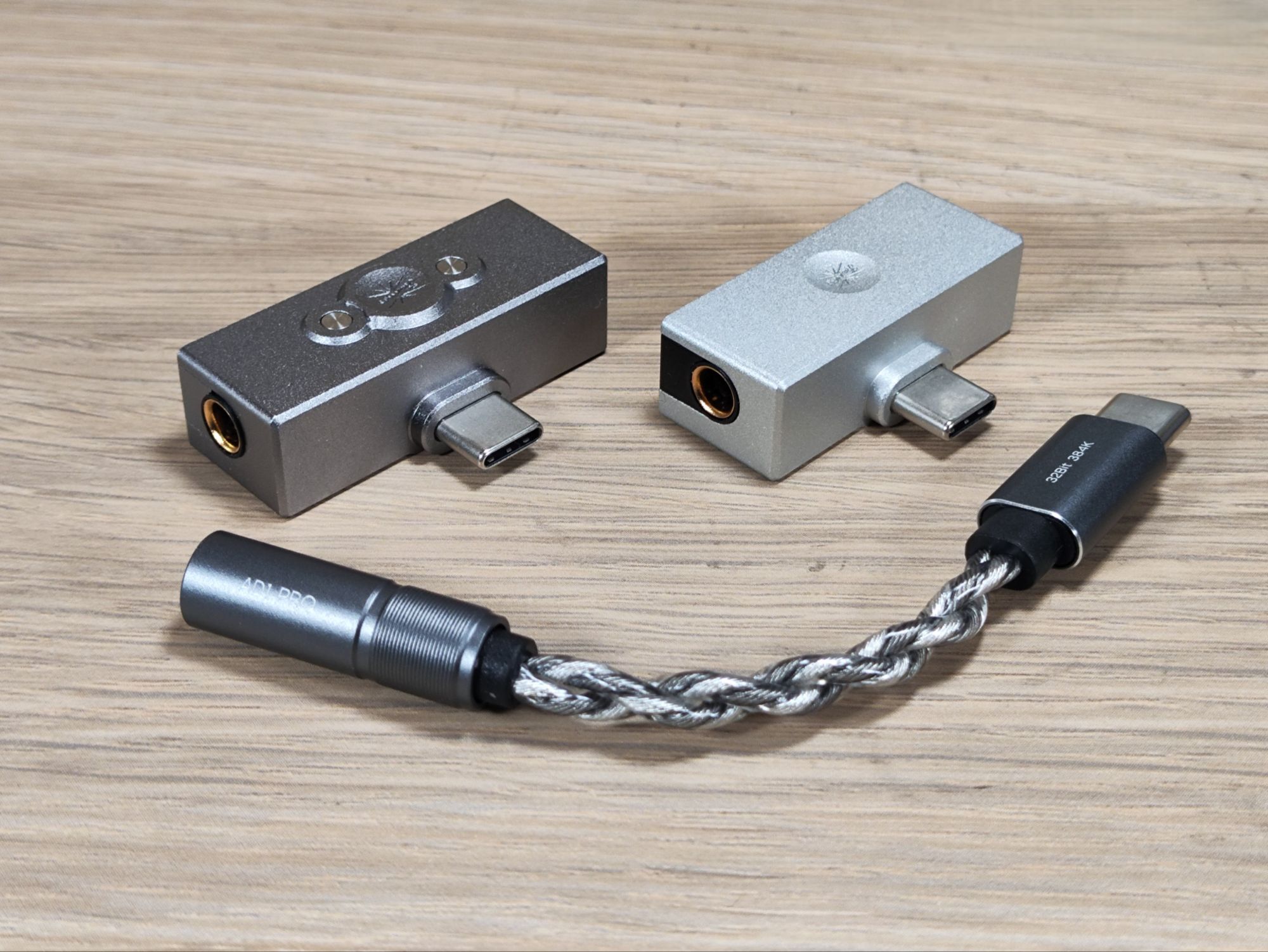
For portable options I tested three of Kiwi Ears’ own USB-C DAC/Amps:
- Kiwi Ears Allegro Mini – 90 degrees, 3.5 mm and 4.4 mm (20 USD)
- Kiwi Ears Allegro Pro – 90 degrees, 3.5 mm and 4.4 mm (50 USD)
- Kiwi Ears AD1 PRO – Standard 3.5 mm or 4.4 mm cable dongle (16 USD)
All three options work very well. I don’t think the Allegro Pro offers much extra. I might even find it a tad crisper with the Chorus, which I don’t prefer, making me like the two more affordable options better, if anything. I didn’t have the optional built-in USB-C cable available, so I cannot give an opinion.
CONCLUSION
The Kiwi Ears x B_Media Chorus is an excellent budget IEM with warm, controlled bass, textured mids, and clear and detailed treble. It has a wide, airy soundstage with good imaging.
The Chorus sounds and looks almost identical to the Kiwi Ears Belle. Choosing between the two comes down to isolation preferences. Choose the Chorus if you want more awareness of your surroundings, and the Belle if you want maximum isolation.
Thanks for reading. You can support us by purchasing anything using any of our affiliate links.
Availability:
Kiwi Ears x B_Media Chorus
- Kiwi Ears: Chorus
- Amazon: Kiwi Ears Chorus
- Linsoul: Kiwi Ears Chorus
Kiwi Ears Belle
- Kiwi Ears: Belle
- Amazon: Kiwi Ears Belle
- Linsoul: Kiwi Ears Belle
Any purchase you make on Amazon, Linsoul , AliExpress or Audio46 with any of our affiliate links will give us a small provision at no cost to you.
We only get a provision for items that are not returned, so there’s no incentive for us to recommend something that’s not good.
Linsoul : Headphones, Earbuds, Wireless Earbuds, Desktop DAC/AMP, Portable DAC/AMP, Digital Audio Players,
Amazon: Headphones, IEMs, Headphone Amplifiers, Home Audio or Anything else.
.
If you enjoyed this article or other content on The Headphoneer, you might consider leaving a small donation to keep this website up and running. No donation is too small. Thanks for supporting us!

If you like our work please follow us on Instagram, Facebook and Twitter , it will help us grow. Sharing is caring 🙂