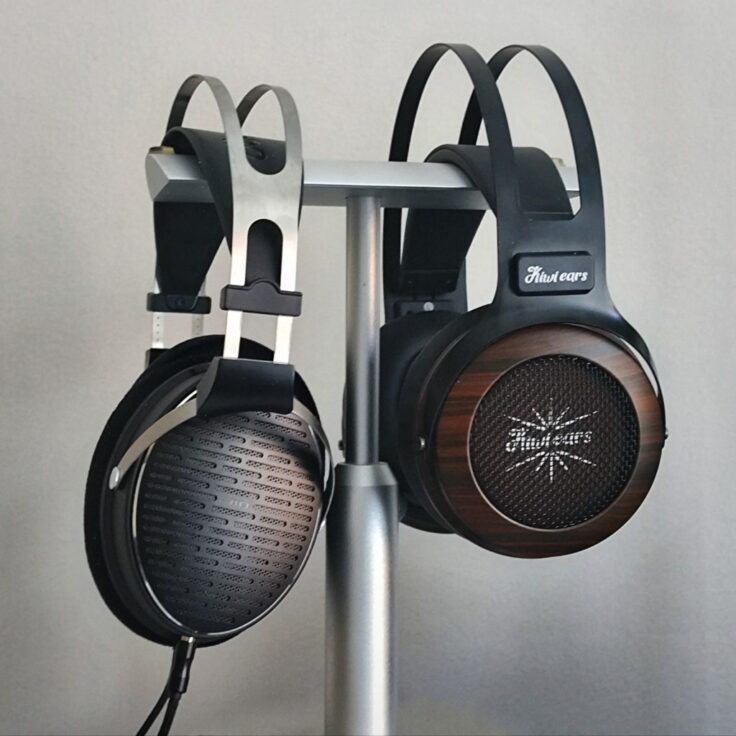


The Étude is a recently released tribrid in-ear monitor from Kiwi Ears, adding another reasonably priced IEM to their growing lineup. The price is currently 119 USD / €100 ex. tax.
It uses a 10mm dynamic driver with a Beryllium-electroplated diaphragm for the bass, with a crossover at 250 hz. A single high-efficiency midrange balanced armature driver takes over from there, while a dual balanced armature tweeter takes care of the highs.
The most unusual feature of the Étude is its vibration driver: The KVT, “Kiwi Vibration Transducer” is designed to enhance low-mid acoustics with tactile vibrations. Similar to a bone conductor but focused on the lows rather than the highs, it adds depth to the low-mid frequencies and a subtle physical dimension to the sound experience
If you tap the earbud, it resonates with a distinct springy sound around 250 Hz. I also noticed the resonance when biting my teeth together quickly. It’s a bit peculiar, but the real question is how much it truly affects the listening experience.

KIWI EARS ÉTUDE SPECIFICATIONS
- Drivers: 1 Dynamic Driver + 3 Balanced Armatures + 1 Vibration Transducer
- Sensitivity: 104dB SPL/mW
- Impedance: 5 Ohms
- Frequency Response: 20Hz – 20kHz
- Cable connectors: 0.78mm 2-Pin Connector
- Cable Length: 1.2 Meters
- Cable termination: 3.5mm jack.
Current price and availability:
- Amazon: Kiwi Ears Étude
- Linsoul: Kiwi Ears Étude
- Kiwi Ears: Étude
BUILD AND COMFORT
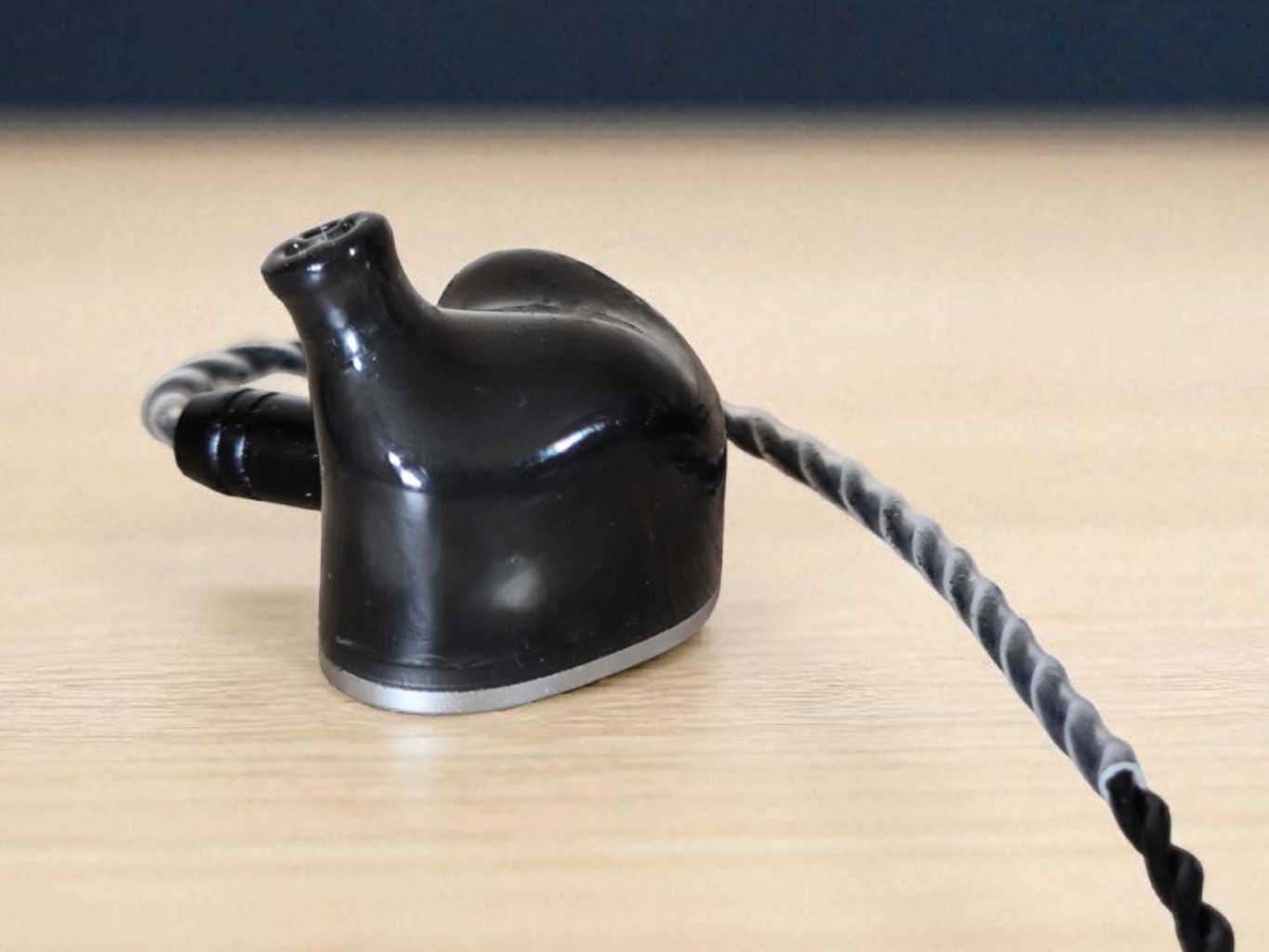
The Étude is a fairly large IEM but sits comfortably in my ear. Its main shell is resin, shaped in a universal custom-style design with a decorative faceplate. The nozzles are integrated into the resin shell rather than using a metal tube.
It features detachable cables with 0.78 mm 2-pin connectors. The cable is light and thin, nothing remarkable in appearance, but functional, terminating in a standard 3.5 mm jack.

LISTENING IMPRESSIONS
Associated equipment:
- Amplifier: Topping A90
- DAC: RME ADI-2 DAC FS
- SpinFit CP145 tips
Hello Dave by Michael Wollny
The Étude is lively and punchy, with full-bodied bass, a warm and lush presentation, and smooth highs. Overall, it feels refined and delicate.
Limit to Your Love by James Blake
Delicate, lush vocals with excellent bass delivery that is deep, clean, and abundant, complemented by snappy percussion.
Bullet in the Head by Rage Against the Machine
Powerful, controlled bass with smooth, naturally articulate vocals, creating a full-bodied sound and an immersive experience.
The Tunnel by Tord Gustavsen Trio
It’s a warm, smooth, and snappy presentation, with bass that feels like a soft, lush carpet beneath the music, while the other instruments are presented with great musicality.
Eye of the Day by Marta del Grande
The vocals are beautiful and the bass is plentiful. There is very nice detail retrieval, but most of all it sounds very musical and organic.
Don’t Stay by Linkin Park
The bass and guitars are full-bodied, creating a rich and grounded foundation for the rest of the instruments and vocals. The overall presentation is smooth and musical.
Eusexua by FKA twigs
It’s highly musical sounding, with a delicious bass and ambient foundation, complemented by ethereal vocals.
Jambi by Tool
Rich guitars and powerful bass provide a strong foundation, while the vocals are still nicely separated. The bass carries a bold presence with pleasing texture.
Almost Like The Blues
The bass is detailed and textured yet full-bodied, with a lively, bouncing character. The vocals are equally textured and rich, delivering a full and engaging sound.
As Before by Olga Konkova
The cajôn drum has a good tight punch, the piano is clear and clean sounding. Vocals are delicate and nuanced. Very musical delivery.
It Could Be Sweet by Portishead
The bass is prominent without being overwhelming. The organ and synth in the lower mids stand out more than usual, while the vocals remain neutral, smooth, and delicate.
Spontaneous Compositorius by Thomas Agergard
The saxophone sounds bold and rich. The treble and percussion are crisp and lively, with zing and articulation, feeling organic without being overly sharp. The bass is full-bodied and assertive, yet not overpowering.

WRAPPING IT UP
Sound Signature
The Étude has a bass-forward, warm, and lush sound signature that is dynamic and organic, though not studio-grade neutral.
Treble
The treble is clean and liquid-sounding, with good presence that never becomes overly sharp or harsh. It remains smooth and non-offensive throughout.
Midrange
The midrange is not overwhelmed by the bass, remaining lush and full with a very organic character, though it doesn’t push texture or crisp detail forward.
Bass
The bass is full-bodied and rounded, with excellent extension and nice detail, but generally presented in a bold manner.
Soundstage and Imaging
The soundstage is typical for an IEM, with imaging that is solid though not exceptional.
Detail, Dynamics, and Timbre
The detail level is good, especially in the treble, which is clean and liquid. Macrodynamics are excellent, microdynamics less impressive.
The timbre is warm and organic, giving the presentation a lush, musical quality that feels very alive.
COMPARISONS
Associated equipment:
- Amplifier: Topping A90
- DAC: RME ADI-2 DAC FS
KIWI EARS AETHER vs ÉTUDE
The Aether, released in spring 2025, is Kiwi Ears’ first planar magnetic single-driver in-ear monitor, featuring a large 15.3mm driver. Priced at around 150 USD (excluding tax), it’s 30 USD more expensive than the Étude, but its build, design, and size are very comparable.

In terms of sound, the Aether leans more neutral, offering greater texture and detail. Its bass is tighter yet still plentiful, with improved separation and a slightly airier, crisper presentation. By contrast, the Étude emphasizes warmth and musical liveliness.
In other words, while the differences are not vast, the Étude provides a richer, more engaging sound, whereas the Aether emphasizes more neutrality, texture, and detail.
Here’s my full Aether vs Etude comparison review
- Amazon: Kiwi Ears Aether
- Linsoul: Kiwi Ears Aether
KIWI EARS AIROSO vs ÉTUDE
The Airoso is a five-driver hybrid, also released this spring. It features one dynamic driver and four balanced armatures. It’s identically priced as the Étude.

In my setup, the differences between the Airoso and the Étude are minimal. Kiwi Ears seems to have tuned both IEMs to the same target, despite their different driver configurations and crossovers, and characteristics like detail and dynamics are very close.
That said, I find myself reaching for the Étude more often. It has a wonderfully musical character, and while it’s hard to distinguish from the Airoso in direct comparison, there’s something about it—perhaps the KVT—that adds a subtle touch of extra magic. The Airoso, however, is noticeably smaller, which some might prefer.
KIWI EARS KE4 vs ÉTUDE
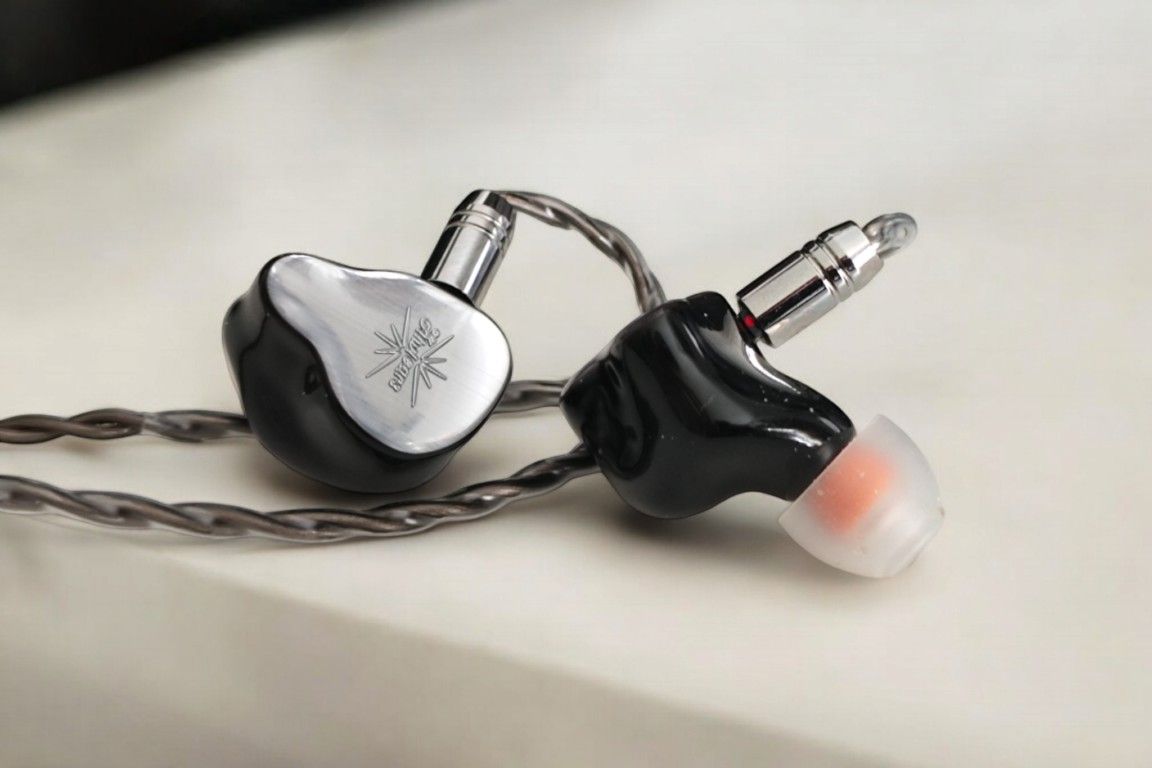
The Kiwi Ears KE4 was released in late 2024 and is typically priced at $199 / €170 ex. tax. Like the Étude, it’s a hybrid driver IEM, though with no vibration driver. The KE4 uses 4 drivers: dual 10mm dynamic drivers for the bass, a combined balanced armature for the mids and lower highs, and a dedicated balanced armature tweeter for the upper treble.
The Étude and KE4 are very close in sound, with tuning clearly aligned—similar to the Airoso. All three cater to listeners who prefer a warm, organic presentation. Differences in frequency response can make one or the other seem bassier depending on the track. Overall, though, the KE4 provides slightly better detail and a higher level of refinement.
- Linsoul: Kiwi Ears KE4
- Amazon: Kiwi Ears KE4

AMPLIFICATION
For this review, I’ve mainly been using my usual Topping A90 desktop amp, but I also tested several portable options, which are likely more relevant for most users. Here’s what I found:
Starting with the tiny Jade/FiiO JA11 dongle, things sound open, dynamic, and detailed. It’s a good match for the Étude and very impressive performance for such a small thing.
Kiwi Ears Allegro Pro is a bit better, though, with a bit higher resolution and improved dynamics. The Letshuoer DT03 sounds similar to the Allegro Pro, the xDuoo Link2 Bal2 slightly better and more refined. The Dragonfly Cobalt performs great with the Étude, a step up from the rest – it’s dynamic, detailed and smooth. Finally, the Chord Mojo is superb, another step up.
In conclusion, while there are some differences between the amplifiers, the Étude is very easy to drive and sounds good with every DAC/amp I tested.

CONCLUSION
The Étude delivers a warm and lush listening experience with a bass-forward yet nicely balanced presentation. Its treble is clean and smooth and the midrange remains organic and present, despite the powerful bass. Along with excellent dynamics the music gets an engaging and lively character.
There are many solid options in this price range, but for me, the Étude stands out as something special. The KVT vibration driver may well contribute to that touch of magic.
In conclusion, the Étude delivers a musical, engaging, and thoroughly enjoyable listening experience, and I can wholeheartedly recommend it.
Thanks for reading. You can support us by purchasing anything using any of our affiliate links.
- Amazon: Kiwi Ears Étude
- Linsoul: Kiwi Ears Étude
- Kiwi Ears: Étude
Any purchase you make on Amazon or Linsoul with any of our affiliate links will give us a small provision at no cost to you.
We only get a provision for items that are not returned, so there’s no incentive for us to recommend something that’s not good.
Linsoul : Headphones, Earbuds, Wireless Earbuds, Desktop DAC/AMP, Portable DAC/AMP, Digital Audio Players,
Amazon: Headphones, IEMs, Headphone Amplifiers, Home Audio or Anything else.
.
If you enjoyed this article or other content on The Headphoneer, you might consider leaving a small donation to keep this website up and running. No donation is too small. Thanks for supporting us!

If you like our work please follow us on Instagram, Facebook and Twitter , it will help us grow. Sharing is caring 🙂