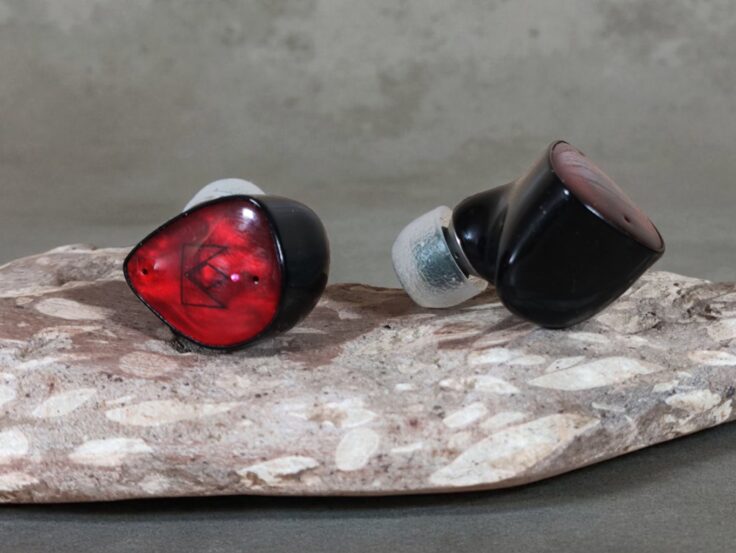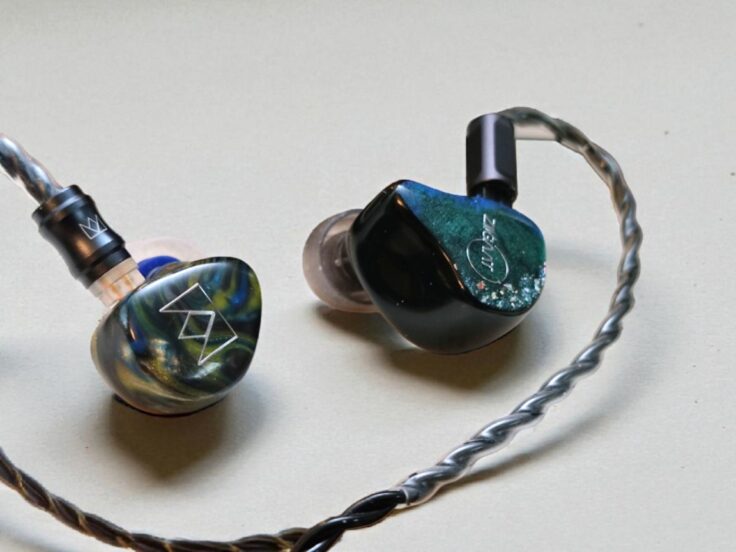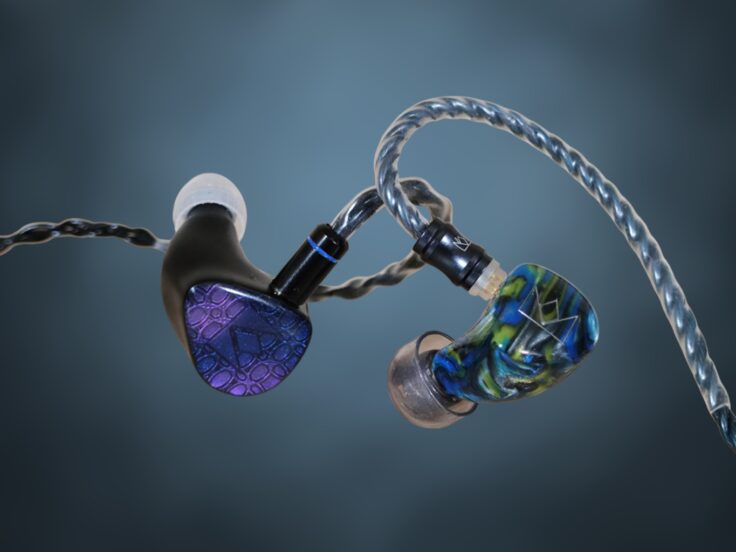


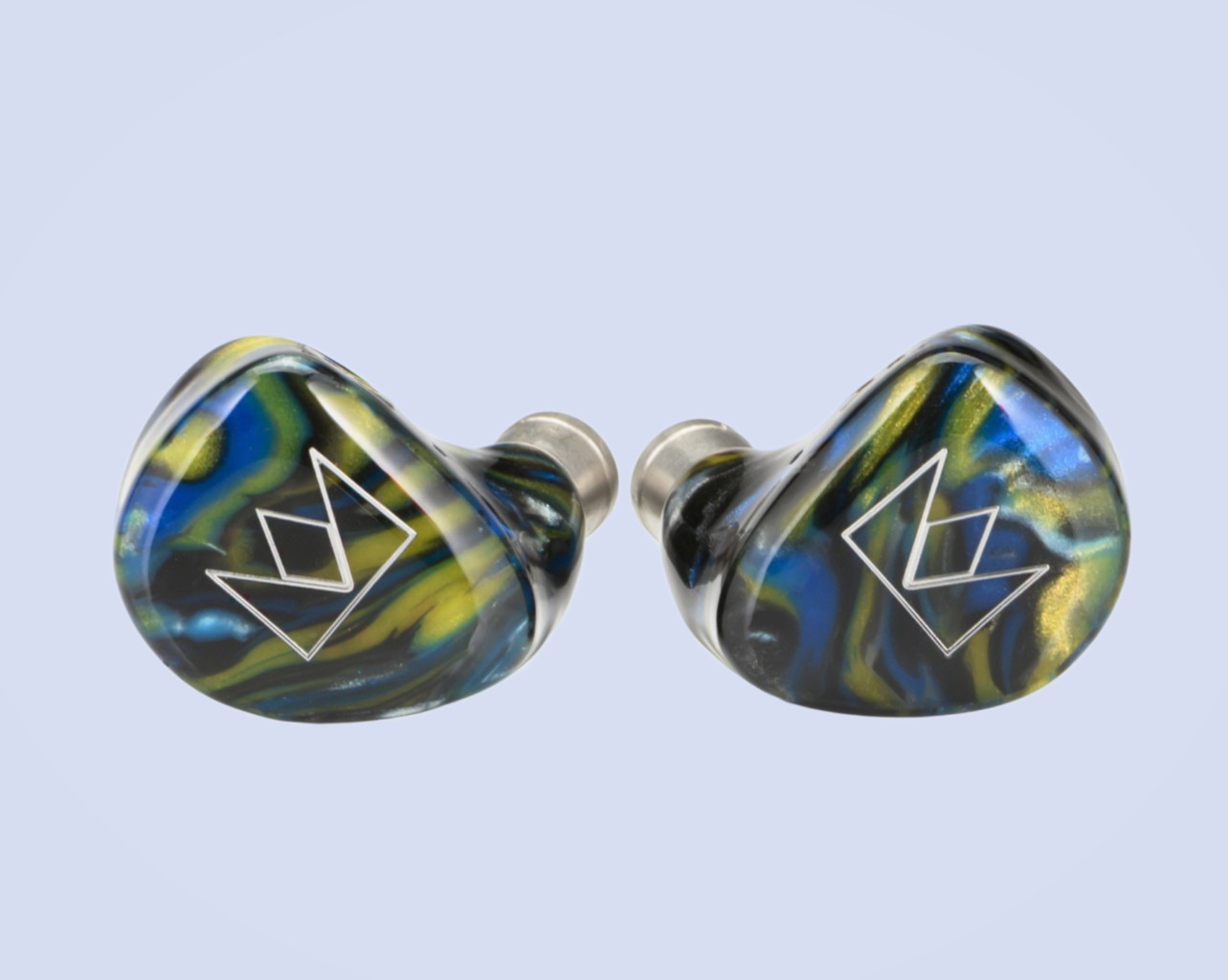
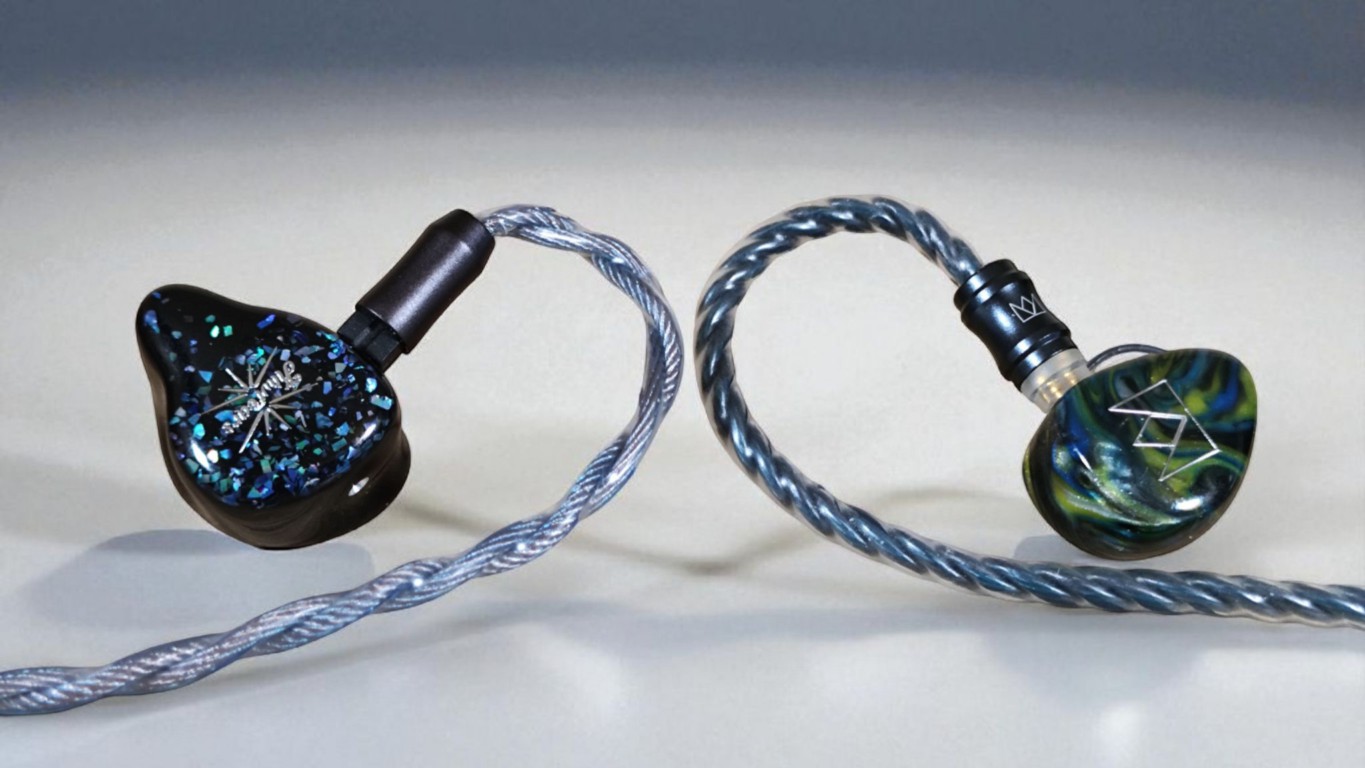
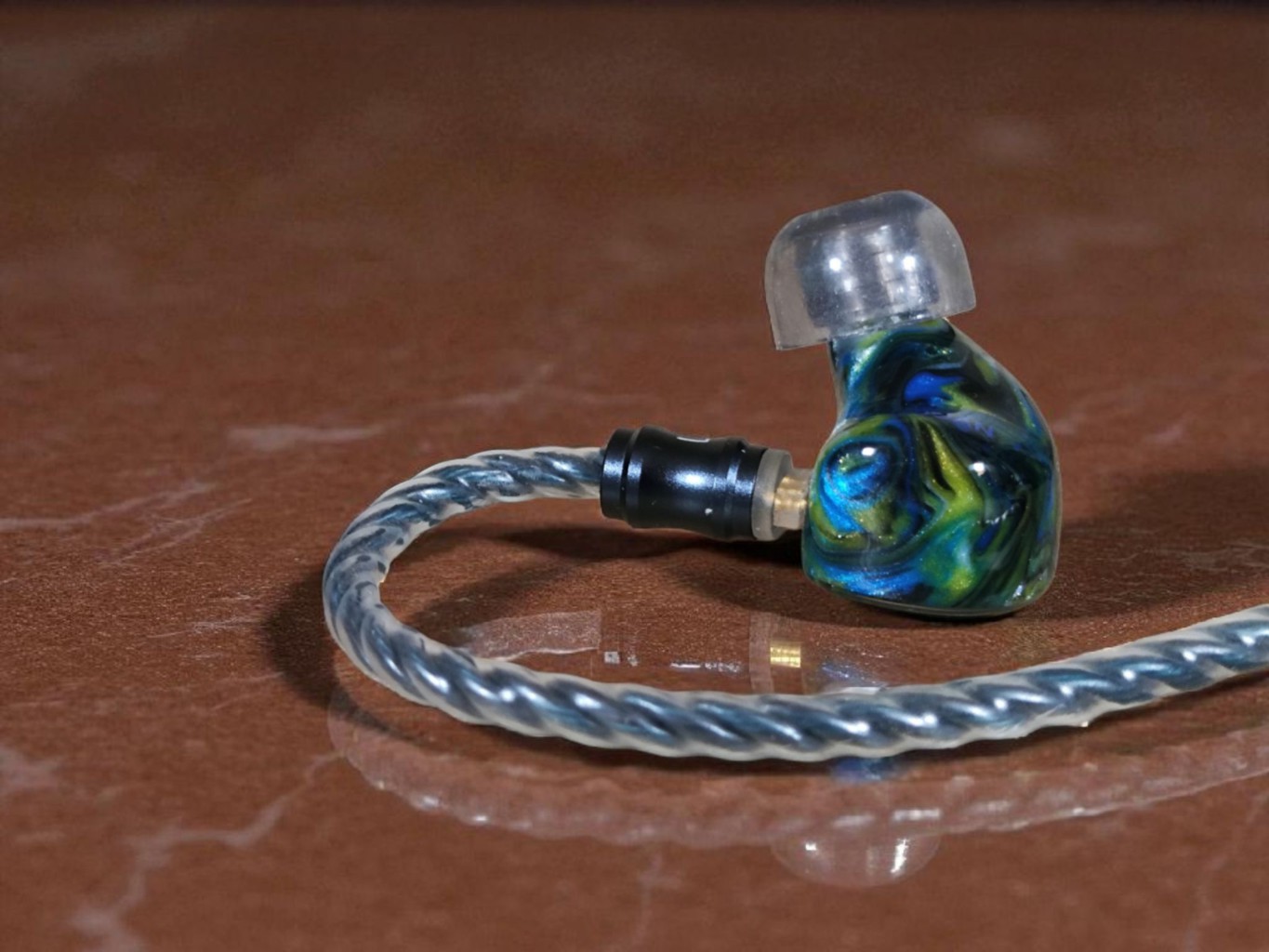
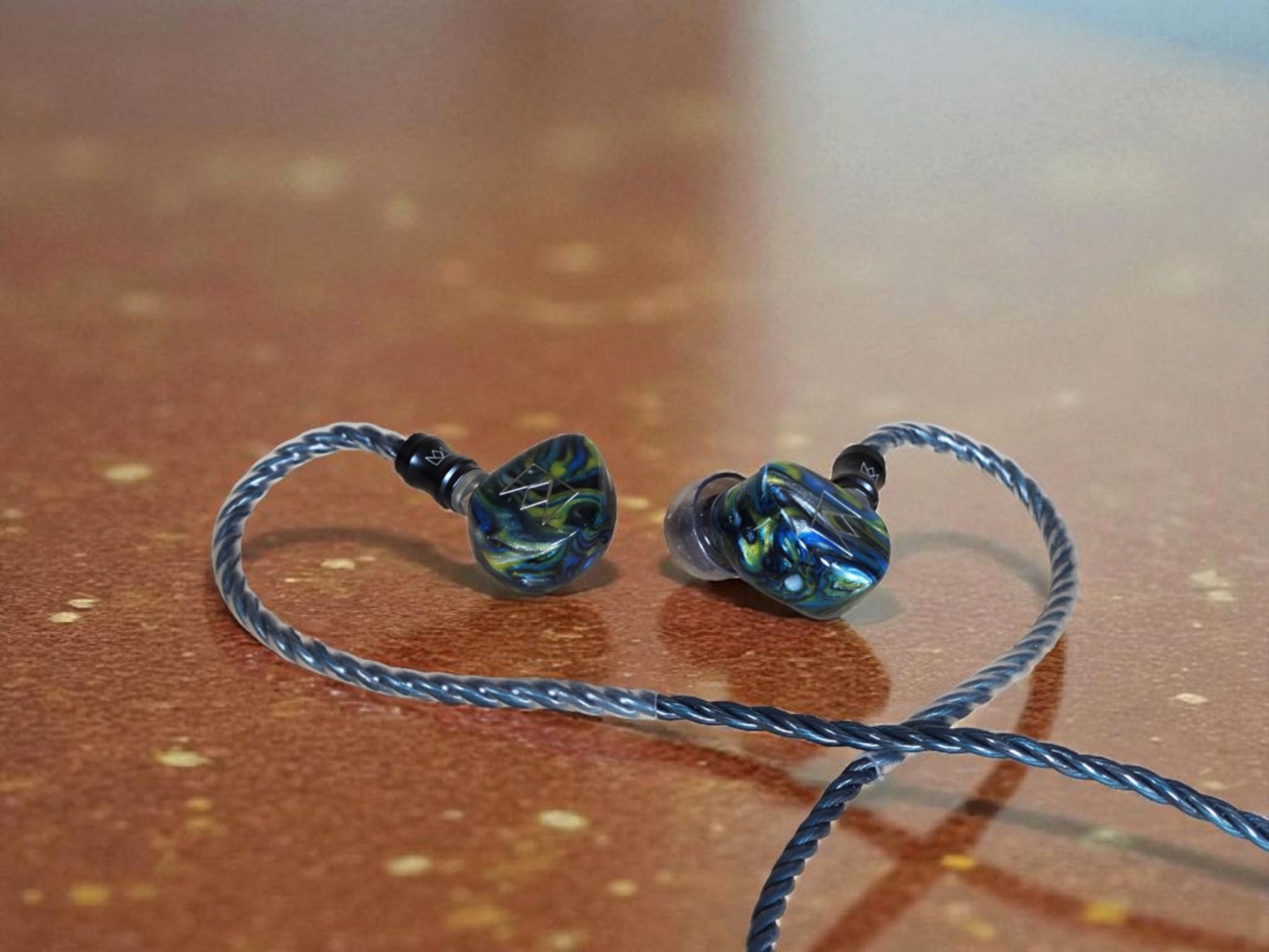
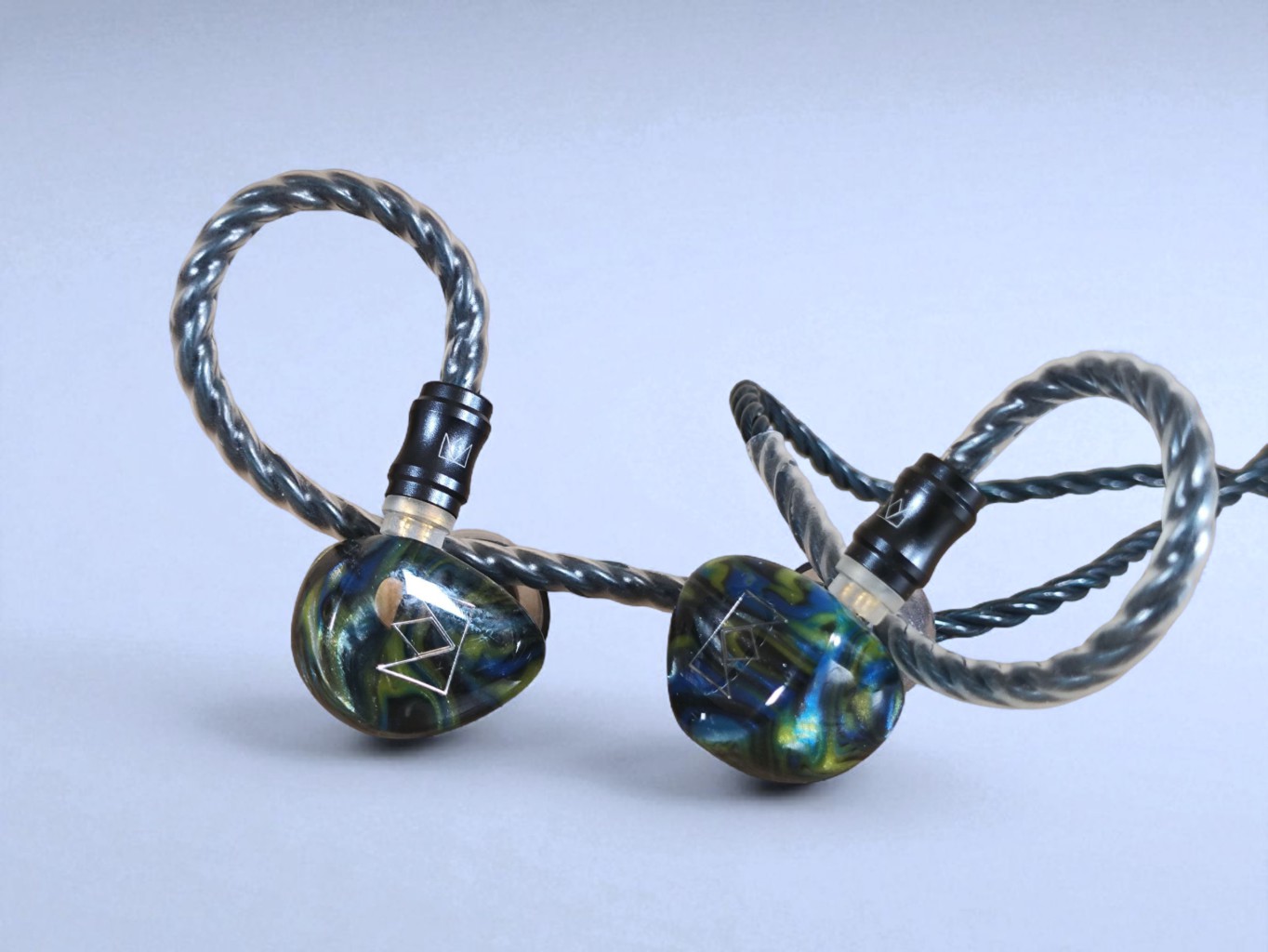
Noble Audio Van Gogh is a hybrid in-ear monitor featuring one dynamic driver and three balanced armatures. Its name comes from the design, which has a unique hand-finished look inspired by Van Gogh’s Starry Night.
The bass is delivered by an 8 mm dynamic driver with a magnesium–aluminium diaphragm and a dual-magnetic circuit. Two Sonion E Series balanced armature drivers handle the mids, while one Knowles RAD Series balanced armature driver takes care of the highs.
The Van Gogh has a relatively high sensitivity of 107 dB and a stable 29 Ω impedance. It is designed to perform well with affordable portable sources, while still offering enough resolution to scale with higher-end gear and desktop setups.

NOBLE AUDIO Van GOGH SPECIFICATIONS
- Four-driver hybrid configuration (1DD + 3BA)
- Magnesium-aluminium diaphragm dynamic driver with dual-magnetic circuit
- Frequency response: 20Hz–20kHz
- Sensitivity: 107dB
- Impedance: 29Ω
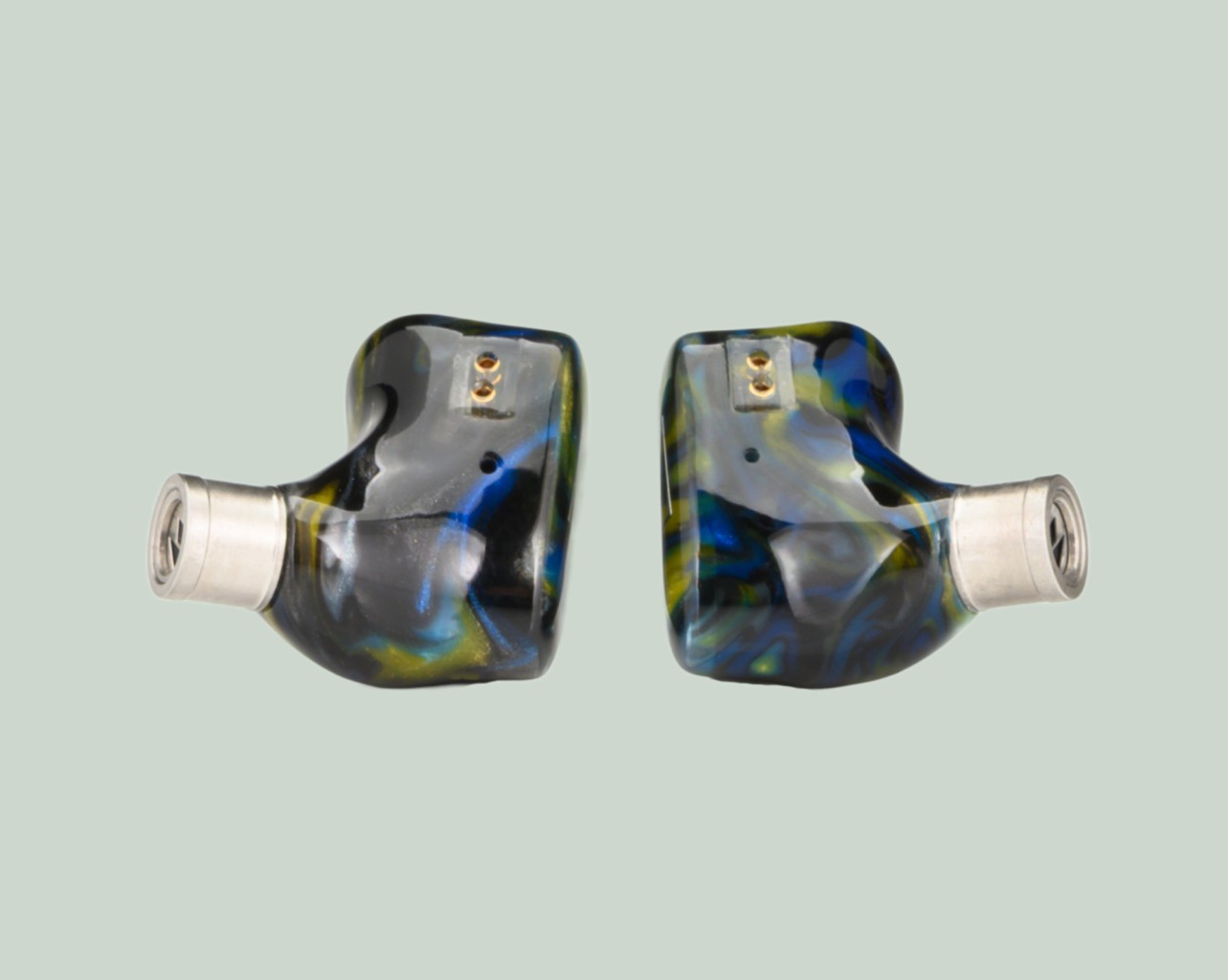
- Cable: detachable 8-core OCC copper
- Cable connectors: 2-pin 0.78mm
- Cable termination: 4.4mm balanced plug
- Supplied with fit kit, accessories and premium packaging
BUILD AND COMFORT
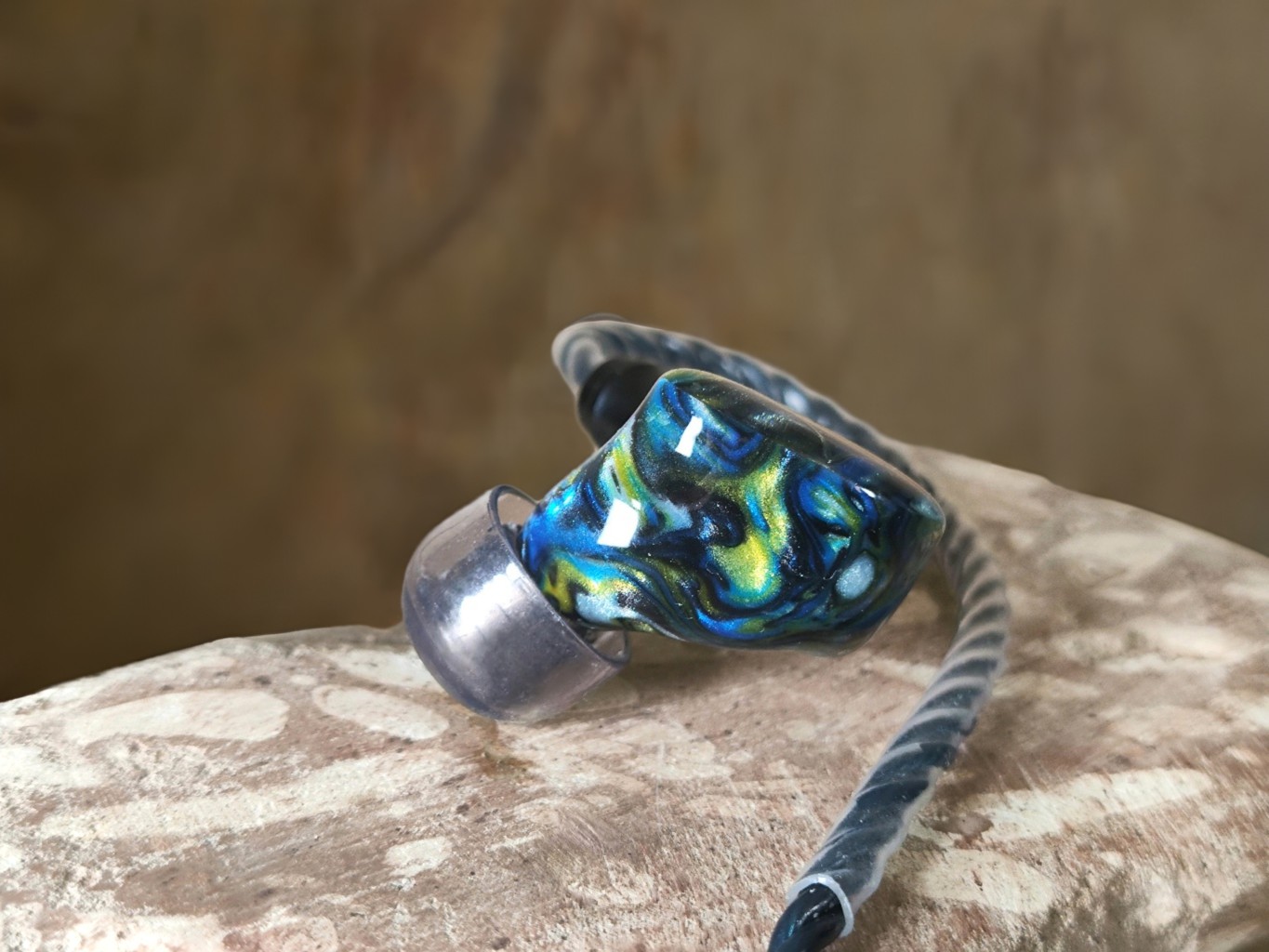
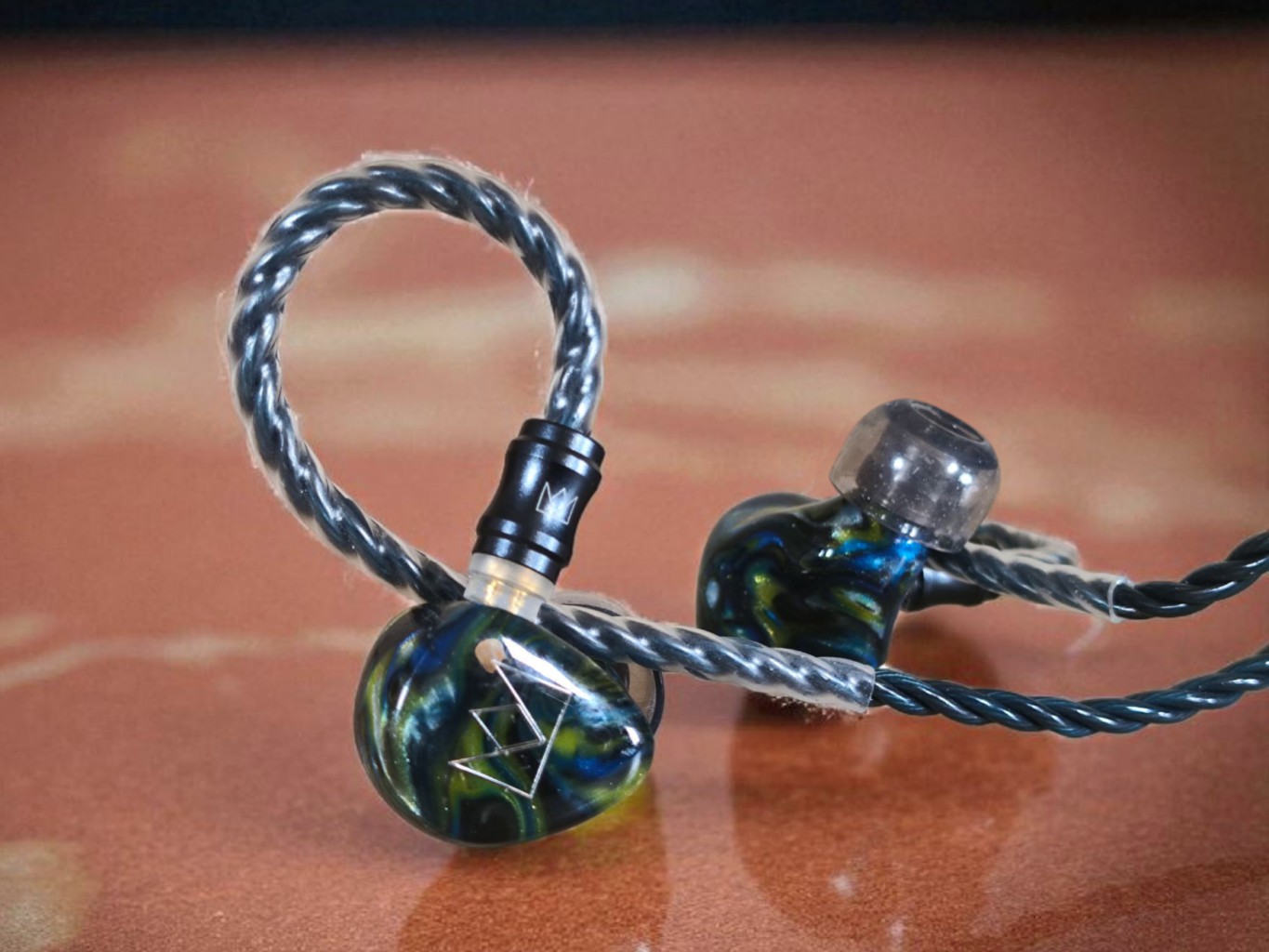
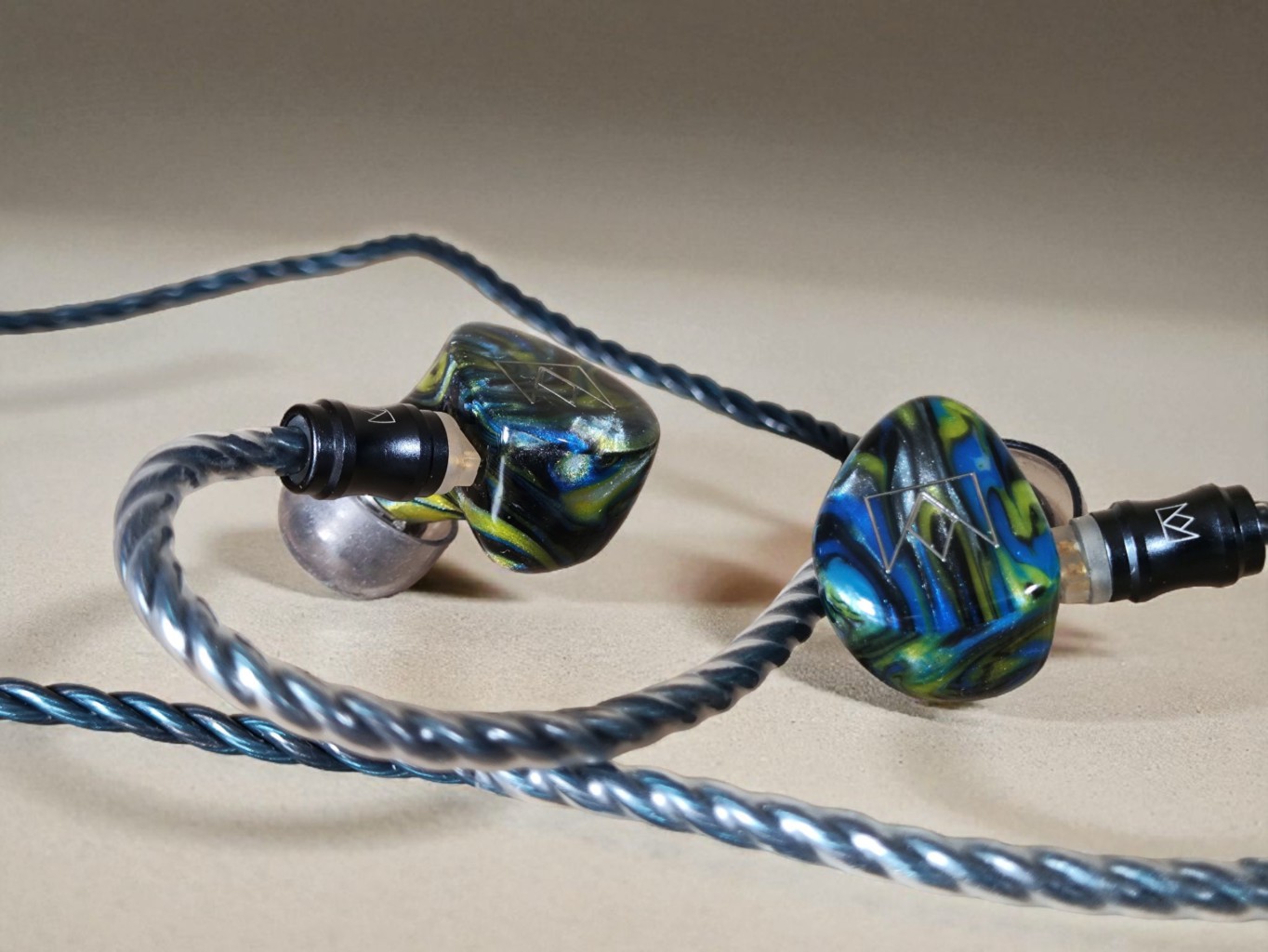
The Van Gogh feels very exclusive and high quality. The shells are quite small and sit comfortably in the ear, with a refined and solid feeling finish.
The cable is well made. It’s not too thin or too thick, and it has a pleasant texture that provides just the right amount of grip. It comes with a fixed 4.4mm jack. Personally, I am not a big fan of fixed balanced plugs. If it fits your existing ecosystem, you might prefer it, but in general, I find balanced gear unnecessary. “Balanced audio” in the world of earphones just makes things more expensive. There are no technical reasons the manufacturer of amps and DACs could not achieve the same sound quality unbalanced.
Hence, I would prefer if the Van Gogh came with a swappable termination plug system, which has become a common and convenient feature on many modern in-ear monitors. That said, the cable uses the widely available 0.78 mm 2-pin connectors and can be easily replaced.
TIPS
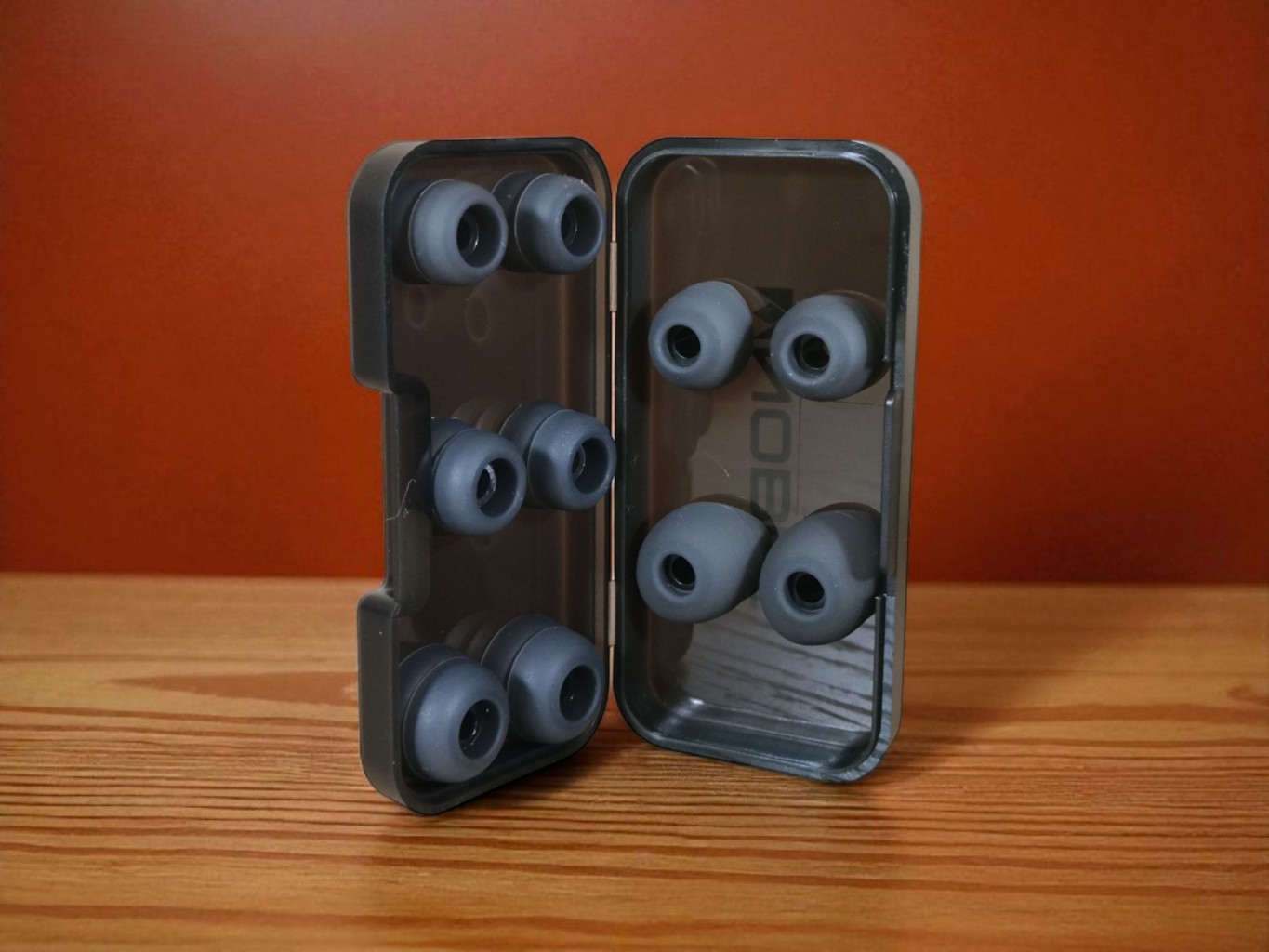
The Van Gogh comes with six sets of silicone tips, featuring two designs in three sizes each. They are neatly stored in a box that holds the five pairs not already fitted on the IEMs. The two types differ in bore diameter (hole size), which slightly affects the sound: narrower bores usually reduce treble (and indirectly thus emphasize the bass), while wider bores provide more treble.
As usual, though, I did not try out the included tips since it is too much hassle when doing reviews. Instead, I always use some of my preferred ear tips to ensure the best fit and performance for my ears.
First, I tried the medium-bore SpinFit CP145 tips but was not satisfied with the bass, which sounded a bit too thick and woolly. The wider bore and stiffer Azla SednaEarFit Xelastec tips were a bit better and provided a slightly more textured and somewhat leaner bass response, so I stayed with them.
LISTENING IMPRESSIONS
Note 1: As you will see, I often find the bass of the Van Gogh a bit excessive. Reducing it with EQ makes the bass sound more balanced and also reveals more detail. That said, unless otherwise noted, I have not used EQ.
Note 2: I have found that the bass on the Van Gogh can vary a bit depending on the amplifier used, with a few amps keeping the bass tighter than others.
The Ferrum Erco Mk2 and Topping A90 used in my “listening impressions” and “comparisons” sections are great amps, but they are not among those that deliver the tightest bass with the Van Gogh, even though they usually perform excellently with most earphones. I discuss amplification further at the end of the review.
Associated equipment
- DAC/Amp: Ferrum Erco mk2
- Tips: Azla SednaEarFit Xelastec
Jambi by Tool
There are rich, bold guitars and a full-bodied, almost thunderous bass. Vocals still stand out in the mix and are not drowned out, with no bothersome sibilance. It’s a very powerful sounding delivery.
Smile by Pearl Jam
Again, the bass is very full and rounded. Vocals are slightly restrained, and sibilance is present but not bothersome.
Almost Like The Blues by Leonard Cohen
The bass is deep and rounded, while the piano sounds gentle and delicate. Vocals are very rich, resulting in an overall bass-heavy presentation.
Black Crow by Cassandra Wilson
Again, the bass is very dominant. Vocals are beautiful and warm, with an overall good sense of space.
One Day My Prince Will Come by Coryell Miroslav Quartet
Even though the guitar has a wonderful timbre, the bass is a bit overwhelming for my taste – EQ can easily fix this, though.
Bored by Deftones
The guitar sounds rich, with gentle vocals and a round, full-bodied bass.
As Before by Olga
The cajón drum delivers excellent bass punch, really packing a slam. Vocals and piano are both excellently rendered, with a warm, smooth, and delicate timbre.
It Could Be Sweet by Portishead
The bass is again bold, thick, and rounded. Vocals are delicate, slightly warm, and smooth, though some sibilance is present.
Escape Route by Boris Blank
There is a fascinating rumble in the lowest frequencies. Excellent instrument separation and natural timbre on the trumpet.
Spontaneous Compositorius by Thomas Agergard
Great timbre on the saxophone and excellent treble rendition on the percussion with a nice liquidity; not harsh but not dark either. The bass is a bit too powerful for my taste, it’s very bold – but again, some EQ brings it down to more neutral levels in a nice manner.
Mahler’s Symphony No 2 III by Paavo Järvi
The kettledrums deliver a rich, deep punch, while the wind and string instruments have a very natural and delicate timbre.
Young Vivaldi by Modo Antiquo
The strings have excellent timbre, sounding very natural and warm, delicate yet energetic, with clear bite and attack.
Summer 3 Vivaldi Recomposed by Max Richter
The rich low end creates a grandiose presentation. There is excellent instrument timbre and great instrument separation.
Maple Noise by Greene Serene
The dynamics are excellent. There’s great timbre on the trumpet and piano. The percussion is snappy and crisp without being harsh. The bass remains a bit thick, as usual – unless you apply some EQ.
Sunrise by Norah Jones
The vocals have a beautiful timbre, with warmth and smoothness, yet retain air and a slight upfront sharpness. The guitar sounds great and natural, and the bass is rich.
Rambling Man by Laura Marling
The vocals are absolutely beautiful. There’s great instrument separation and lots of detail.
Fata Morgana by Spiritbox
The delivery is excellent—smooth and detailed, with great separation and layering. The bass is well-controlled, and the overall sound is nicely balanced.
WRAPPING IT UP
Sound Signature
The Van Gogh is clearly a bass-heavy IEM, with warm, smooth mids and liquid, present highs. Many would call it a U-shaped tuning. With EQ, and/or a fortunate amplifier pairing, the bass can be tamed to a more neutral level.
Treble
The treble is present and articulate, with a smooth, liquid quality. It is not harsh or overly bright, yet not laid-back either.
Midrange
The mids are excellently executed: warm but not thick, delicate and smooth, yet with texture and energy.
Bass
The bass on the Van Gogh is prominent and often dominant, with a rounded, thick character. A few amplifiers can tighten it somewhat, though I’ll discuss that in more detail later.
I often prefer reducing the bass levels with EQ, which results in a more neutral, detailed, and textured bass. That said, the stock tuning remains enjoyable, but it’s certainly a colored presentation.
Soundstage and Imaging
The soundstage is very wide and open for an IEM, with excellent imaging and layering.
Detail, Dynamics, and Timbre
The detail level in the mids and highs is excellent. The bass can be a bit disappointing at this price point, but EQ-ing it down significantly enhances the perceived detail.
Dynamics are generally excellent. The midrange timbre is magical—natural and organic, yet still detailed—and the same can be said about the treble. The bass timbre is a bit one-dimensional, often thick and bold, but with some EQ it can sound a lot more neutral and nuanced.
COMPARISONS
Note: I always use the Topping A90 for comparisons because it is an all-rounder that performs well with nearly every earphone I try, making comparisons more accurate and consistent. As mentioned, though, there are other amplifiers that can make the Van Gogh’s bass slightly tighter. I’ll elaborate on this later.
Associated equipment:
- Amplifier: Topping A90
- DAC: RME ADI-2 DAC FS
NOBLE AUDIO KNIGHT vs VAN GOGH
The Knight is Noble’s $299 entry-level IEM, featuring a dynamic driver, balanced armature, and piezo tweeter.

Unlike the Van Gogh, it offers a neutral, balanced sound with textured bass and upfront mids, making it consistent across tracks. The Van Gogh, in contrast, emphasizes bold bass, cleaner but slightly recessed mids, and clearer highs, with stronger dynamics, a larger soundstage, and better imaging. I prefer the Knight’s tonal balance, but Van Gogh’s cleaner sound and fun, bold bass are very appealing.
Read more: Knight vs Van Gogh Comparison
KIWI EARS ASTRAL vs VAN GOGH
The Kiwi Ears Astral is a $299 hybrid IEM with a 10 mm dynamic driver for bass and three dual balanced armatures for the rest. Sound wise, it has more in common with the Knight than the Van Gogh.
The Astral is balanced, coherent, and detailed, with natural timbre and controlled bass. The Van Gogh shines in the mids and highs, offering cleaner, sweeter instruments, superior separation, and imaging – but the bass is generally rich enough on the Astral, and a bit much on the Van Gogh.
Read more: Astral vs Van Gogh Comparison
- Linsoul: Kiwi Astral
- Amazon: Kiwi Astral
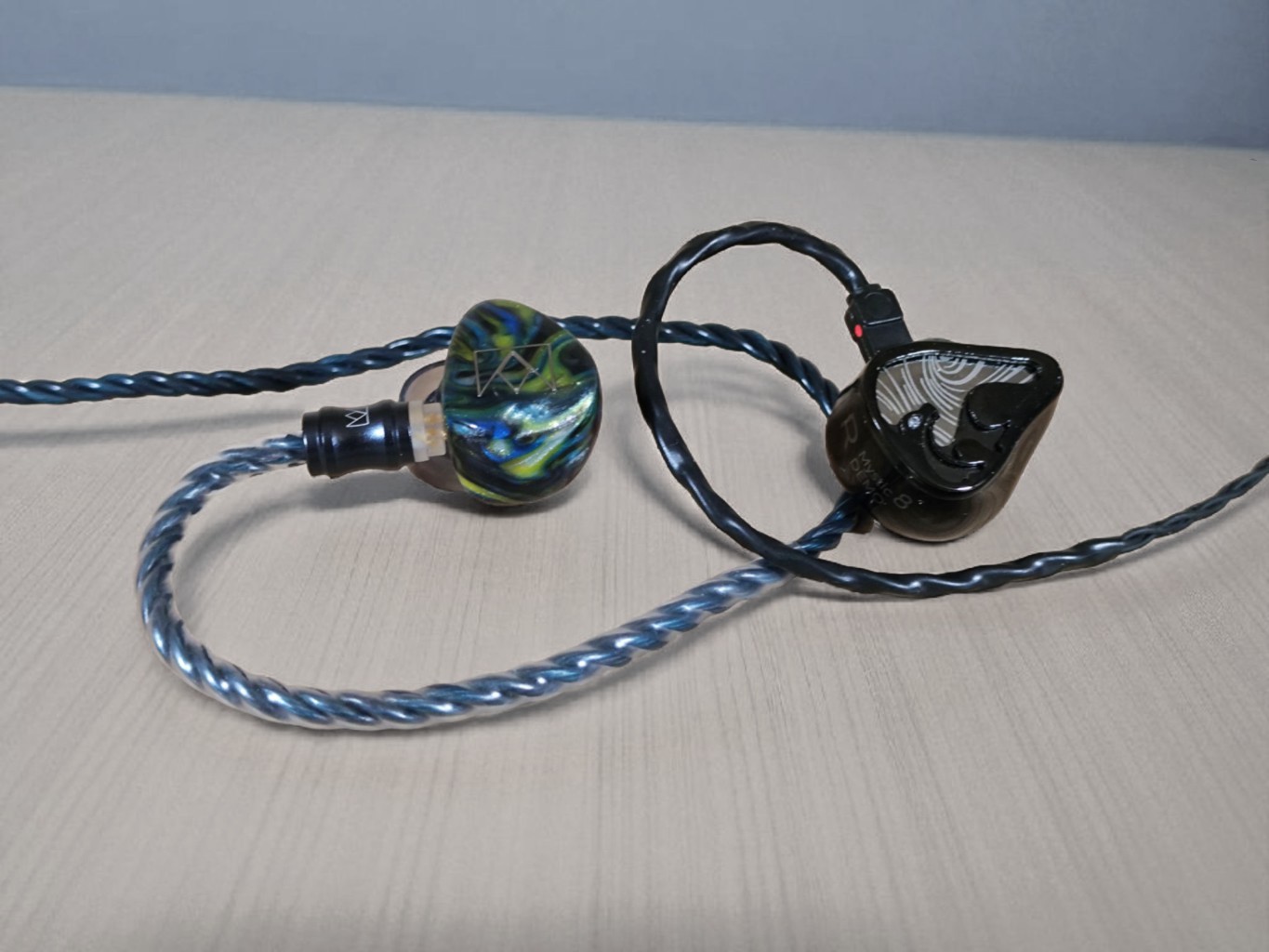
LETSHUOER MAGIC 8 vs VAN GOGH
The Letshuoer Mystic 8 is an 999 USD, eight-driver, balanced armature IEM with a neutral, detailed, and articulate sound signature. It delivers polite yet textured bass, upfront mids, and consistent treble, in contrast to the Van Gogh’s warmer, bass-heavy presentation. While EQ can bring the Van Gogh closer to the Mystic 8’s balanced profile, the Mystic 8 remains more precise, dynamic, and neutral overall.
Read more: Mystic 8 vs Van Gogh Comparison
- Linsoul: Mystic 8
AMPLIFICATION
Most of my testing was done with the Topping A90 and Ferrum Erco mk2 desktop amps. However, since portable options are more relevant to most users, I also tried several compact USB devices, using their 4.4 mm outputs when available and a NiceHCK adapter otherwise.
I start out with Kiwi Ears’ Allegro Mini and Allegro Pro. Both sound great and are very similar. The xDuoo Link2 Bal2 is a bit more refined, while the Alpha XI1 ONIX also performed very well.
The Letshuoer DT03, however, pairs especially well with the Van Gogh, offering a slightly smoother presentation than the others and, importantly, tighter, more controlled bass. This came as a surprise and is a very important distinction from every other amp I have tried so far.
Using the 4.4 mm to 3.5 mm adapter, I tried the Dragonfly Cobalt, which also pairs excellently with the Van Gogh, tightening and refining the bass in a way similar to the DT03. Both outperform my desktop rigs in that respect. Finally, the Chord Mojo is superb in the midrange and treble, though it does not control the bass as well as the DT03 and Cobalt.
It was very interesting to test all these DAC-amplifiers, because while most showed only minor differences, two of them made a significant improvement in the bass region.
BEST VAN GOGH DAC/AMP MATCHES
The Letshuoer DT03 and Dragonfly Cobalt stood out as particularly good amplifier matches for the Van Gogh, essentially addressing my main criticism of its bold and overly rich bass. With the more than ten other amplifiers I’ve tried, the bass is notably thicker and bolder.
Why this happens is something I can only speculate about, but it is clearly not related to raw power. It might be influenced by output impedance, though usually lower impedance results in tighter bass. Interestingly, the best result came from the Cobalt, rated at 0.65 ohms, while the Topping A90 is below 0.10 ohms and the Mojo is rated at an incredibly low 0.075 ohms. This suggests that the lowest output impedance does not necessarily yield the best result. In any case, all the numbers mentioned are very low.
After writing most of my review, I checked a few other reviews and noticed that opinions on the bass vary. This could likely be due to differences in amplification.
Whatever the reason, it’s clear that the Van Gogh is quite particular about amplification when it comes to achieving optimal bass performance, even though all amps tested deliver a relatively consistent experience in most other aspects.
FINAL THOUGHTS
I am a bit torn about the Van Gogh. When I first got it, I was fascinated and enjoyed listening to it a lot. The bass was often fun and engaging, but what truly stood out were the smooth, detailed mids and the liquid, expressive highs.
After a while, however, I found the bass to sound somewhat similar across tracks and often overly dominant. I initially tried using EQ, which provided a relatively effective fix. However, when I started testing a lot of different amplifiers, it became clear that a very few of them actually tightened up the bass just enough for me to prefer it without EQ.
I find this a bit peculiar. I would like a more consistent bass experience across all amplifiers. Alternatively, a bass switch on the IEMs themselves would be ideal, allowing adjustment depending on the amplifier’s bass control and personal preferences.
CONCLUSION
The Van Gogh is a bass-forward IEM with polite, yet warm and smooth mids, complemented by clear, liquid highs. It offers a spacious soundstage, strong dynamics, and excellent instrument separation. While its bass can be overly dominant, it can be tamed with EQ or the right amplifier for a more balanced and detailed listening experience.
Thanks for reading. You can support us by purchasing anything using any of our affiliate links.
Any purchase you make on Amazon or Linsoul with any of our affiliate links will give us a small provision at no cost to you.
We only get a provision for items that are not returned, so there’s no incentive for us to recommend something that’s not good.
Linsoul : Headphones, Earbuds, Wireless Earbuds, Desktop DAC/AMP, Portable DAC/AMP, Digital Audio Players,
Amazon: Headphones, IEMs, Headphone Amplifiers, Home Audio or Anything else.
.
If you enjoyed this article or other content on The Headphoneer, you might consider leaving a small donation to keep this website up and running. No donation is too small. Thanks for supporting us!

If you like our work please follow us on Instagram, Facebook and Twitter , it will help us grow. Sharing is caring 🙂