

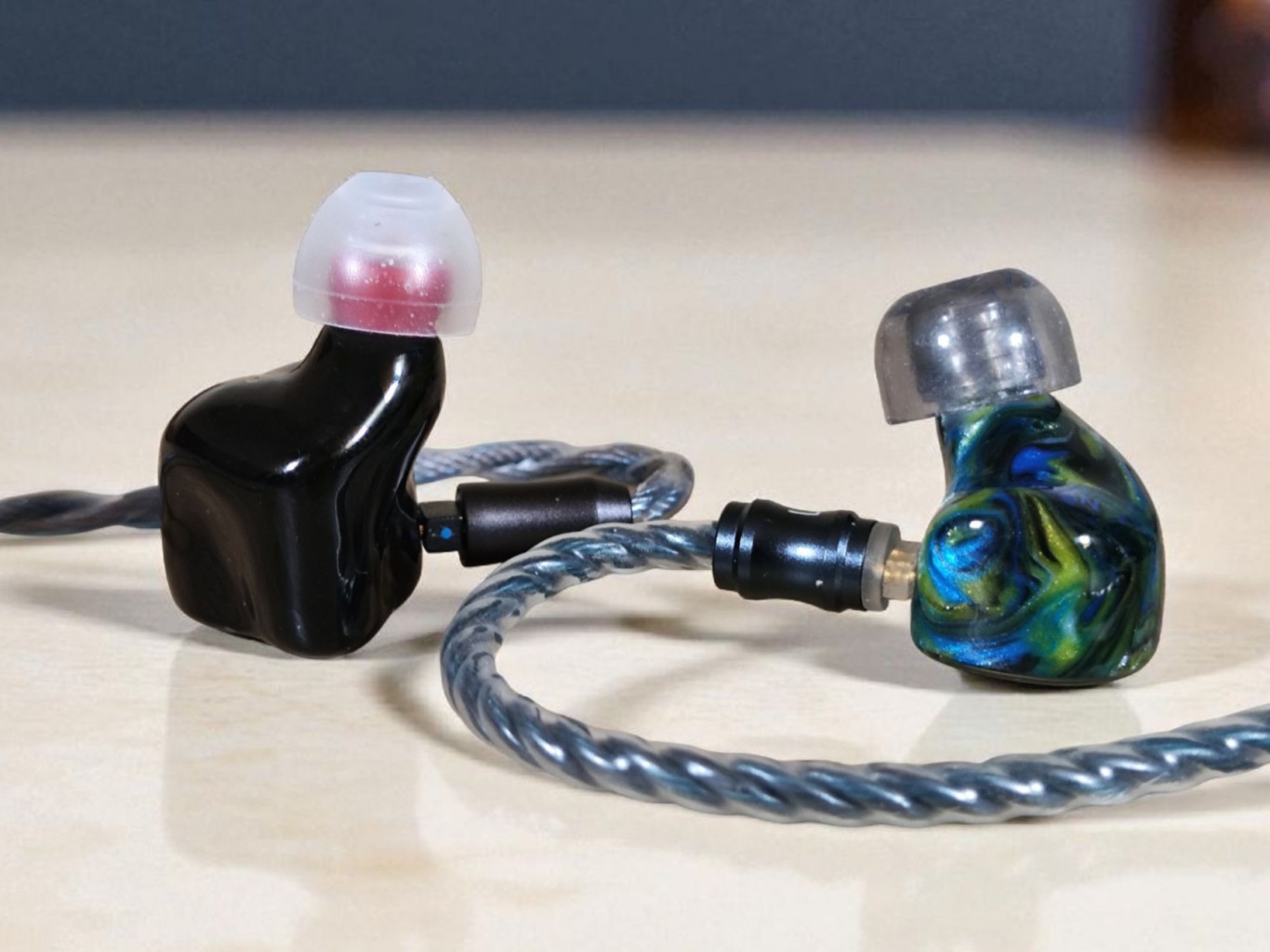
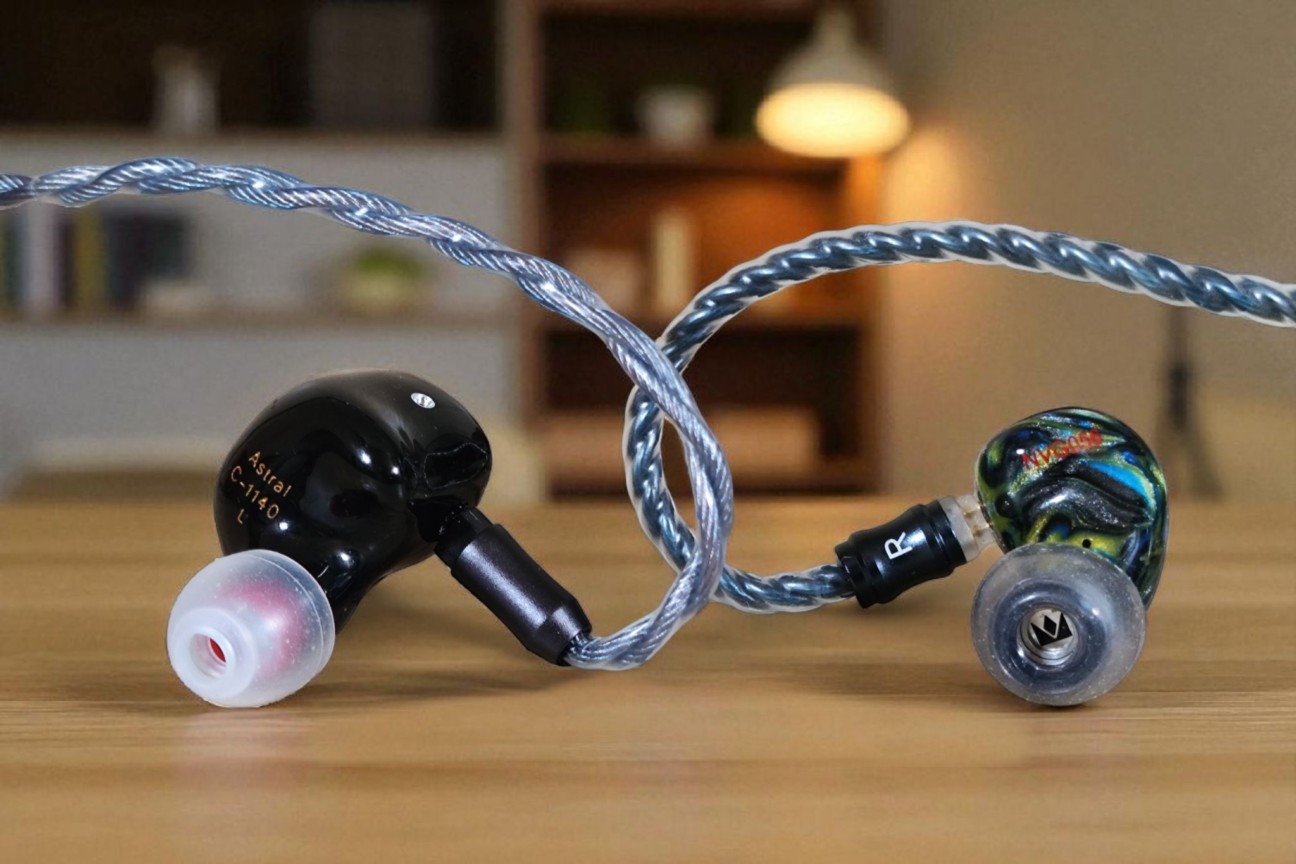
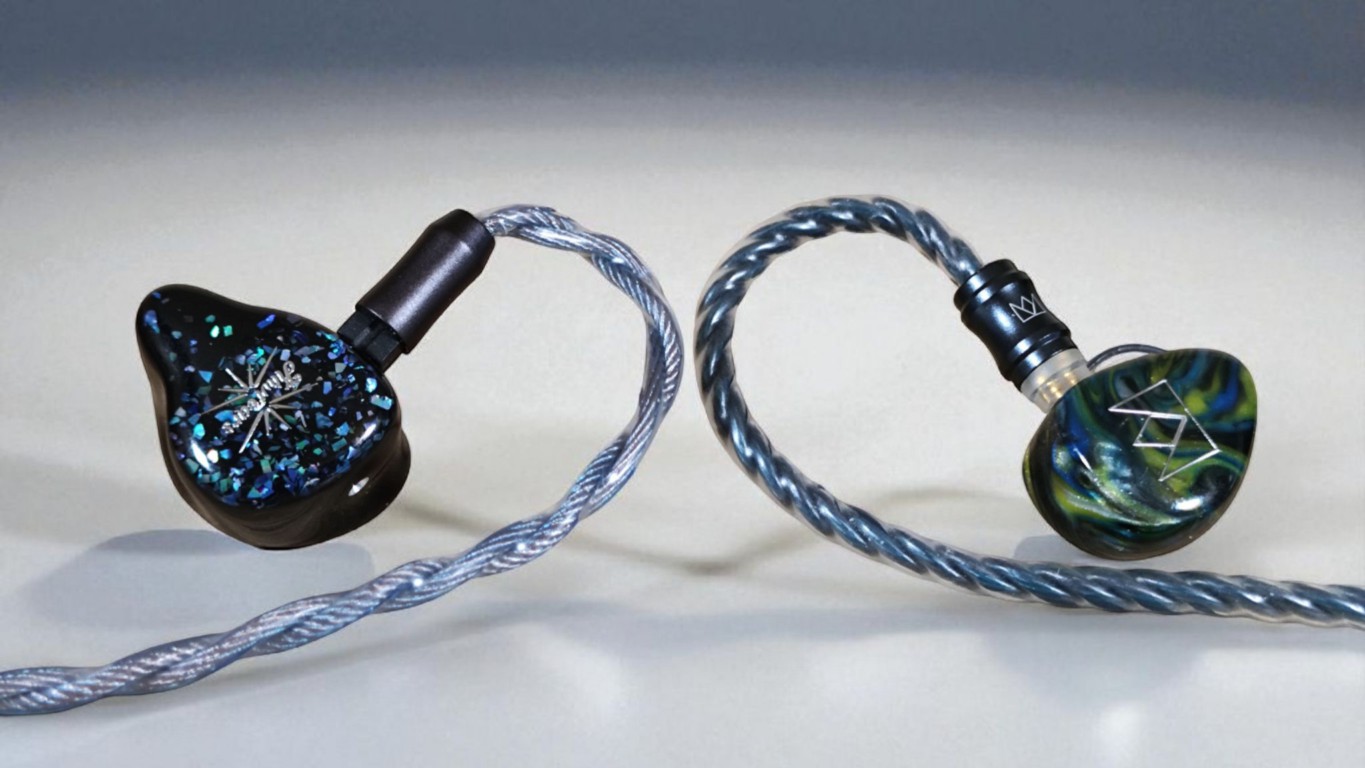
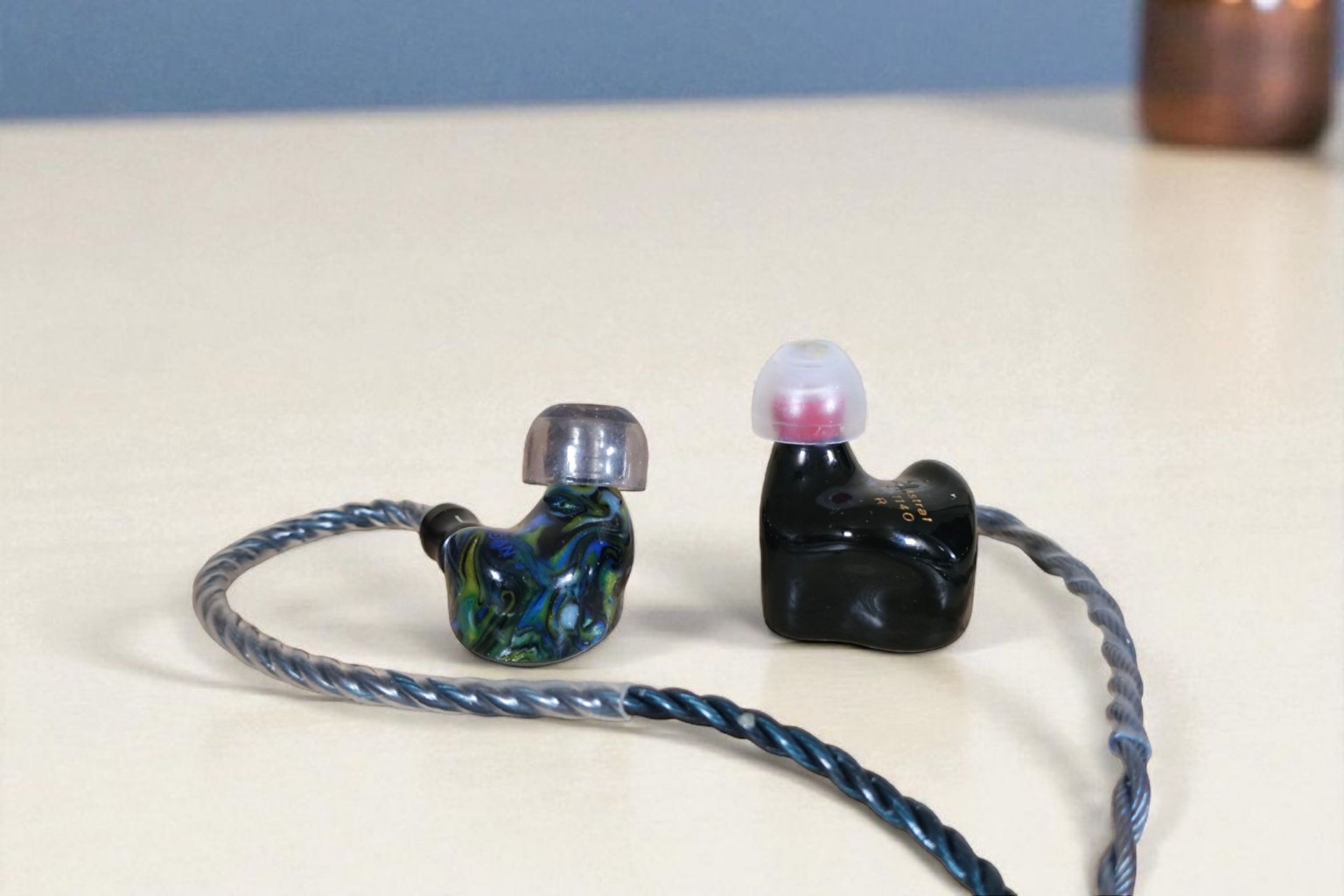
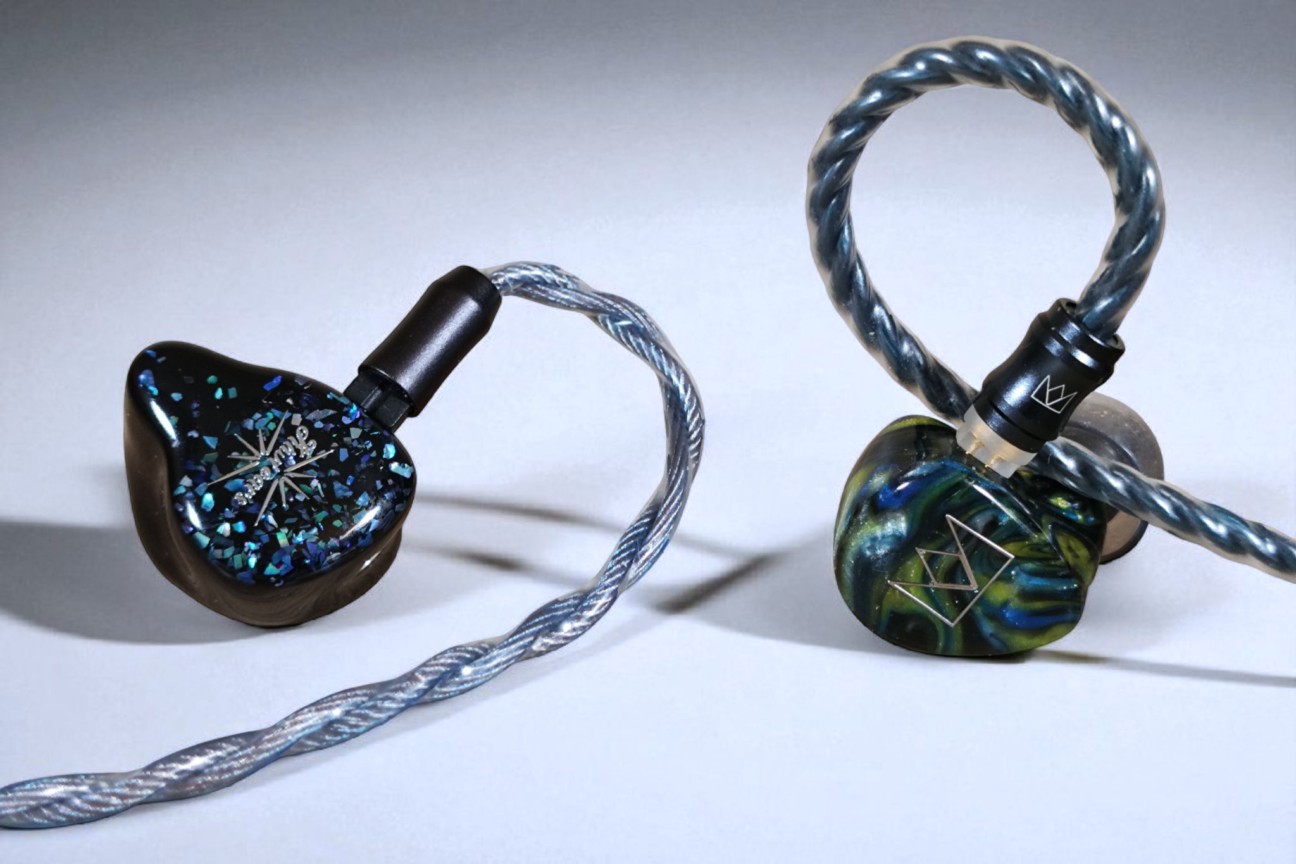
Noble Audio Van Gogh is a hybrid in-ear monitor with one dynamic driver and three balanced armature drivers from Sonion and Knowles. It uses small resin shells. The Van Gogh was released in June 2025 at a price of 699 USD before tax.
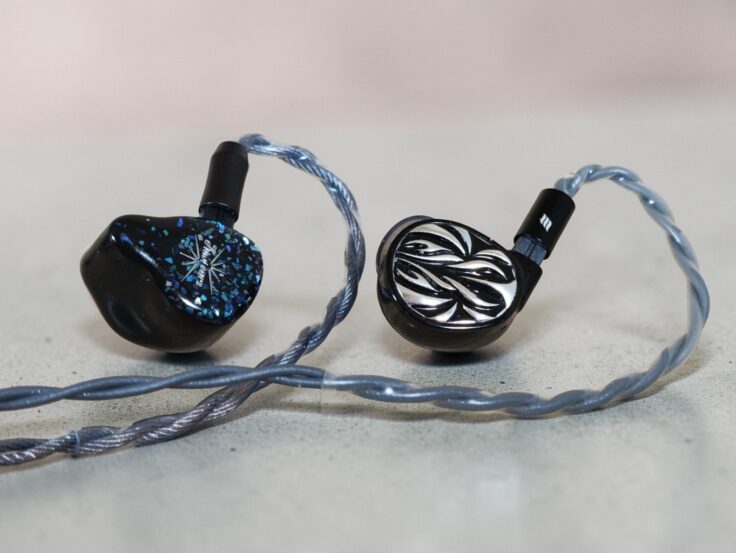
Kiwi Ears Astral is also a hybrid in-ear monitor. It features a 10 mm dynamic driver for the bass and three dual balanced armatures for the rest of the frequency range. The Astral was released earlier in 2025 at a price of 299 USD before tax.
NOBLE AUDIO VAN GOGH SPECIFICATIONS
- Drivers: Dynamic Driver (DD) and Balanced Armatures (BA) hybrid
- Setup: 1 DD bass + 1 Sonion BA for mid + 2 Knowles BA tweeters
- Impedance: 29 Ohms
- Sensitivity: 107dB
- Frequency response: 20Hz–20kHz
- Cable: detachable 8-core OCC copper
- Cable connectors: 2-pin 0.78mm
- Cable termination: 4.4mm balanced plug
Current price and availability:
- Noble Audio: Van Gogh
KIWI EARS ASTRAL SPECIFICATIONS
- Drivers: Dynamic Driver (DD) and Balanced Armatures (BA) hybrid
- Setup: 1 DD bass, 4 BA mids and 2 BA tweeters.
- Impedance 23 Ohms
- Sensitivity,: 105dB
- Cable connector: 0.78mm 2-Pin
- Cable: 1.2 m with 3.5mm & 4.4mm interchangeable jacks
Current price and availability:
- Kiwi Ears: Astral
- Linsoul: Kiwi Astral
- Amazon: Kiwi Astral
COMPARISONS
Note 1: As you will see, I often find the bass of the Van Gogh a bit excessive. Reducing it with EQ makes the sound more balanced and also reveals more detail. That said, I have (as I always do) compared these IEMs without EQ, unless otherwise noted.
Note 2: I have found that the bass on the Van Gogh can vary a bit depending on the amplifier used, with a few keeping the bass tighter than others. You can read more about this in my dedicated Van Gogh review. The Topping A90 used here isn’t one of them. I do, however, use wide-bore AZLA Xelastec tips on the Van Gogh, which typically reduce bass to some extent.
Associated equipment:
- Amplifier: Topping A90
- DAC: RME ADI-2 DAC FS
- Tips: SpinFit CP145 on the Astral, Azla SednaEarFit Xelastec on the Van Gogh
As you will see, I often find the Van Gogh having a bit too much bass presence. Reducing it with EQ is certainly a good option, as it makes the sound more neutral. This would certainly affect my comparison. However, I always compare gear in its stock form, and unless stated otherwise, both are used without EQ.
Fuglerfangeren by Maridalen
This excellent jazz trio piece sounds spacious on the Astral. The saxophone is breathy and natural, with well-balanced bass and good detail.
The Van Gogh offers even better instrument separation and a more refined, less breathy saxophone timbre, although the bass has less detail.
Limit to Your Love by James Blake
Compared to the Van Gogh, the vocals are warmer on the Astral. The bass is more detailed and balanced, while still plentiful. On this track, the Van Gogh has too much bass for me to enjoy without EQ.
Bullet in the Head by Rage Against the Machine
The bass is more prominent with the Van Gogh but not completely overwhelming. Vocals sound a bit thinner yet carry more detail. Instrument separation and overall detail are better on the Van Gogh, with the exception of the bass.
The Tunnel by Tord Gustavsen Trio
The Van Gogh sounds spacious, organic, and snappy, with bass that underpins the music like a red carpet.
The Astral has noticeably less bass, but it also lacks the same dynamics. The background is not as dark, and instrument separation is weaker compared to the Van Gogh.
Rocket Man by Bob James Trio
The Astral is well balanced, with powerful bass and excellent instrument timbre. The Van Gogh has a very dominant bass, but it is otherwise cleaner with better imaging and instrument separation. With EQ, the Van Gogh performs better, but without it, the bass is simply too much for my taste.
Daddy Lessons by Beyonce
The Van Gogh offers excellent instrument separation and a nice, airy timbre, with very powerful bass. The Astral, by comparison, is more midrange-focused and has a much better balanced sound, though it is not as clean.
Eye of the Day by Marta del Grande
They sound quite different. The Van Gogh has much stronger but less textured bass, which makes me prefer the Astral in that regard. However, the Van Gogh is cleaner in the mids and highs.
Don’t Stay by Linkin Park
The track sounds excellent on the Van Gogh. The bass is, for once, just right in quantity, the mids are clear, the highs are clean, and instrument separation is impressive. The Astral is just less engaging, less clean and disappointing in direct comparison.
Sandermosen by Maridalen
Another piece from this fabulous jazz trio. The Astral sounds very nice, but switching to the Van Gogh makes the mids and highs cleaner. The mids are also sweeter and effortless, though slightly more polite. The bass is a bit bold but not overpowering, instead adding extra body to the music in a pleasing way.
WRAPPING IT UP
Sound Signature
These two IEMs differ significantly in tonal balance. When I reviewed the Astral, I described it as slightly bass-heavy but still relatively neutral. The Van Gogh, however, does not aim for neutrality. Most would describe it as U-shaped, with its excessive bass, polite mids, and neutrally prominent highs.
Treble
The treble is where these two are most similar, though the Van Gogh is slightly more pronounced and offers higher resolution.
Midrange
In terms of quantity and presence, the Astral is more neutral and better balanced. In terms of detail and timbre, the Van Gogh performs better.
Bass
As far as I am concerned, the bass is the weak spot of the Van Gogh, unless you are, as mentioned, very lucky with the amplifier pairing or use EQ. The bass is very powerful but lacks detail and refinement compared to the much better-balanced Astral. I would love to hear the bass of the Astral combined with the mids and highs of the Van Gogh.
Soundstage and Imaging
On its own, the Astral has a very nice soundstage with good imaging. Compared directly to the Van Gogh, however, the Van Gogh clearly offers better instrument separation, a darker background, and more precise imaging, all of which contribute to the illusion of a larger “listening room.”
Detail, Dynamics, and Timbre
In the midrange and treble, the Van Gogh clearly offers better detail and more dynamic contrast. In the bass, however, it sounds one-dimensional, and even with EQ, it lacks the refinement and texture that the Astral provides in the lower frequencies.
The timbre is very pleasing throughout on the Astral, with great bass, mids, and highs, and a very coherent presentation. In direct comparison, however, the Van Gogh delivers sweeter and more refined mids that often feel more natural, while the treble is more refined, liquid, and lifelike. Bass timbre, however, is not the Van Gogh’s strong suit, as all bass notes tend to sound similar unless EQ is applied.
CONCLUSION
The Van Gogh and Astral offer distinctly different experiences. The Astral is well-balanced, coherent, and nicely detailed across the spectrum, with a natural timbre and controlled bass. The Van Gogh excels in mids and highs, offering cleaner, sweeter, and more refined instrument presentation, along with superior instrument separation and imaging, but its powerful bass can feel a bit one-dimensional – unless you get a great amplifier match and or/use EQ.
Thanks for reading. You can support us by purchasing anything using any of our affiliate links.
- Noble Audio: Van Gogh
- Kiwi Ears: Astral
- Linsoul: Kiwi Astral
- Amazon: Kiwi Astral
Any purchase you make on Amazon or Linsoul with any of our affiliate links will give us a small provision at no cost to you.
We only get a provision for items that are not returned, so there’s no incentive for us to recommend something that’s not good.
Linsoul : Headphones, Earbuds, Wireless Earbuds, Desktop DAC/AMP, Portable DAC/AMP, Digital Audio Players,
Amazon: Headphones, IEMs, Headphone Amplifiers, Home Audio or Anything else.
.
If you enjoyed this article or other content on The Headphoneer, you might consider leaving a small donation to keep this website up and running. No donation is too small. Thanks for supporting us!

If you like our work please follow us on Instagram, Facebook and Twitter , it will help us grow. Sharing is caring 🙂