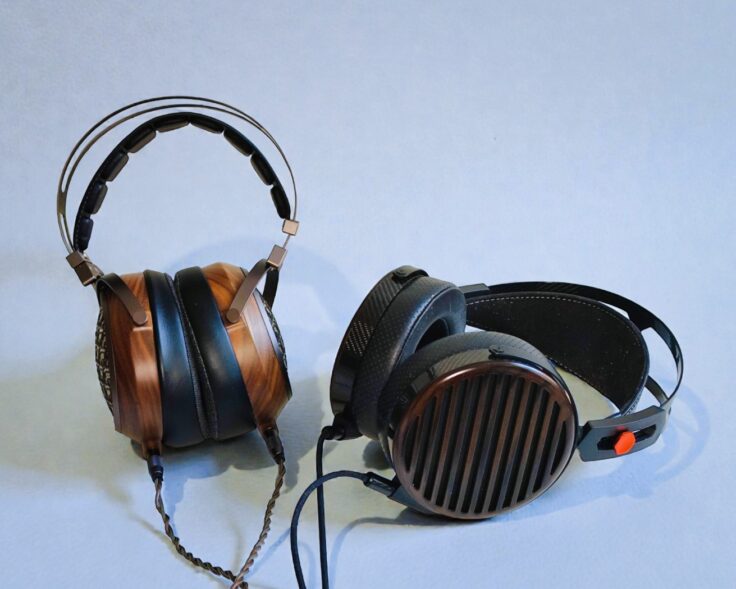


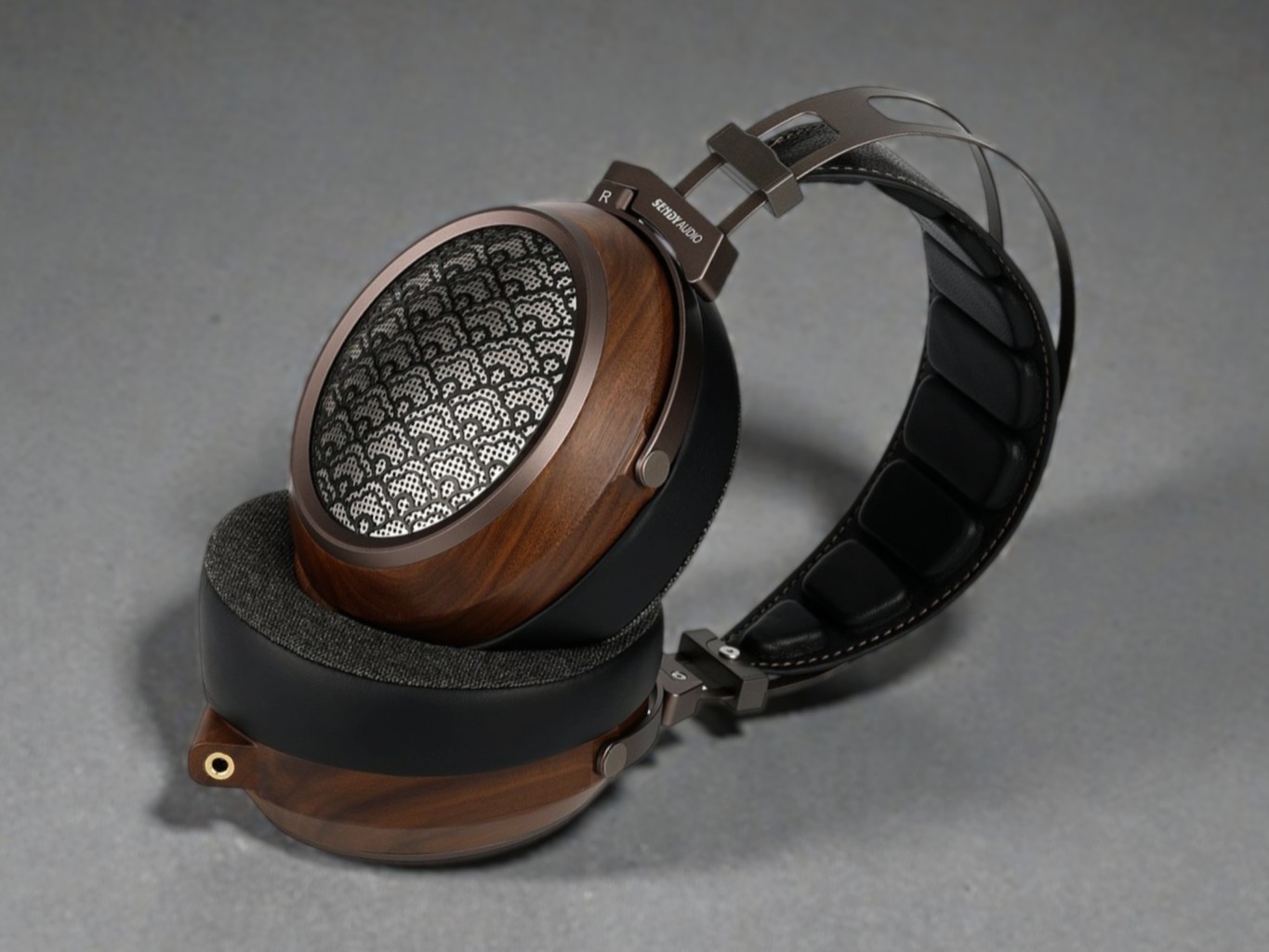
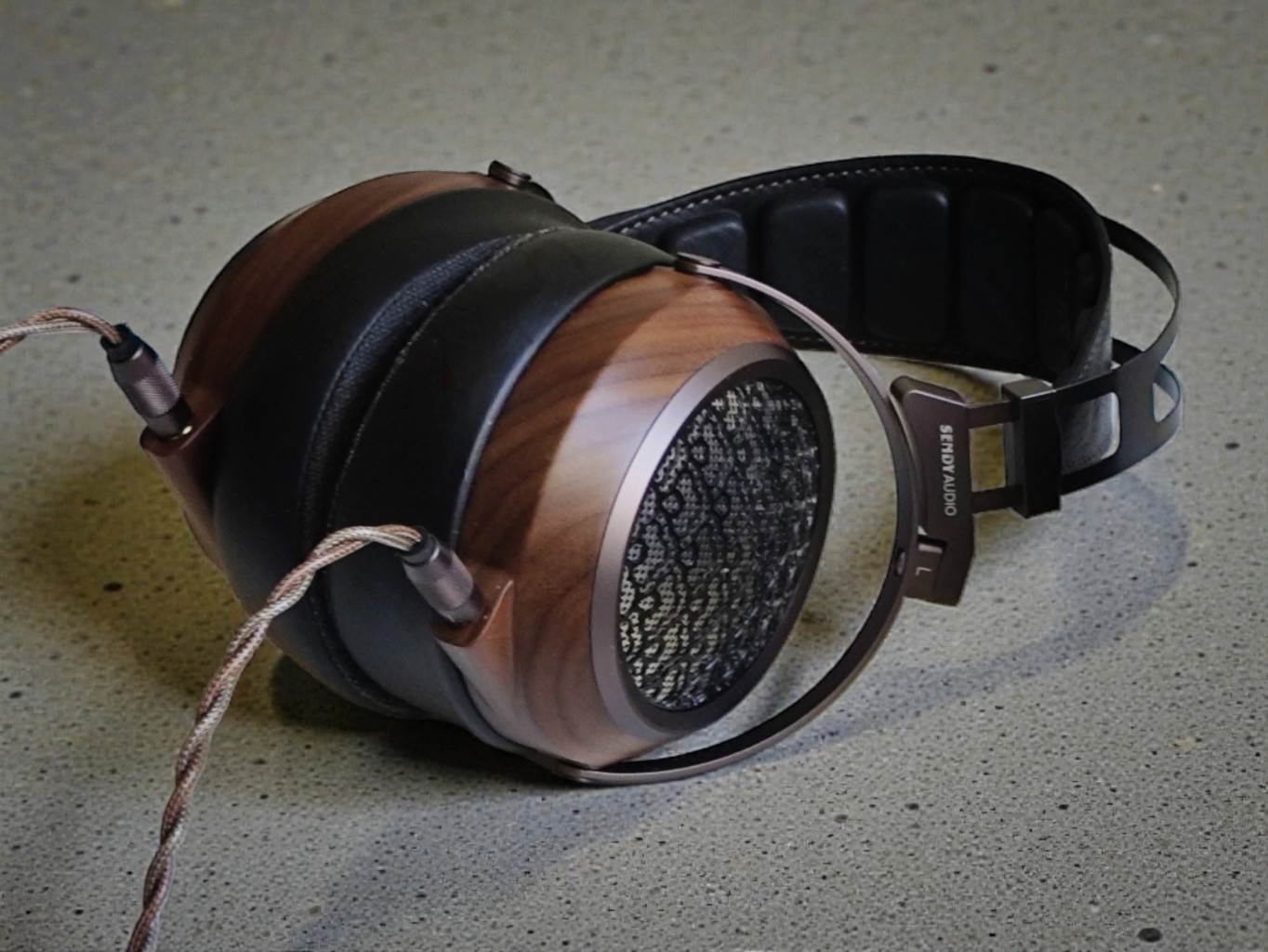
The Egret is the current flagship headphone of Sendy Audio, Sivga’s high-end sub-brand. It’s a planar magnetic full-size headphone that uses a 98 x 84 mm planar driver. The Egret is beautifully built, and the open-back wooden cups use black American walnut, which is known for its high density.
MAIN TAKEAWAY
- Stunning build quality
- Bold and energetic sound
- Responds well to pad swapping
As is typical for modern, especially high-end planars, the Egret uses a very thin diaphragm, in this case only 0.8 micrometers, which equals 800 nanometers. One nanometer is about 4-5 atoms thick depending on the atom type.
Several manufacturers of modern planar magnetic drivers boast “nanometer thickness diaphragms,” meaning below 1 micrometer (like the Egret). A thinner diaphragm will in theory lead to better potential for detail retrieval because there is less mass, but a thin diaphragm is far from the only factor involved and is no guarantee for success.
The diaphragm on a planar magnetic headphone must be imprinted with metal tracings to work, and there are several methods used. Sendy uses electron beam evaporation deposition to “print” ultra-thin aluminum circuits onto the nano-scale diaphragm.
ABOUT SENDY AUDIO
Sendy Audio is a sub-brand of the Chinese audio company Sivga (link to store), focusing on more premium offerings. The first Aiva was released in 2019 and Sendy’s current models are the Aiva 2, the Egret, the Apollo, and the Peacock, all planar magnetic headphones with seemingly great build quality and wooden ear cups. They also offer the Kylin DAC/AMP.
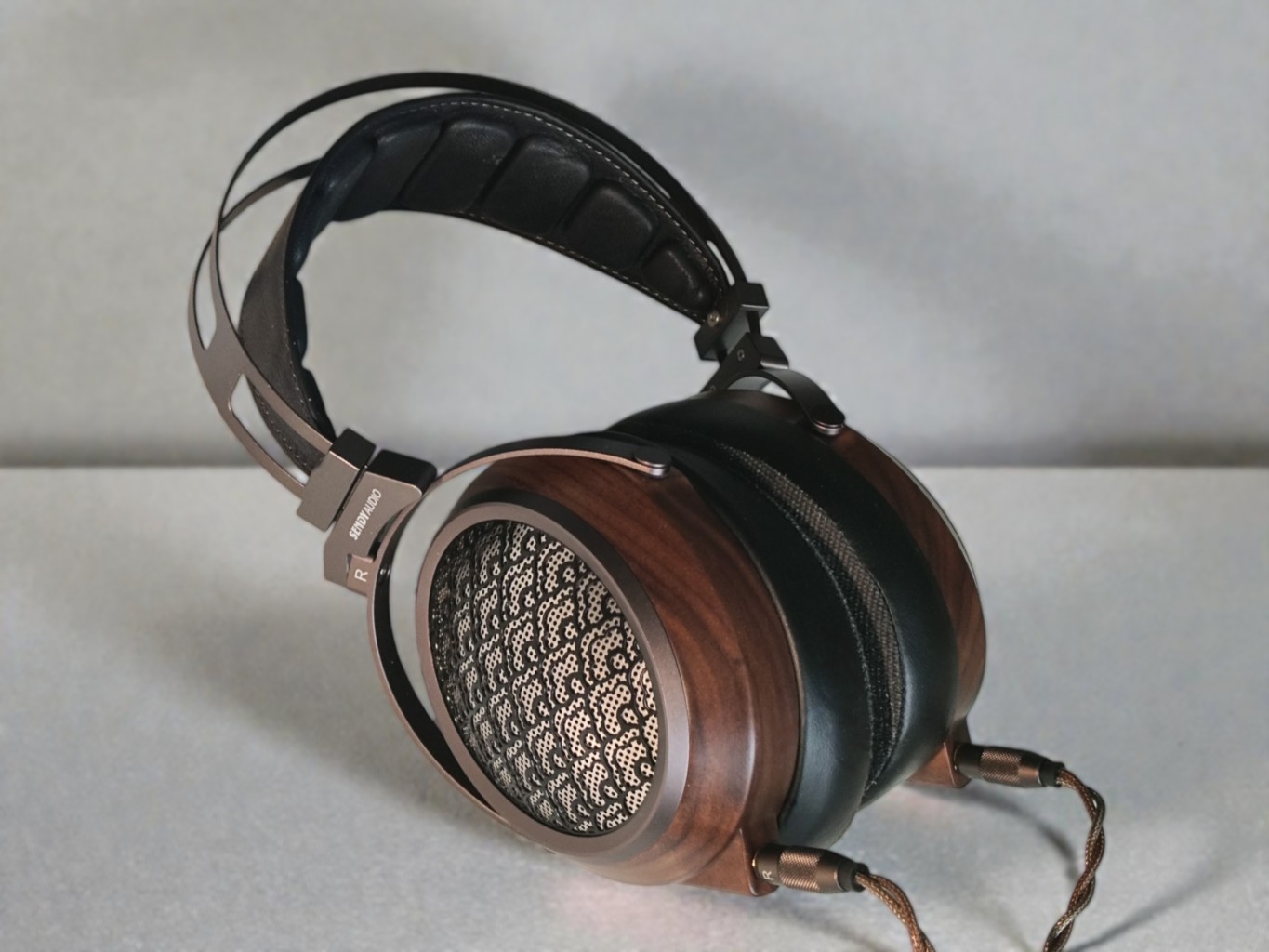
SENDY EGRET SPECIFICATIONS
- Open-back full-size headphones.
- Driver: Planar Magnetic .
- Driver dimensions: 98 x 84 mm.
- Frequency response: 20Hz to 40kHz.
- Sensitivity: 95dB (+/-3dB).
- Impedance: 24 Ohms
- Cable: Detachable silver-plated copper
- Cable connectors: dual 3.5mm
- Cable termination: 4.4mm – Adapters to 3.5 and 6.35 mm jacks included
- High density black American walnut housing
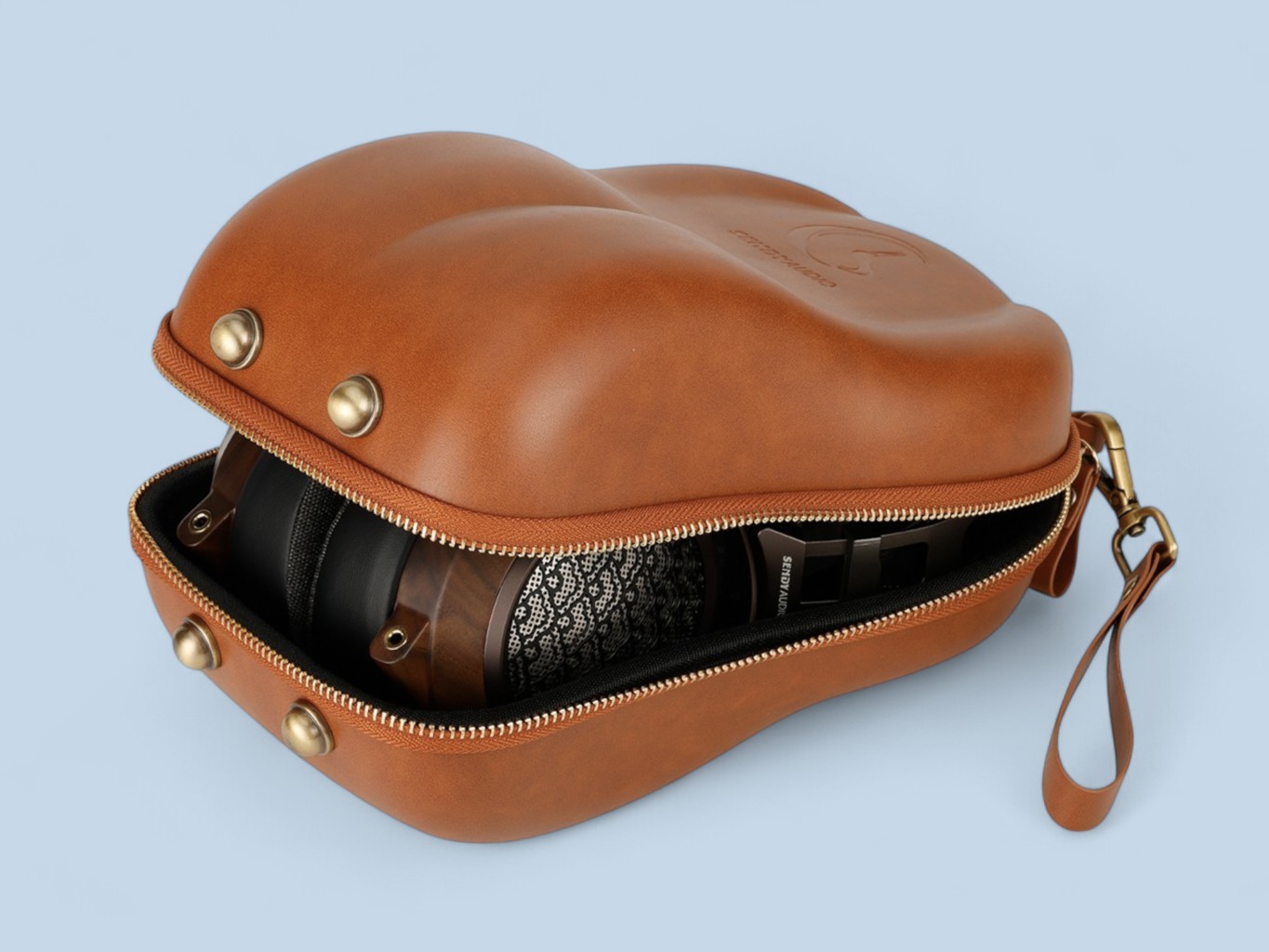
- Pleather transport case included
- Weight: 443 grams.
Current price and availability:
- AliExpress: Sendy Egret

BUILD AND COMFORT
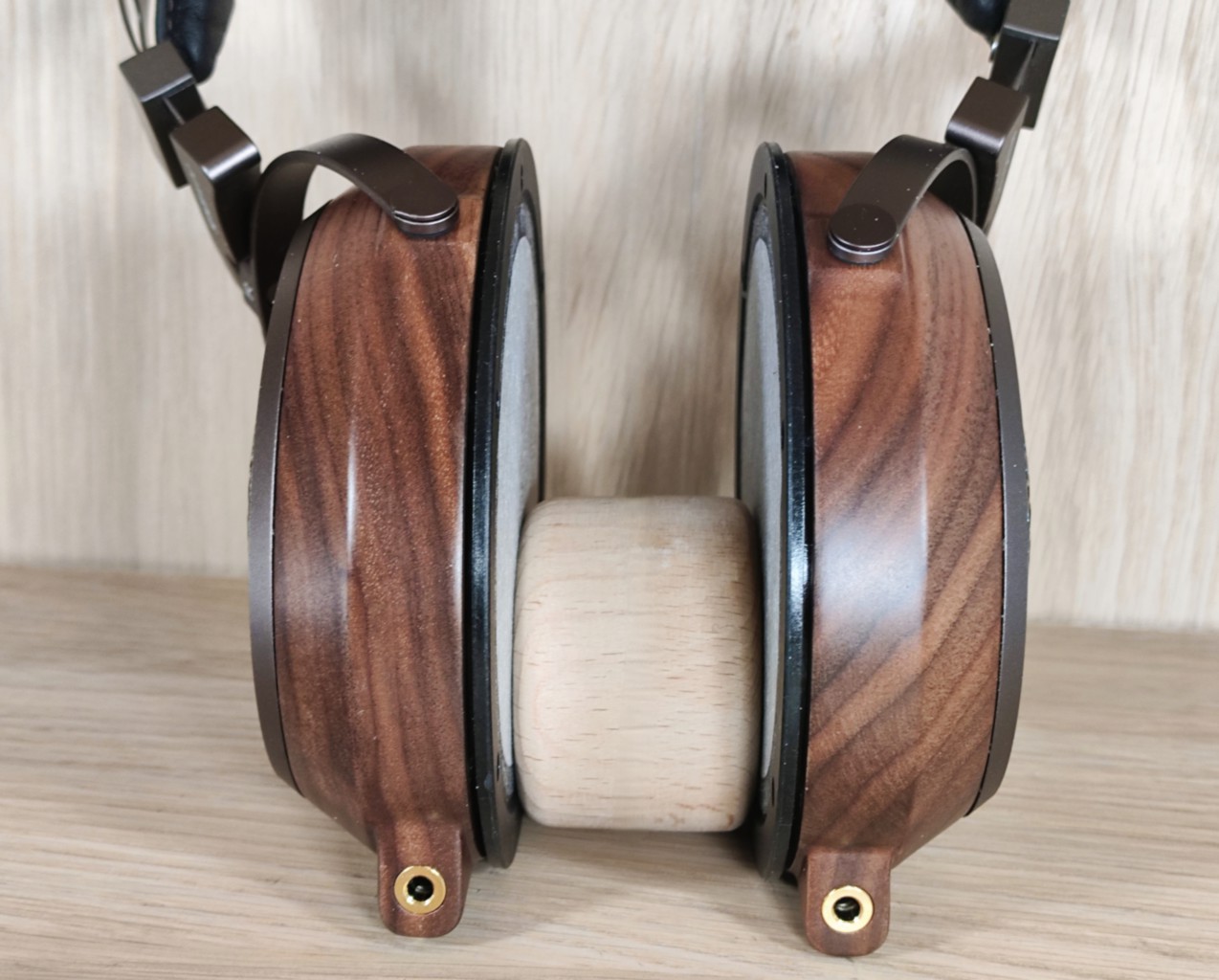
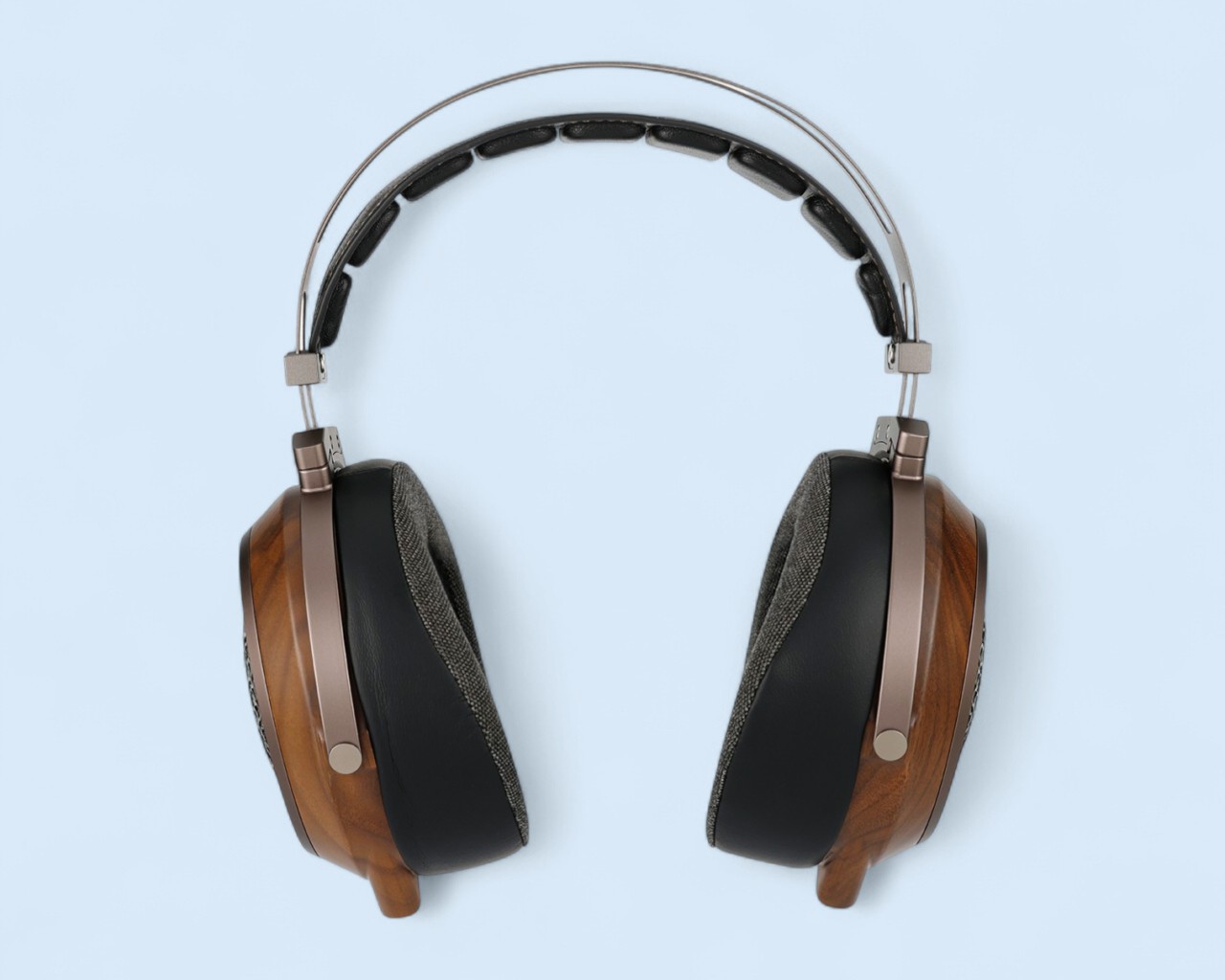
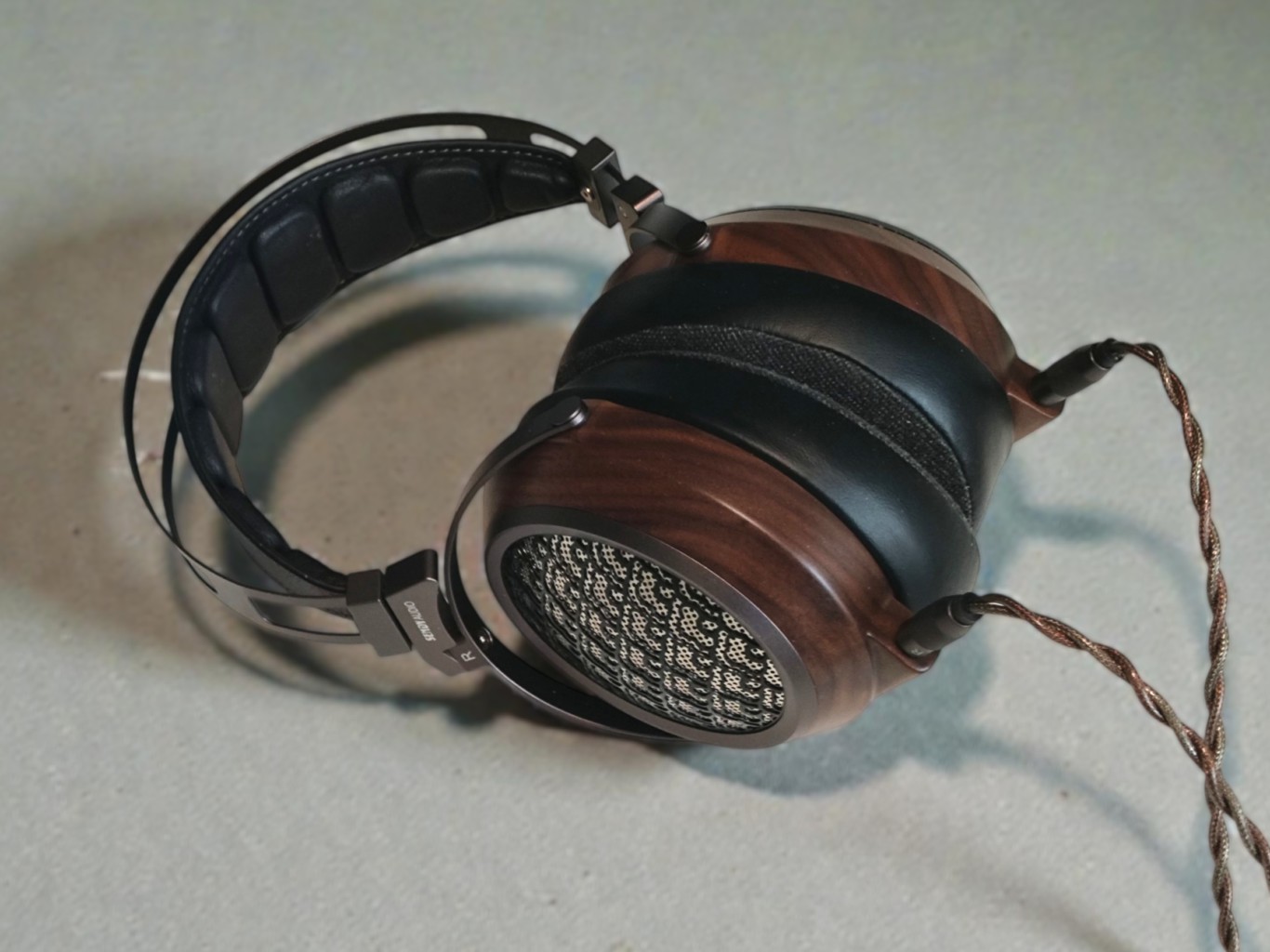
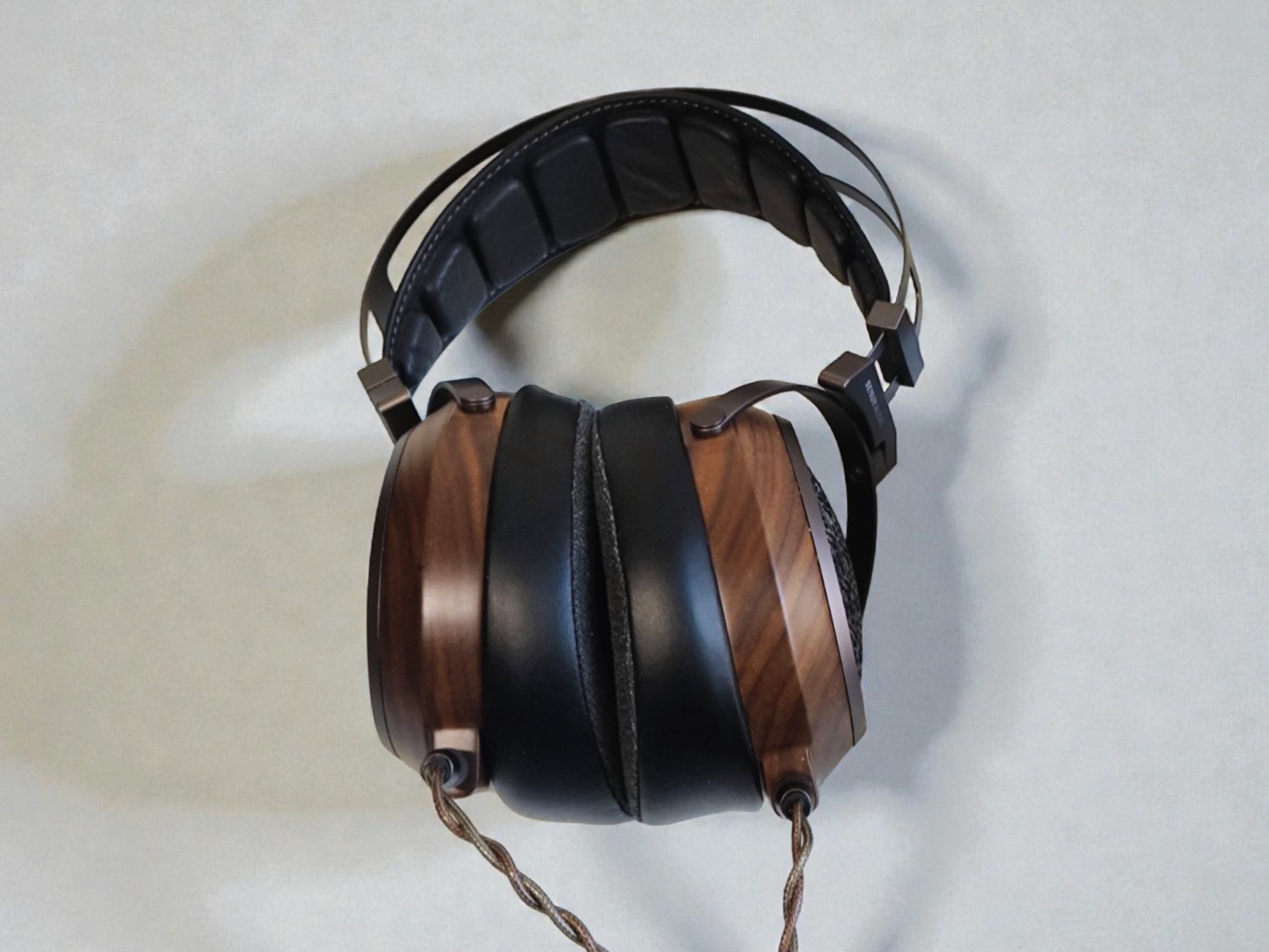
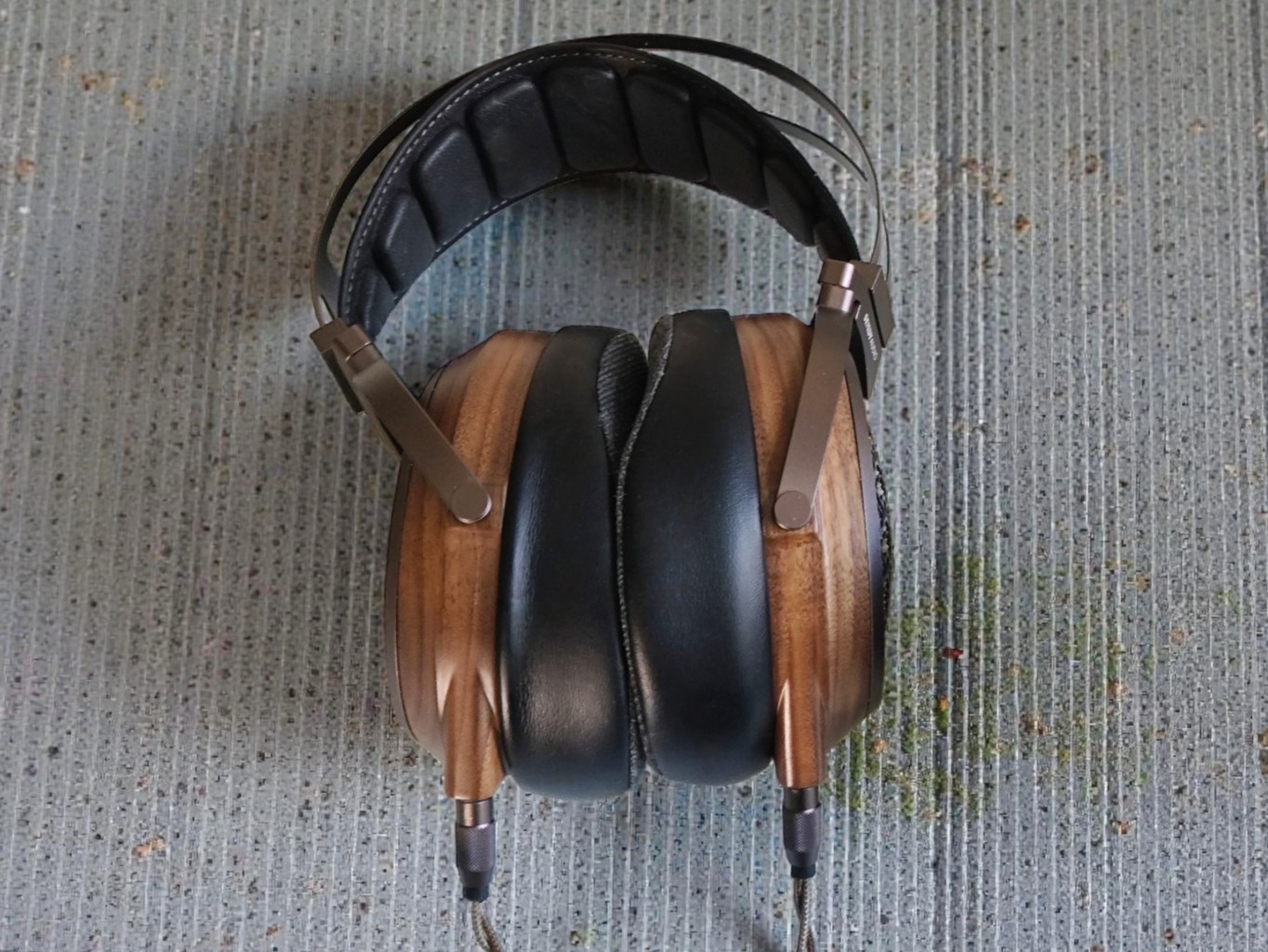
The Egret features excellent craftsmanship. It is a large headphone with wooden cups made from black American walnut, shaped in an oval form. The footprint is not particularly large, but the cups are very thick. I find the Egret very comfortable, though it may not suit people with larger heads as the headband might be a bit narrow in combination with the thick cups.
However, I am really fond of headband design, which is shared by many other headphones from Sivga and Sendy. It is arguably the best headband mechanism I have come across in my 15 years of experience with high-end headphones.
COVERED DRIVERS
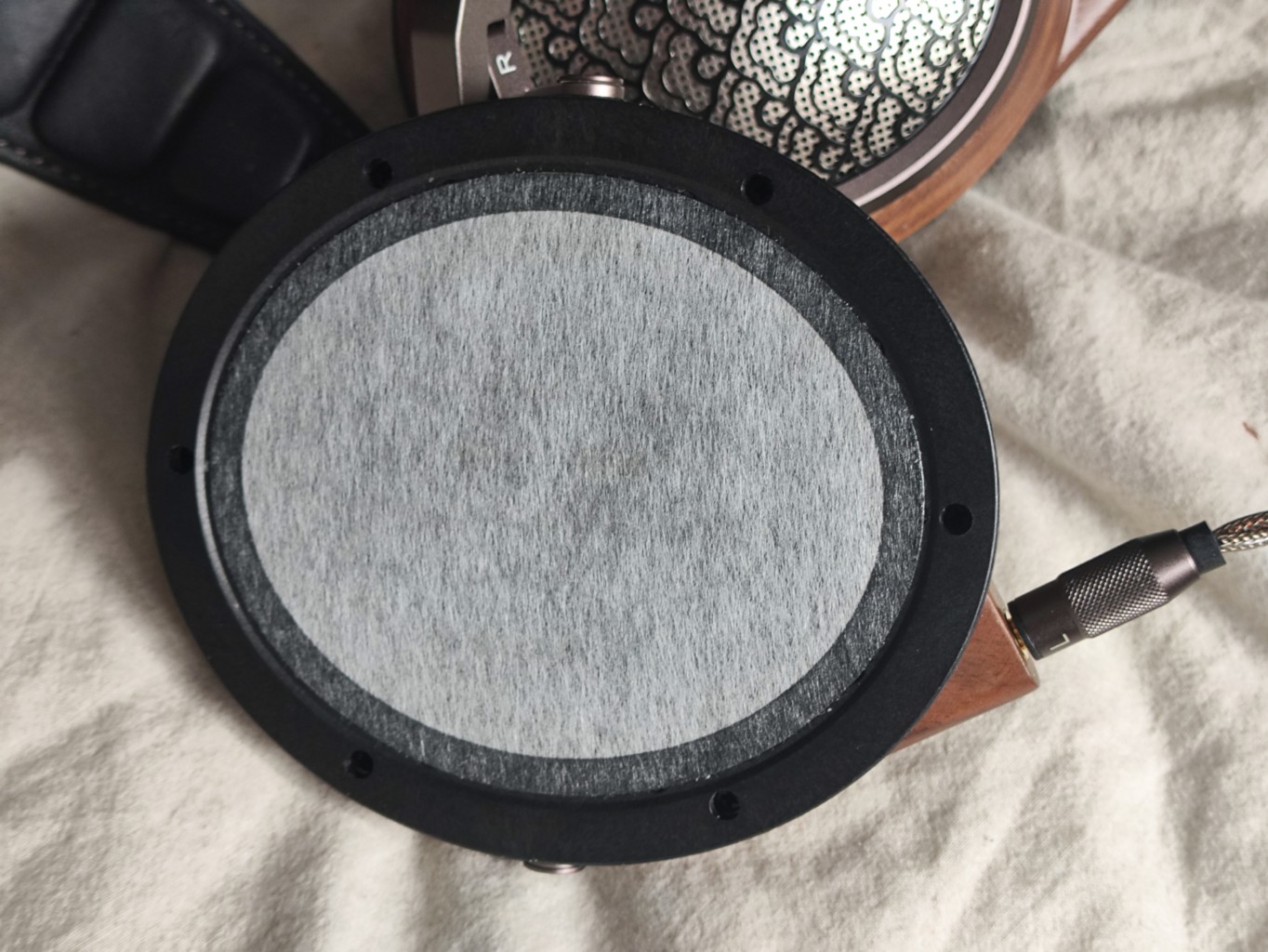
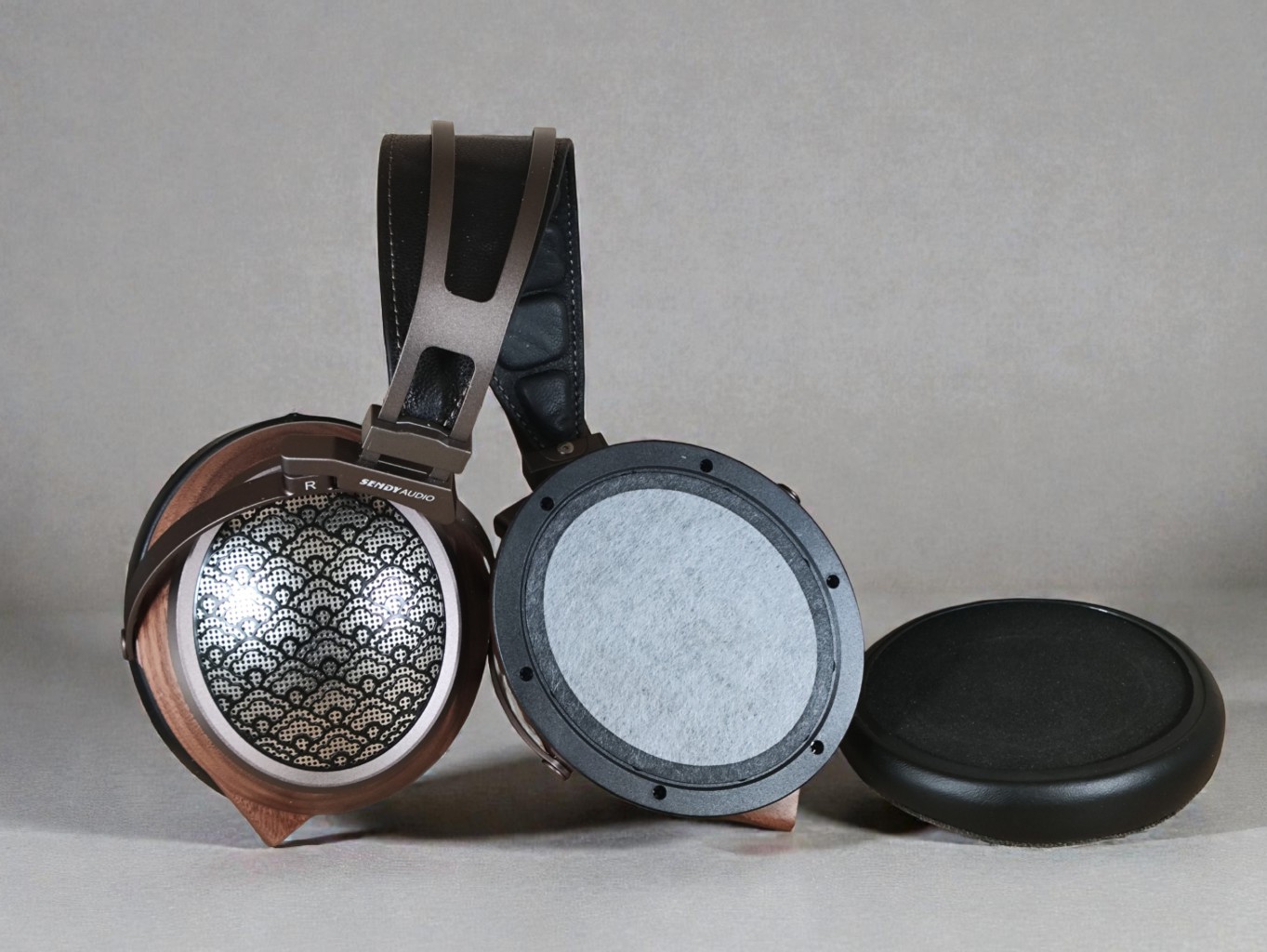
An interesting aspect of the Egret is that Sendy Audio has chosen to protect the driver very thoroughly, going in the opposite direction of Hifiman’s unveiled series. There is a visible metal mesh on the outside over the cups, probably with some material underneath, but even more interesting is the paper-like tissue covering the drivers, sitting tightly in front of them.
This is not the first driver I have seen covered in this way. The legendary HD800/HD800S features a very tightly woven plastic mesh in front of its driver. It would be interesting to hear how the Egret sounds with the driver bare, but that would require an irreversible modification that I am not willing to make on an already great sounding headphone.
EAR PADS
The ear pads are somewhat unique. The Egret appears to use the same pads as the Sivga Peng and Sendy Aiva 2, among others. These pads are not flat against the face (which rests on your head) but are shaped to follow the contour of your skull. This works very well for some people and less so for others, though for me it works well.
The pads feature textile on the face which touches your skin, and pleather on the inside and outside. The stock pads measure 110mm tall and 95mm wide and attach via the standard lip-and-groove system widely used in headphones.
SWAPPING/REPLACING PADS ON THE SENDY EGRET
Because the attachment design is so universal, you can use third-party oval or circular-shaped ear pads with a standard lip-and-groove attachment style. The stock pads sit quite snugly, but I managed to remove them easily by grabbing the inside of the pad and pulling outward, gently but firmly. The groove is a bit narrow and there is no guide notch, so attaching new pads can be a little fiddly. That said, I managed to fit a pair of third-party pads without much trouble, and fortunately it is not something you need to do every day.
THIRD PARTY PADS ON THE EGRET
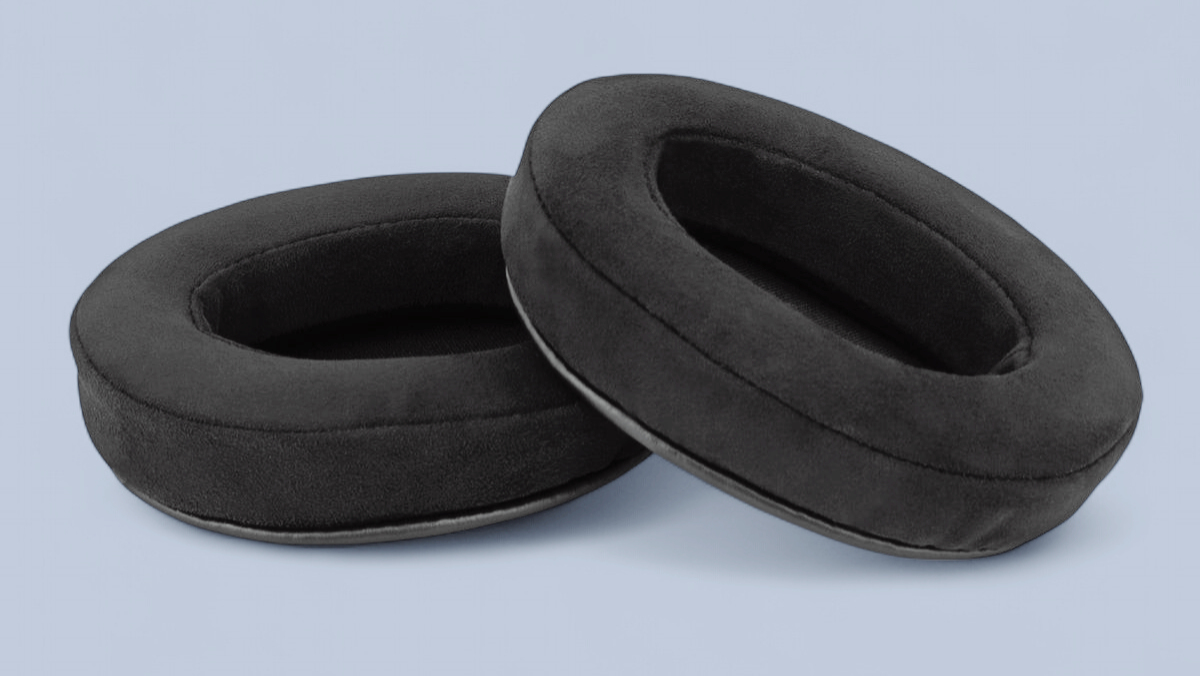
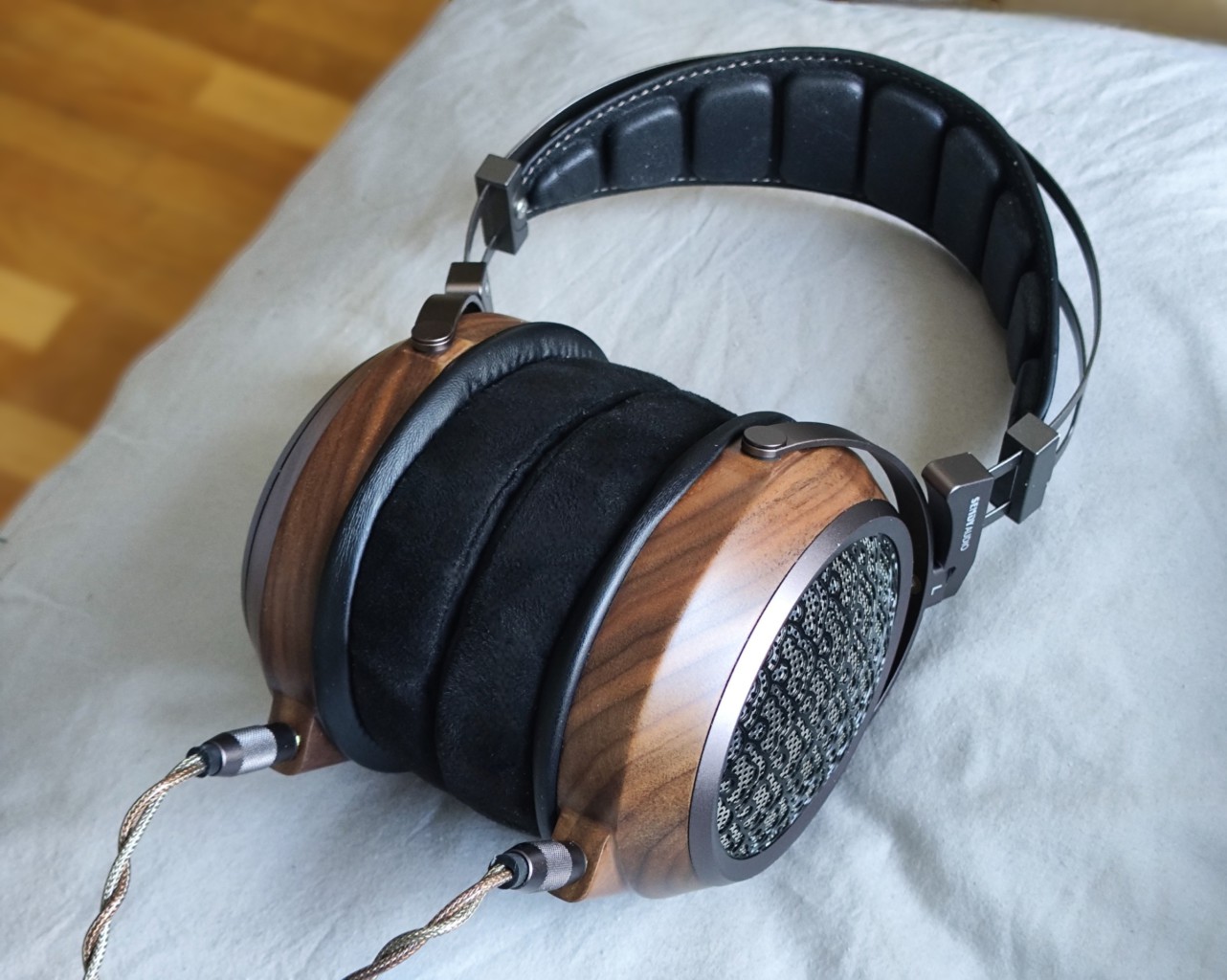
Swapping pads can actually have a positive effect on the sound. I used what might be my general favourite pads, the Brainwavz Micro Suedes. They are both comfortable and tend to sound great on every headphone I have tried them on. I believe the reason they perform so well is that the specific combination of fabric and foam is excellent at absorbing rather than reflecting sound across the frequency spectrum, allowing the driver to do its job with minimal acoustic distortion and reflections.
Brainwavz Micro Suede Pads:
As you will see in my listening impressions below, I encountered some issues with the Egret becoming a bit sharp on certain hard piano notes and specific percussive elements, and some vocals could sound overly thick and dense. These issues are not present with the Micro Suede pads.
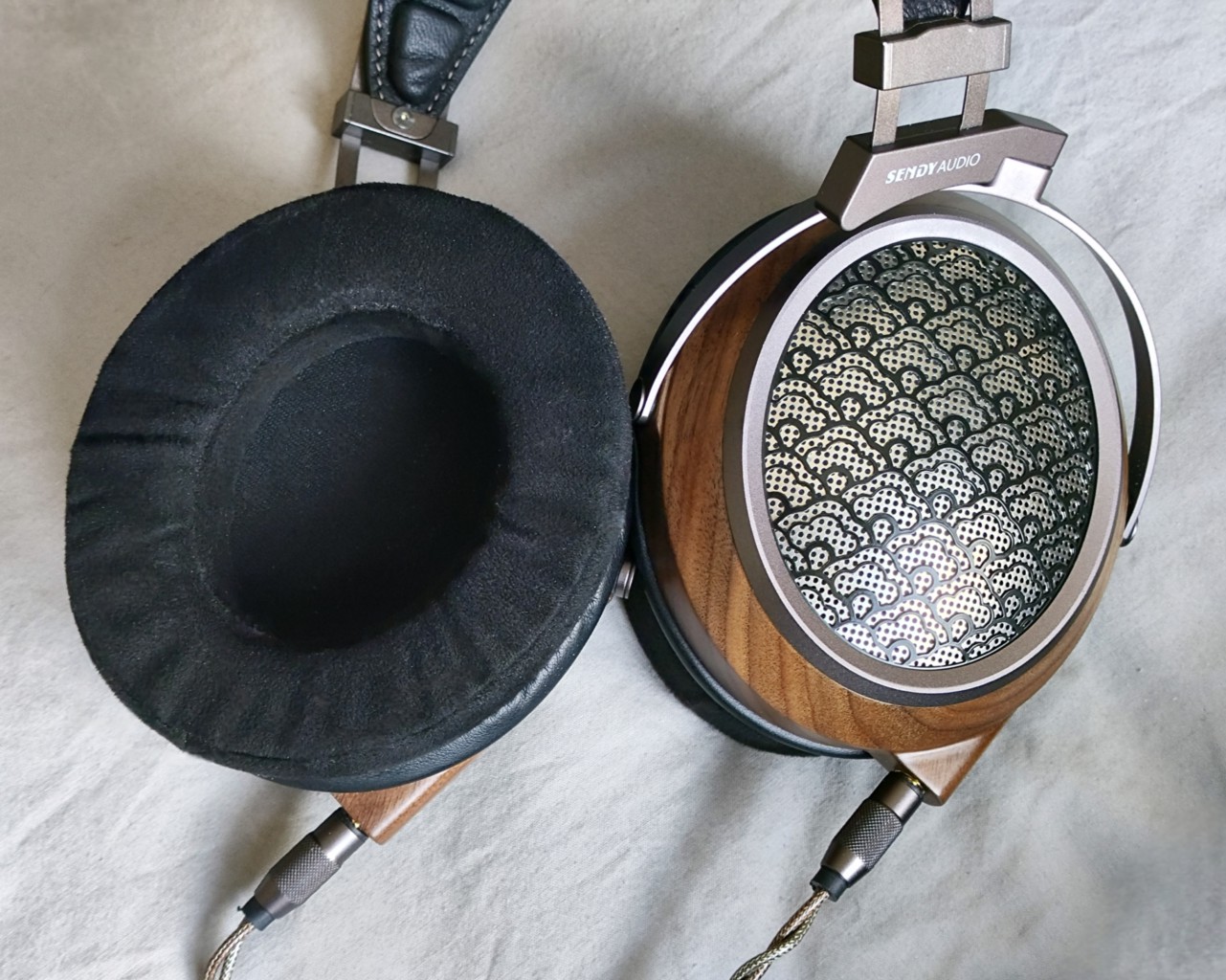
I also find the Egret to have a relatively narrow soundstage, though it opens up noticeably with the Micro Suede pads. This makes me wonder whether Sendy should have opted for a denser, less reflective fabric on the inside of the stock pads rather than pleather.
The oval Micro Suede pads work well, though they are slightly smaller than the Egret cups. They fit, but it is a tight stretch. I also tried the circular XL version, which is larger but obviously circular, so you are left choosing between pads that are slightly too small or slightly too large. I am fine with the ovals, but others might find the XL more comfortable. Soundwise, they’re very similar.
AMPLIFICATION
I found the Egret to be more responsive to different amplifiers than many other headphones. I was particularly impressed by the pairing with the Woo Audio WA22. The WA22 is a transformer-coupled, fully balanced tube amplifier that has long been considered a reference in the headphone community. It tends to add a slight warmth to the sound as well as excellent detail and imaging. It is quite powerful, though not an absolute powerhouse.
The solid-state Bryston BHA-1 was also an excellent pairing, sounding relatively similar to the WA22. The generally excellent Violectric DHA-226/VHA-222, on the other hand, can sound a bit dry with the Egret, though it does offer a larger soundstage than many other amplifiers.
My go-to amplifier for comparisons is the Topping A90. It is neutral, never too dry and never too warm, and has never failed to deliver a very respectable performance, though some amplifiers can sound even better.
The Topping A90 pairs very well with the Egret, and I suspect this combination is more representative of what most people will be using than the more expensive options mentioned above.
LISTENING IMPRESSIONS
Related equipment:
- Amplifier: Bryston BHA-1
- DAC: RME ADI-2 DAC FS
Rambling Man by Laura Marling
Vocals are upfront, warm and natural. The soundstage is intimate, but the detail level is high. The overall delivery is very nicely balanced, neither bassy nor bright. Busy passages are handled well, where some headphones can start to sound congested.
Sunrise by Norah Jones
The bass is good and well balanced, without the excessive power that can be found in many headphones. Vocals are upfront and very present, with a pleasing warmth and a nicely textured raspiness.
In the Mountains by Espen Eriksen Trio
The bass on this track can often come across as overly strong on many headphones, but the Egret remains neutral in that regard. There is plenty of detail, and the soundstage feels open yet intimate.
Angel by Massive Attack
Again, the bass quality is excellent and the quantity is very nicely balanced. Vocals are present and nuanced.
Fantasy by The XX
This track features a very nice and challenging bassline, which the Egret handles well. There is no distortion, and the dreamy guitar playing over the bass is rendered with plenty of detail.
Limit to Your Love by James Blake
This is another track with a very challenging bass. The vocals sound clear and textured, conveying emotion with a suitable dose of warmth. The bass sounds exactly as it should, the percussion is very snappy, and there is a good sense of space, especially openness.
Bullet in the Head by Rage Against the Machine
The Egret is snappy and detailed, but lacks the extra coloration I feel this track needs to truly shine. Perhaps the Egret is simply too neutral for this kind of music. It is not bad by any means, just not enough to get my head banging.
The Tunnel by Tord Gustavsen Trio
Moving over to some understated jazz, the Egret sounds wonderful. The percussion is very snappy and detailed, and the piano and bass blend together beautifully. It makes you just want to lean back and enjoy the music.
Rocket Man by Bob James Trio
Another jazz trio that sounds very well balanced, detailed and snappy in a thoroughly musical way.
The Poet by Julia Hülsmann Trio
More jazz. The Egret sounds exquisite, with the percussion especially snappy while the other instruments are very nicely balanced, blending together into a musical whole.
Aura by Bicep
This electronic track offers fat, thick bass and snappy percussion. The Egret delivers. Instrument separation is good, though the soundstage remains intimate.
As Before by Olga Konkova
Even though it is a neutral headphone, the cajon drum has a nice but polite punch. Vocals are smooth, textured and nicely present.
The piano is, however, on the crisper side, surprisingly sharp but not fully distorted. When listening to this track after swapping the pads to Micro Suede pads as mentioned earlier, the piano sharpness is no longer an issue, which leads me to conclude that what I hear is mainly bad reflections inside the pad/cup, dependent on the pad material and probably my own ear shape.
It Could Be Sweet by Portishead
This electronic-based track sounds balanced, with textured bass and delicate vocals free of sibilance, which can be an issue with other headphones.
Escape Route by Boris Blank
Another electronic track. It sounds dynamic and energetic, with the trumpet crisp but not overly sharp. The overall delivery is very organic yet balanced.
Spontaneous Compositorius by Thomas Agergard
The saxophone is present and full yet textured, and the bass is nicely balanced as always.
The bright percussion, however, has a sharp zing to it with the stock pads. After swapping to the previously mentioned Micro Suede pads, the treble improves noticeably, sounding cleaner and smoother.
II. Allegro, Sonata in A Minor de la Guerre by Sophie de Bardonnèche
It sounds natural and balanced, with some crispness and texture. Each instrument is easy to follow, the layering is well defined, and the timbral quality of the instruments is good.
Young Vivaldi by Modo Antiquo
Again the strings are crisp and textured, not smooth and silky but rather forward in attack with some edginess and bite. I would not call it shouty, but at higher volumes it borders on being unpleasant.
Changing to the Micro Suede pads helps a great deal, however. The strings remain crisp and energetic, but the tendency toward shoutiness and unpleasantness is gone, and the timbre feels far more natural.
Moo)n by Lindstrøm
Lindstrøm makes excellent electronica, and this track sounds very nice on the Egret. The bass is very punchy, the percussion snappy, and the overall presentation nicely balanced and very entertaining. It also sounds relatively spacious with good imaging.
Eye of the Day by Marta del Grandi
Instrument separation and detail are good. The bass, percussion, and guitar are punchy and snappy.
The vocals are very warm and upfront, intimate and quite intense. With the Micro Suede pads, the vocals remain warm but feel better balanced and not as intense.
WRAPPING IT UP
Sound Signature
The sound signature is relatively neutral, but with some compression and coloration, often in a positive sense. The bass presence is sufficient without being excessive, the midrange is upfront and definitely not recessed. The treble is crisp and clear, but can lean toward being a touch too crisp at times.
Switching to the previously mentioned Micro Suede pads, however, changes the sound for the better for me, taking the edge off the occasionally bothersome crispness and delivering a more balanced and neutral sound with better detail.
Treble
With the stock pads, the treble feels a bit uneven and can sometimes be more aggressive than I would prefer, though mostly it is nicely detailed, adding a slightly crisp touch to the overall delivery.
After changing to the Micro Suede pads, however, this never proved to be an issue, which leads me to assume it is a matter of reflections inside the cup.
Midrange
The midrange is mostly quite warm but also textured and detailed, and can often feel a bit thick and bold.
Again, after swapping the pads, the midrange cleans up and becomes more neutral – though remains warm and upfront.
Bass
The bass is of neutral quantity and comes across as detailed and textured, neither dry nor thick, but with a nice warmth.
Soundstage and Imaging
The soundstage is open but also quite, and sometimes very, intimate. To put it another way, to me the Egret sounds like you are standing in front of a small outdoor stage, where other headphones can sound like you are listening to a large stage indoors.
Instrument separation is good, but the limited soundstage size means imaging can often feel quite narrow. The Egret is far from offering a Sennheiser HD800 type of experience. It is more akin to the HD650, placing you in the middle of the band on stage, with the music residing mostly inside your head. This is neither objectively good nor bad, it is simply what it is. It comes with a sound signature that has many positive qualities, and a more spacious soundstage inevitably requires trade-offs.
That said, after changing the pads, the imaging also improved and the stage became larger – again likely due to fewer reflections inside the cups.
Detail, Dynamics, and Timbre
The detail level is very good, as are the dynamics.
When it comes to instrument timbre, the Egret generally does a very good job, though occasionally it can sound overly crisp, while at other times it can sound overly warm and bold.
No headphone gets this perfectly right, and the amplifier and source can play an important role. I did find the Egret to perform better with certain amplifiers than others, typically those with a slight warmth to them. Amplifier matching is always a complex matter, as there are many factors at play.
That said, with regards to detail retrieval and especially timbre, changing the pads improved the performance for me, and again I attribute this to fewer reflections with the Micro Suede pads.
COMPARISONS
I have spent some time comparing the Egret to some relevant headphones in the same price class, and have written separate comparison reviews for each, which you will find linked below.
For these comparisons I used the Egret with its stock pads only.
Associated equipment:
- Amplifier: Topping A90
- DAC: RME ADI-2 DAC FS
FiiO FT7 vs SENDY EGRET
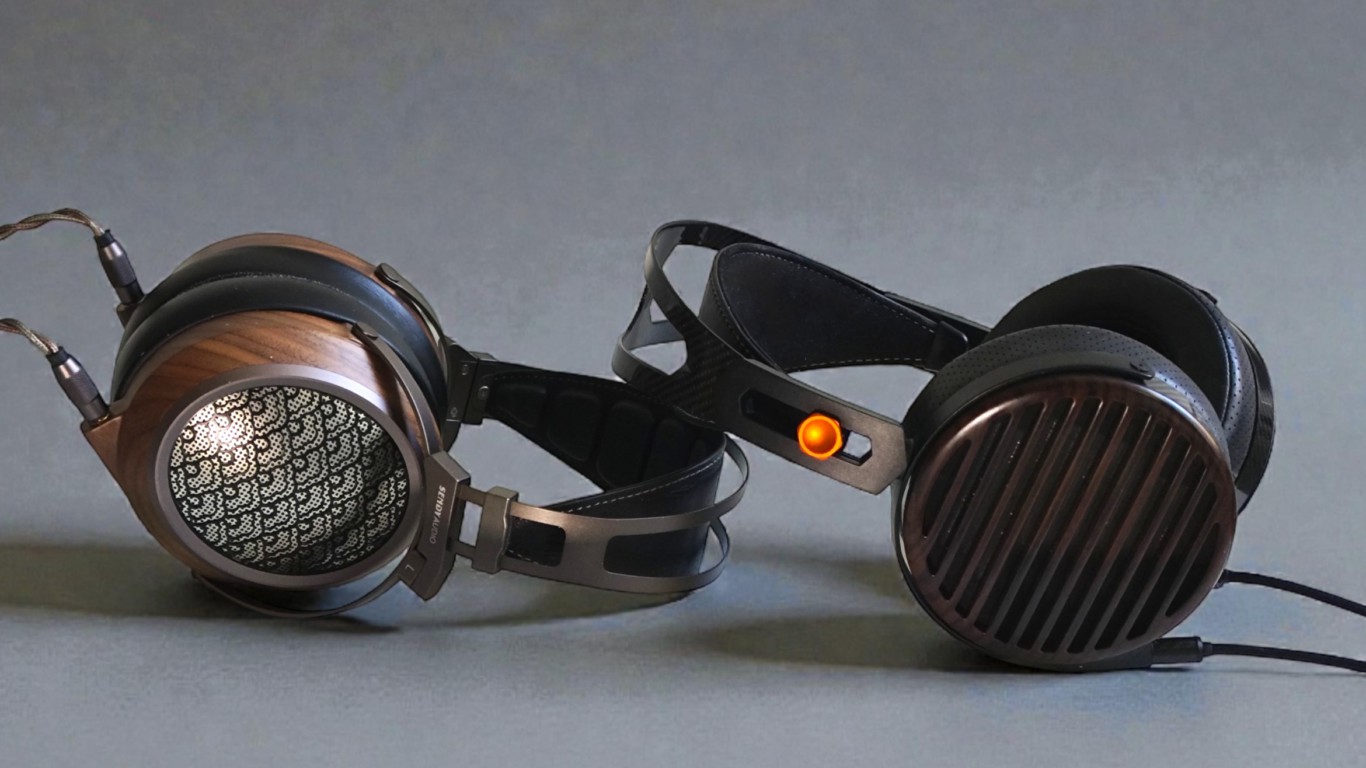
The FT7 was launched last spring and is a large planar magnetic headphone typically costing 699 USD, slightly less than the Egret.
The FT7 interestingly comes with two pairs of pads offering variations in sound signature and characteristics. This is a good idea, and given my own experience with the Egret regarding ear pads, it might be worth considering for Sendy as well.
Anyway, for this comparison I use the perforated sheepskin pads on the FT7, which I generally prefer.
When comparing the two headphones I found that the Egret in general has a bolder delivery and is more intimate, while the FT7 offers some warmth but is generally more neutral and offers a larger soundstage.
You can read my full comparison here:
HIFIMAN HE600 vs SENDY EGRET
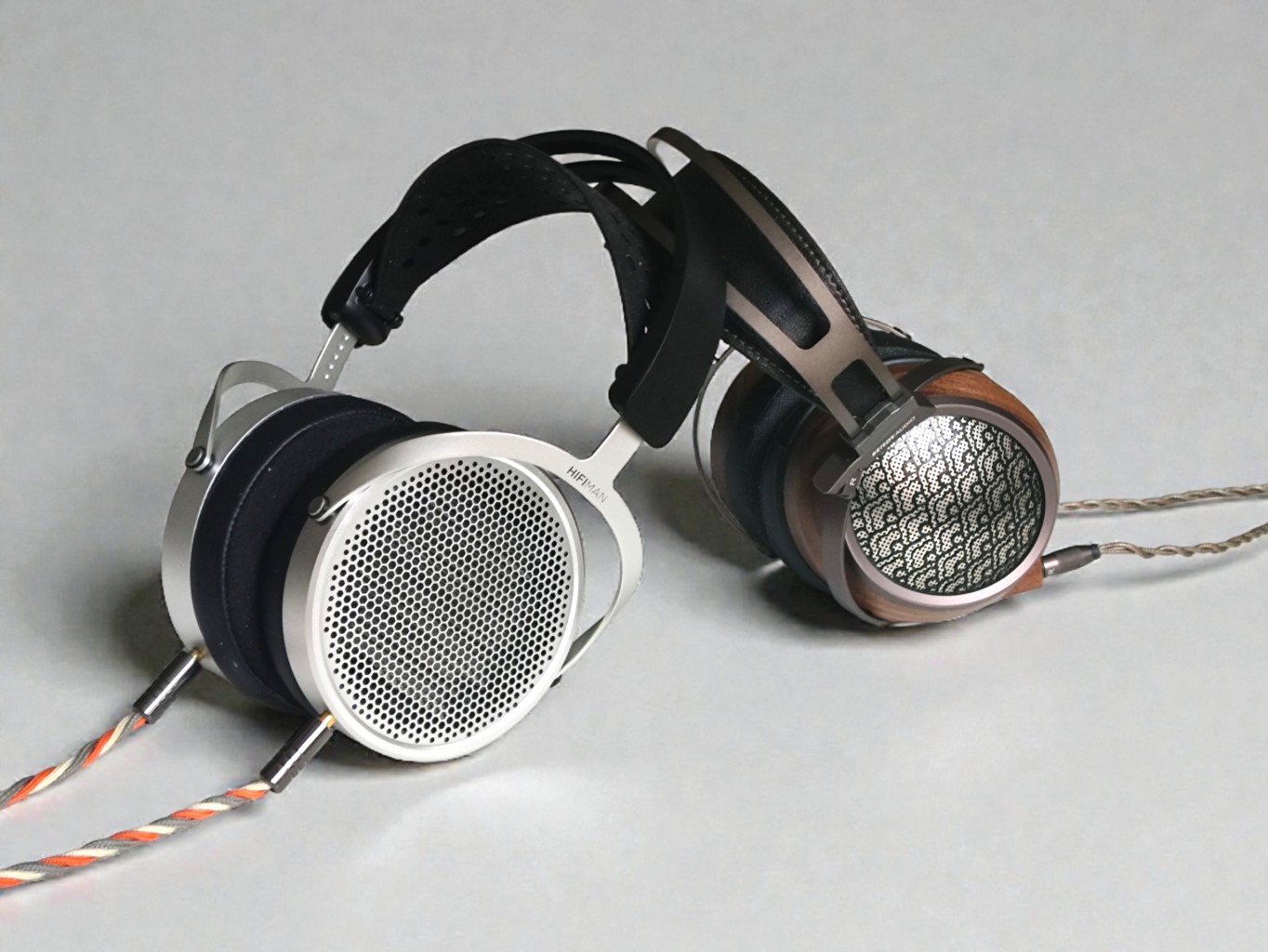
The HiFiMAN HE600 is also a full-size planar magnetic headphone, launched in 2025 at a typical price of 799 USD. When it comes to build quality, the Egret is miles ahead of the HE600. In terms of sound quality the two are more comparable, though relatively different in character.
Generally speaking, the Egret is bolder and more intimate, while the HE600 has less warmth, feels more neutral, and offers a larger soundstage.
You can read my full comparison here:
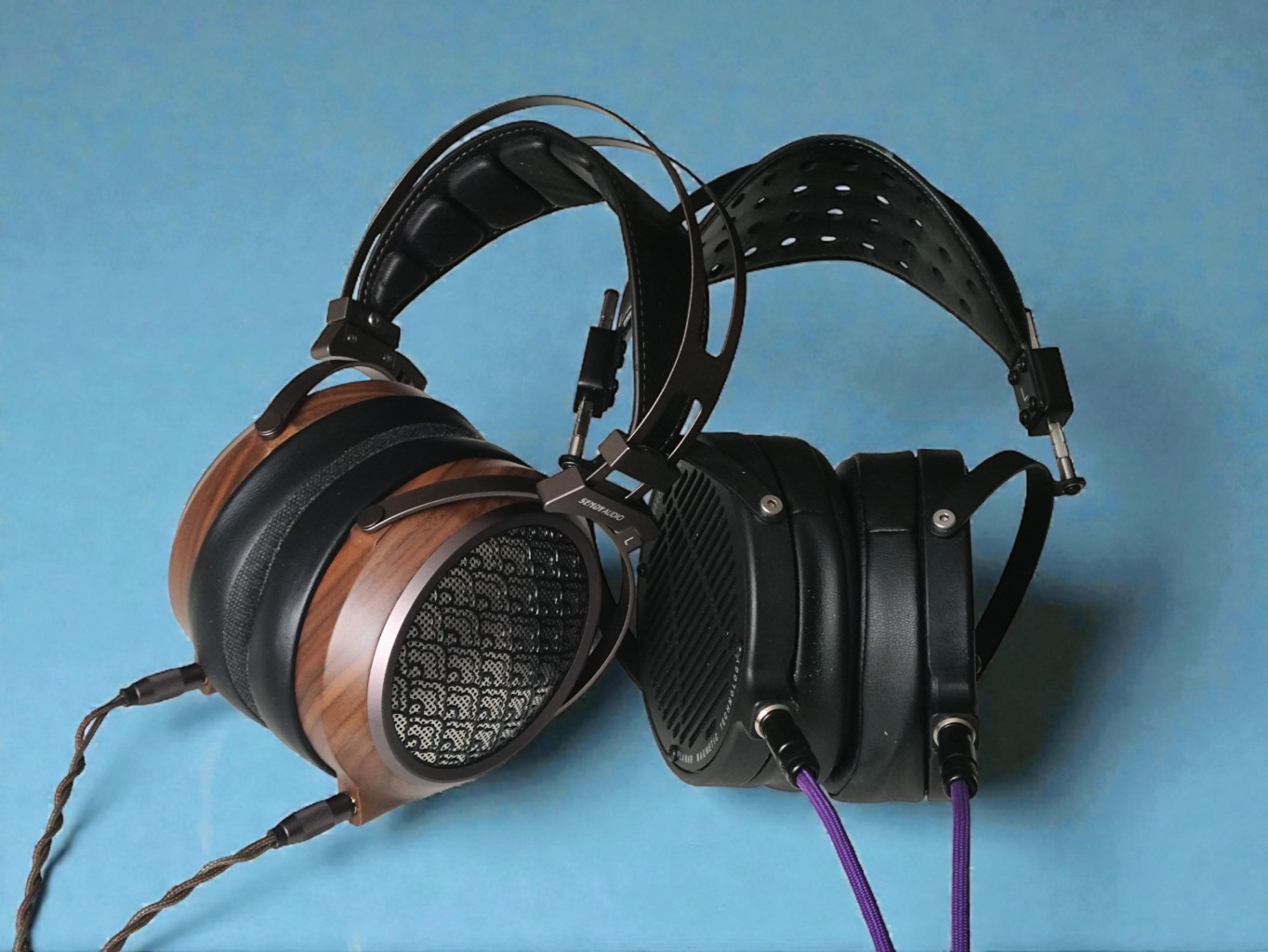
AUDEZE LCD-2 Classic vs SENDY EGRET
The planar magnetic Audeze LCD-2 Classic was launched back in 2018 but remains a great performing headphone at its price point of around 799 USD, the same as the Egret.
When comparing it to the Sendy Egret, I find the two headphones to have pretty similar soundstages, both being rather intimate. In general, the LCD-2 Classic is darker and smoother, while the Egret is more upfront and energetic.
You can read my full comparison here:
- Amazon: LCD-2 Classic
CONCLUSION
First of all, the Egret is an extremely well built headphone and the craftsmanship is truly impressive. When it comes to sound, I think it performs on par with what you should expect at this price point. In general, the bass is neutral and tight with a nice touch of warmth, the midrange is upfront and often bold, and the treble is rich and pleasingly crisp.
I did, however, occasionally touch upon some issues with the Egret that were resolved by switching to alternative pads. My conclusion is that I sometimes experienced some unwanted reflections with the stock pads. These caused a degree of sharpness and a sense of compression that prevented the Egret from performing at its best.
Headphone acoustics are heavily dependent not only on the driver, dampening materials and pads, but also on the listener’s own ears, which effectively act as part of the acoustic environment. For me, changing the pads helped a lot and turned the already very good Egret into an even more complete and well performing headphone.
It has become increasingly common for headphone manufacturers to ship their products with two alternative pairs of pads, allowing the user to decide which suits them best both acoustically and in terms of comfort. I think this is a very positive development, and perhaps something Sendy Audio should consider, to ensure every customer gets the best possible experience.
In conclusion, the Egret is a very good headphone, and it is great to see such a strong focus on craftsmanship alongside solid sonic performance.
Thanks for reading. You can support us by purchasing anything using any of our affiliate links.
- AliExpress: Sendy Egret
Any purchase you make on Amazon or Linsoul with any of our affiliate links will give us a small provision at no cost to you.
We only get a provision for items that are not returned, so there’s no incentive for us to recommend something that’s not good.
Linsoul : Headphones, Earbuds, Wireless Earbuds, Desktop DAC/AMP, Portable DAC/AMP, Digital Audio Players,
Amazon: Headphones, IEMs, Headphone Amplifiers, Home Audio or Anything else.
.
If you enjoyed this article or other content on The Headphoneer, you might consider leaving a small donation to keep this website up and running. No donation is too small. Thanks for supporting us!

If you like our work please follow us on Instagram, Facebook and Twitter , it will help us grow. Sharing is caring 🙂