

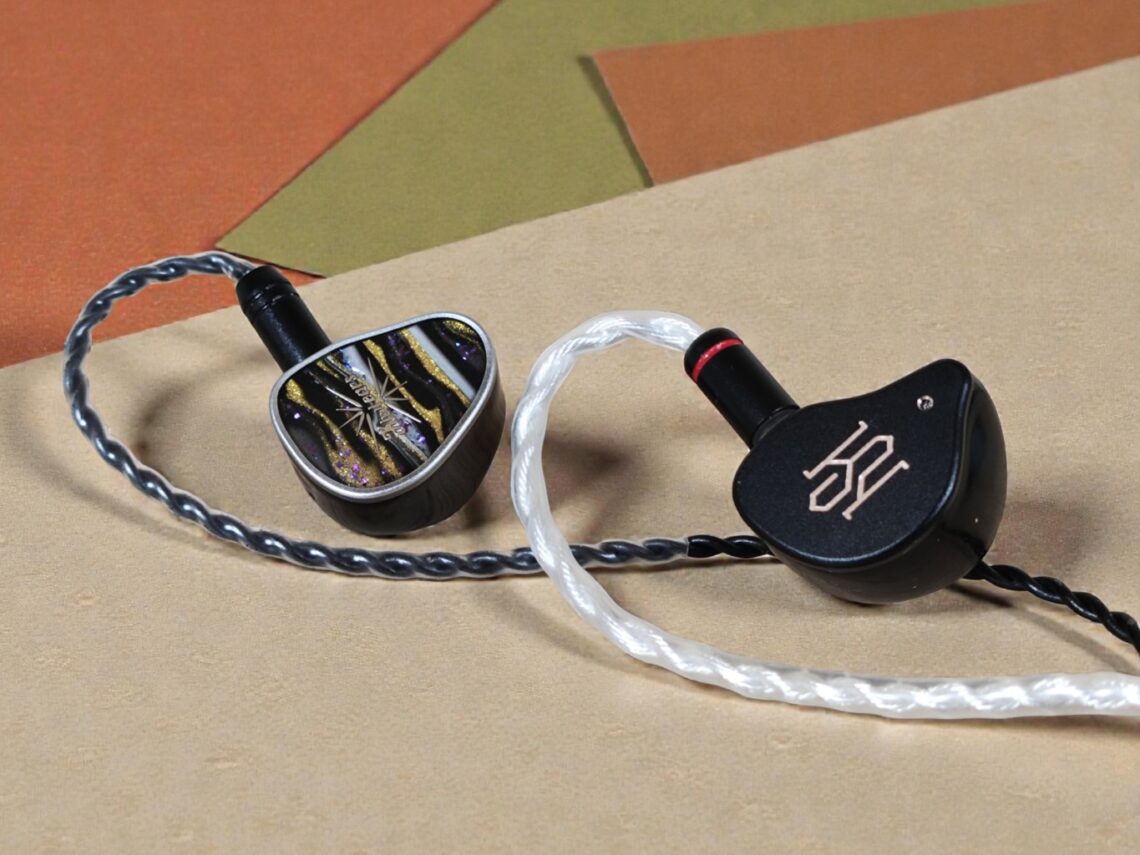
The Simgot SuperMix 5 and Kiwi Ears Étude offer an interesting comparison as both use vibration drivers to enhance upper bass and midrange frequencies.
The Simgot SuperMix 5 is a recently launched IEM with four conventional drivers plus a vibration driver, totaling five drivers. The conventional setup consists of a dynamic driver for bass, two balanced armatures for the midrange, and a planar-magnetic micro-driver for the treble. The vibration driver covers a broad range – from 200 Hz to 7 kHz – which is unusually broad for such a device. Launch price of the SuperMix 5 is 219 USD.
The Kiwi Ears Étude is a tribrid, featuring a 10mm dynamic bass driver, a single balanced armature for the midrange, and a dual balanced armature tweeter for highs. It also incorporates a vibration driver handling the “low-mid” frequencies. The exact range isn’t specified, but it’s a less broad range than the vibration driver of the SuperMix 5 which goes from upper bass to the lower treble region. Typical price for the Kiwi Ears Etude is below 110 USD, roughly half of the SuperMix 5.
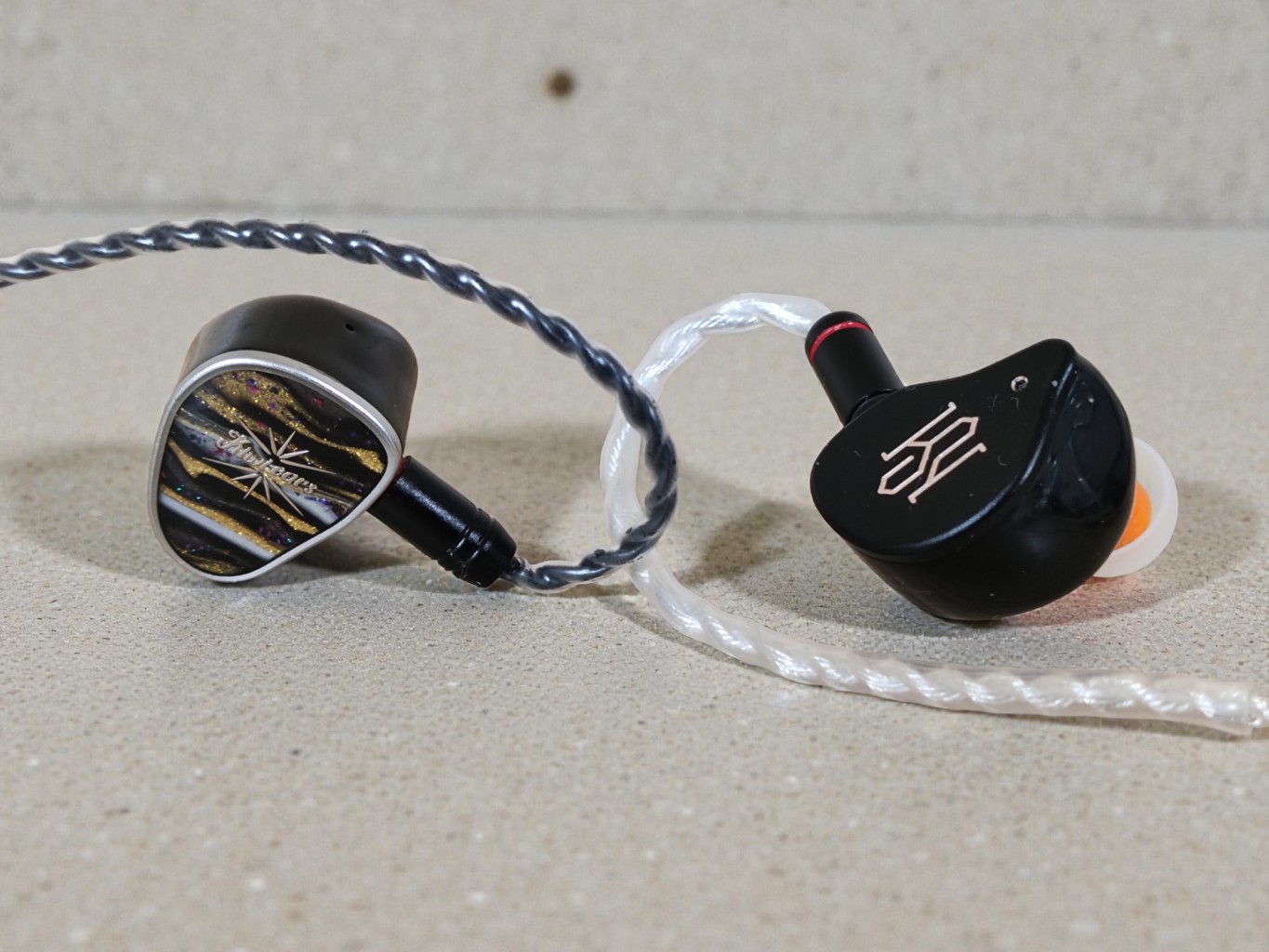
SIMGOT SuperMix 5 SPECIFICATIONS
- Driver Configuration: 1 Dynamic Driver, 2 Balanced Armatures, 1 Micro Planar Driver, 1 Vibration Driver
- Impedance: 19 Ohms ±15% (@1kHz)
- Sensitivity: 120dB/Vrms (@1kHz)
- Frequency Response: 8Hz–40kHz
- Housing main material: Resin
- Cable: Detachable 1.2m Silver-Plated Single Crystal Copper Litz
- Cable Connector: 0.78mm 2-Pin
- Cable Termination: 3.5mm / 4.4mm Interchangeable Plugs
Current price and availability:
- Linsoul: SuperMix 5
- Amazon: SuperMix 5
KIWI EARS ÉTUDE SPECIFICATIONS
- Drivers: 1 Dynamic Driver, 3 Balanced Armatures, 1 Vibration Driver
- Sensitivity: 104dB SPL/mW
- Impedance: 5 Ohms
- Frequency Response: 20Hz – 20kHz
- Cable connectors: 0.78mm 2-Pin Connector
- Cable Length: 1.2 Meters
- Cable termination: 3.5mm jack.
Current price and availability:
- Kiwi Ears: Étude
- Amazon: Kiwi Ears Étude
- Linsoul: Kiwi Ears Étude
BUILD AND COMFORT
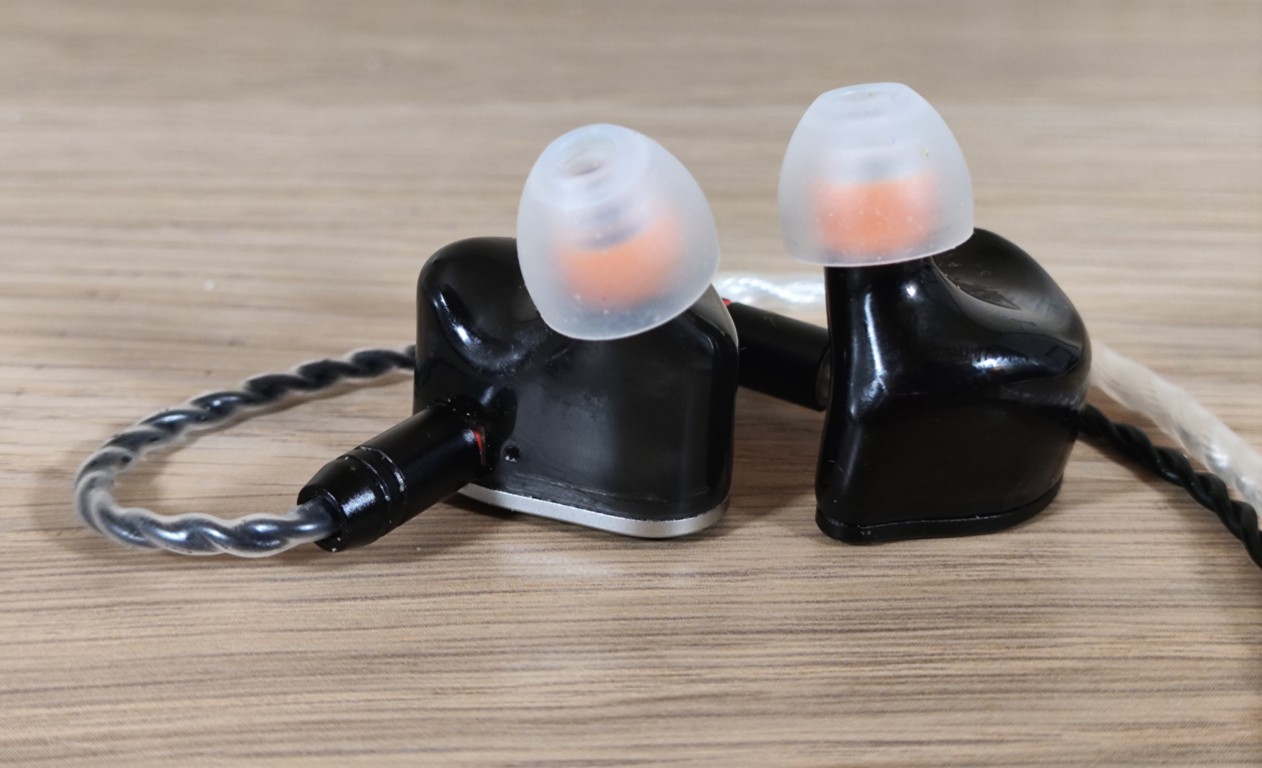
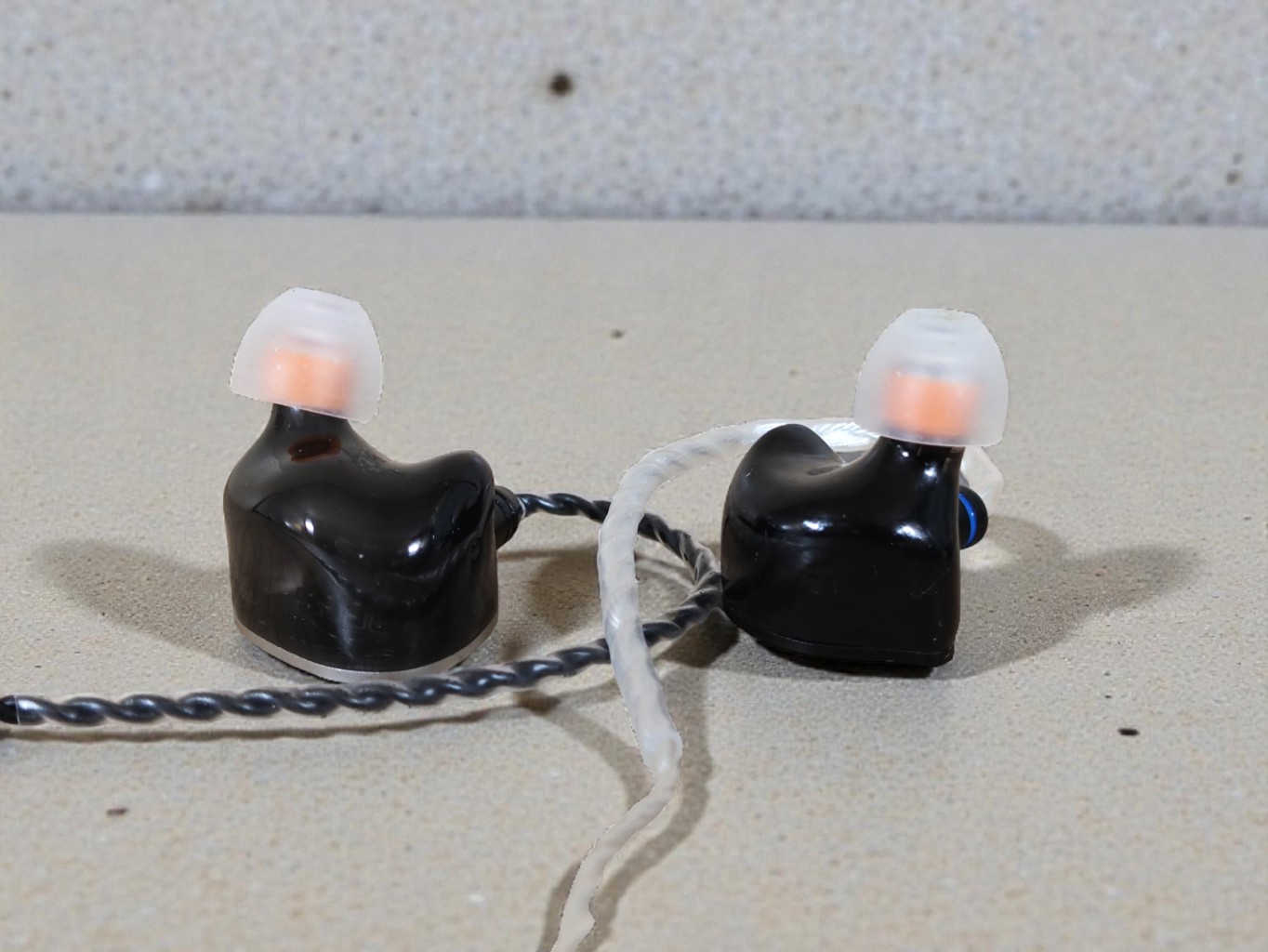
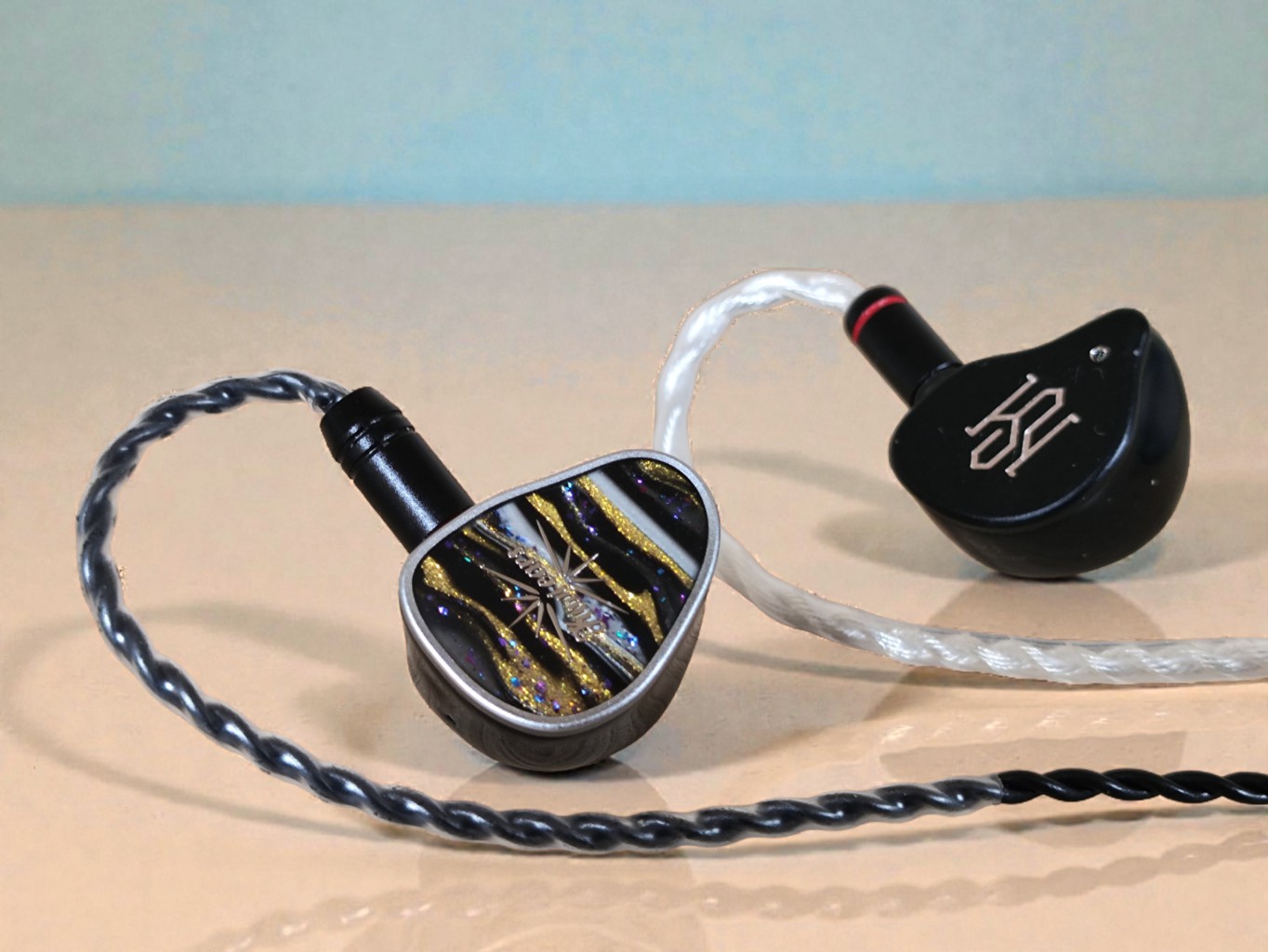
Both use resin shells with decorative faceplates, and both are larger than average — likely because the vibration driver takes up extra space. The Étude comes with a thin cable and a basic travel case, while the SuperMix 5 includes a thicker, more premium-looking cable and a very nice storage box.
ABOUT VIBRATION DRIVERS
Vibration drivers for the midrange and bass in IEMs are still quite rare and relatively new, while they’re more common in the treble region.
Although they share similarities with bone-conduction technology, normal IEMs don’t make direct contact with the bone, so all vibrations have to travel through the eartip (or the air) — which isn’t very efficient. Standard bone-conduction earphones, by contrast, sit on the head, typically directly above the ear, allowing vibrations to go straight into the skull and from there into the ear where it becomes “translated” to sound in the inner ear.
It’s difficult for me to know how much of what I’m hearing and feeling comes from the vibration driver versus the regular drivers. The idea, however, is to add an extra physical dimension to the sound — and both of these IEMs do feel quite tactile.
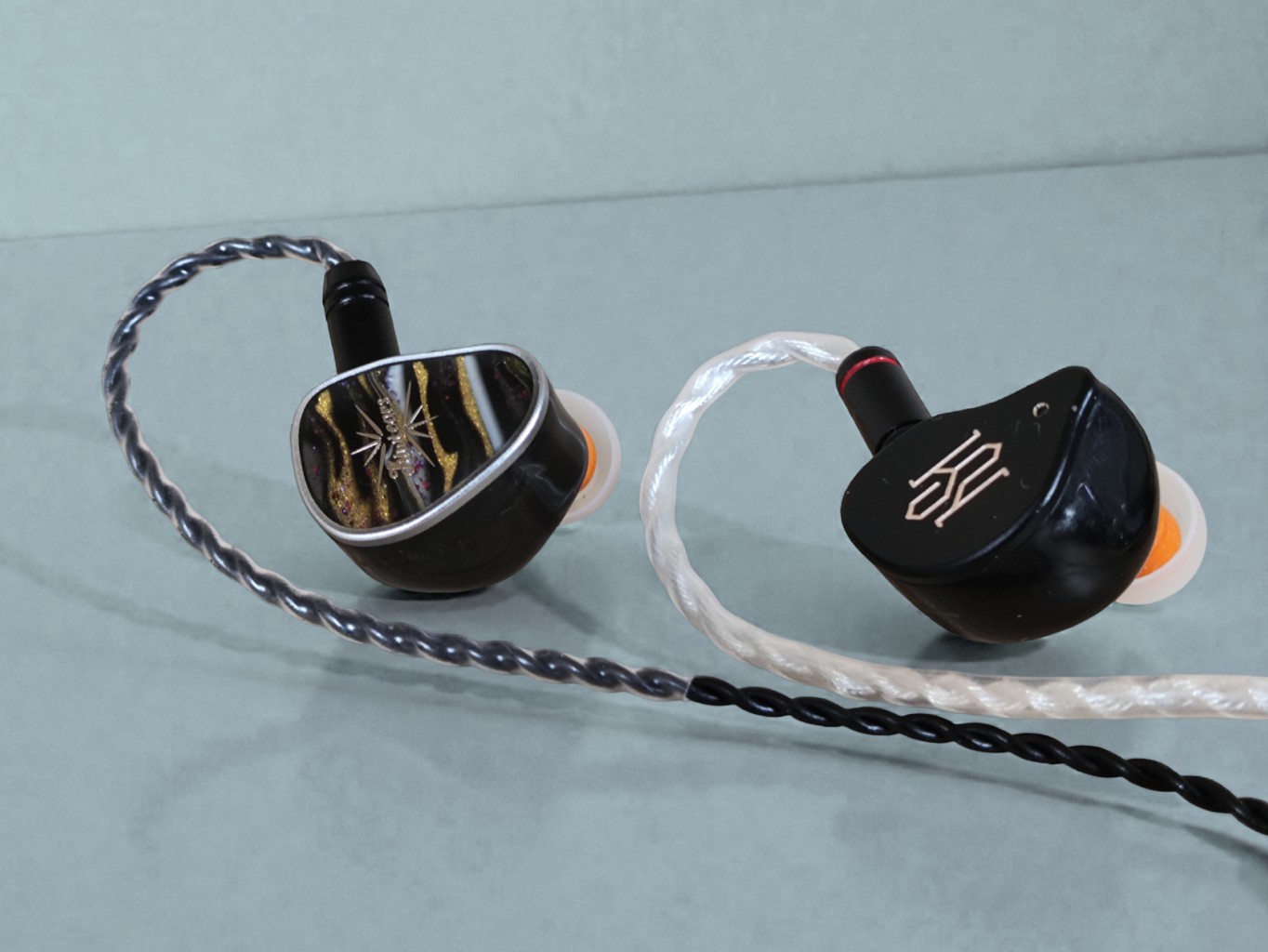
COMPARISONS
Associated equipment:
- Amplifier: Topping A90
- DAC: RME ADI-2 DAC FS
- Eartips for both sets: SpinFit CP145
Rambling Man by Laura Marling
The Étude is thicker and warmer, with darker-sounding vocals. When tracks get busy, it tends to blend instruments together, while the SuperMix 5 maintains better separation and clarity.
Sunrise by Norah Jones
The vocals on the Étude are much thicker, warmer, and more forward, while the SuperMix 5 sits a row or two farther back from the stage, so to speak.
In the Mountains by Espen Eriksen Trio
The Étude is bassy, thick, and dark. That isn’t a bad thing — I actually really like it for what it is — but the SuperMix 5 is noticeably more neutral, with better detail and separation.
Angel by Massive Attack
Here the differences are smaller. The Étude is still a bit darker, but for some reason this track doesn’t separate them as much.
Limit to Your Love by James Blake
The Étude has thicker bass and darker vocals than the SuperMix 5, which has a darker background.
Bullet in Your Head by Rage Against The Machine
The SuperMix 5 is snappier and cleaner. They aren’t drastically different here, but the SuperMix 5 feels more dynamic, with better detail and texture. The Étude is darker and fuller sounding.
As Before by Olga Konkova
The SuperMix 5 delivers a nicely punchy cajón without overdoing it, and the piano and vocals are crisp and clear. The Étude has a fuller-sounding cajón, with darker vocals and piano.
Spontaneous Compositorius by Thomas Agergard
The Étude is dark and smooth, the bright percussion is laid back and non-offensive. The SuperMix is generally brighter, more neutral, crisper and tighter. It has more detail and better separation.
Young Vivaldi by Modo Antiquo
I think both sound excellent with this string quartet, but they have different timbres: the SuperMix 5 is (unsurprisingly) brighter and crisper, while the Étude is darker.
Summer 3 Vivaldi Recomposed by Max Richter
Both are good but quite different. The Étude is darker, with decent separation and detail, while the SuperMix 5 is brighter, offering better separation and detail.
WRAPPING IT UP
Sound Signature
The Simgot SuperMix 5 has somewhat of a “Harman-neutral” tuning with a pleasing bass presence and a sound that’s neither overly bright nor dark. The Kiwi Ears Étude is warmer and darker by comparison.
Treble
Neither of these are particularly bright headphones. The SuperMix 5 has a fairly neutral treble with good detail, while the Étude is darker and more laid-back.
Midrange
In the midrange, the Étude is darker — bolder, warmer, and thicker. The SuperMix 5 remains smooth, but it’s much more neutral.
Bass
The SuperMix 5 has a “Harman-tuned” bass that sounds natural and nicely balanced. The Étude doesn’t necessarily have much more bass in quantity, but it is meatier and thicker.
Soundstage and Imaging
Soundstage is fairly similar and quite good for IEMs, but the SuperMix 5 feels more open. It also has better imaging, with more space between instruments and stronger layering.
Detail, Dynamics, and Timbre
Overall, the SuperMix 5 has higher detail from top to bottom — and at twice the price, that’s to be expected. The Étude is still very good for its price point and tuning.
Both have strong macrodynamics, though the differences vary a bit from track to track. In terms of microdynamics and articulation, the SuperMix 5 is generally better.
Discussing timbre is always somewhat relative. On its own, the SuperMix 5 is slightly rounded and refined — organic, a bit laid-back, and smoothly pleasant. It remains fairly neutral, but compared to the Étude, the difference is clear: the Étude is thicker and darker, with a lush, musical quality – still it feels very alive.
CONCLUSION
It might not be obvious from what I’ve written above, but I’m a huge fan of the Kiwi Étude, with its dark, warm, and full presentation that creates a lush, musical character.
I’m also very enthusiastic about the SuperMix 5. It’s smooth and very musical as well, but compared with the Étude it’s noticeably more neutral. It also offers more detail, with better separation and clarity.
In other words, both are excellent for what they are. The tuning is a matter of preference, but in terms of technical performance, the twice-as-expensive SuperMix 5 clearly comes out on top, even though the Étude is still very good on its own.
When it comes to the vibration drivers, I haven’t focused too much on them, because it’s hard to know exactly what they’re contributing. I also suspect the effect depends on how firm your eartips are. What is clear, though, is that both IEMs are very dynamic and have a tactile quality that many IEMs lack.
Thanks for reading. You can support us by purchasing anything using any of our affiliate links.
- Linsoul: SuperMix 5
- Amazon: SuperMix 5
- Kiwi Ears: Étude
- Amazon: Kiwi Ears Étude
- Linsoul: Kiwi Ears Étude
Any purchase you make on Amazon or Linsoul with any of our affiliate links will give us a small provision at no cost to you.
We only get a provision for items that are not returned, so there’s no incentive for us to recommend something that’s not good.
Linsoul : Headphones, Earbuds, Wireless Earbuds, Desktop DAC/AMP, Portable DAC/AMP, Digital Audio Players,
Amazon: Headphones, IEMs, Headphone Amplifiers, Home Audio or Anything else.
.
If you enjoyed this article or other content on The Headphoneer, you might consider leaving a small donation to keep this website up and running. No donation is too small. Thanks for supporting us!

If you like our work please follow us on Instagram, Facebook and Twitter , it will help us grow. Sharing is caring 🙂