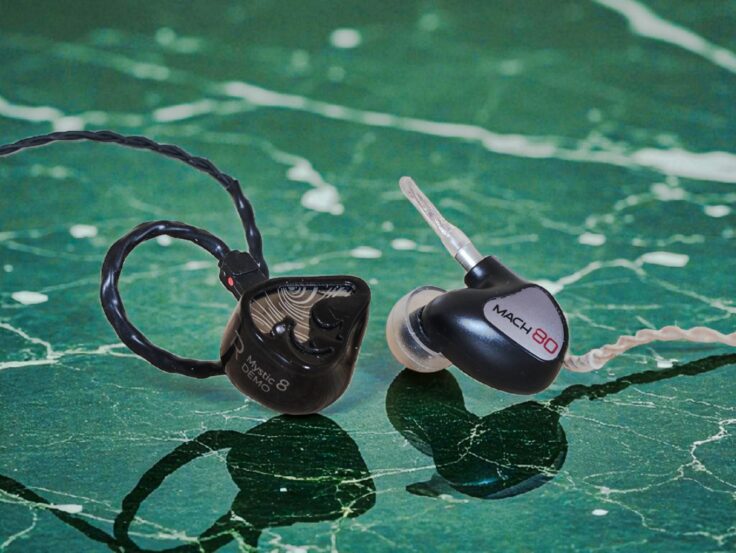


High price, delightful sound, tiny build
The Mach 80 is Westone’s top-of-the-line in-ear monitor, launched in 2022 along with the rest of the MACH series. It features eight balanced armature drivers and is designed as a professional tool, while also being excellent for music enthusiasts. Tuned to be extremely neutral, it is well suited for studio work and mixing.
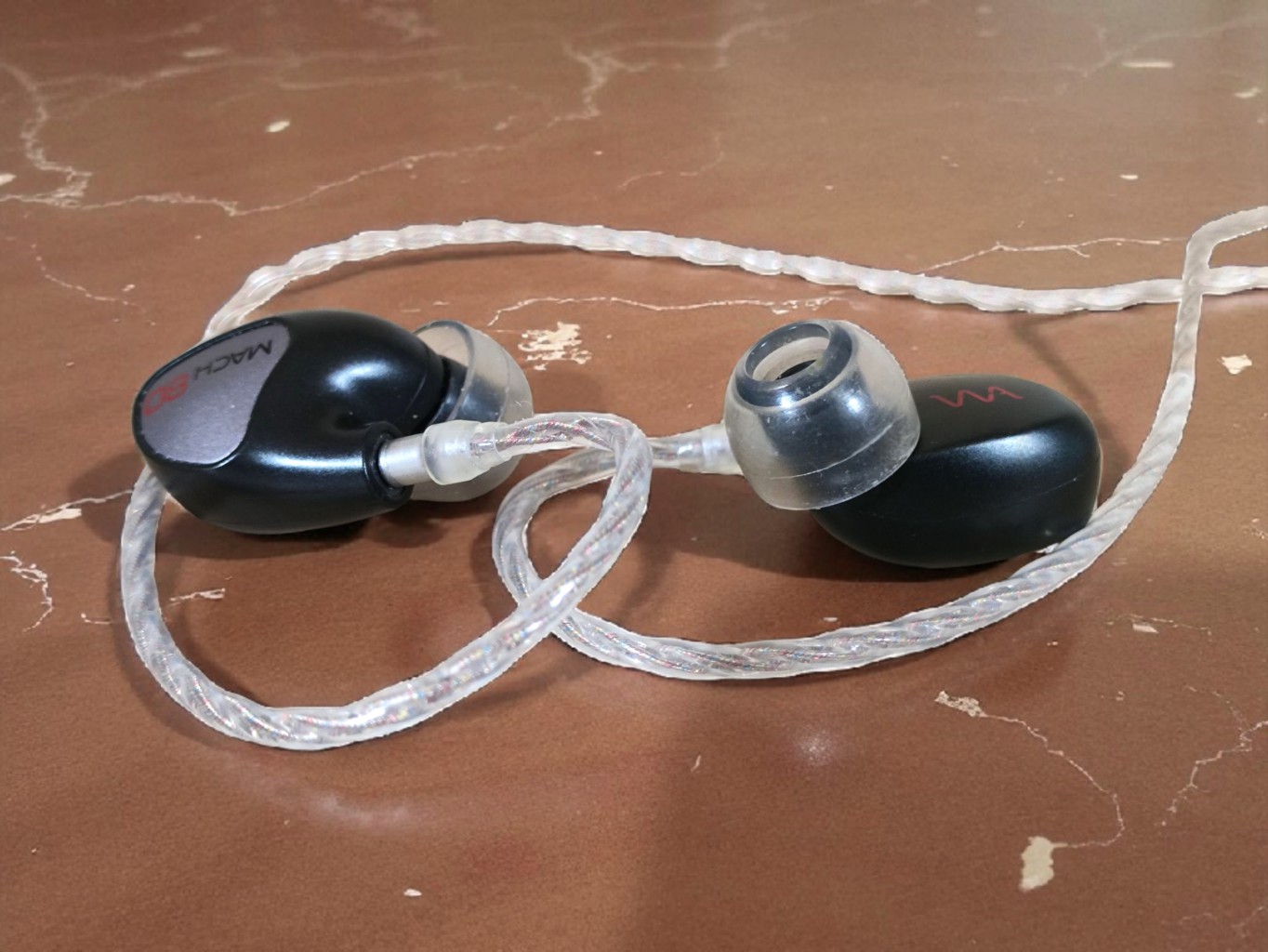
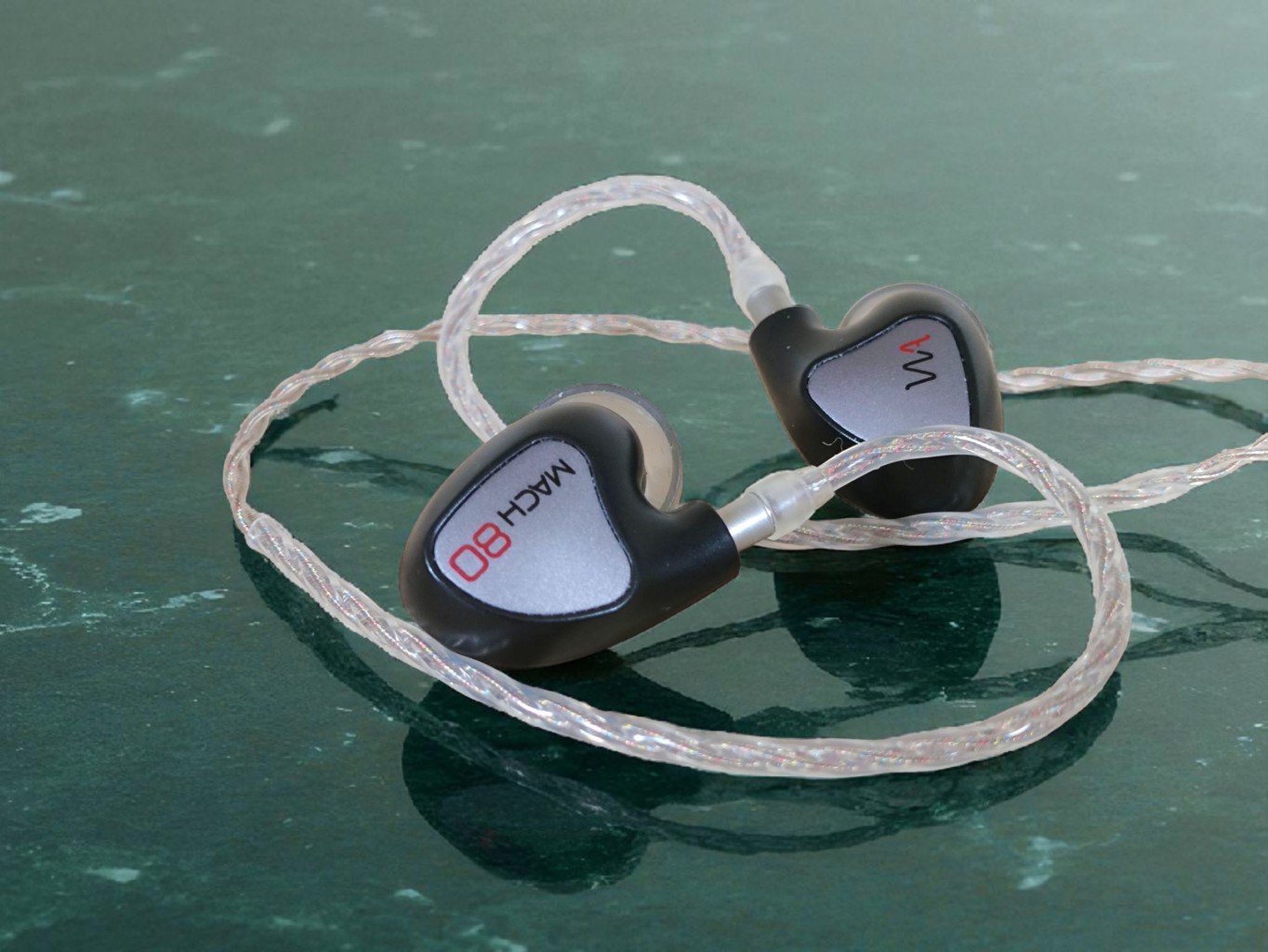
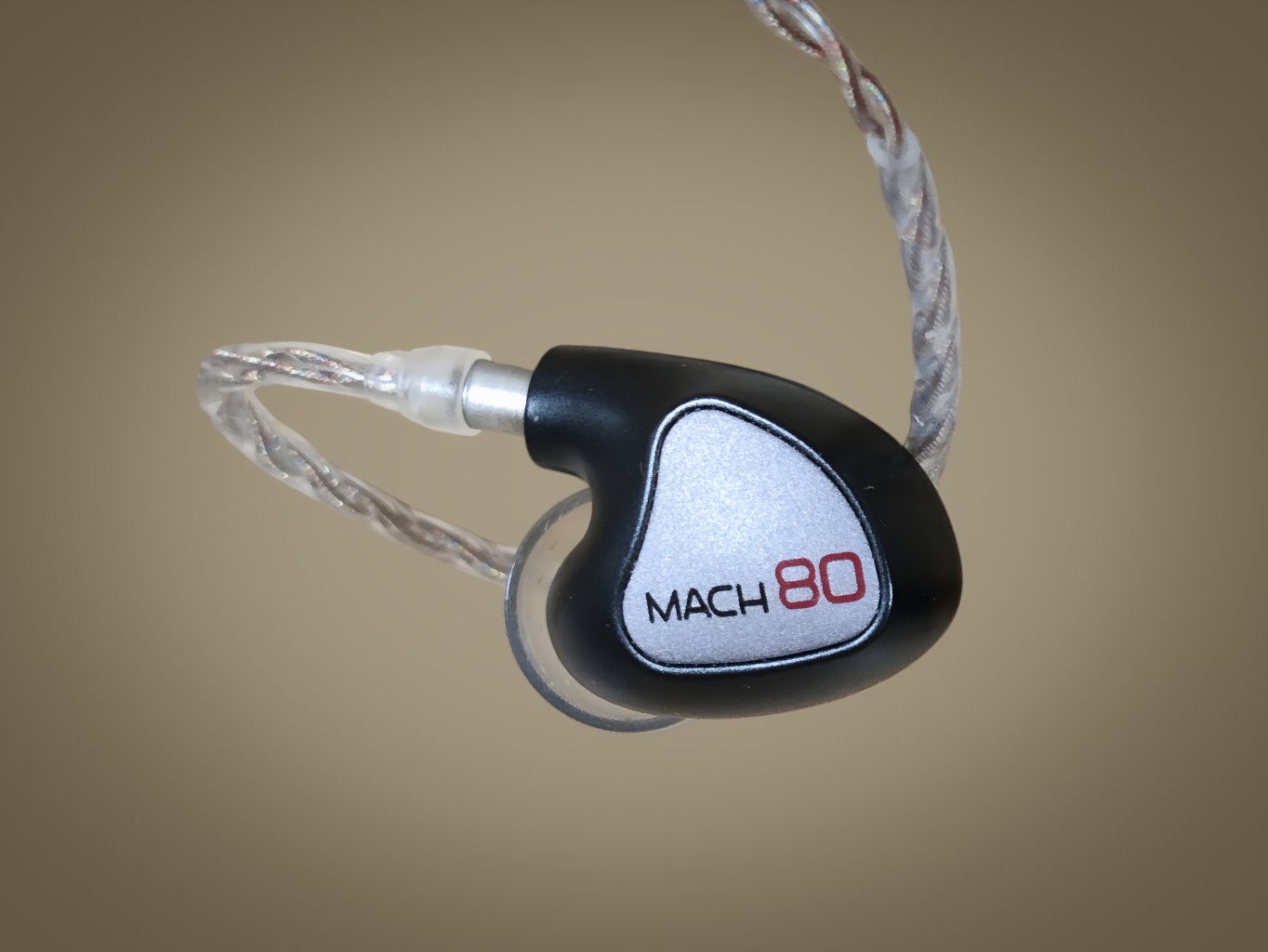
Physically, it is compact, lightweight, and durable. It comes in a well-thought-out package that includes a Pelican case, a pouch, tips, and maintenance tools. The Westone Mach series uses thin 3 mm nozzles, similar to Shure, which are incompatible with most third-party ear tips unless you use an adapter.
The normal retail price is rather high – around 1700 USD or €1250 before tax.
MAIN TAKEAWAY
- Tiny build – Neutral tuning
- Smooth yet crisp
- Fantastic midrange timbre and presence
- Moderate bass quantity – excellent bass quality
- Detailed highs
- Picky about the amplifier
- Superior detail retrieval with the right amplifier/source.
- Pro-grade build and accessories
- Thin 3 mm nozzles – makes ear tip rolling difficult
WESTONE MACH 80 SPECIFICATIONS
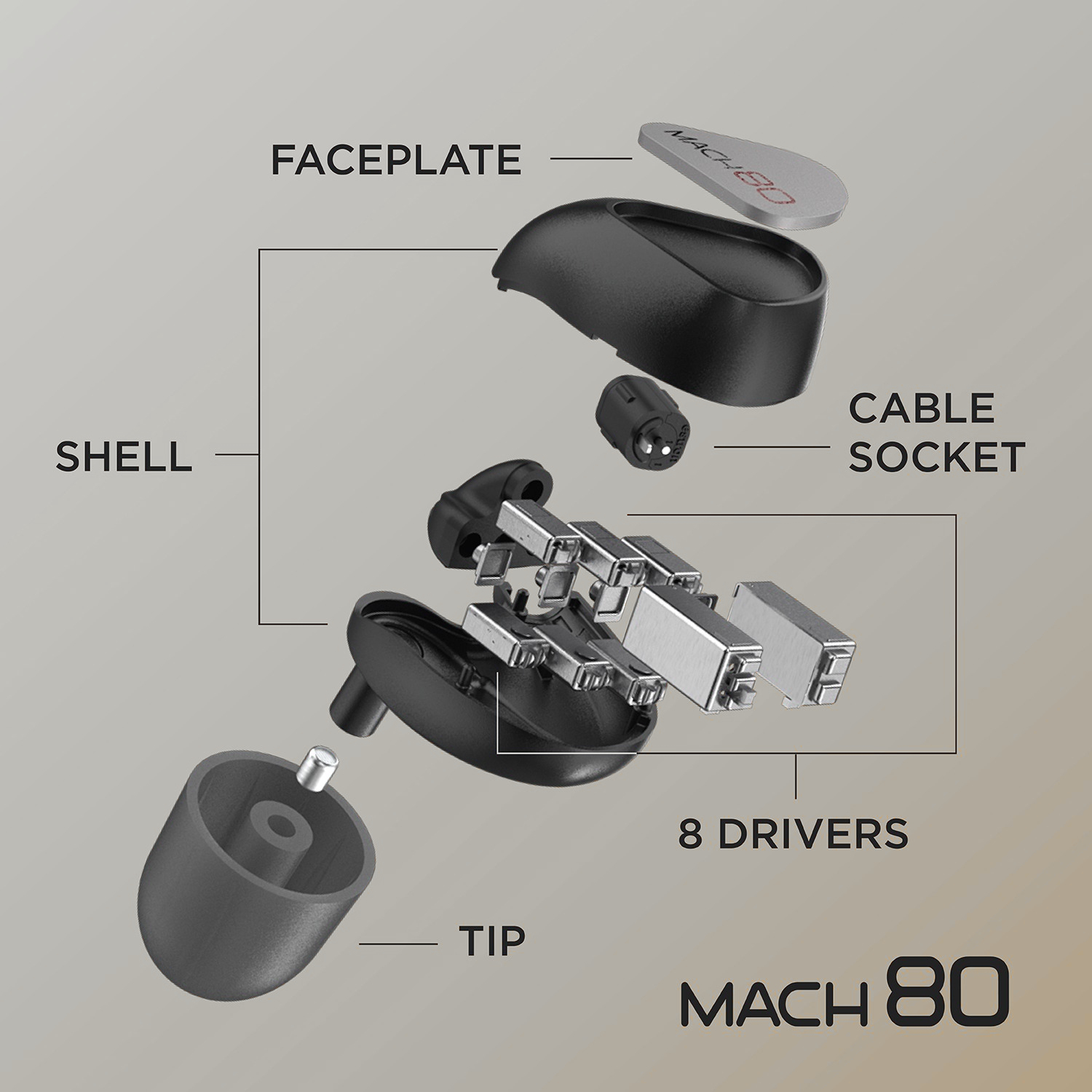
- Drivers: 8 balanced armature drivers with 3-way crossover
- Driver Configuration:
- 2 Balanced-Armature Bass Drivers
- 2 Balanced-Armature Midrange Drivers
- 4 Balanced-Armature Treble Drivers
- Sensitivity: 104dB @1kHz
- Impedance: 66 Ohms @1kHz
- Frequency Response: 5Hz – 22kHz
- Cable length 127cm / 50 inches
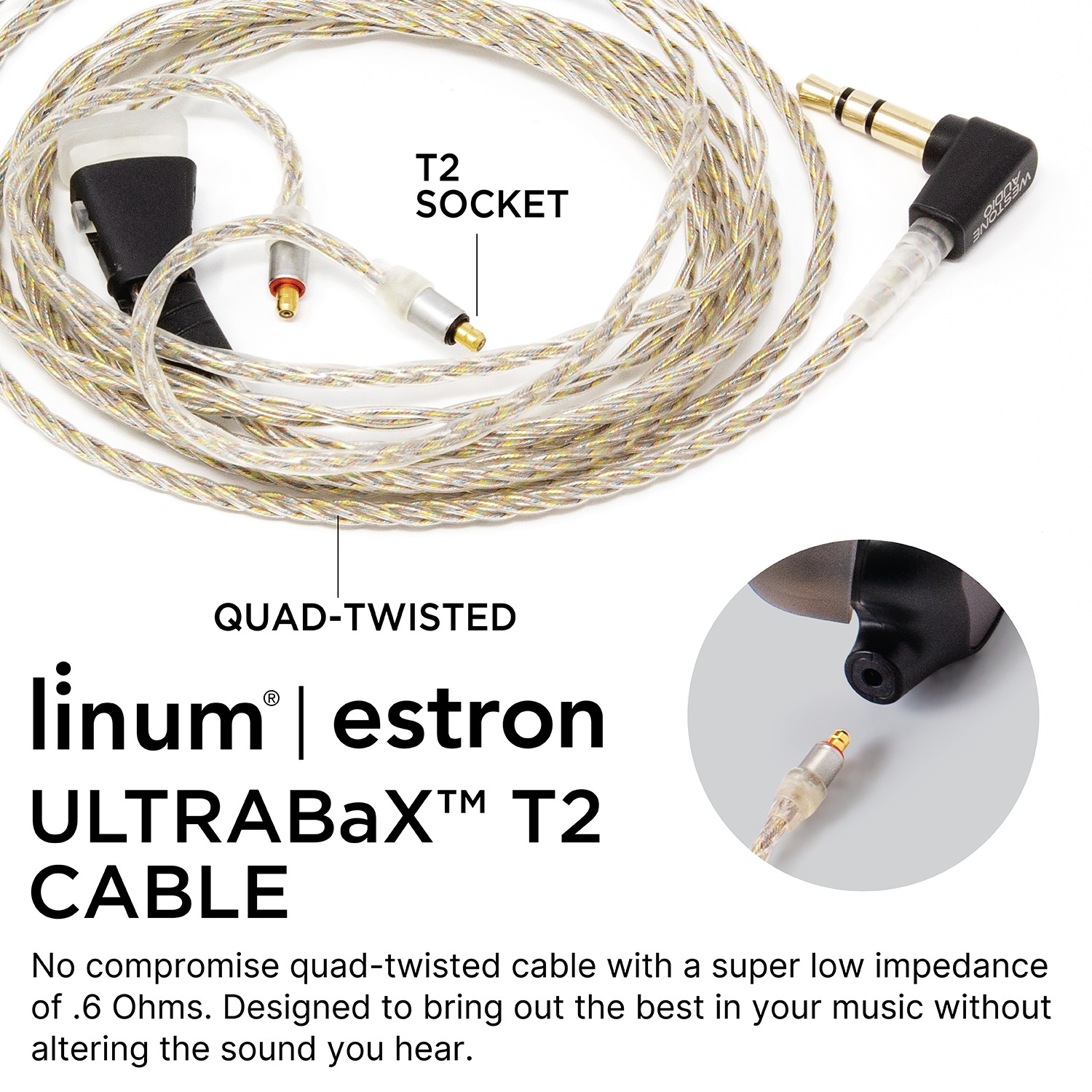
- Cable name: Linum UltraBaX T2 Cable
- Cable connectors: T2 type
- Cable termination: 3.5mm jack
- Nozzles: 3 mm (Shure compatible)
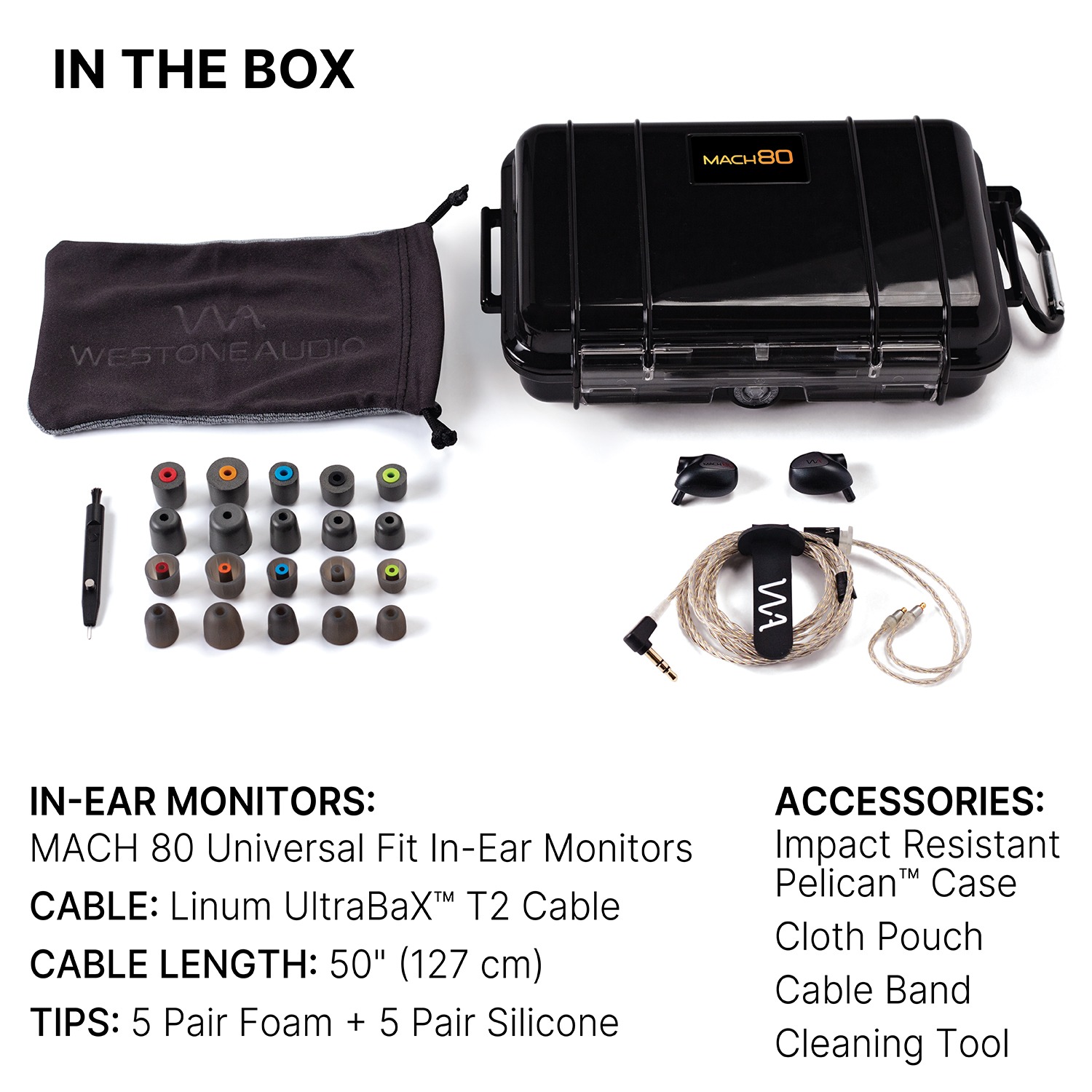
IN THE BOX:
- Mach 80 Universal fit in-ear Monitors
- Cable: Linum UltraBaX T2 Cable
- Tips: 5 pair foam + 5 pair silicone
- Impact resistant Pelican case
- Westone Audio cloth bag
- Cleaning tool
Disclaimer: The review sample was provided in the exchange for an honest review.
Current price and availability:
ABOUT WESTONE
Westone isn’t just any other IEM manufacturer. Founded in 1959, Westone Audio has a rich history as a pioneer in the development of hearing aids and in-ear monitoring technology.
In 1985, Westone made the first custom earpiece for “Walkman”-style earbuds. In 1989, it added balanced armature drivers to custom earpieces for musicians. In 1990, Westone worked with Rush and Def Leppard to create the first custom in-ear monitors. In 1995, it partnered with Jerry Harvey to start Ultimate Ears and designed ambient monitors for Metallica.
In 1996, Westone built the first universal-fit dual-driver monitor for Shure, the E5, and also helped launch the custom dual-driver UE5 with Ultimate Ears.
In 2002, Westone finally released its own range of self branded earphones, including the Universal-Fit UM1 and UM2, and the Custom-Fit ES2 and ES3, and more models followed in the years to come.
In 2016, it launched the AM Pro Series, the first universal in-ear monitor with passive ambient sound, basically just semi-open in-ears that allows you to hear your surroundings in a balanced and practical way. The first full-resolution Bluetooth cable was also released in 2016, as was the W80, an 8-driver universal monitor.
Two years later, in 2018, Westone released its first high-resolution Bluetooth cable. In 2020, Westone Audio was acquired by Lucid Audio, joining with other brands like Etymotic Research.
THE WESTONE MACH SERIES
The MACH series launched in 2022 and consists of 8 IEM models named from 10-80. The first number in the name indicates the total of balanced armature drivers, starting at 1 and moving up to 8 for the top model. As you move up in number you also move up in price and quality. However they are actually three line-ups:
ENTRY LINEUP
- MACH 10 – 1 BA full-range driver
- MACH 20 – 2 BA drivers, 1 bass + 1 mids/highs
BASS LINEUP
- MACH 30: 3 BA drivers, 1 bass + 1 mids + 1 treble
- MACH 50: 5 BA drivers, 1 bass + 2 mids + 2 treble
- MACH 70: 7 BA drivers, 1 bass + 2 mids + 4 treble
REFERENCE LINEUP
- MACH 40: 4 BA drivers, 2 bass + 1 mids + 1 treble
- MACH 60: 4 BA drivers, 2 bass + 2 mids + 2 treble
- MACH 80: 4 BA drivers, 2 bass + 2 mids + 4 treble
As you may have noticed, the Bass lineup has only one bass driver, while the Reference lineup has two. This is because the bass driver used in the Bass lineup is significantly larger. In this case, one large driver can produce more sound—especially in low frequencies—than two smaller ones.
Read more on head-fi: MACH Lineup
BUILD AND COMFORT
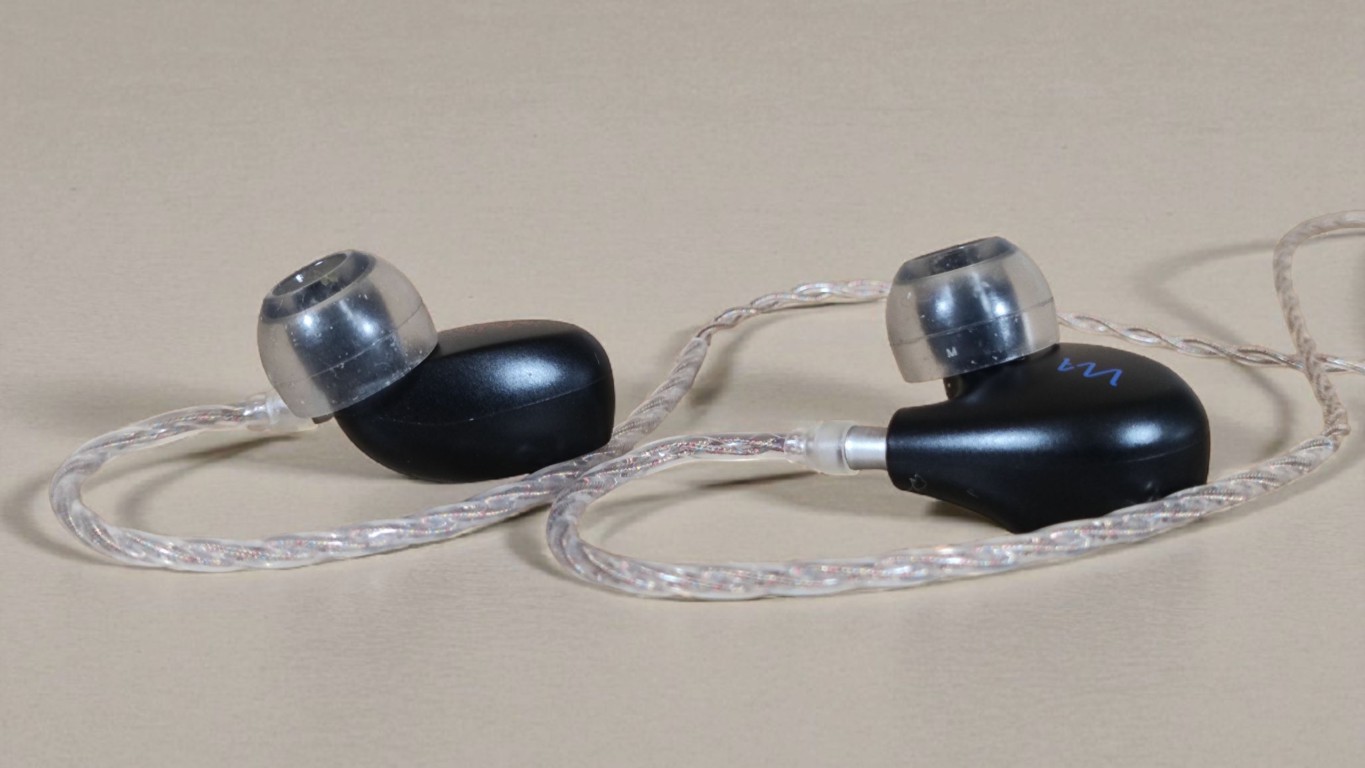
Modern IEMs are generally quite large, but the MACH series is refreshingly compact and does not protrude from the ears at all. The nozzles, however, are less ideal. The series uses legacy nozzles with an outside diameter of 3 mm, similar to Shure. This makes it harder to try different ear tips, since most are designed for larger nozzles. Some companies offer adapters, but they’re not exactly easy to get hold on.
Personally, I think Westone should consider shipping their IEMs with nozzle adapters.
I actually struggled a bit to find tips that provided both a good seal and comfort. Fortunately, I had several options on hand and ended up using AZLA SednaEarFit Crystal tips that came with a small adapter for the narrow nozzle. Those specific ear tips are now discontinued, but AZLA Origin includes adapters, and SpinFit Neo (new version of the CP100+) also comes with suitable adapters.
The cable is very thin and light. It’s made by Danish manufacturer Linum and bears the fancy name UltraBaX T2 Cable. It’s made of silver plated copper litz wires, and is a quad-twisted 224-strand construction. The UltraBaX is flexible and light at 8g, designed to reduce interference and microphonics. You can read more about the UltraBaX cable here.
The connectors are a bit special, like a mini version of MMCX. They’re called “estron T2” connectors, and are very small. They’re IP68-Rated and claimed to be very durable. “Designed to withstand harsh environments, with no signal dropouts even after 10,000 insertions”. You can read more about the T2 cable connector here.
The small and lightweight design is certainly a plus, but it does feel a bit fragile in hand. Only extended use will show how it holds up, though given Westone’s decades of experience with professional gear, I must assume the cables, connectors and IEMs are very durable.

LISTENING IMPRESSIONS
What stands out when looking at the specifications of the Westone MACH 80 is the high impedance of 66 Ohms combined with the somewhat low sensitivity at 104 dB. This indicates that these earphones are not indifferent to the amplifier used to drive them, which aligns with my own experience.
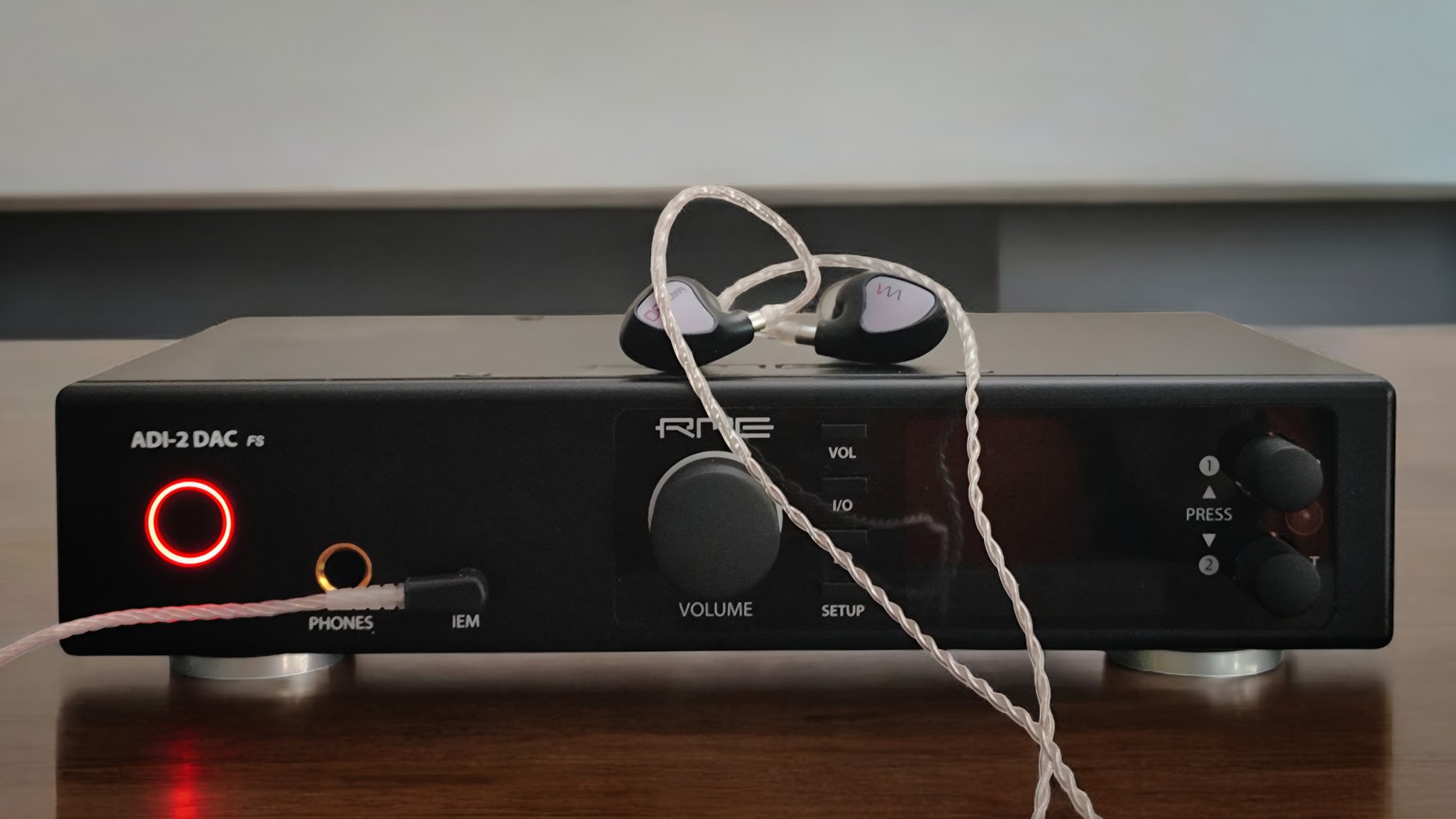
Initially, I was a bit underwhelmed using the Topping A90, but performance improved noticeably with other amplifiers. The Ferrum Erco was better, and the Questyle CMA800R was outstanding – but sadly discontinued. Fortunately, I found an excellent, currently manufactured, and widely used match: the RME ADI-2 DAC FS DAC/Amp.
The amplifiers that performed best brought out greater detail, and improved soundstage and imaging. They also gave better macrodynamics and more nuanced microdynamics, resulting in a far more engaging experience.

LISTENING TRACK BY TRACK
Related Equipment
- Ferrum Erco DAC/Amp
- Questyle CMA800R amplifier
- RME ADI-2 DAC FS DAC/Amp
- Azla SednaEarFit Crystal ear tips with adapters
På Nye Eventyr by Maridalen
Great jazz quartet piece. The bass is perfectly balanced in quantity and excellent in quality, tight yet with a touch of warmth. The saxophones have outstanding timbre, making this track a pure joy to listen to, full of nuance and refinement.
Jambi by Tool
This metal track sounds very well balanced. The guitars are rich, neither too crisp nor too thick. Vocals stand out more than with most earphones, presented in a very coherent way, with sibilants that are neither harsh nor unpleasant. Everything feels effortless. The bass is polite but reasonably tight.
Smile by Pearl Jam
This sounds snappy and balanced. Vocals stand out with excellent timbre, and sibilants are not an issue. The presentation is spacious, with great instrument separation.
Almost Like The Blues by Leonard
The bass is tight and detailed, with a slightly rounded character. Vocals are perfectly balanced, refined, and very present. Instrument separation is very good.
Black Crow by Cassandra Wilson
Snappy and spacious, yet still smooth. Vocals are beautiful, standing out in the mix with refinement and detail.
Some Day My Prince Will Come by Coryell Miroslav Quartet
The double bass is perfectly balanced, the electric guitar has a smooth, delicate warmth.
Bored by Deftones
Great texture on the guitars, without being overly sharp. Vocals stand out in the mix with subtle refinement.
As Before by Olga Konkova
The cajón drum is not very full-sounding, but the vocals are exceptional. The rest of the presentation is coherent, smooth yet crisp, never laid back, and carries great detail.
It Could Be Sweet by Portishead
Again, the vocals take center stage. Sibilants are soft and controlled. The bass is neutral, punchy, and detailed. The soundstage is rather average with the Erco, but great with the Questyle amp or the ADI-2.
Escape Route by Boris Blank
On this instrumental electronic track, the Mach 80 feels rather average with the Erco. Paired with the Questyle, however, it becomes more dynamic, articulate, and engaging. Even so, the track benefits from a bass shelf.
Spontaneous Compositorius by Thomas Agergard
The saxophone has excellent timbre, and the bright percussion highlights a detailed and articulate treble that is crisp without being overly sharp, though quite prominent in this instance.
Mahler’s Symphony No 2 III by Paavo
The kettle drums are punchy and full-bodied with a pleasing texture. The strings sound sweet, detailed, and refined, yet retain both bite and attack.
Young Vivaldi by Modo Antiquo
The strings have excellent timbre, sounding natural and detailed, with a balance of smoothness and crispness.
Summer 3 Vivaldi Recomposed by Max Richter
This track can often sound a bit muddy, but not with the Mach 80. There’s excellent instrument separation and timbre, strings sound energetic and natural.
Maple Noise by Greene Serene
It is snappy and energetic, with the trumpet displaying great timbre while remaining crisp and articulate.
Never Enough by Loren Alred
This beautiful vocal performance is produced in a way that often makes the vocals sound harsh and unnatural. Few earphones can deliver both revealing and natural sound with this track, but the Mach 80 manages it.
Sunrise by Norah Jones
Neutral bass with upfront vocals that are sweet and articulate.
WRAPPING IT UP
Sound Signature
The Mach 80 is neutral and well balanced. The bass goes deep without being overpowering, and the midrange gets the focus it deserves. While mostly smooth sounding, it is not dark or laid back and retains a crisp edge in the presentation.
Treble
The Mach 80 has a well-extended, well-behaved treble that remains crisp enough to be very revealing when needed.
Midrange
The midrange is the star. The Mach 80 is smooth, subtle, and refined, yet also crisp and revealing, sounding very natural on both instruments and vocals.
Bass
The Mach 80 has a neutral bass presence with high-quality performance. If you want elevated bass, you will need to look elsewhere or use EQ. Despite its neutrality, the Mach 80 offers slight fullness and a warm character.
Soundstage and Imaging
The soundstage and imaging depend heavily on the amplifier. With a suboptimal pairing, they aren’t immediately impressive and require you to “lean in,” as the music first feels a bit blended.
With a well-matched amplifier, however, the Mach 80 delivers excellent soundstage size and top-notch imaging.
Detail, Dynamics, and Timbre
With the Mach 80, I often hear details, not seldom in the form of imperfections on the recording, that I usually do not hear with most earphones. Still, I find that the Mach 80 delivers detail in a subtle, refined manner. However, even if it is perceived as quite smooth it certainly can be crisper when needed.
That said, as with the imaging, the level of detail and detail articulation depends on the amplifier. With the Questyle or RME ADI-2 DAC FS, there’s more detail to be heard and it is better articulated.
Macrodynamics are good, though not exceptional. Microdynamics and articulation are solid, but the Mach 80 excels more in smoothness and subtle nuances than in overt, in-your-face presentation.
That said, as with the detail, the level of dynamics , both macrodynamics and microdynamics, depends on the amplifier, and it’s better with the Questyle or RME ADI-2 DAC FS than the rest
The midrange timbre of the Mach 80 is fantastic—consistently smooth and slightly warm, yet with a crisp edge when needed. The bass is tight but also slightly rounded and warm, while the treble is well-behaved but not dark, and very revealing.
COMPARISONS
I’ve written a separate in-depth comparison between the Mach 80 and another high end eight-driver balanced armature IEM, the Letshuoer Mystic 8, a well-regarded model launched earlier this year. In short, the Mystic 8 is crisper and more articulate, while the Mach 80 is smoother and more refined. You can read the full comparison here:
Mach 80 vs Mystic 8 Comparison Review
AMPLIFICATION
As mentioned earlier, the Mach 80 is highly dependent on the amplifier to perform at its best. My favorites by far are the Questyle CMA800R and the RME ADI-2 DAC FS.
The Questyle is particularly interesting because it uses a current-mode design and, despite its low output impedance, was originally made for the HD800 headphone. With the Mach 80, it takes performance to a whole new level—not only in terms of detail and dynamics, but also soundstage and imaging. There is a slight background hiss, though it is not distracting. Unfortunately, it is out of production, even if the technology partly lives on in other Questyle products. Unfortunately, Questyle no longer offers standalone desktop amplifiers.
It is therefore fortunate that the widely used and still-in-production RME ADI-2 DAC FS basically performs as well as the Questyle, and in some ways even better, as it is completely silent.
Other amplifiers worth mentioning are the Ferrum Erco and Violectric V226. Both perform well but not as impressively as the Questyle or ADI-2. My usual go-to, the Topping A90, is a bit disappointing and couldn’t bring the Mach 80 to its full potential. The A90 has the same output impedance as the RME ADI-2 DAC FS (0.1 ohm) so that can certainly not be the deciding factor.
I tried some portable options. The Dragonfly Cobalt performs reasonably well but doesn’t quite reach the top level. The Chord Mojo comes close to the ADI-2 DAC FS—very good, though not quite there.
CONCLUSION
The Mach 80 delivers a pleasant, nuanced, and refined sound. The midrange is beautiful, with exceptional sounding vocals. Tonally well balanced, it remains smooth yet crisp without ever sounding harsh. The bass is neutral with a touch of warmth, while the plentiful details are often presented in a subtle, natural way rather than with sharp emphasis.
The compact housings make them very comfortable to wear. While it is difficult to say objectively whether the price is justified, with the right amplifier the Mach 80 is among my absolute favorite in-ear monitors, offering a slightly sweet tuning paired with exquisite technical performance.
As long as you pair it with a well matching amplifier like the RME ADI-2 DAC FS, I can highly recommend the Westone Mach 80.
Thanks for reading. You can support us by purchasing anything using any of our affiliate links.
Any purchase you make on Amazon or Linsoul with any of our affiliate links will give us a small provision at no cost to you.
We only get a provision for items that are not returned, so there’s no incentive for us to recommend something that’s not good.
Linsoul : Headphones, Earbuds, Wireless Earbuds, Desktop DAC/AMP, Portable DAC/AMP, Digital Audio Players,
Amazon: Headphones, IEMs, Headphone Amplifiers, Home Audio or Anything else.
.
If you enjoyed this article or other content on The Headphoneer, you might consider leaving a small donation to keep this website up and running. No donation is too small. Thanks for supporting us!

If you like our work please follow us on Instagram, Facebook and Twitter , it will help us grow. Sharing is caring 🙂