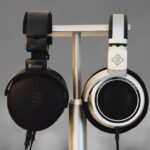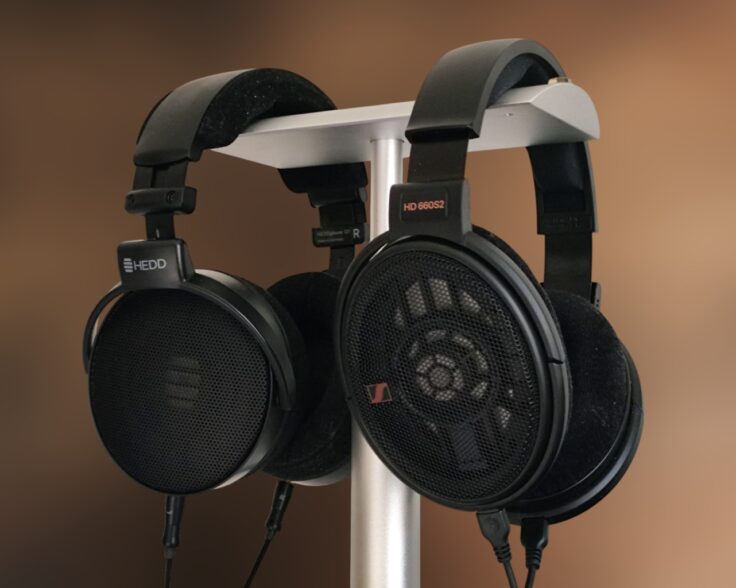

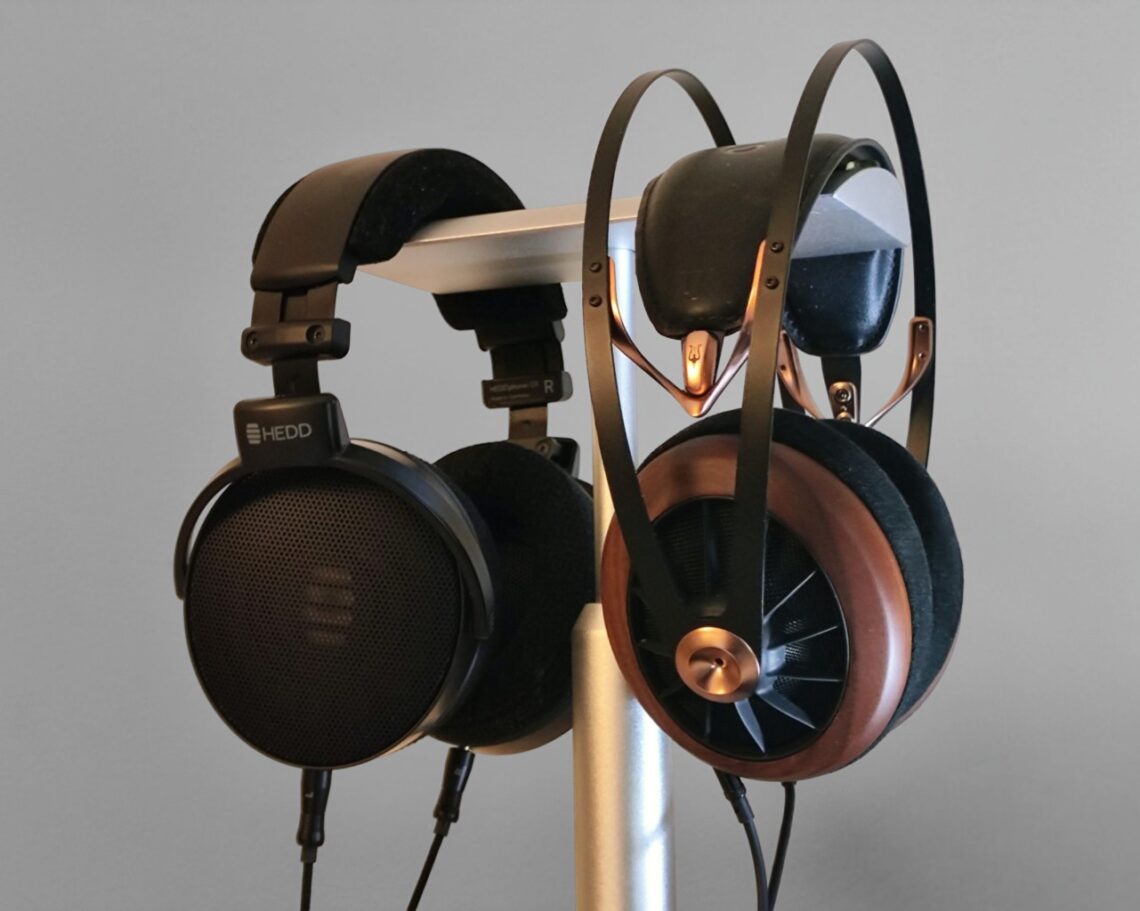
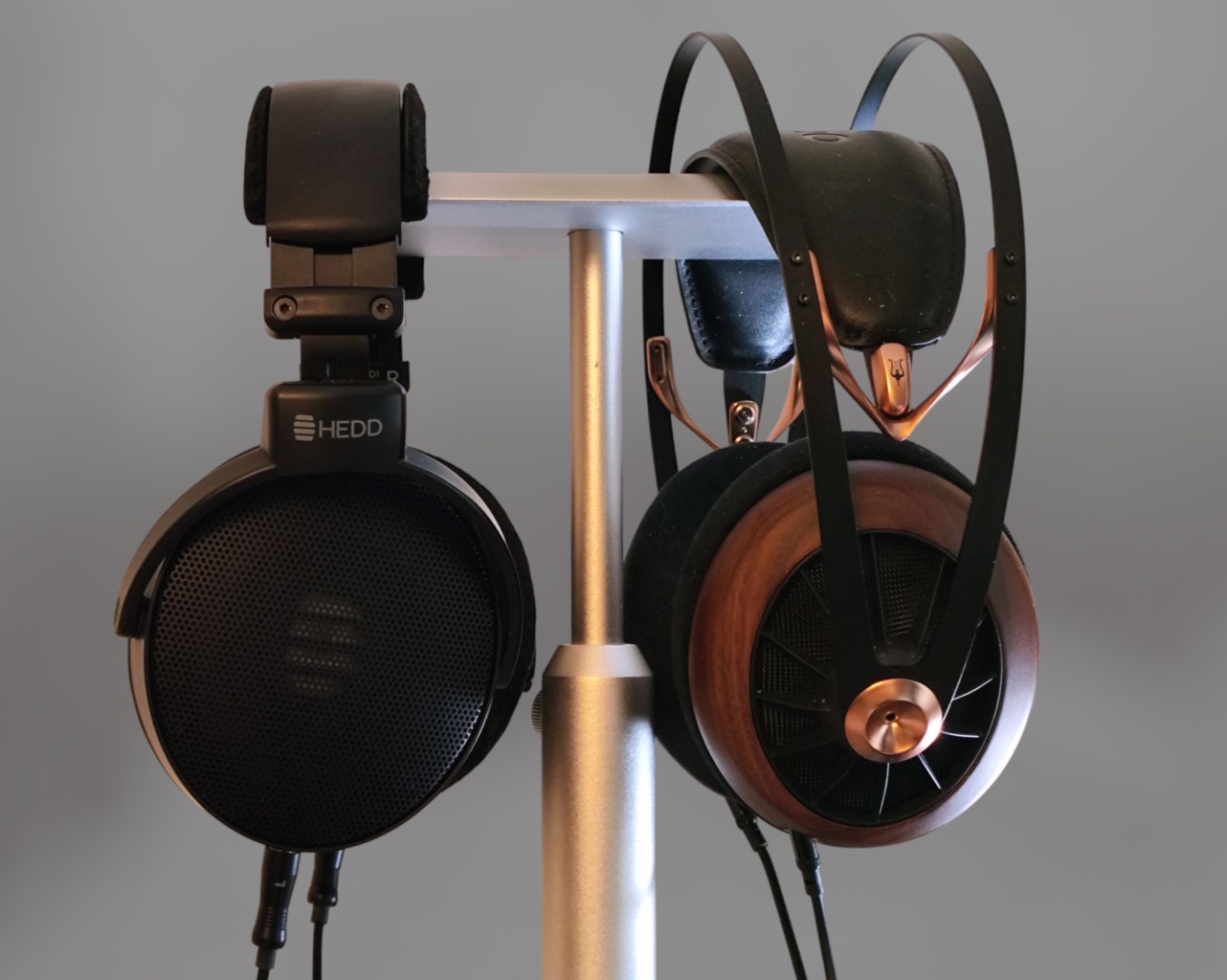
The Meze 109 PRO and the HEDD D1 are dynamic driver headphones aimed at different audiences but priced very similarly, both currently at $799 (excluding tax) in the US. In Europe, the D1 costs €699 and the 109 PRO €750 (including VAT).
The Meze 109 PRO is Meze’s most expensive dynamic driver model, featuring a 50 mm, 40-ohm driver. It was launched in 2023.
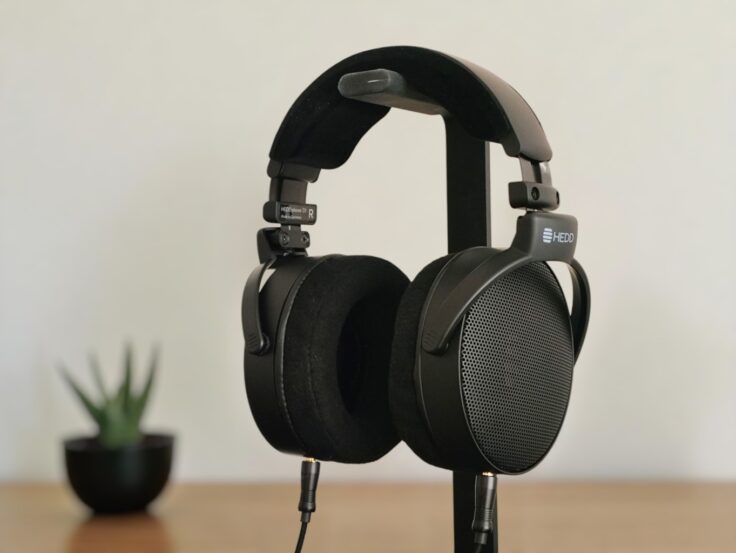
The HEDD D1 was released in late 2025 and is the company’s first dynamic headphone. HEDD has already achieved success with its AMT ribbon driver headphones, the HEDDphone and the HEDDphone TWO. The brand is however mainly known for its active speakers aimed at professional users and studio work.
MEZE 109 PRO SPECIFICATIONS
- Driver: 50 mm Dynamic
- Impedance: 40 Ohms
- Sensitivity: 112 dB SPL/mW at 1 kHz
- Total Harmonic Distortion <0.1% at 1 kHz
- Frequency Range: 5 Hz – 30 kHz
- Ear Cups: Black Walnut
- Two detachable cables: 1.8 m & 3 m
- Cable connector: dual 3.5 mm TS Jack
- Cable termination: 3.5mm
- Weight: 375 g (13 oz.)
Current price and availability:
- Amazon: Meze 109 Pro
HEDD D1 SPECIFICATIONS
- Driver: Dynamic TPCD driver
- Impedance: 32 Ohms
- Sensitivity: 100 dB
- Cable: 2 m detachable
- Cable headphone connectors: dual 3.5 mm
- Cable termination: 3.5 mm jack with screw on adaptor
- Semi-circular detachable pads “lip style”
- Modular design with replaceable parts
- 5 year warranty
- Weight: 356 g (measured)
Price at launch: $799 (excl.tax), €699 (incl. VAT), and £599 (incl. VAT).
BUILD AND COMFORT
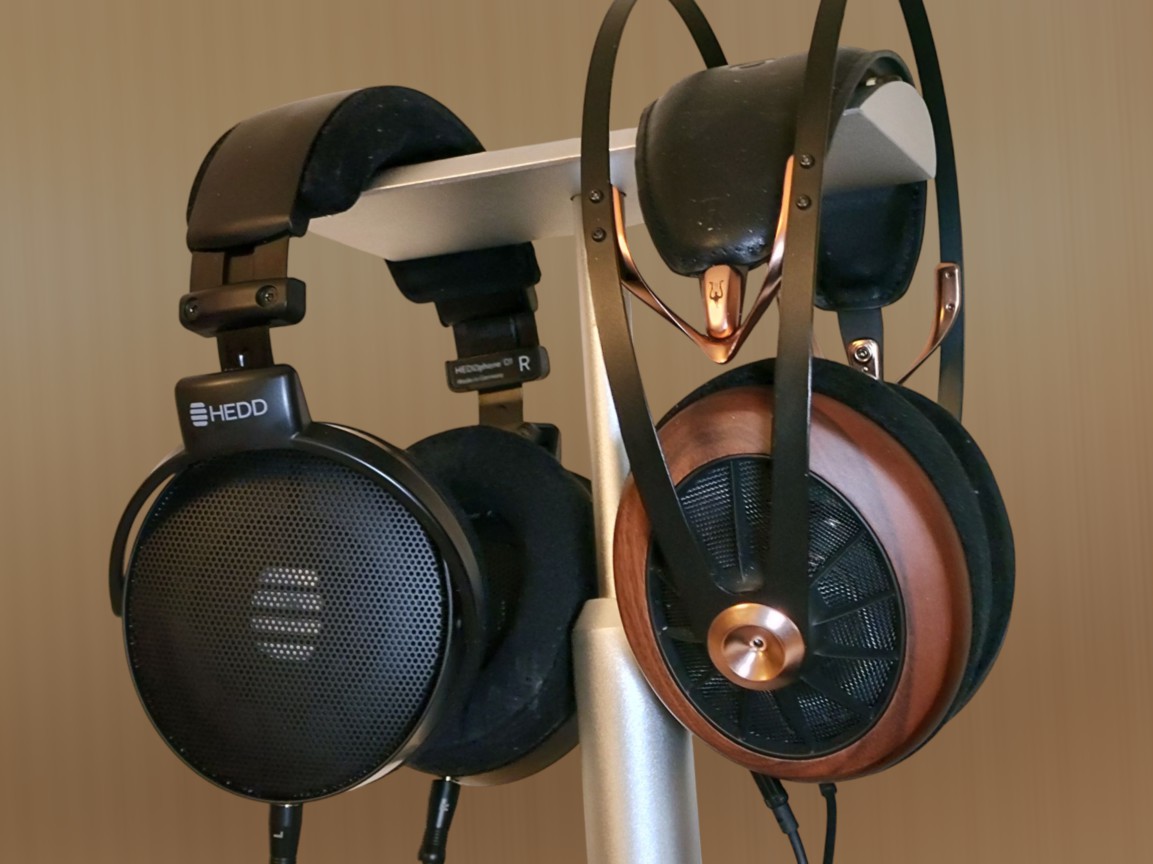
The two headphones are clearly designed with different audiences in mind. The 109 PRO targets audio enthusiasts with its wooden cups and aesthetic design, the D1 It’s very utilitarian, targeting the professional market.
They are both fairly light at around 350 g and I find them both very comfortable to wear. Neither headphone is foldable, but both provide good swivel action.
Both headphones have dual entry detachable cables with 3.5 mm connectors, however, because of the deep insert design, the 109 Pro needs the connectors to be extra long and narrow.
Both headphones have detachable, slightly oval ear pads using the widely used lip-and-groove attachment.
LISTENING COMPARISONS
Associated equipment:
- Amplifier: Topping A90
- DAC: RME ADI-2 DAC FS
Hello Dave by Michael Wollny
Both sound excellent. The 109 Pro offers a larger soundstage with better layering, along with stronger bass and treble. The D1 has a flatter, more neutral profile, it’s not as lively or three-dimensional.
Impedans by Erlend Apneseth Trio
The 109 Pro delivers a spacious sound with rich, punchy bass and crisp, airy highs. The D1 sounds flatter but more neutral, with tighter bass and a less sparkly treble.
The Sun Always Shines on TV MTV Unplugged by a-ha
The D1 has a more forward midrange, while the 109 Pro sounds slightly recessed in direct comparison. Vocals on the 109 Pro feel darker and more laid-back, but it delivers a more spacious presentation.
Spontaneous Compositorius by Thomas Agergard
The saxophone is more present and forward with the D1, while it sounds darker and more distant with the 109 Pro. The bright percussion is airier on the 109 Pro and slightly more grounded on the D1. The bass is fairly similar between them here. Overall, the D1 feels better balanced and more neutral.
Maple Noise by Greene Serene
In this dynamic jazz quartet improv, they both sound excellent with strong dynamic capabilities. Once again, the D1 is more neutral, while the 109 Pro places a bit more emphasis on the bass and treble. Both sound spacious.
Escape Route by Boris Blank
The 109 Pro delivers fuller bass, airier highs, and a more open soundstage, while the D1 sounds flatter and more neutral.
It Could Be Sweet by Portishead
The bass is fuller and softer with the 109 Pro, while it’s tighter and more textured with the D1. Vocals are more upfront and articulate on the D1, but more laid-back on the 109 Pro. The soundstage is larger, airier, and deeper with the 109 Pro, whereas the D1 feels more neutral, flatter, and grounded.
Vicarious by Tool
The 109 Pro has a larger soundstage but also sounds a bit hazier, while the D1 is flatter yet more grounded, with greater midrange presence and less airy treble.
Spring 1 Vivaldi Recomposed by Max Richter
Again, the D1 feels more straightforward and grounded, with stronger presence in the midrange. The 109 Pro is airier, brighter, and a bit more delicate in the highs, with a thicker low end.
WRAPPING IT UP
Sound Signature
The Meze 109 Pro and HEDD D1 offer distinct sound signatures. The D1 is very neutral, with a flat presentation where every frequency feels equally represented. The 109 Pro has a slightly V-shaped profile, featuring fuller bass and brighter, airier highs.
Treble
The D1’s treble is well-balanced, detailed, and articulate without being overly crisp, while the 109 PRO delivers a brighter, airier presentation with a similar level of detail, though it can sometimes sound a bit more delicate.
Midrange
The D1 has a more present and upfront midrange that feels very neutral, while the 109 Pro sounds slightly recessed in comparison, with a more polite and mellow midrange.
Bass
The D1 delivers tight, well-balanced bass, while the 109 Pro has thicker, softer bass with less detail but greater presence.
Soundstage and Imaging
Although the D1 has a very good soundstage and imaging capabilities on its own, the 109 Pro sounds larger, airier, and more spacious, with greater depth and more space between instruments. This is often the result of a well-executed V-shaped sound signature.
Detail, Dynamics, and Timbre
The overall detail level is very similar, except in the bass region where the D1 is superior. Both have great dynamics, though the 109 Pro can sometimes feel more lively, while the D1 may seem slightly flat in direct comparison.
Timbre generally feels more natural and neutral on the D1, but the 109 Pro remains organic and very enjoyable – but with a different flavour.
CONCLUSION
The HEDD D1 and Meze 109 PRO are both excellent headphones that present music in slightly different ways. The D1 has a very neutral tuning, while the 109 PRO offers richer lows and brighter highs, often giving an impression of greater space and stronger dynamics. For professional studio work, I would definitely choose the D1. For simply listening to music, both are equally great but offer different flavors.
Thanks for reading. You can support us by purchasing anything using any of our affiliate links.
- Amazon: Meze 109 Pro
Any purchase you make on Amazon or Linsoul with any of our affiliate links will give us a small provision at no cost to you.
We only get a provision for items that are not returned, so there’s no incentive for us to recommend something that’s not good.
Linsoul : Headphones, Earbuds, Wireless Earbuds, Desktop DAC/AMP, Portable DAC/AMP, Digital Audio Players,
Amazon: Headphones, IEMs, Headphone Amplifiers, Home Audio or Anything else.
.
If you enjoyed this article or other content on The Headphoneer, you might consider leaving a small donation to keep this website up and running. No donation is too small. Thanks for supporting us!

If you like our work please follow us on Instagram, Facebook and Twitter , it will help us grow. Sharing is caring 🙂