
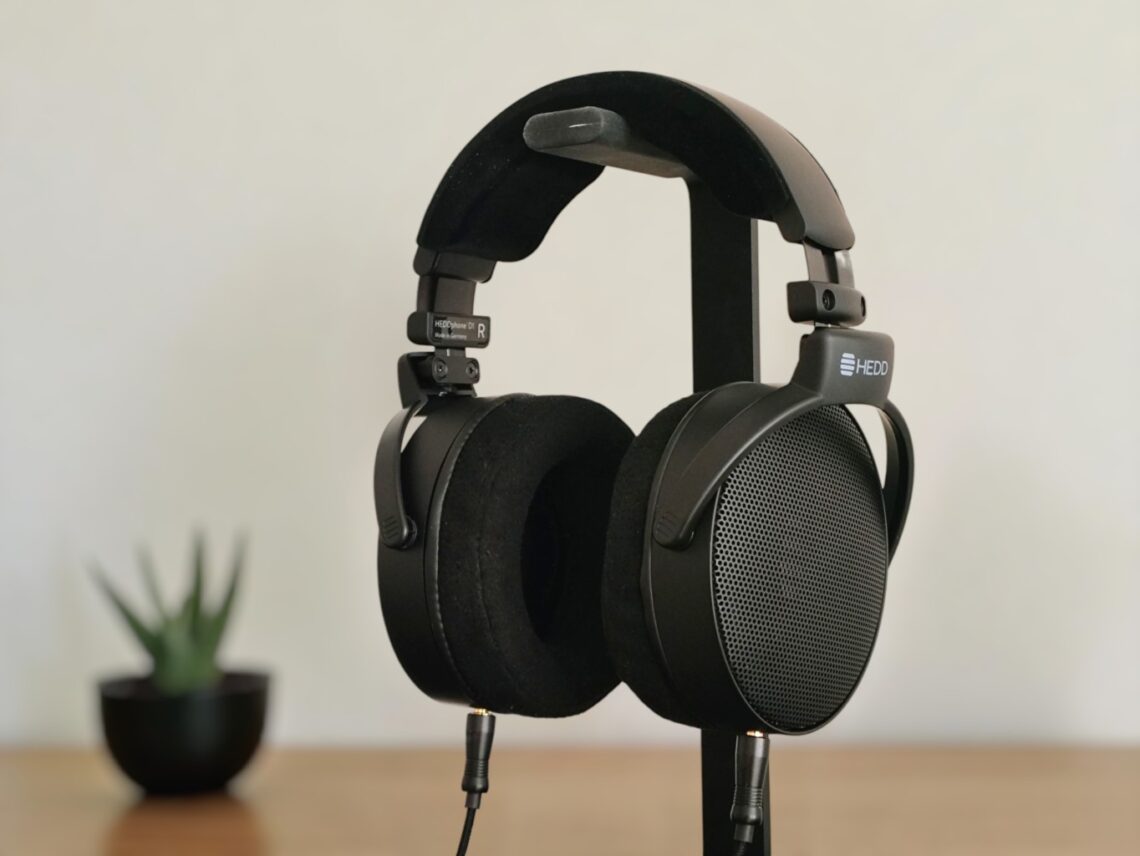
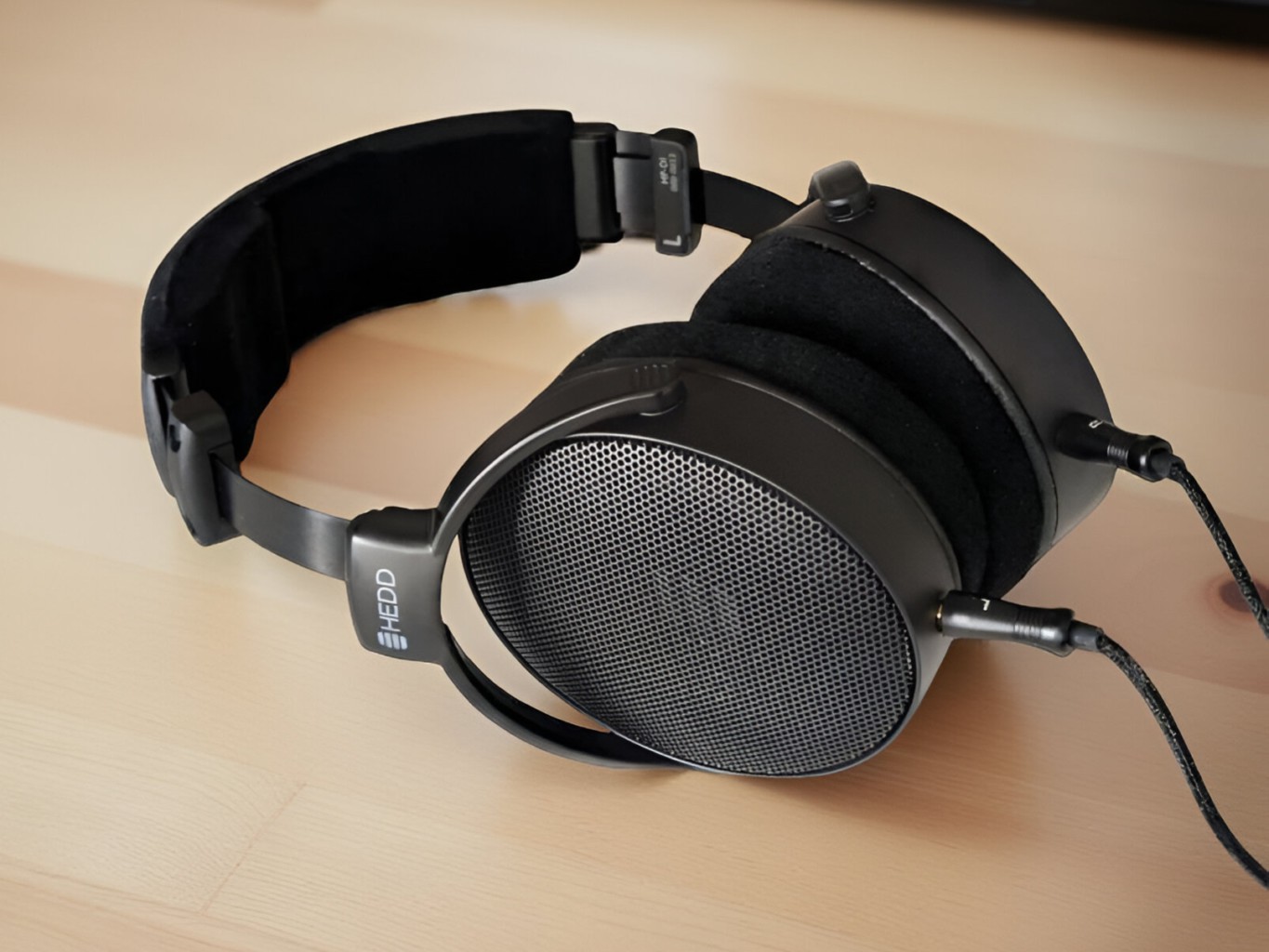
The HEDDphone D1 is HEDD Audio’s first dynamic driver headphone. It’s an open-back design built for studio-grade neutrality and clarity.
At launch, the D1 is priced at $799 (w/o tax), €699 (incl. VAT), and £599 (incl. VAT).
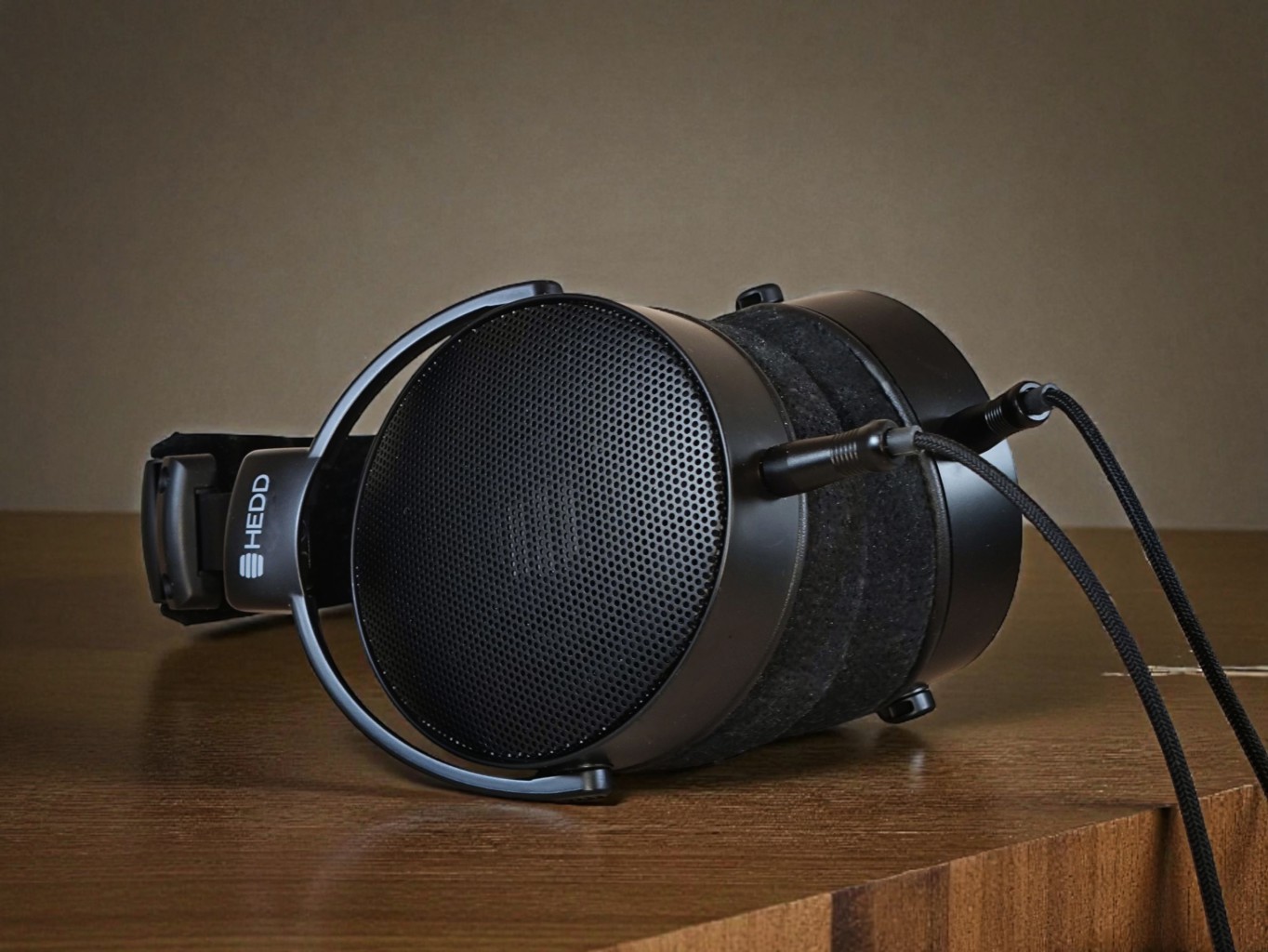
The HEDDphone D1 uses a 50 mm driver with a thin-ply carbon diaphragm (TPCD). Actually it’s the first headphone to use this diaphragm material. Thin-ply carbon is an ultra-light, ultra-rigid material used in many areas, including high-end speaker drivers by manufacturers such as SEAS, a Norwegian supplier known for its premium woofers and tweeters.
Building on their loudspeaker design expertise and experience with their more expensive AMT-driver headphones, HEDD Audio has tuned the D1 for accurate tonal balance, high detail level, and low listening fatigue. It is made in Germany and features a modular, serviceable design with replaceable parts and comes with a 5-year warranty.
ABOUT HEDD
HEDD was founded in 2015 and is mainly designing and producing studio monitors, subwoofers, and main speakers. They entered the headphone market in 2020 with the HEDDphone, which features an AMT driver. AMT stands for Air Motion Transducer, a special type of ribbon driver design with folded/pleated diaphragm rarely used in headphones.
Ribbon drivers follow the same underlying operating principle as planar magnetic designs, and in loudspeakers they are most often used as tweeters. In the headphone world, the only real competitor using ribbon technology is RAAL. Their ribbon implementation is completely different from HEDD’s AMT approach, and unlike HEDD’s AMT headphones, RAAL models cannot be driven by standard headphone amplifiers.
While the first HEDDphone is still available, HEDD released their second version in late 2023: the HEDDphone TWO targeting professionals and the HEDDphone TWO GT, tuned more for audiophiles.
HEDDphone D1 SPECIFICATIONS
- Type: Open back full size
- Driver size: 50 mm
- Driver type: Dynamic TPCD
- Impedance: 32 Ohms
- Sensitivity: 100 dB
- Cable: 2 m detachable
- Cable headphone connectors: dual 3.5 mm
- Cable termination: 3.5 mm jack with screw-on adapter
- Pads: detachable ring with “lip-and-groove mounting”
- Modular design with replaceable parts
- 5 years warranty
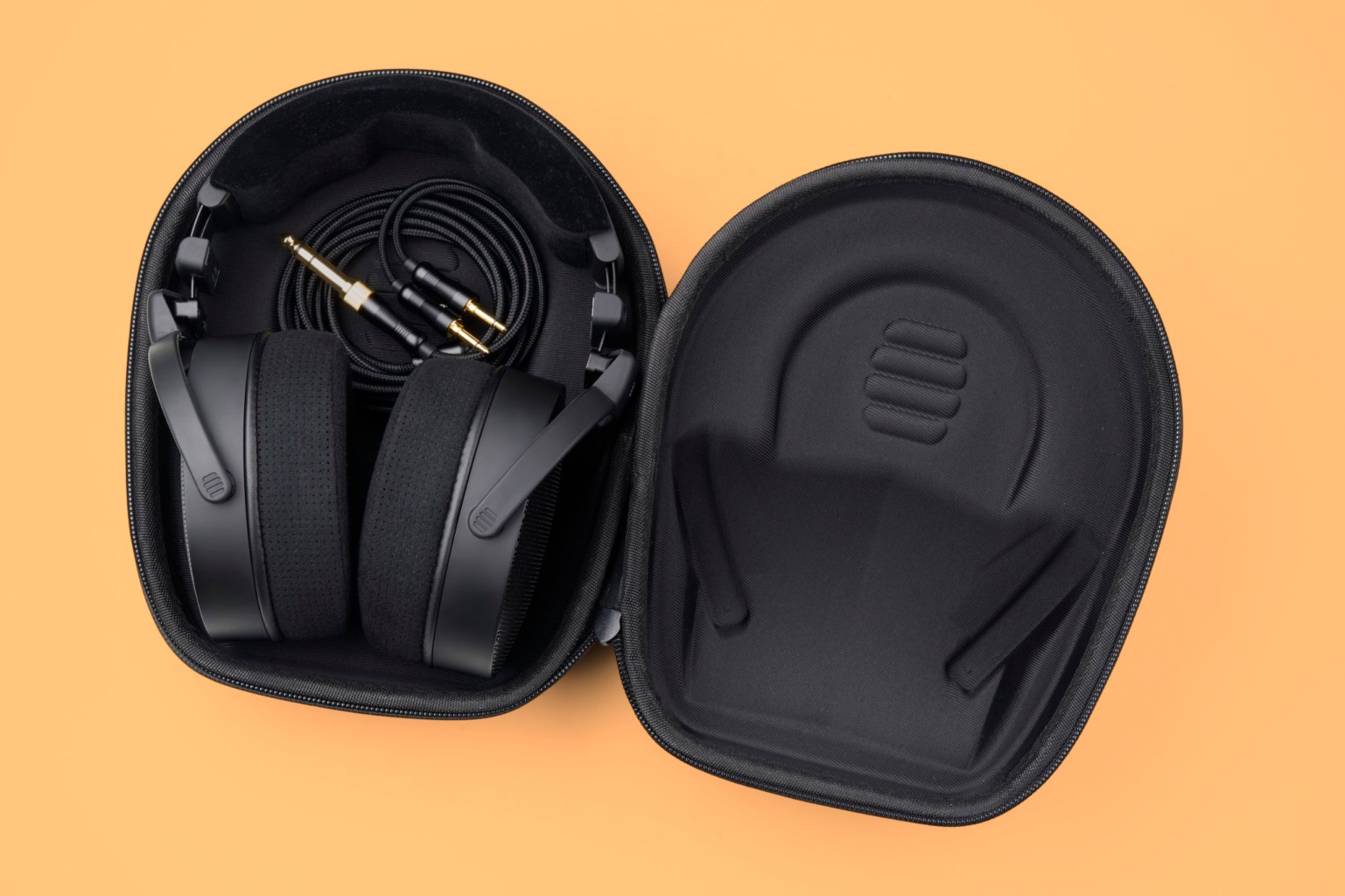
- Carry case included
- Weight: 356 g (measured)
BUILD AND COMFORT
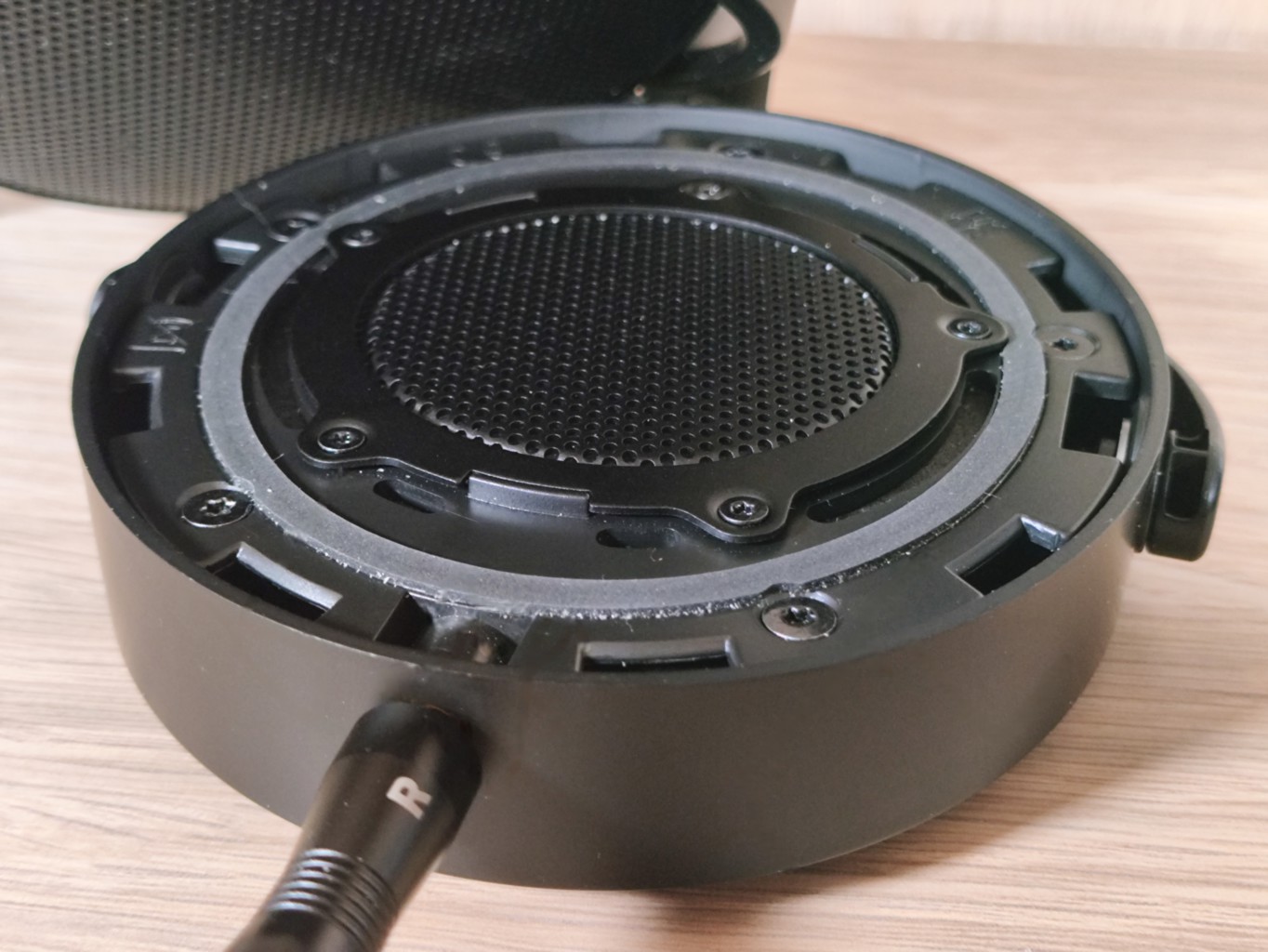
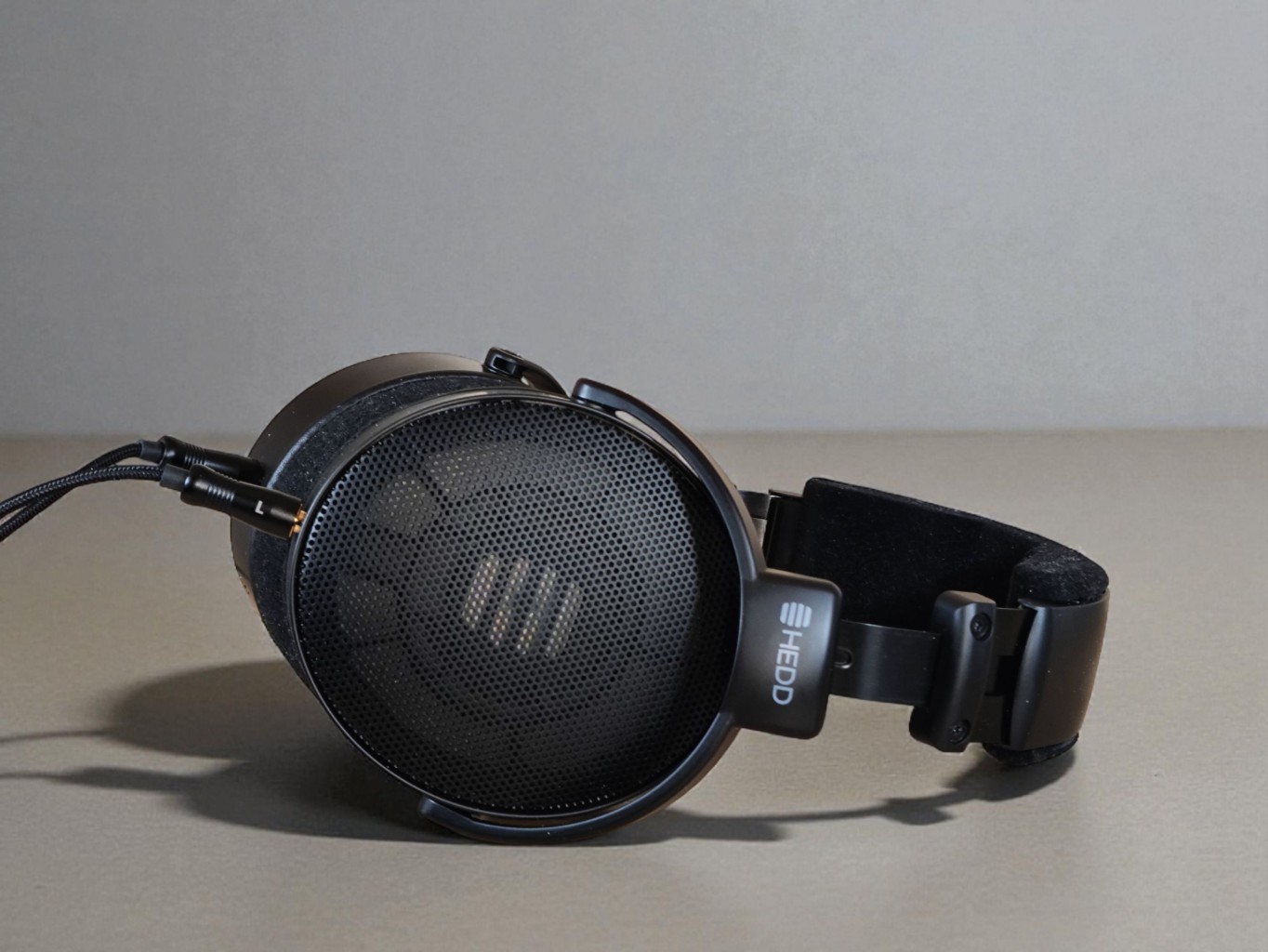
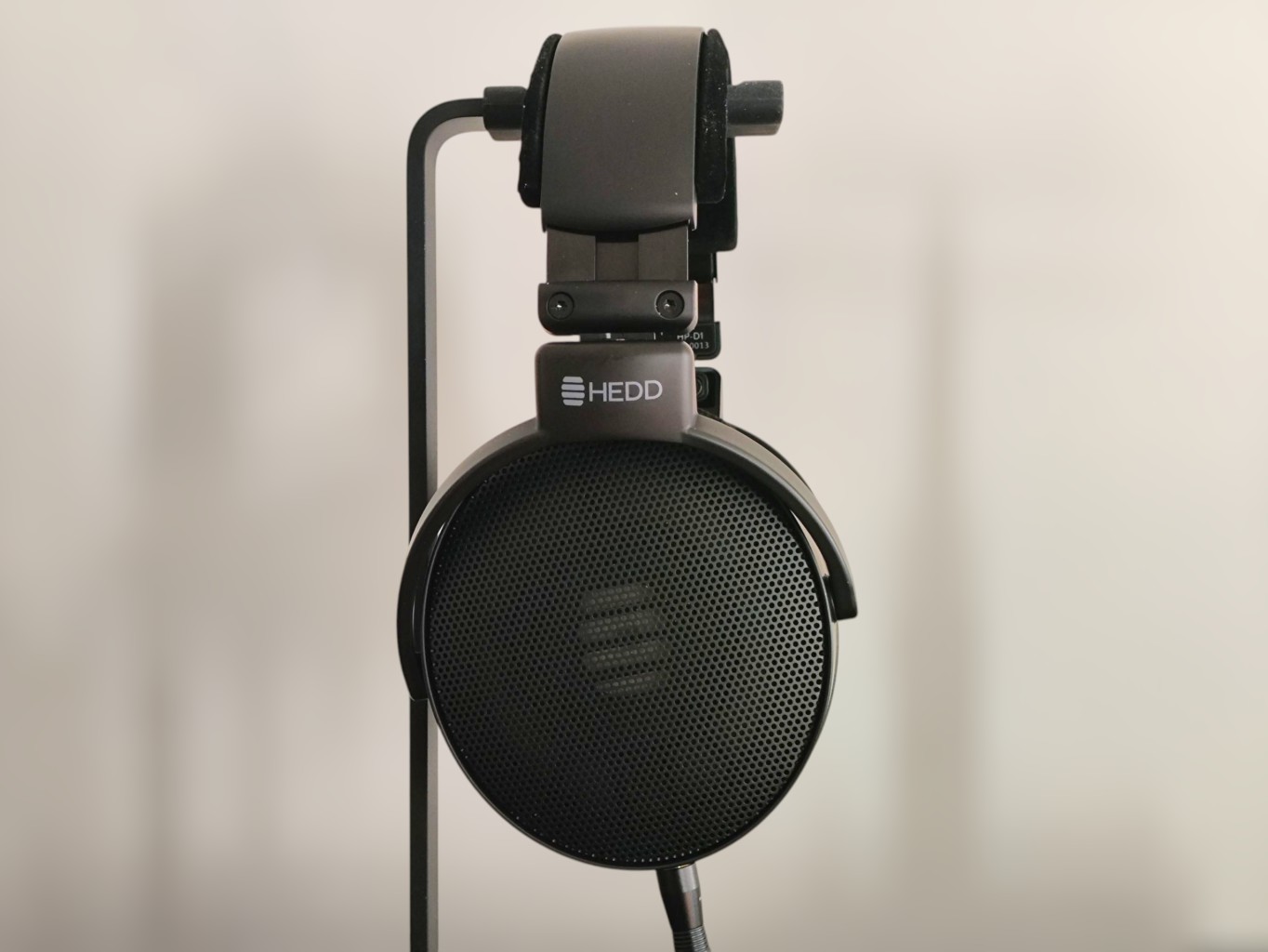
The D1 is clearly built for professional use, with an emphasis on serviceability and straightforward parts replacement. For a full-size headphone, it’s fairly light at 356 g, and very comfortable to wear. The cups offer a good amount of swivel, though they do not fold.
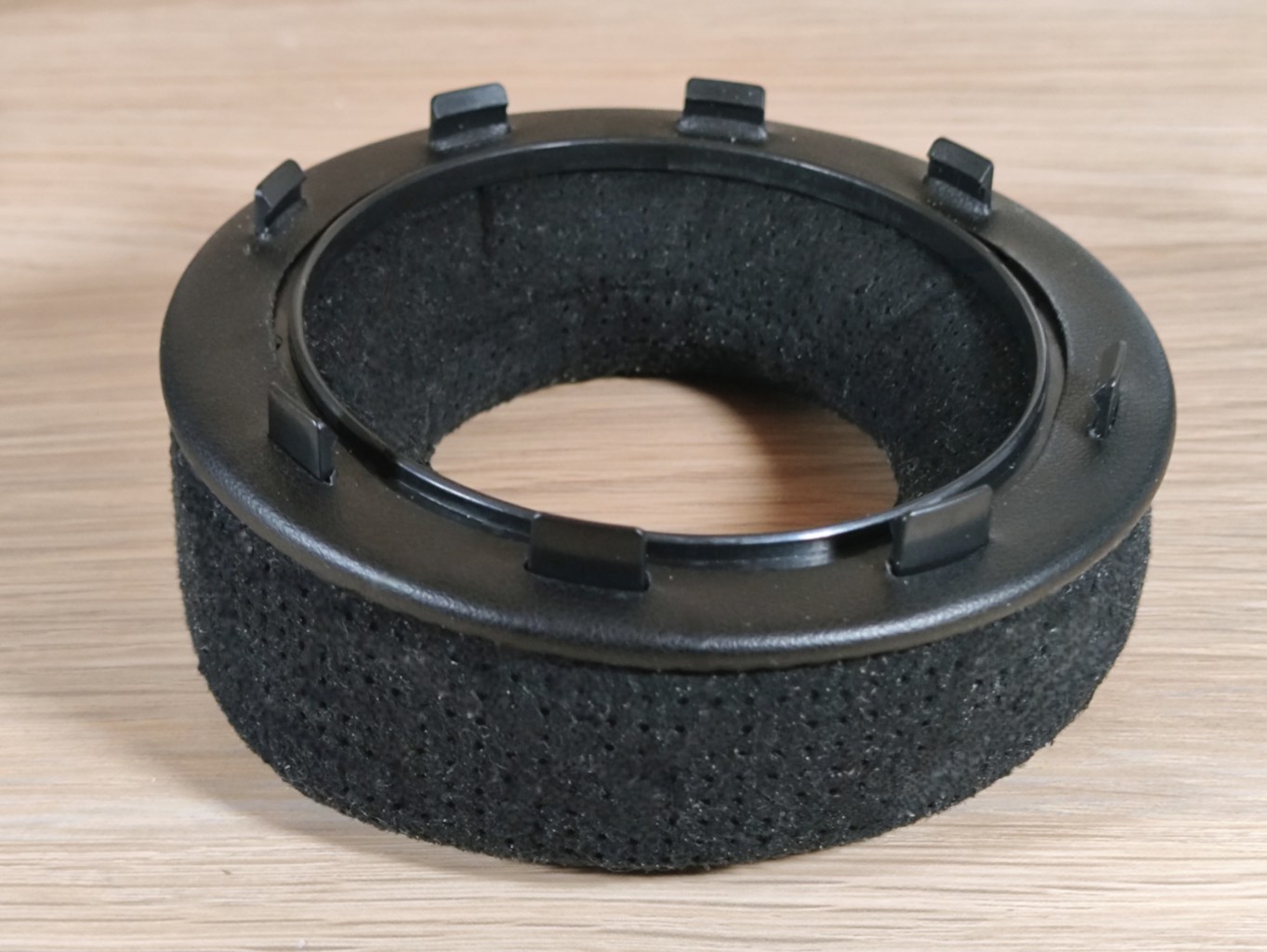
The pads are made of semi firm, comfortable foam with a synthetic suede like material that is fenestrated with small holes on all sides. They’re almost circular, measuring 10 x 9 cm on the outside with a 6 x 5 cm internal opening. The pads are attached to plastic rings using the widespread lip-and-groove attachment design. The plastic ring easily clicks into place. This design means that standard circular pads would work, making pad swapping very accessible.
The cable is 2 m long. It’s detachable with dual 3.5 mm connectors on the headphone side which makes cable swapping easy. It is terminated with a standard 3.5 mm jack with an included screw-on adapter for 6.35 mm jacks.
If you want balanced operation, you’ll need to swap the cable. That’s easy to do, since the D1 uses standard 3.5 mm connectors.
AMPLIFICATION
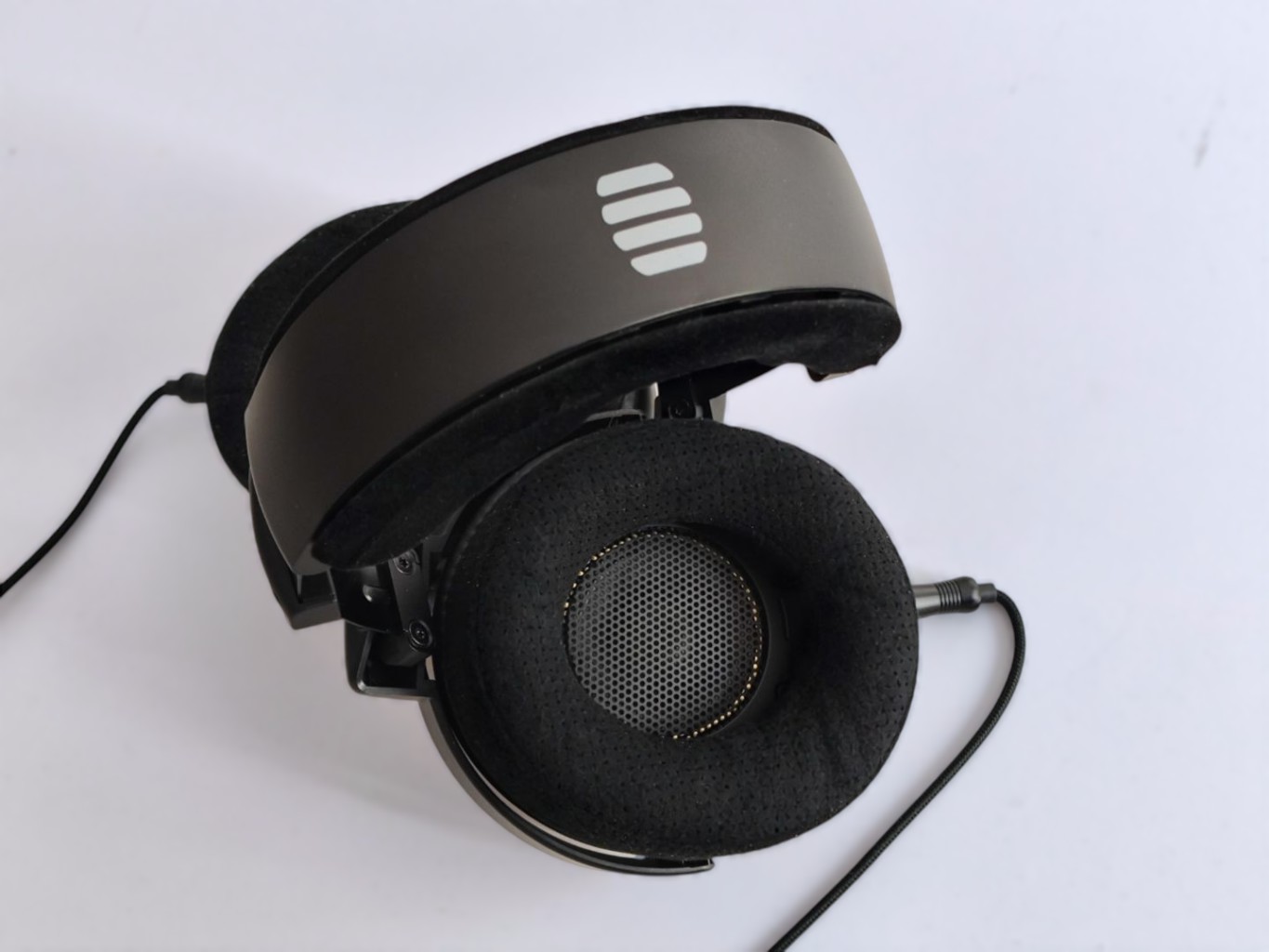
The HEDDphone D1 is a dynamic driver headphone with a low impedance of 32 Ohms and a friendly sensitivity of 100 dB. It should not be much of a challenge for modern desktop headphone amplifiers, but if you have older gear with higher impedance and/or higher background noise they might not be optimal.
Anyway, the D1 is made for the modern era and I find it pairs well with all my desktop amplifiers. Examples are the Ferrum Erco MK2, Topping A90, and Schiit Magni Heretic. Importantly, the D1 is a great match for the RME ADI-2 DAC FS. My cherished Questyle CMA800R gives the D1 a smoother, more delicate feel, but for uncoloured neutrality, I get the absolute most out of its potential with the Violectric VHA 226 (which is a 222 with a DAC card)
STANDALONE LISTENING IMPRESSIONS
Associated equipment
- Headphone amp: Violectric DHA V226/HPA V222
- DAC: RME ADI-2 DAC FS
Sunrise by Norah Jones
The bass is tight and well-defined, never bloomy or overpowering as it can be on some headphones. Vocals are open and nuanced without dominating the mix, while imaging is excellent and instrument placement feels precise and stable.
Rambling Man by Laura Marling
Vocals are rendered beautifully, with plenty of detail, yet the other instruments never take up more space than they should.
Midnight City by M83
This busy electronic indie-pop track sounds very coherent and even on the D1. It’s punchy and detailed, well balanced across the frequency range, and it stays controlled through dense passages without becoming sharp or diffuse.
As Before by Olga Konkova
The cajón drum has a satisfying punch, and the piano is clear and crisp without coming close to distortion or harshness. Vocals are straightforward and natural, with a touch of smoothness and plenty of detail and articulation.
It Could Be Sweet by Portishead
The bass is nicely balanced—tight and punchy without dominating. Vocals are clear, clean, and well separated, and both imaging and instrument separation are excellent.
Escape Route by Boris Blank
This track has a lot happening on the same level, and the D1 renders it truthfully. It can feel a bit overwhelming at first, since most headphones naturally steer your attention toward certain frequency ranges, but this is exactly what true neutrality is about.
Spontaneous Compositorius by Thomas Agergard
Again, the instruments are very well balanced, with none of them dominating. The saxophone, double bass, and bright percussion are all presented evenly. The percussion doesn’t have the extra zing and sparkle you might get from more treble-heavy headphones, but it remains detailed, nuanced, and completely non-fatiguing.
Mahler’s Symphony No 2 III by Paavo Järvi
All the instruments sound natural and neutral, with excellent separation and a clear sense of space. The kettle drums deliver a satisfying punch when the music calls for it.
Spring 3 Vivaldi Recomposed by Max Richter
Excellent tonality and microdynamics. Every detail is cleanly articulated, the layering is great, and instrument separation is excellent.
Alt e bra by Building Instrument
Dreamy jazz-pop with a great hook. The layering is superb, and the space between instruments is large and deep. The bass drum is tight but feels like it throws its punch from the background. The bright percussion carries plenty of detail without ever becoming piercing.
WRAPPING IT UP
Sound Signature
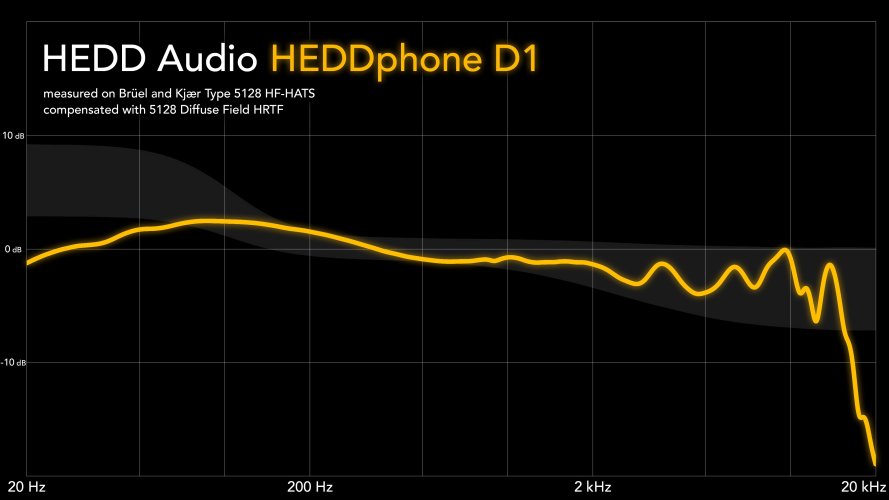
The HEDDphone D1 has a distinctly neutral and uncoloured sound signature. Everything feels balanced and coherent: the bass reaches deep without exaggeration, the mid-range is clear and articulate, and the treble is well defined while avoiding sharpness or fatigue. It presents music in an accurate, honest way that suits both analytical listening and just enjoying music.
Treble
The treble is detailed, clean, and nicely articulated. It offers enough brightness to reveal fine nuances, yet it stays controlled and smooth. Some headphones provide more sparkle, but they often introduce fatigue. The D1 avoids this, delivering a natural and easy-to-listen-to top end.
Midrange
The midrange is upfront, neutral, and highly detailed. Vocals and instruments sound natural with excellent clarity and presence. It maintains a realistic timbre without adding warmth or softness, making it both accurate and engaging.
Bass
The bass is tight, linear, and well extended. It remains balanced and controlled, offering depth and definition without overpowering the rest of the spectrum. Its neutrality and accuracy allow low-end details to come through clearly.
Soundstage and Imaging
The soundstage feels open, and the imaging is precise. Instrument placement is stable and easy to follow. There is a clear sense of space between elements, and the background feels dark and silent.
Detail, Dynamics, and Timbre
Detail retrieval is one of the D1’s key strengths, offering high clarity from bass through treble.
Dynamics are lively and responsive, with both subtle shifts and larger swings presented convincingly.
Timbre is natural and realistic, giving instruments an accurate and believable tone without sounding coloured or clinical.
COMPARISONS
- Amplifier: Topping A90
- DAC: RME ADI-2 DAC FS
SENNHEISER HD 600 vs HEDDphone D1
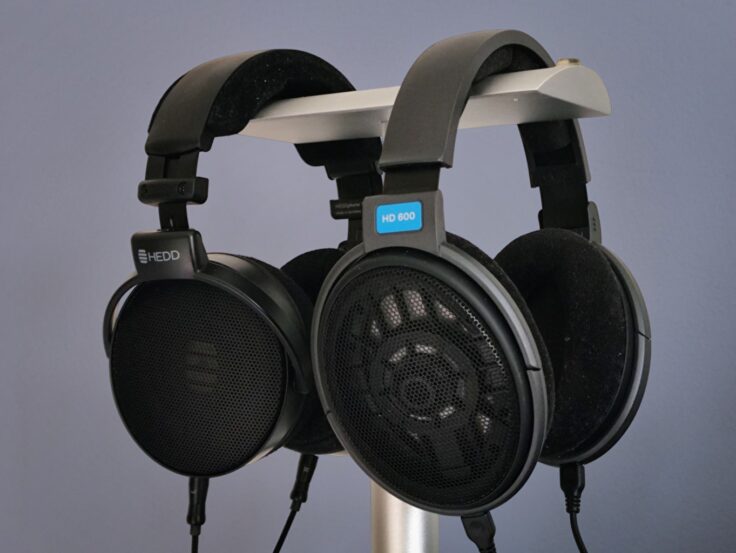
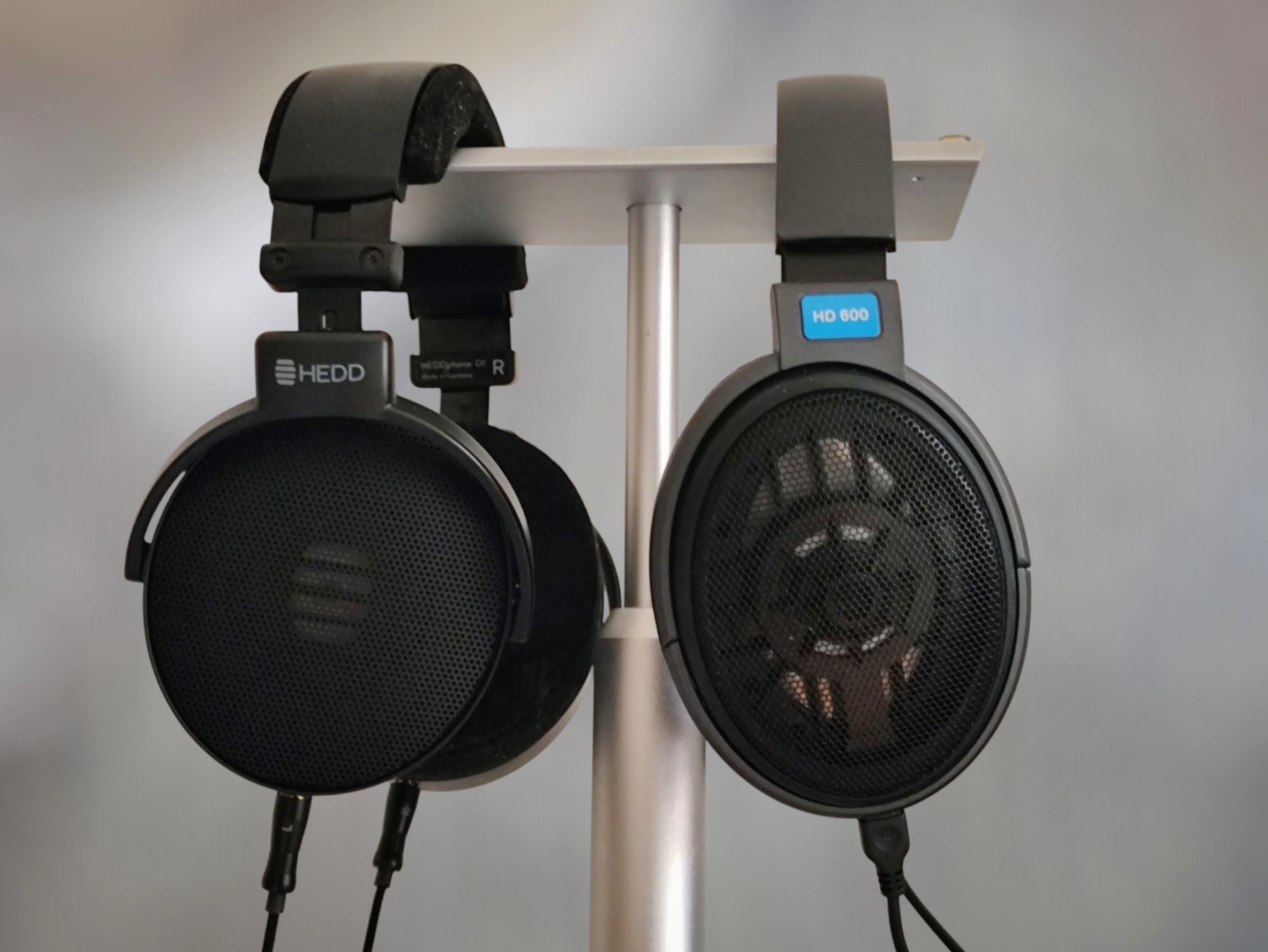
The Sennheiser HD 600 is a true legend in both professional and audiophile circles and hardly needs an introduction. All since its release in 1997, it has remained a reference headphone — an impressive achievement in itself. It’s built around a 38 mm 300 Ohms dynamic driver and can often be bought for around 300 USD.
The HD600 remains a benchmark for natural, balanced sound with a midrange that has earned its legendary reputation. The D1 stays remarkably close to that signature while delivering clearer highs, tighter and more linear bass, better separation, and stronger overall articulation. If you love the HD600 but want a cleaner, more detailed, and more modern take without losing the core tonality, the D1 feels very much like a direct upgrade.
That said, the differences are more complex than I can describe in a few lines, and I recommend reading my full comparison review if interested:
HEDDphone D1 vs HD 600 Comparison
- Amazon: HD600
HEDDphone D1 vs SENNHEISER HD660S2
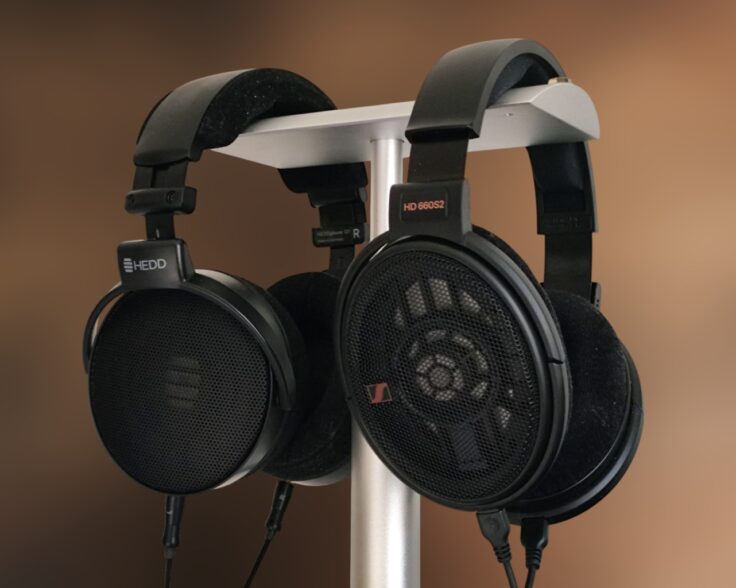
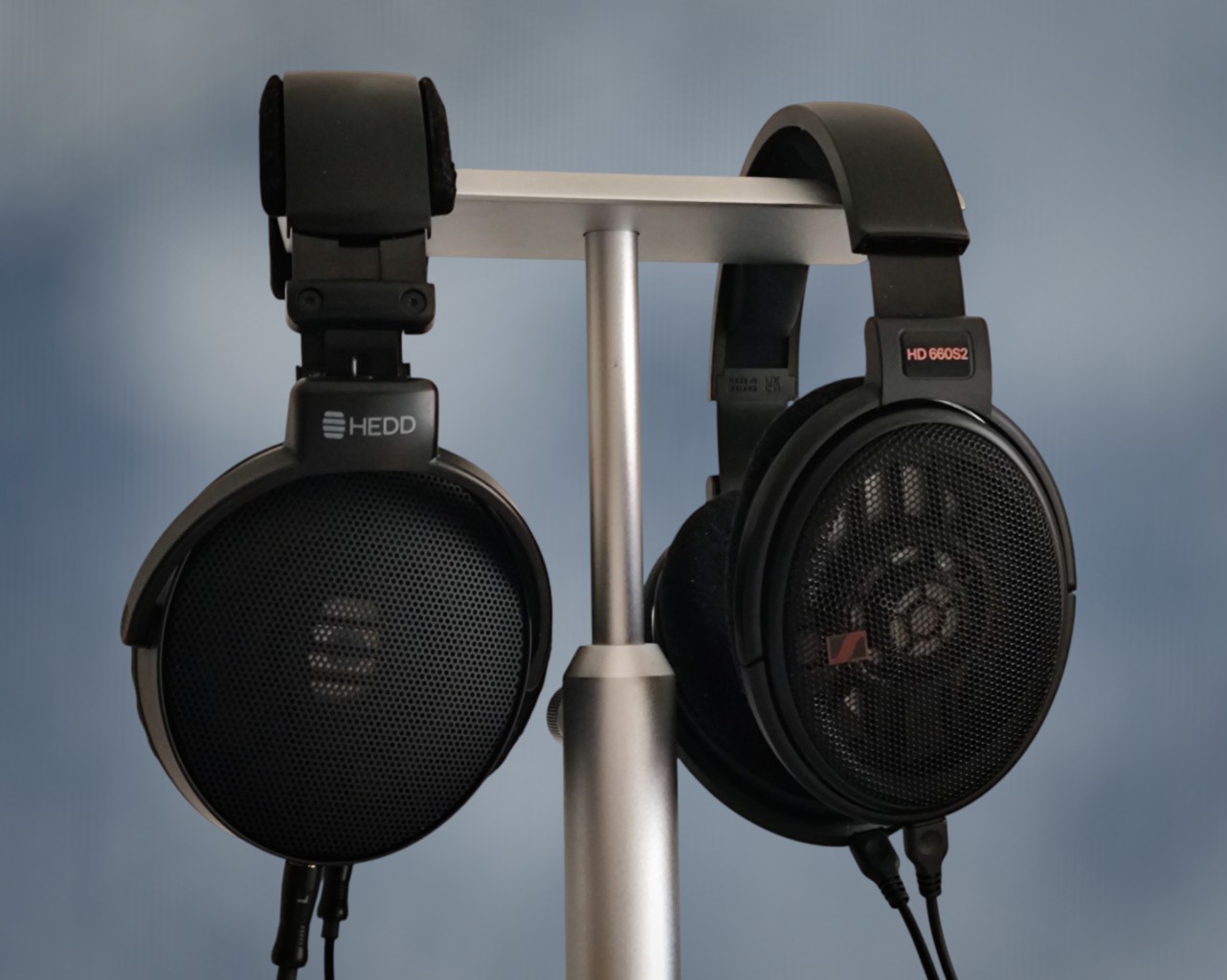
The HD 660S2 is the latest model in Sennheiser’s HD600 series. Launched in 2023, it typically retails for around 499 USD.
Overall The HD 660S2 is not very different from the D1 but delivers a smoother, sweeter, and more “musical” sound, while the D1 is tighter, more articulate, and precise, offering better detail, bass control, and instrument separation.
Both are “neutral and natural” sounding, so preference comes down to taste. Technically, the D1 is superior in my setup, but the HD 660S2’s slightly less precise, yet charming and smooth delivery certainly has an appeal.
That said, the differences are more complex than I can describe in a few lines, and I recommend reading my full comparison review if interested:
HEDDphone D1 vs HD 660S2 Comparison
- Amazon: HD 660S2
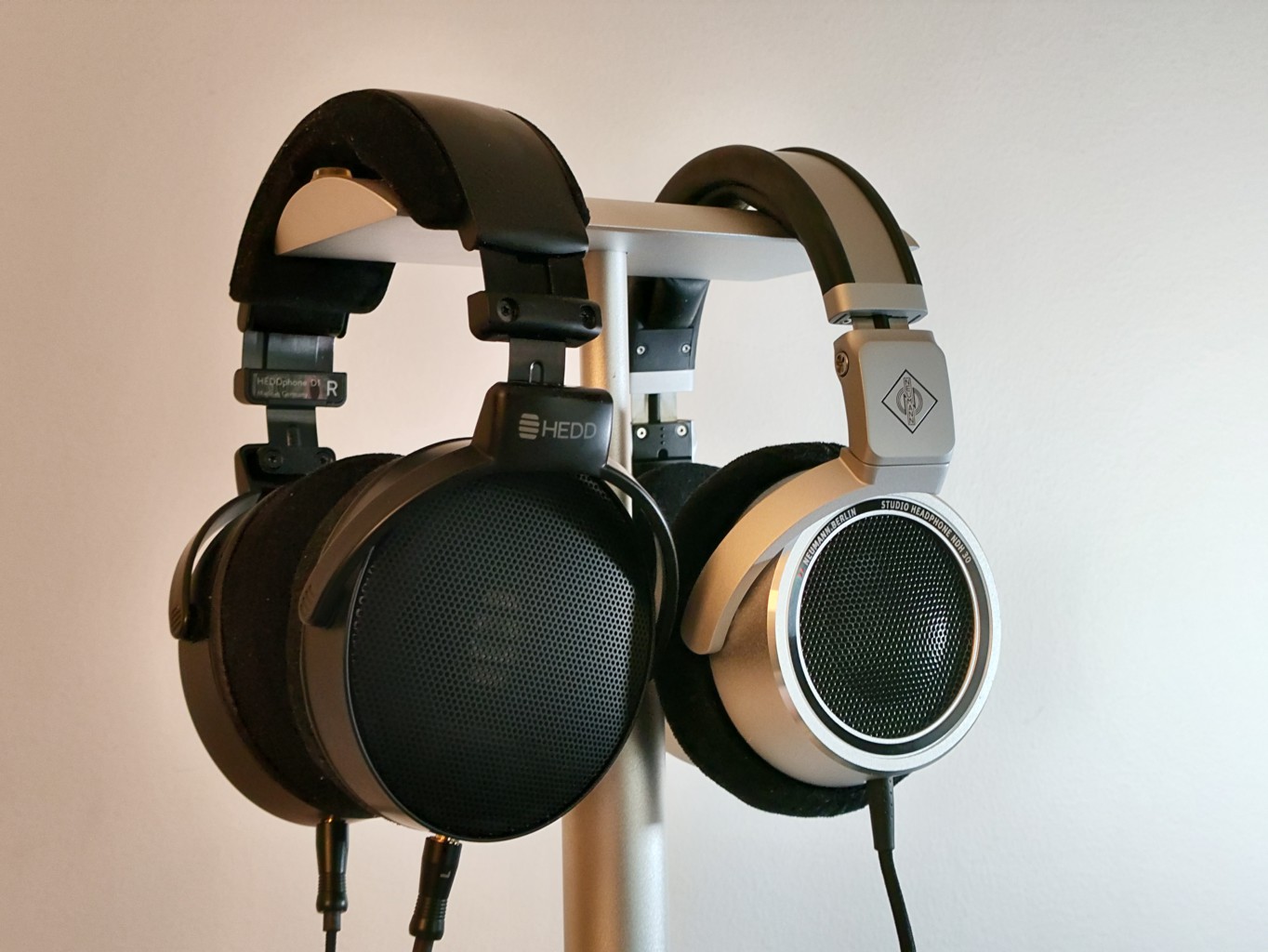
NEUMANN NDH 30 vs HEDDphone D1
Like HEDD, Neumann is best known for products aimed at the professional market. However, Neumann’s history goes much further back—they began producing microphones in 1928. Now owned by Sennheiser, the company has expanded into studio-grade headphones, resulting in the release of the closed-back NDH 20 and the open-back NDH 30. The NDH 30 uses a 120 Ohms dynamic driver and it’s usually available below 600 USD.
The NDH 30 and HEDDphone D1 are both neutral-leaning, detailed headphones, but the D1 ultimately feels cleaner and clearer. It’s more even and coherent overall, with tighter bass, a clearer midrange, and more precise imaging. The NDH 30 has a mild V-shape, adding a bit more bass and treble while gently pushing the mids back, giving it a slightly brighter but also more colored presentation. Both offer good soundstage, dynamics, and a natural sounding timbre.
That said, the differences are more complex than I can describe in a few lines, and I recommend reading my full comparison review if interested:
HEDDphone D1 vs NDH 30 Comparison
- Amazon: NDH 30
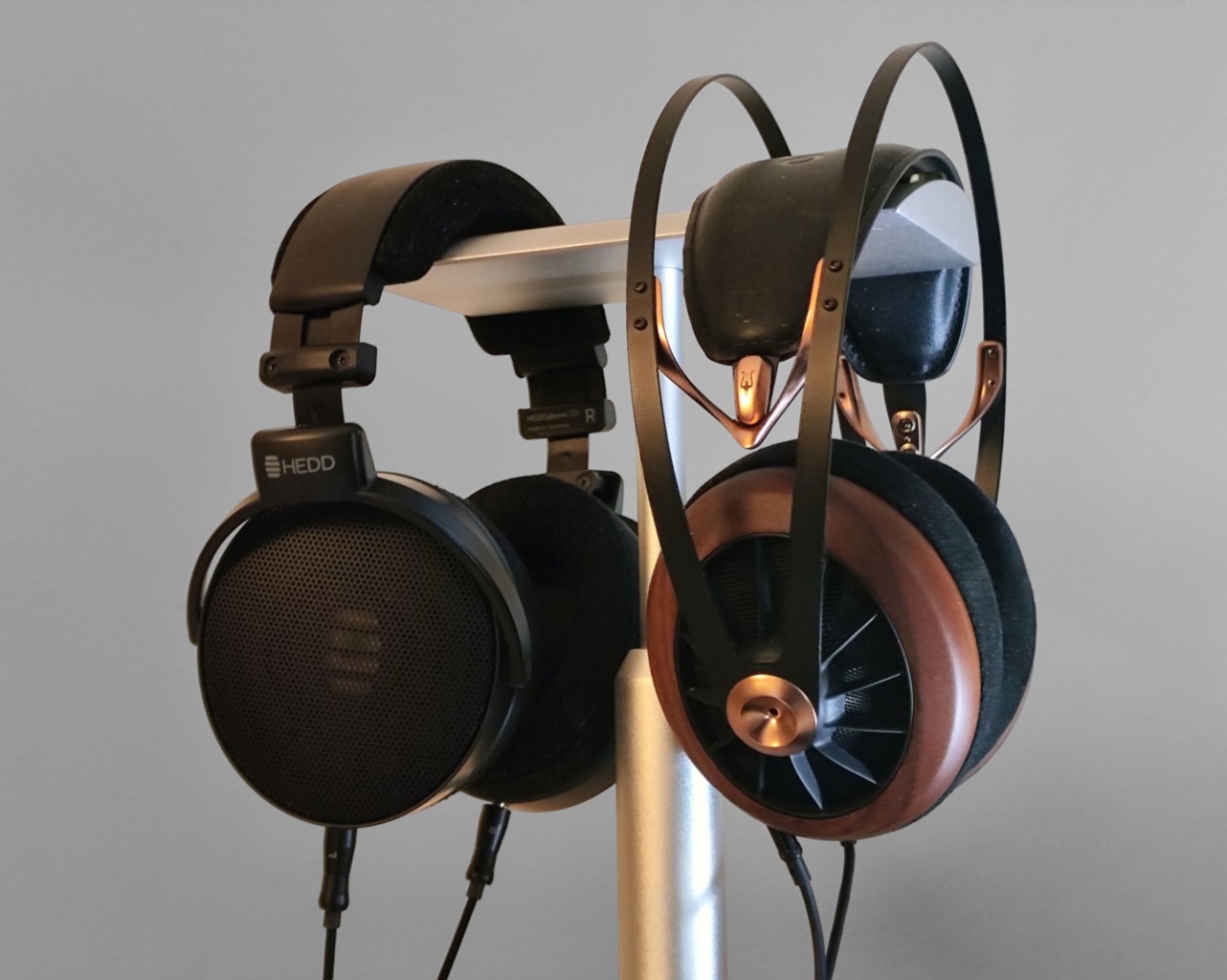
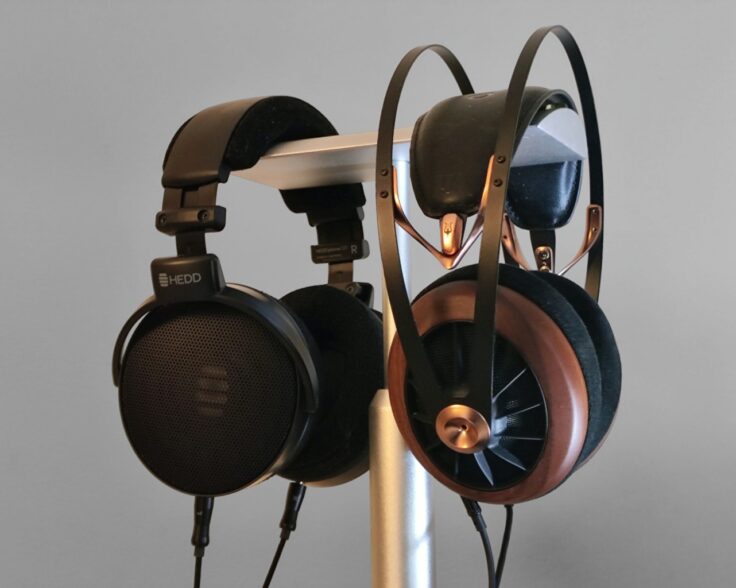
MEZE 109 PRO vs HEDDphone D1
The Meze 109 Pro is Meze’s most expensive dynamic-driver headphone. It is currently priced similarly to the D1 at 799 USD (w/o tax) or 750 EUR (incl. VAT).
The physical design makes it clear that it is aimed more at audiophiles than professionals. Its wooden cups, refined aesthetics, and very comfortable suspended leather headband stand in contrast to the D1’s more utilitarian design language.
Also on the sound, The HEDDphone D1 and Meze 109 Pro take different approaches. The 109 Pro brings fuller lows, brighter highs, and a bigger, airier stage, giving music more space and liveliness. The D1 is flat, neutral, and precise, with tighter bass, a more accurate midrange, and more natural timbre. For studio accuracy, the D1 would be my clear pick; for relaxed listening, the 109 Pro offers a richer, more atmospheric flavor.
That said, the differences are more complex than I can describe in a few lines, and I recommend reading my full comparison review if interested:
HEDDphone D1 vs Meze 109 Pro Comparison
- Amazon: Meze 109 Pro
CONCLUSION
There is a lot to like about the HEDDphone D1. It is comfortable and sturdy, with a practical design that uses widely available cable connectors and pad-mounting standards. The modular build with easily replaceable parts and the reassuring 5-year warranty are features I hope become standard across the industry.
Even more impressive is how effortlessly the D1 presents its neutral sound. After listening to a wide range of music, nothing feels coloured or exaggerated, everything sounds neutral and naturally balanced.
Further, it’s reassuring that the D1 stays close to proven classics like the HD 600, HD 660S2, and NDH 30. Not only does the D1 match them where it matters, it improves on them.
The HEDDphone D1 delivers a genuinely neutral, accurate, and highly detailed listening experience. Its tight bass, clear midrange, smooth treble, and precise imaging make it one of the cleanest and most balanced dynamic-driver headphones in its price class.
If you want a modern, articulate, and uncoloured headphone that performs equally well for all genres, the HEDDphone D1 comes highly recommended.

Thanks for reading. You can support us by purchasing anything using any of our affiliate links.
Any purchase you make on Amazon or Linsoul with any of our affiliate links will give us a small provision at no cost to you.
We only get a provision for items that are not returned, so there’s no incentive for us to recommend something that’s not good.
Linsoul : Headphones, Earbuds, Wireless Earbuds, Desktop DAC/AMP, Portable DAC/AMP, Digital Audio Players,
Amazon: Headphones, IEMs, Headphone Amplifiers, Home Audio or Anything else.
.
If you enjoyed this article or other content on The Headphoneer, you might consider leaving a small donation to keep this website up and running. No donation is too small. Thanks for supporting us!

If you like our work please follow us on Instagram, Facebook and Twitter , it will help us grow. Sharing is caring 🙂