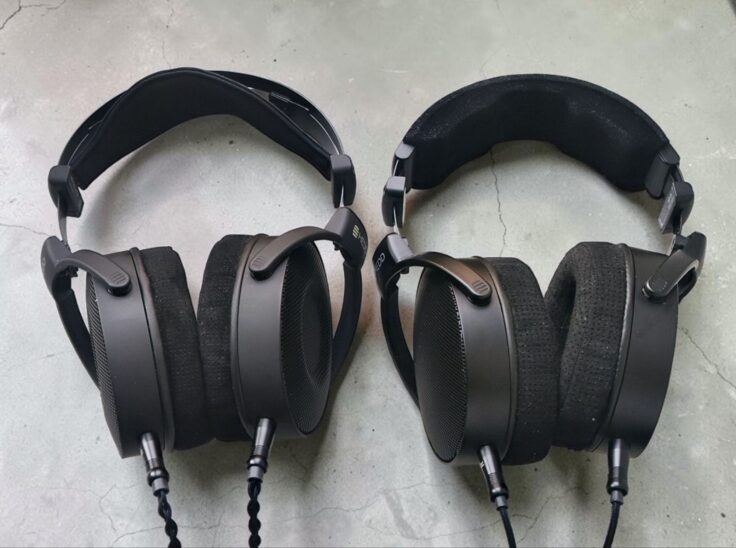


The HEDDphone DX and Meze 109 Pro are two dynamic driver headphones with a strap headband design. Currently, the Meze 109 Pro is priced at around 800 USD / €800, and the HEDDphone DX is priced at 1199 USD / €1199 / £999.
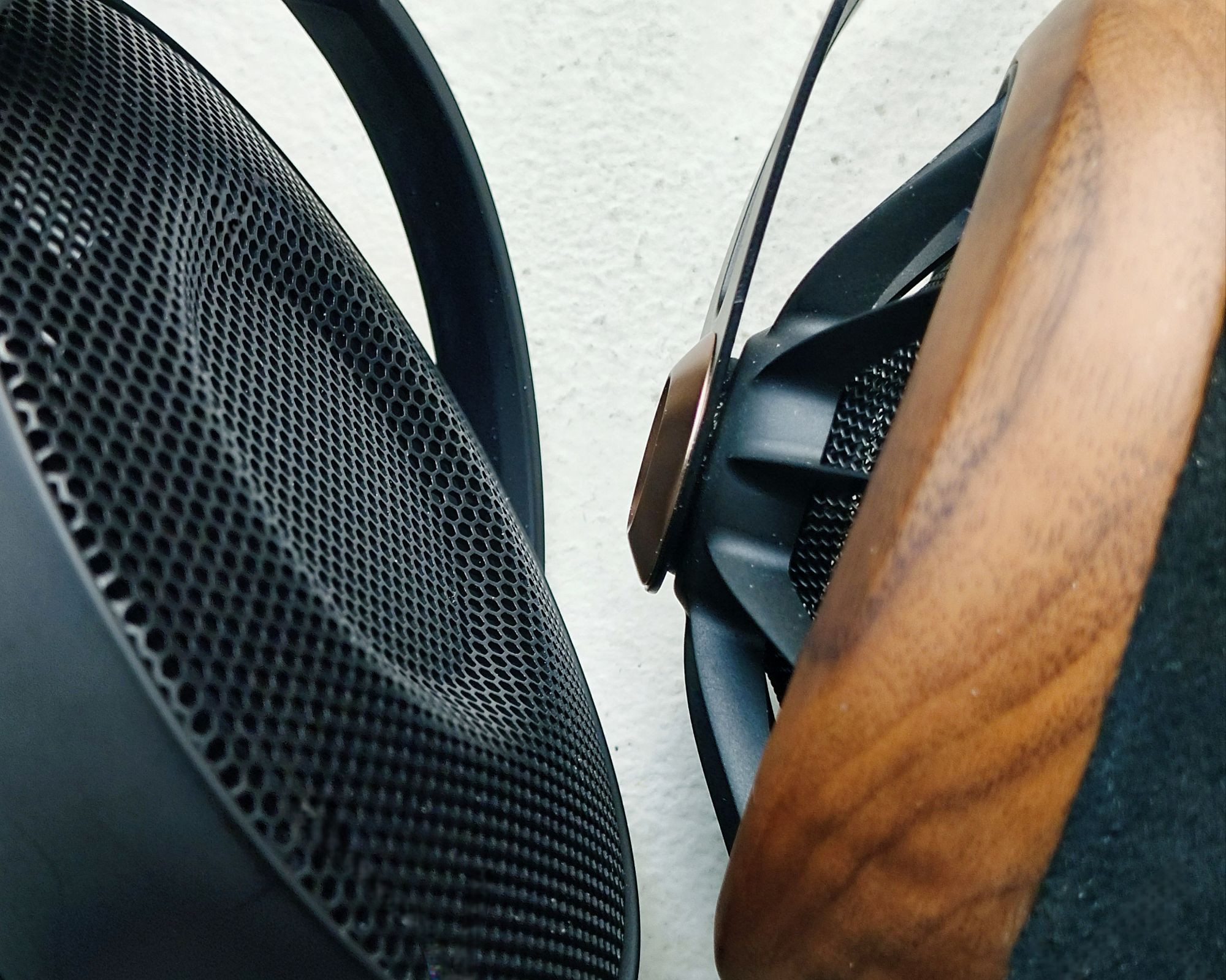
In terms of build and design, they’re quite different. The 109 Pro has wooden cups and a very exclusive-looking, elaborate design, while the DX is very utilitarian and quite anonymous-looking. That said, I find both to be very comfortable to wear. Both have wide, comfortable strap headbands, both are lightweight, and both use velour ear pads.

HEDDphone DX SPECIFICATIONS
- Type: Open-back, full-size
- Driver size: 50mm
- Driver type: Dynamic, high-excursion Thin-Ply Carbon Diaphragm (TPCD)
- Impedance: 32 ohms
- Sensitivity: 100 dB/mW
- Cable: 2.2 m, eight-strand braided OCC balanced Cable connectors: Dual 3.5mm
- Cable termination: 4.4mm
- Pads: detachable ring with “lip-and-groove mounting”
- Modular design with replaceable parts
- Travel case with a double protective layer.
- Weight: 310g
Current price and availability:
- HEDD: HEDDphones

MEZE 109 PRO SPECIFICATIONS
- Driver: 50 mm Dynamic
- Impedance: 40 Ohms
- Sensitivity: 112 dB SPL/mW at 1 kHz
- Total Harmonic Distortion <0.1% at 1 kHz
- Frequency Range: 5 Hz – 30 kHz
- Ear Cups: Black Walnut
- Two detachable cables: 1.8 m & 3 m
- Cable connector: dual 3.5 mm TS Jack
- Cable termination: 3.5mm
- Weight: 375 g (13 oz.)
Current price and availability:
- Amazon: Meze 109 Pro

LISTENING IMPRESSIONS
Associated equipment:
- Amplifier: Topping A90
- DAC/Amp: Ferrum Erco mk2
TRACK-BY-TRACK COMPARISON
Alt e bra by Building Instrument
Both are excellent. The Meze 109 Pro sounds very airy and has a clean, nicely forward treble. The DX sounds more laid back, with less pinpoint imaging. It is smoother in a very nice way.
Terminal 7 by Tomasz Stanko Quintet
They are not radically different, but again, the DX sounds smoother and more laid back. The 109 Pro is more dynamic and expressive.
Blessed Feet by Tord Gustavsen Trio
The 109 Pro is again more energetic, but it has a slight shimmering character that is not there with the smoother, more laid-back DX.
Escape Route by Boris Blank
The DX is fuller and richer sounding. It suits this track better than the slightly thinner-sounding 109 Pro, although the 109 Pro is also very good.
Vicarious by Tool
I find them both to sound excellent here. Again, the DX is a bit darker and smoother, but the 109 Pro is quite smooth-sounding as well.
Like Suicide by Soundgarden
This track can often sound a bit muddled, but both headphones do a good job. Again, the DX sounds darker and the 109 Pro more energetic, but again with a slight shimmer when compared directly.
The Dark Inside Of Cabbage by Fire!
Again, they’re quite similar in many ways. The 109 Pro is a bit more spicy, and the DX a bit smoother and richer.
Rambling Man by Laura Marling
The female vocals are very nice with the 109 Pro. They are articulate and nicely separated. The vocals sound quite similar with the DX, but the guitar is more laid back and smoother.
Sunrise by Norah Jones
The DX sounds rich and delicate, neutral and smooth. The 109 Pro is a bit more airy, dynamic, and spicy. There’s a slight shimmering (again) tint that has both positive and negative sides.
Angel by Massive Attack
The DX is a bit meatier, and the 109 Pro is a tad spicier in the treble. However, again they’re relatively close. Vocals are surprisingly similar.
Limit to Your Love by James Blake
Also here, the vocals are relatively similar, but with the 109 Pro being a tad brighter. The bass, however, is clearly better with the DX. It is better in quality, with significantly less distortion (most headphones struggle with this track to some degree). The DX also has more quantity, and the bass is fuller sounding.
The Hidden Camera by Photek
The DX is excellent here, with full, textured bass and crisp but smooth percussion. The 109 Pro has less bass, and the percussion sounds dry and too crisp. I clearly prefer the DX here.
Young Vivaldi by Modo Antiquo
This is my favorite string timbre test album. The DX is smoother and darker, the 109 Pro thinner and sharper, but both are good.
Summer 3 Vivaldi Recomposed by Max Richter
This orchestral piece sounds darker with the DX, and more airy, a bit brighter, and sharper with the 109 Pro. Both are good, but they’re different.

WRAPPING IT UP
Sound Signature
Neither the 109 Pro nor the DX strays too far from neutral, but they are different. How different varies a lot from track to track. Sometimes they are very close, and sometimes the differences are very audible. In general, the 109 Pro has more treble and articulation, while the DX is darker and has more presence in the lowest, deepest bass.
Treble
The 109 Pro has a sharper, more articulate treble, which can sometimes have a shimmery quality that I’m not always that enthusiastic about, but it’s a minor thing. All in all, I really like the treble of the 109 Pro. I also love the treble of the DX, but it’s smoother, darker, and less articulate, though in a very nice and pleasant way – without really losing detail, it’s just not as pronounced.
Midrange
The midrange is quite similar between the two, and I think when they differ, it is mostly because the bass or the treble affects the midrange instruments. I think both have a very nice, neutral midrange with good detail.
Bass
The 109 Pro mostly has very good, present bass that sounds great, but on the challenging tracks the DX is clearly superior in quality. In the lowest region, it is also richer in quantity without sounding much boosted, just full and rich.
Soundstage and Imaging
The DX has a wide, open soundstage and entirely adequate imaging. It is very pleasant and enjoyable to listen to. However, in direct comparison, the 109 Pro almost always has better instrument separation, and its imaging is more pinpoint.
Detail, Dynamics, and Timbre
The overall detail level is pretty much the same, but I think the 109 Pro excels in treble detail, while the DX excels in bass detail. The midrange is pretty similar.
In terms of microdynamics and articulation, the 109 Pro tends to be more pronounced and feels more precise, while in terms of macrodynamics, the DX, especially when the bass kicks in, feels more dynamic overall. However, the difference is not very large.
Mostly they are relatively similar in terms of timbre, but they can sometimes be quite different, depending on the music. To generalize, the DX is neutral to dark with a warm, slightly dry character, while the 109 Pro is more neutral to bright with a more dynamic and sharper character.

CONCLUSION
I really like both of these headphones. They are certainly in the same ballpark in most ways, but they have some differences that I have tried to lay out in this review.
The only place where I think one is objectively and consistently better than the other is the bass, where the DX is superior. However, the 109 Pro is a bit more spicy and energetic in its playing style, which you may or may not prefer.
I find it hard to pick a personal favorite, but for professional work I would pick the DX because it is the most predictable and even sounding – but then I’d also consider the D1. I have written a dedicated D1 vs DX comparison here.
Thanks for reading. You can support us by purchasing anything using any of our affiliate links.
- Amazon: Meze 109 Pro
- HEDD: HEDDphones
Any purchase you make on Amazon, Linsoul , AliExpress or Audio46 with any of our affiliate links will give us a small provision at no cost to you.
We only get a provision for items that are not returned, so there’s no incentive for us to recommend something that’s not good.
Linsoul : Headphones, Earbuds, Wireless Earbuds, Desktop DAC/AMP, Portable DAC/AMP, Digital Audio Players,
Amazon: Headphones, IEMs, Headphone Amplifiers, Home Audio or Anything else.
.
If you enjoyed this article or other content on The Headphoneer, you might consider leaving a small donation to keep this website up and running. No donation is too small. Thanks for supporting us!

If you like our work please follow us on Instagram, Facebook and Twitter , it will help us grow. Sharing is caring 🙂