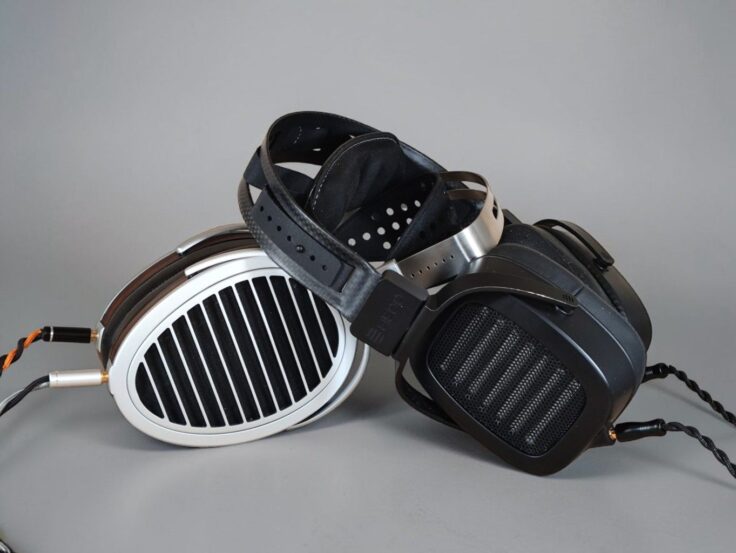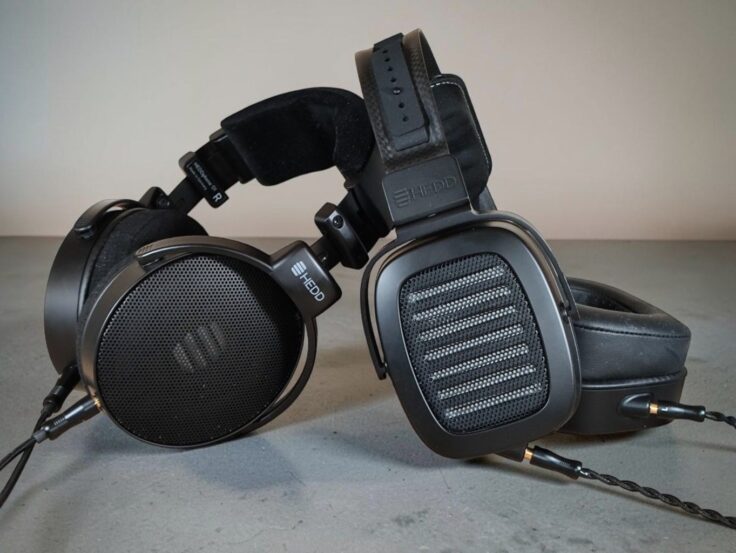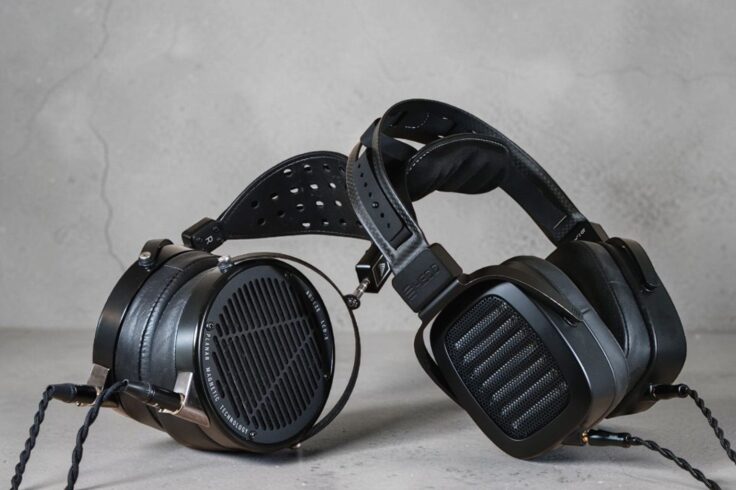

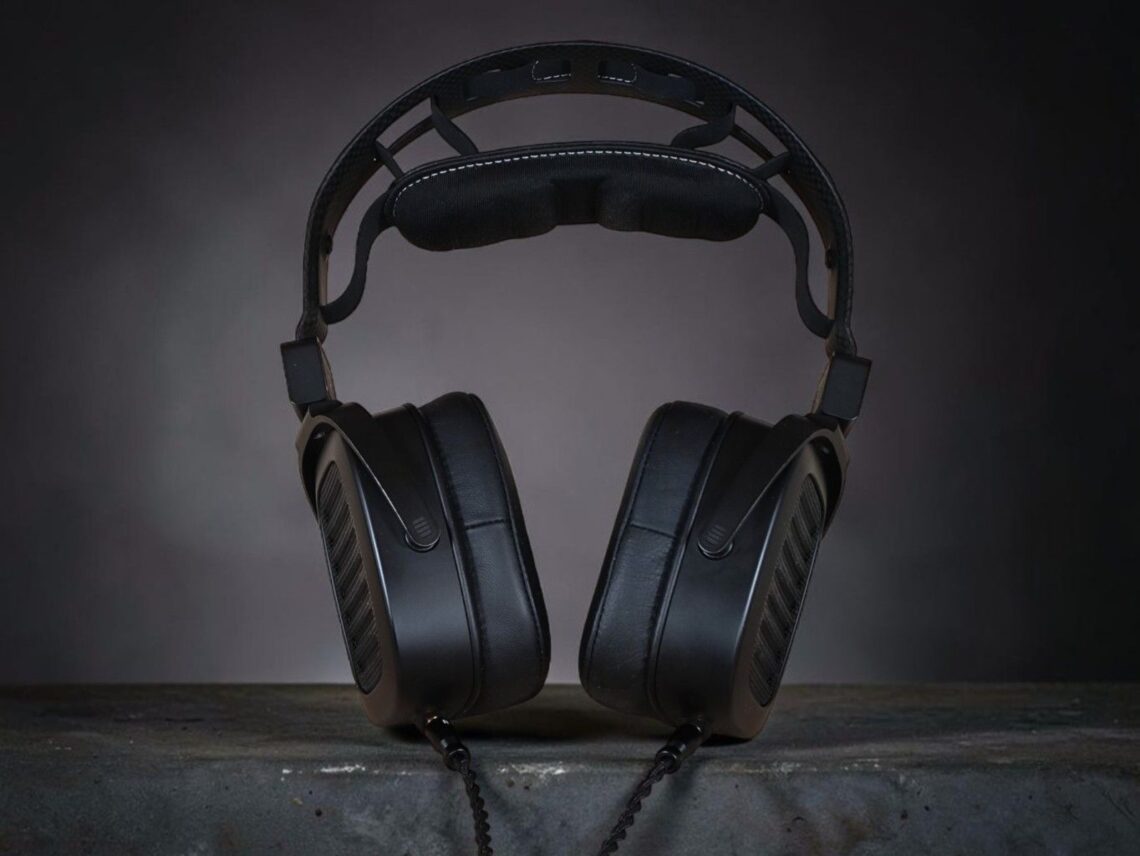
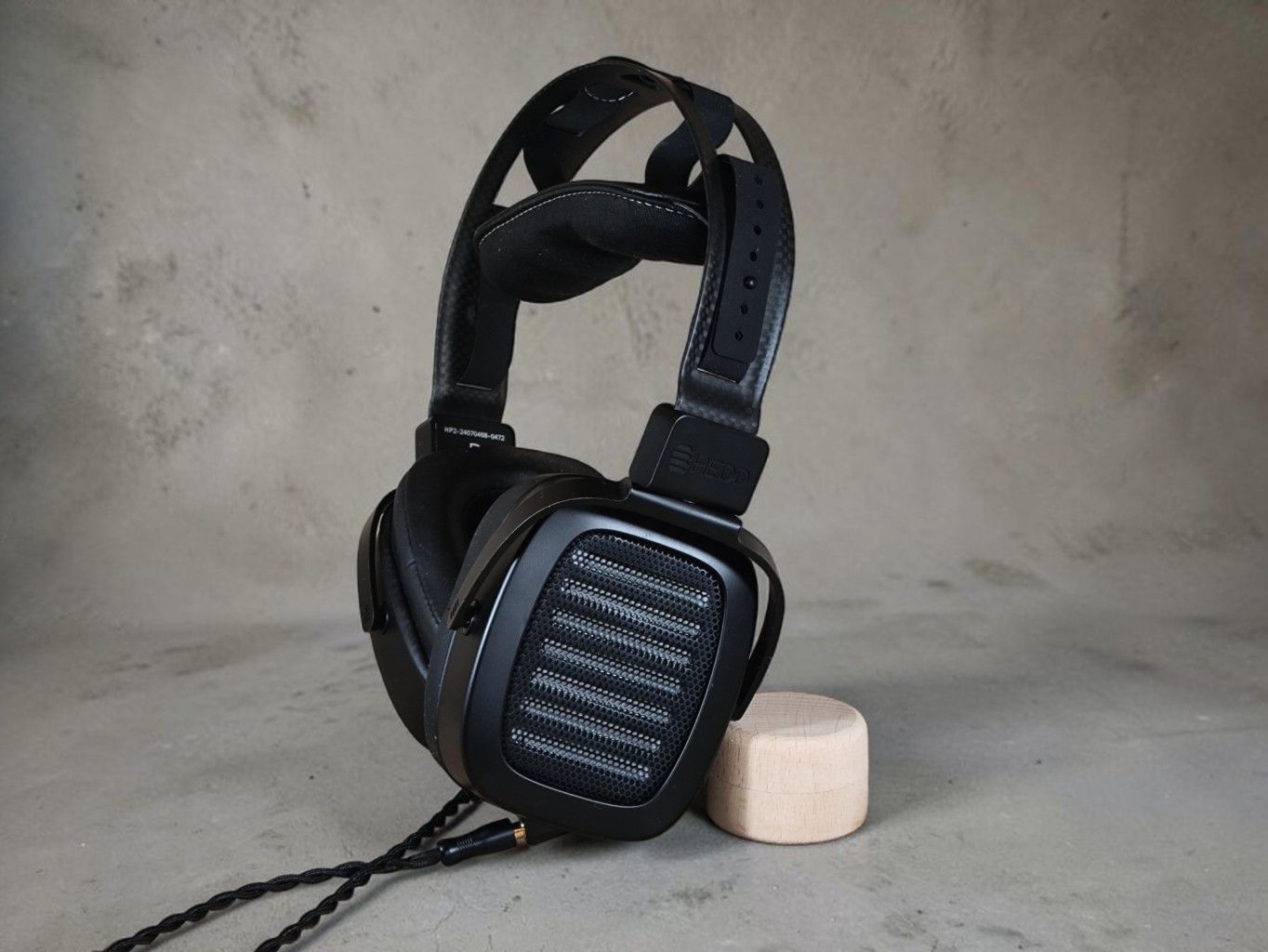
The HEDDphone TWO GT is a full-size, open-back headphone using an AMT ribbon driver. It’s made by HEDD Audio, a German manufacturer mainly known for their high end professional studio monitors. The standard version of the HEDDphone TWO GT has a list price of 2199 USD / Euro.
There’s also an “Unplugged” version, which includes only a carry case and velour pads, but no lambskin pads and no cables. The “Unplugged” list price is 1699 USD / Euro, 500 less than the full version.
MAIN TAKEAWAY
- Excellent sound – neutral and punchy
- Innovative headband mechanism with settings that could be more granular
- Lambskin pads sound superior
- Needs a powerful amplifier
- 1.6 m cables might be too short
HEDD released their first ever headphone, the HEDDphone, in 2020, and it was the first headphone to employ a full-range ribbon driver. The (non-GT) HEDDphone TWO was released in 2023, the TWO GT in 2024. The HEDDphone D1, which I reviewed last year (link here) is a dynamic driver headphone, a more affordable and lightweight option.
In other words, the GT is the third ribbon driver HEDDphone from HEDD Audio. It is practically identical to the HEDDphone TWO standard edition, but tweaked and tuned to sound slightly warmer and more inviting for audiophiles. There’s mainly internal tuning tweaks, driver tweaks and different pads.
Compared to the standard HEDDphone TWO, the TWO GT is different in the following ways:
- DRIVER: Updated AMT driver with even lower distortion
- TUNING: Different dampening
- PADS: Velour and lambskin leather ear pads are both included, the HEDDphone TWO comes with pleather pads.
- CABLES: Premium cables (4-core 5N SPC)
- VISUALS: Engraved logo and white headband stitching
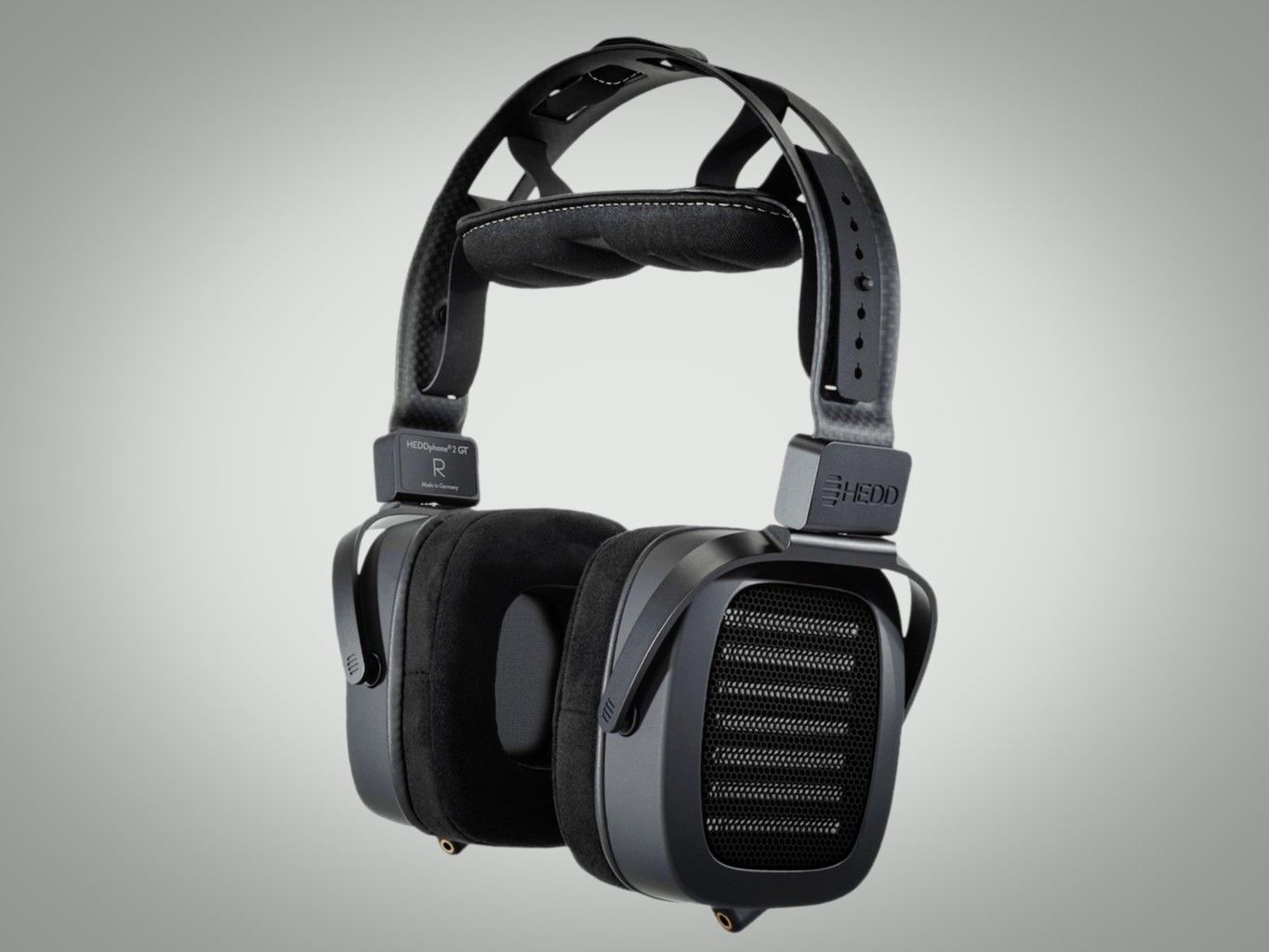
HEDDphone TWO GT SPECIFICATIONS
- Design: Open-back over-ear headphone
- Drivers: Air Motion Transformer with VVT technology and a multi- layered Kapton polyimide diaphragm
- Frequency Range: 10 Hz – 40 kHz
- Impedance: 41 Ohms (flat)
- Power required: Min. 200 mW, recommended ≥1000 mW
- Cable connectors: Dual 3.5mm jack
- Maximum SPL: 88 dB SPL at 1 mW
- Pads – 2 pairs:
- Velour on the face and outside with fenestrated leather on the inside
- Lamb skin on the face and outside with fenestrated leather on the inside
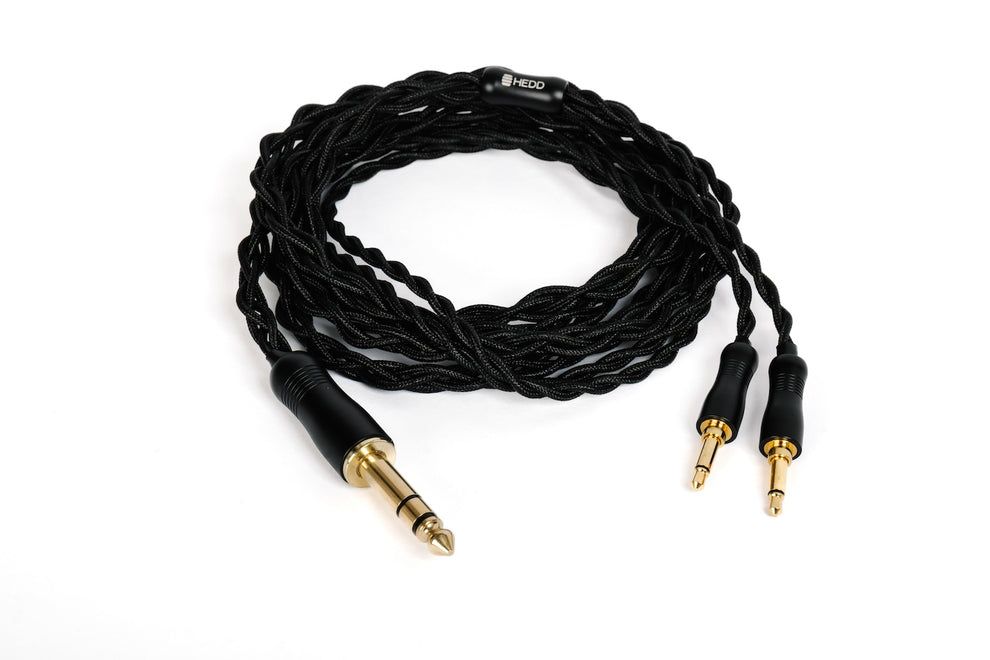
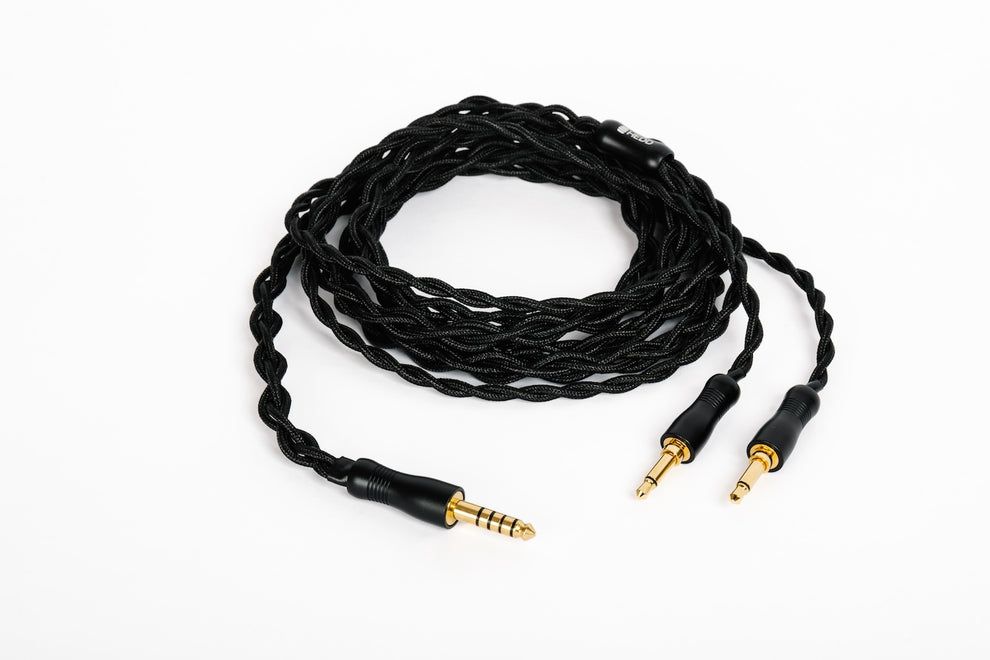
- Cable: 2 cables – Balanced and Unbalanced both 1.6m long.
- with adapters
- Cable tech: 4-Core 5N SPC, nylon-woven and hand-braided
- Weight: 550g
Disclaimer: We were sent the review item in exchange for an honest review.
Current price and availability:
- Amazon: HEDDphone TWO GT
- Audio46: HEDDphone TWO GT
- Audio46: HEDDphone TWO GT Unplugged
- HEDD Audio: HEDDphone headphones
THE AMT DRIVER TECHNOLOGY
There are three main driver technologies used in headphones: dynamic drivers, planar magnetic drivers and electrostatic drivers. These are well established and have a long history. Dynamic and planar magnetic headphones can use standard headphone amplifiers, while electrostatic headphones need special amps.
HEDD’s AMT driver is a different type of driver, but can use normal amps (the same amplifiers used by dynamic and planar magnetic headphones), which makes it very practical – although the AMT driver typically need some power to shine.
The AMT (Air Motion Transformer) driver used by HEDD is somewhat related to both true ribbon drivers and planar magnetic drivers, but should not be confused with either of them.
TRUE RIBBON DRIVERS are very simple in principle, and you can actually make them yourself. They use a very thin, almost free-hanging metallic strip sitting in a magnetic field. The strip can be flat or corrugated. It is usually made of aluminum and acts as both the diaphragm and the voice coil. It is fastened only at the top and bottom, which makes it incredibly fast and great for high frequencies. True ribbons need a special type of high current amp or a transformer to step up the impedance so that the amplifier isn’t shorted.
There are actually headphones using true ribbon drivers, the RAAL-requisite SR1a was the first. True ribbon headphones need special amps or transformer boxes because of the low impedance mentioned above.
PLANAR MAGNETIC DRIVERS are sometimes referred to as quasi-ribbons and utilize a thin, flat, non-conductive diaphragm (like Kapton) that has conductive traces etched directly across its surface. The entire diaphragm typically sits between an array of magnets. The diaphragm moves back and forth according to the electrical signal that passes through the conductive trace on the diaphragm. Planar magnetic drivers are, as mentioned, commonly used in headphones.
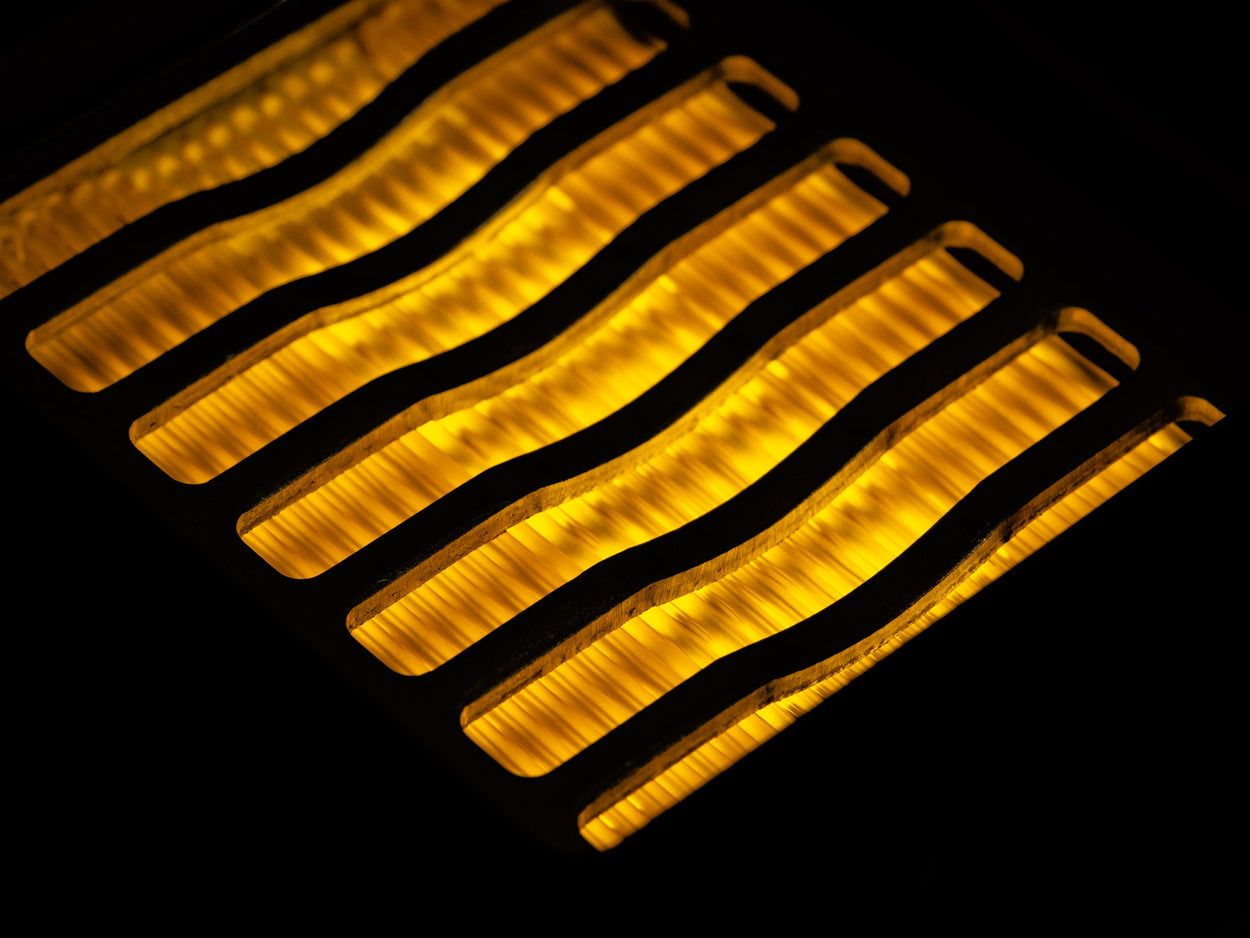
AMT DRIVERS are quite different from both true ribbons and planar magnetic drivers, but the similarity is that the diaphragm has conductive traces that carries the audio signal, and sits in a magnetic field. Importantly, however, the AMT driver works differently from most drivers because the diaphragm doesn’t move back and forth towards the listener like a piston, but the folded diaphragm expands and retracts like an accordion, squeezing together and pulling apart – which pushes air towards the listener. This movement, of course, happens in synchronization with the electrical audio signal running through the conductive aluminium tracings on the diaphragm.
AMT drivers were developed by Dr. Oskar Heil in the 1960s and debuted commercially in 1972. Today, HEDD, ADAM and ELAC are well known manufacturers that use AMT drivers, typically as tweeters.
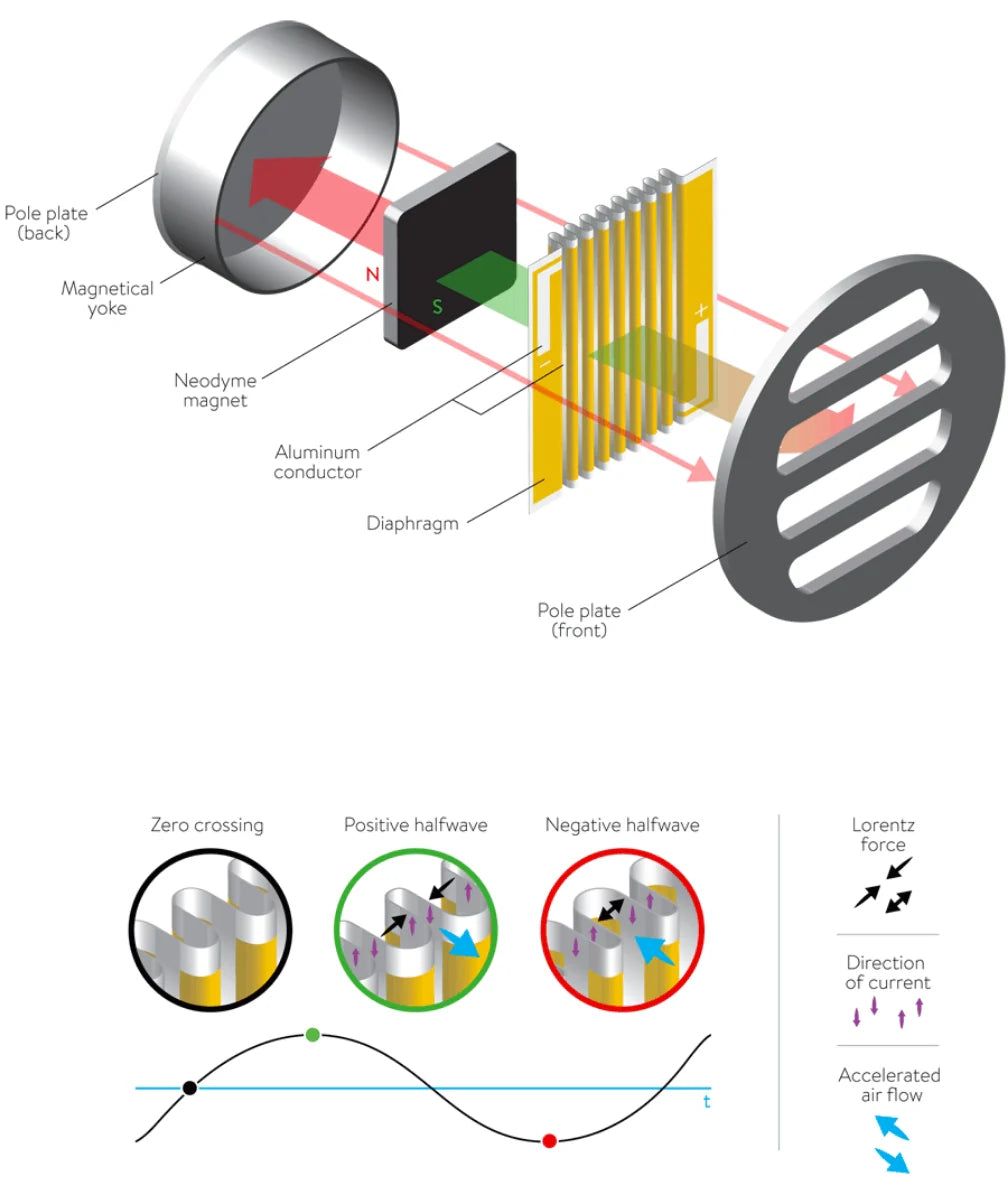
Standard AMT drivers with uniform folds, however, typically cannot handle low frequencies. HEDD solved this by developing a patented technology called VVT (Variable Velocity Transform). Instead of uniform folds on the diaphragm, HEDD had the diaphragm folds vary in both width and depth. This change allowed the driver to replicate the entire audible spectrum, making the first HEDDphone a significant milestone.
HEDD is still one of very few companies that use AMT drivers in headphones, and the most commercially successful at it. Monolith and GoldPlanar are the other headphone manufacturers currently offering AMT drivers, while oBravo and Gold Planar have made AMT IEMs.
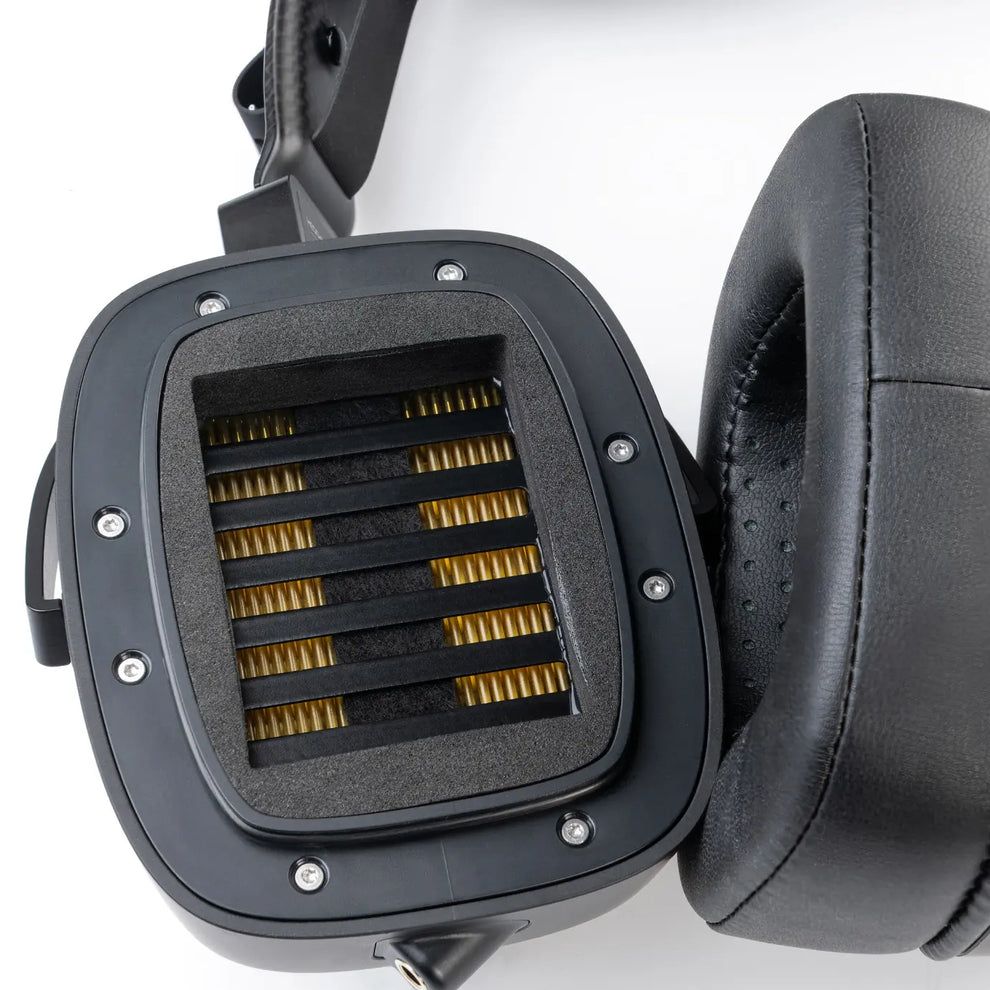
The diaphragm in the HEDDphone TWO/GT features a multi-layered Kapton polyimide film with electrical traces. Kapton is quite ideal for the purpose, generally used in flexible printed circuits, also in planar magnetic drivers (as mentioned). It was invented in the 1960s and often used in space because it remains stable across an extremely wide temperature range, from −269 to +400 degrees Celsius.
BUILD – DESIGN – COMFORT
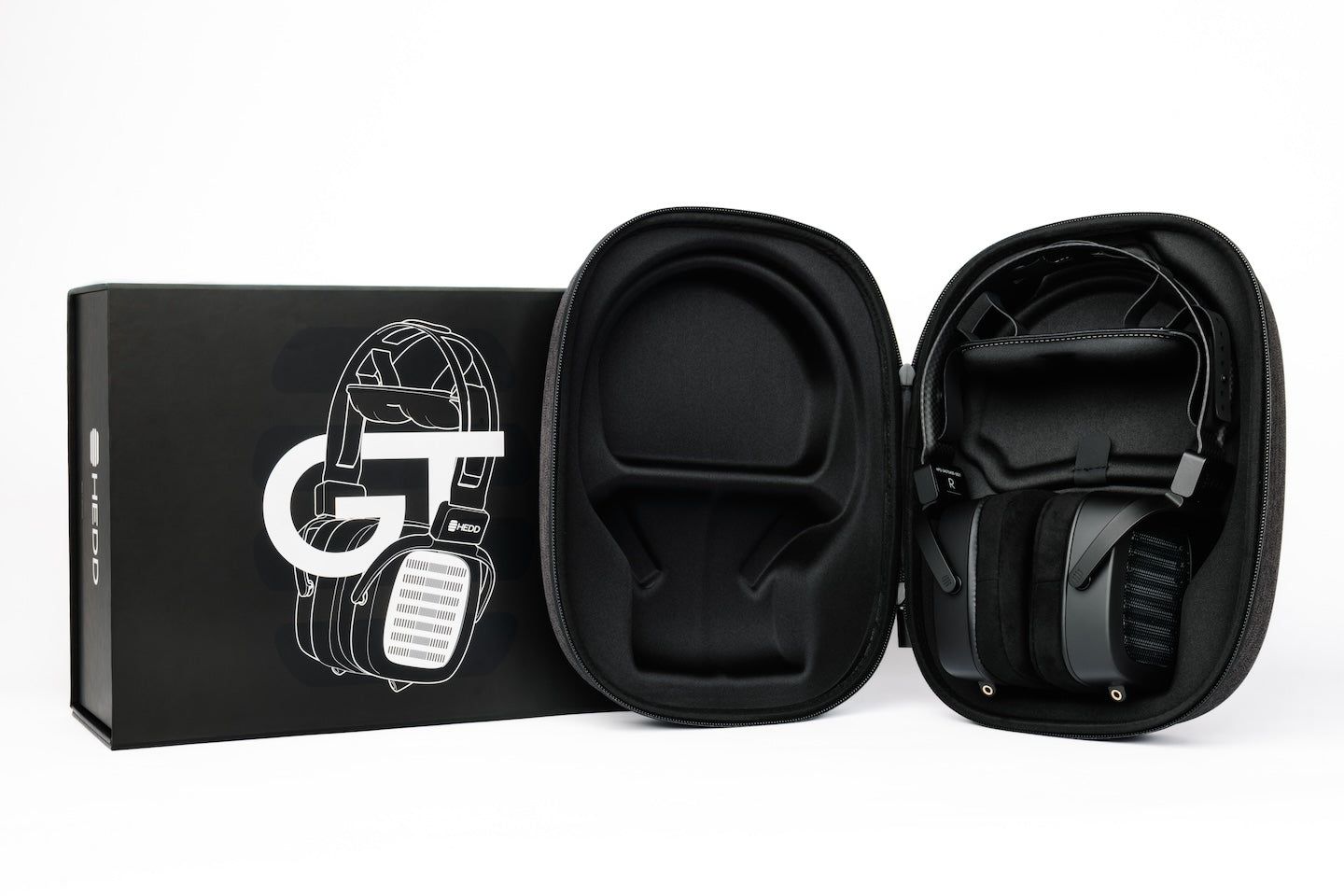
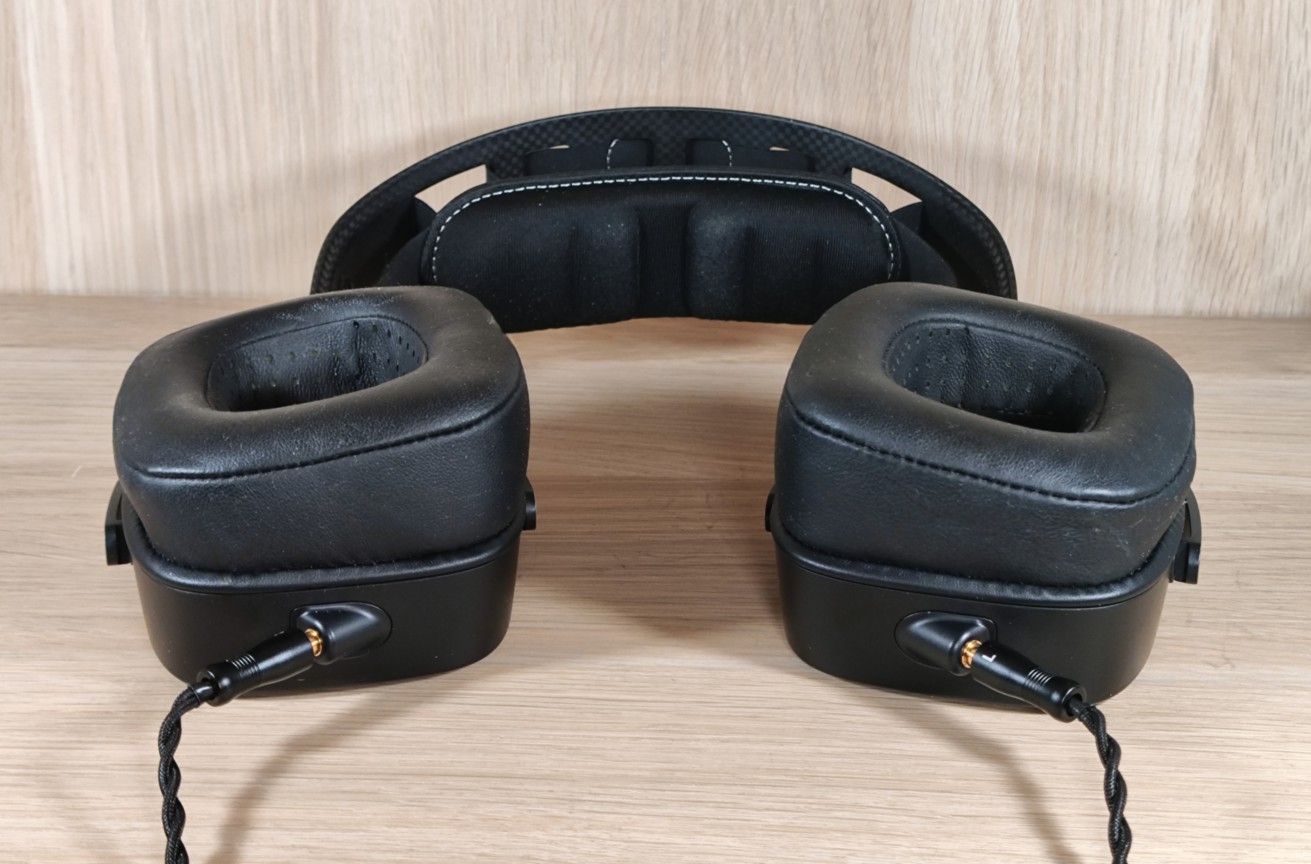
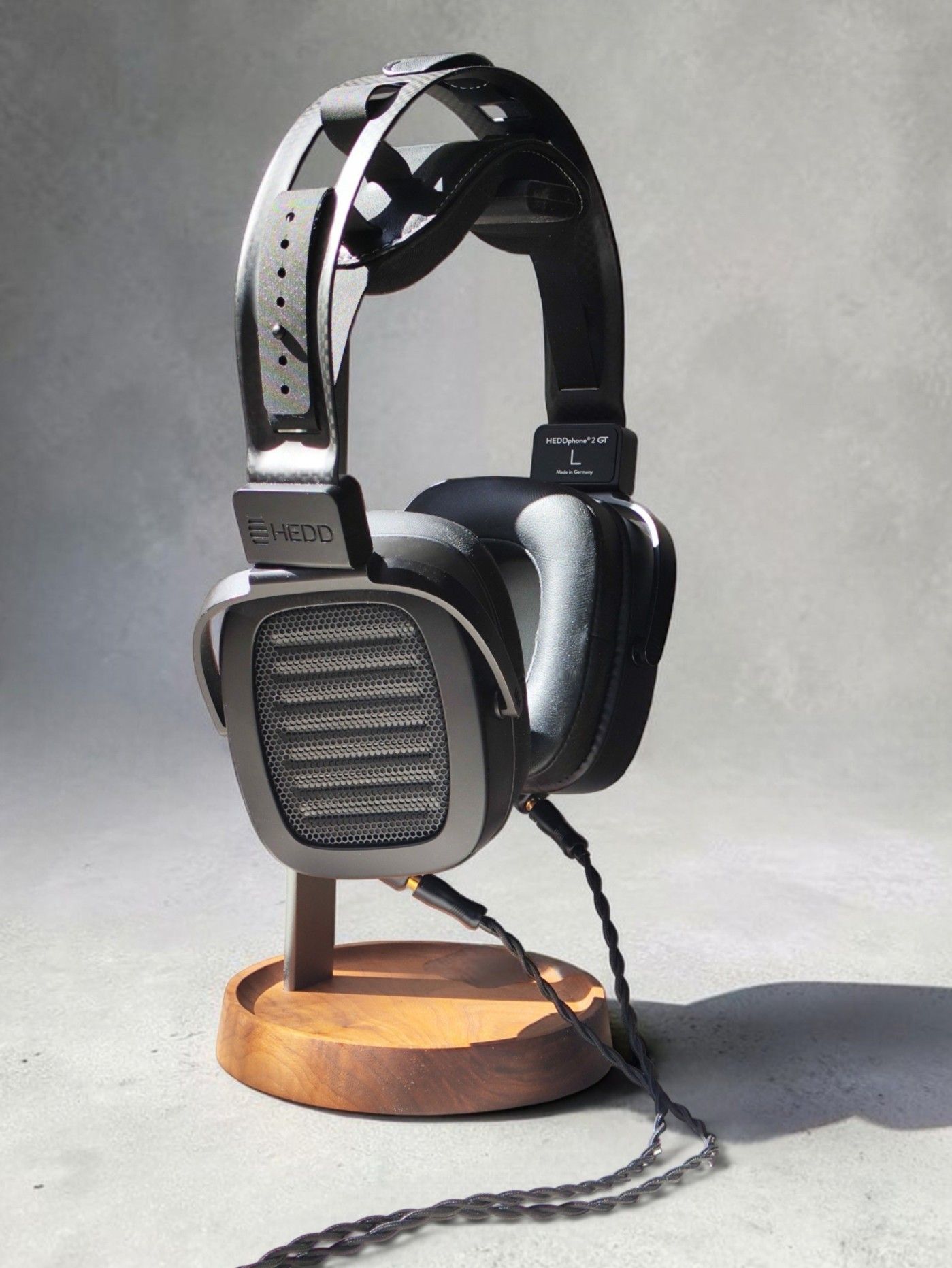
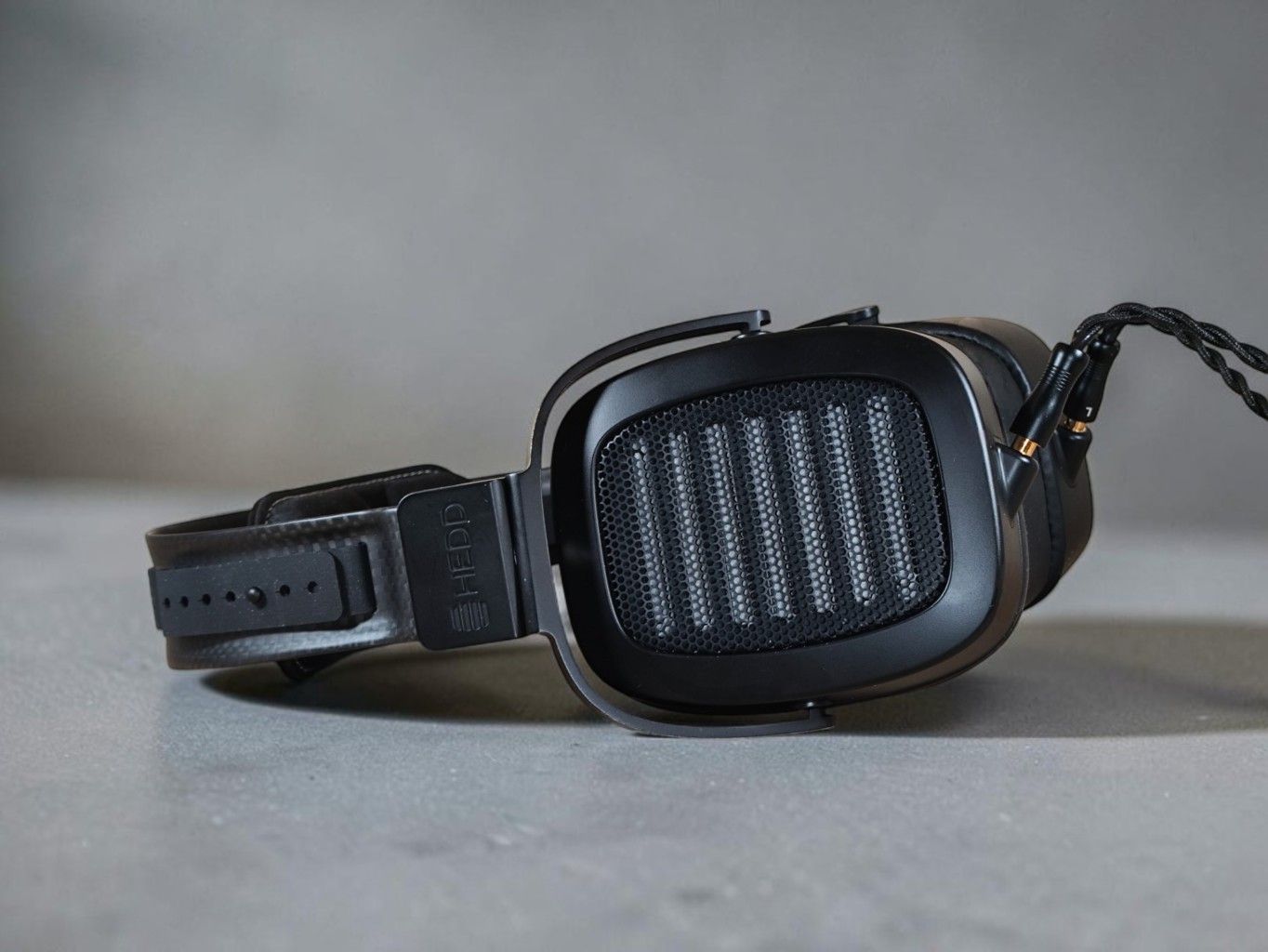
In hand, the HEDDphone TWO GT feels like a high quality product designed to last, with quality materials. HEDD themselves claim they’ve used only high-quality, durable materials. This includes carbon fibre and magnesium to minimize weight and extend the product’s lifespan. There’s a 5-year warranty, and AFAIK all parts are user replaceable or serviceable. There’s a sturdy travel case included.
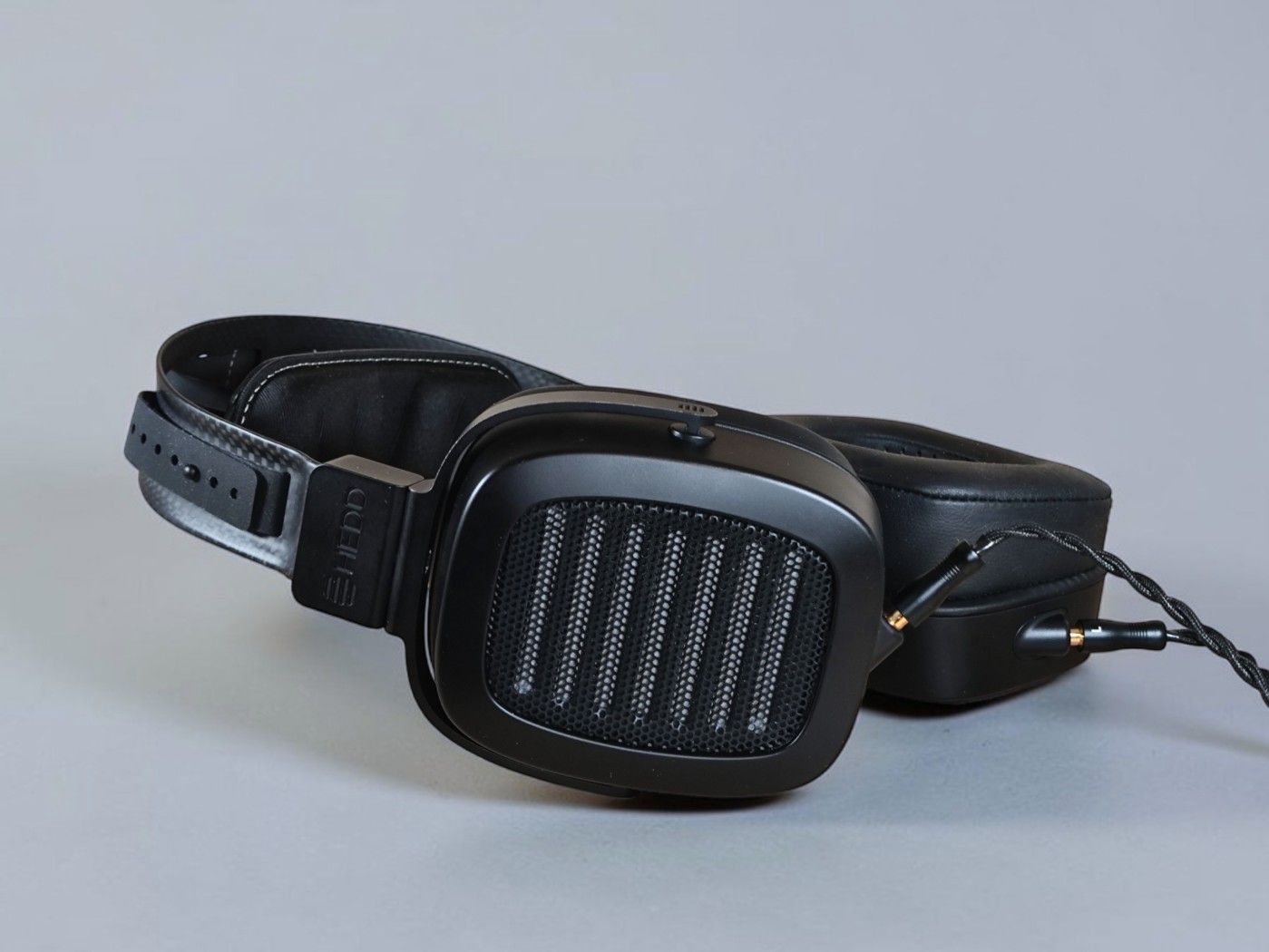
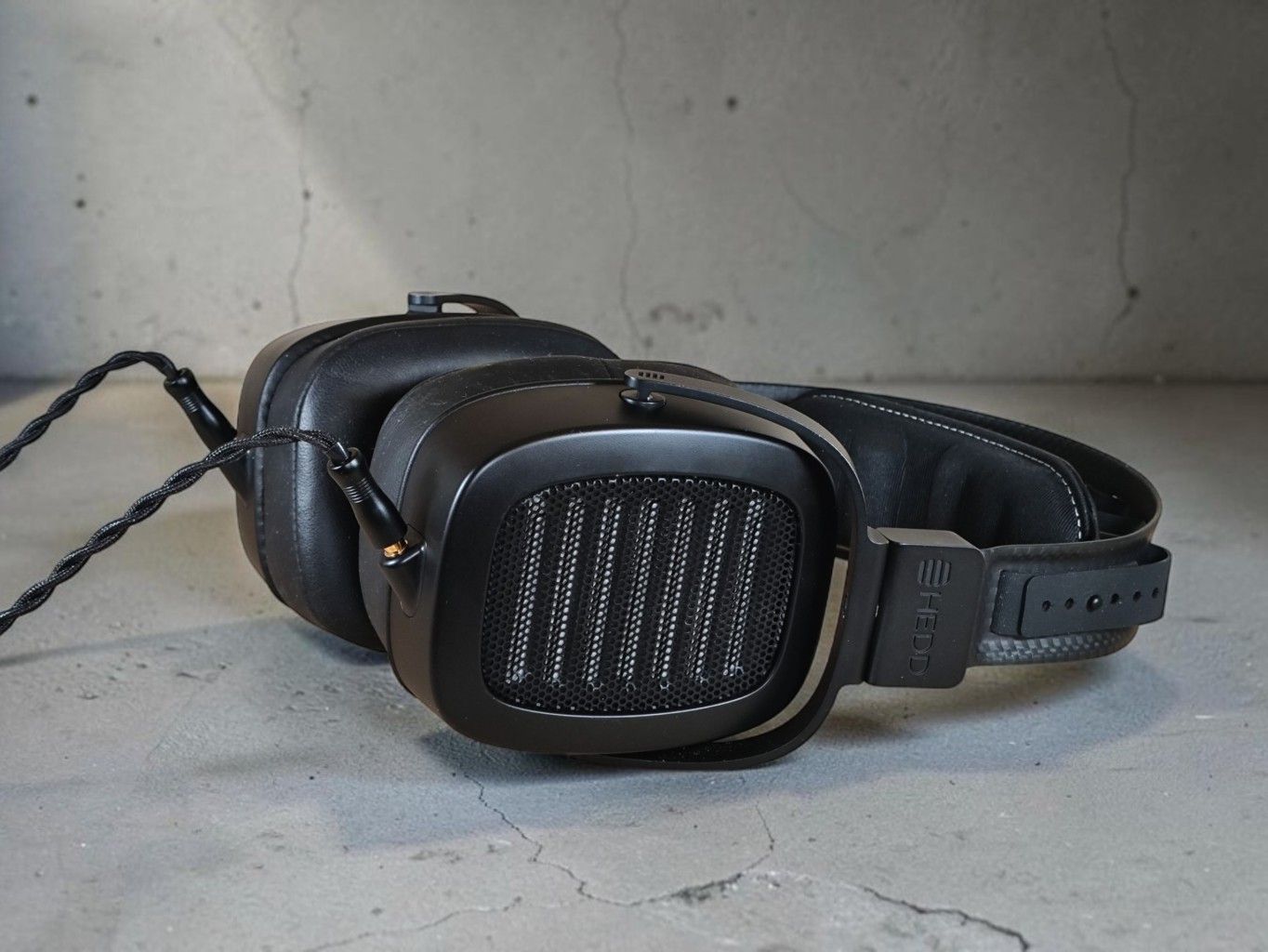
The HEDDphone TWO GT has a very special design. Because of the thickness of the driver unit, the cups aren’t extremely slim, but they are not large in circumference. Actually they are quite small compared to many headphones these days. They are rectangular in shape which works well at least for my ears and on my head. The pads are comfortably deep.
THE HEDDband
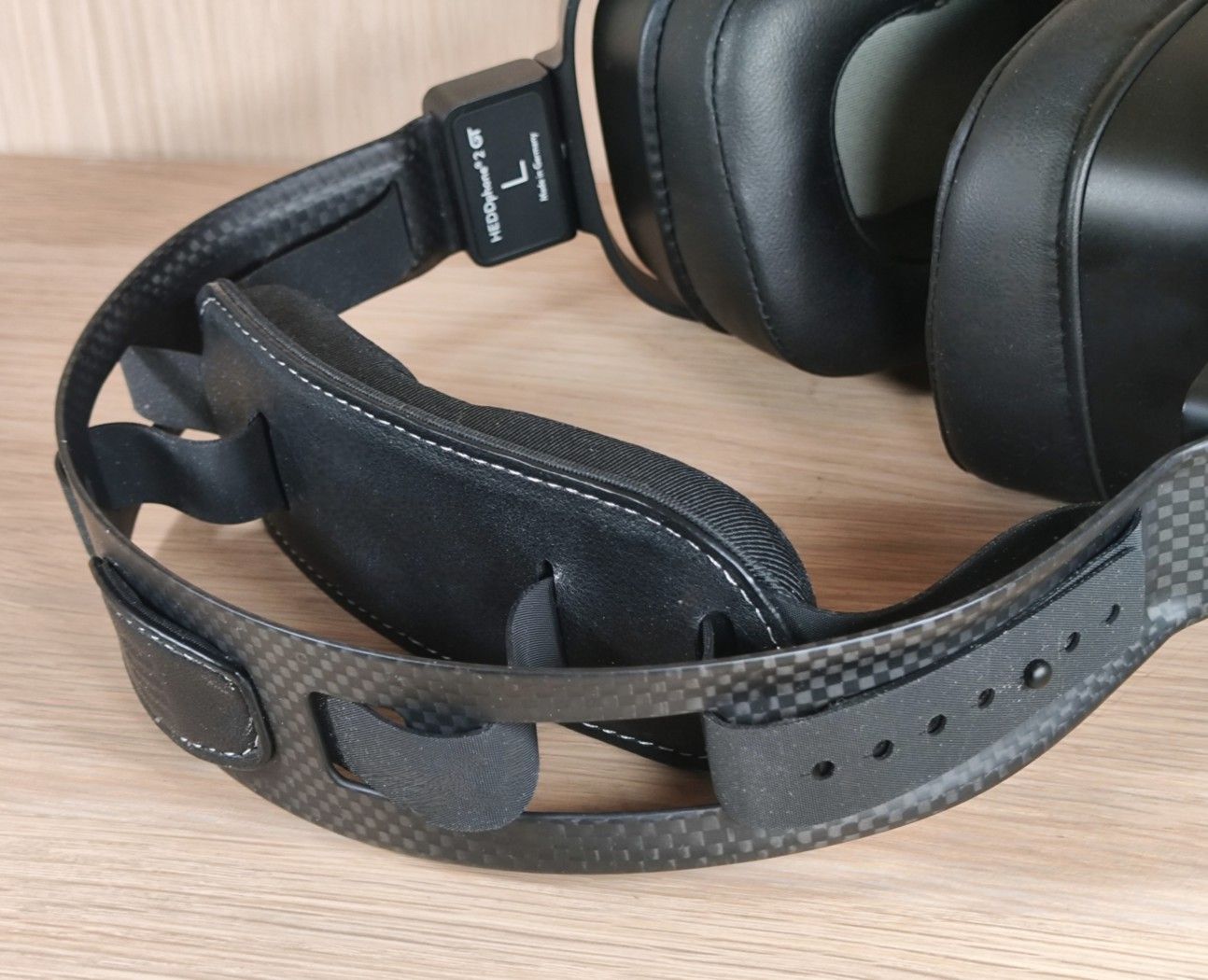
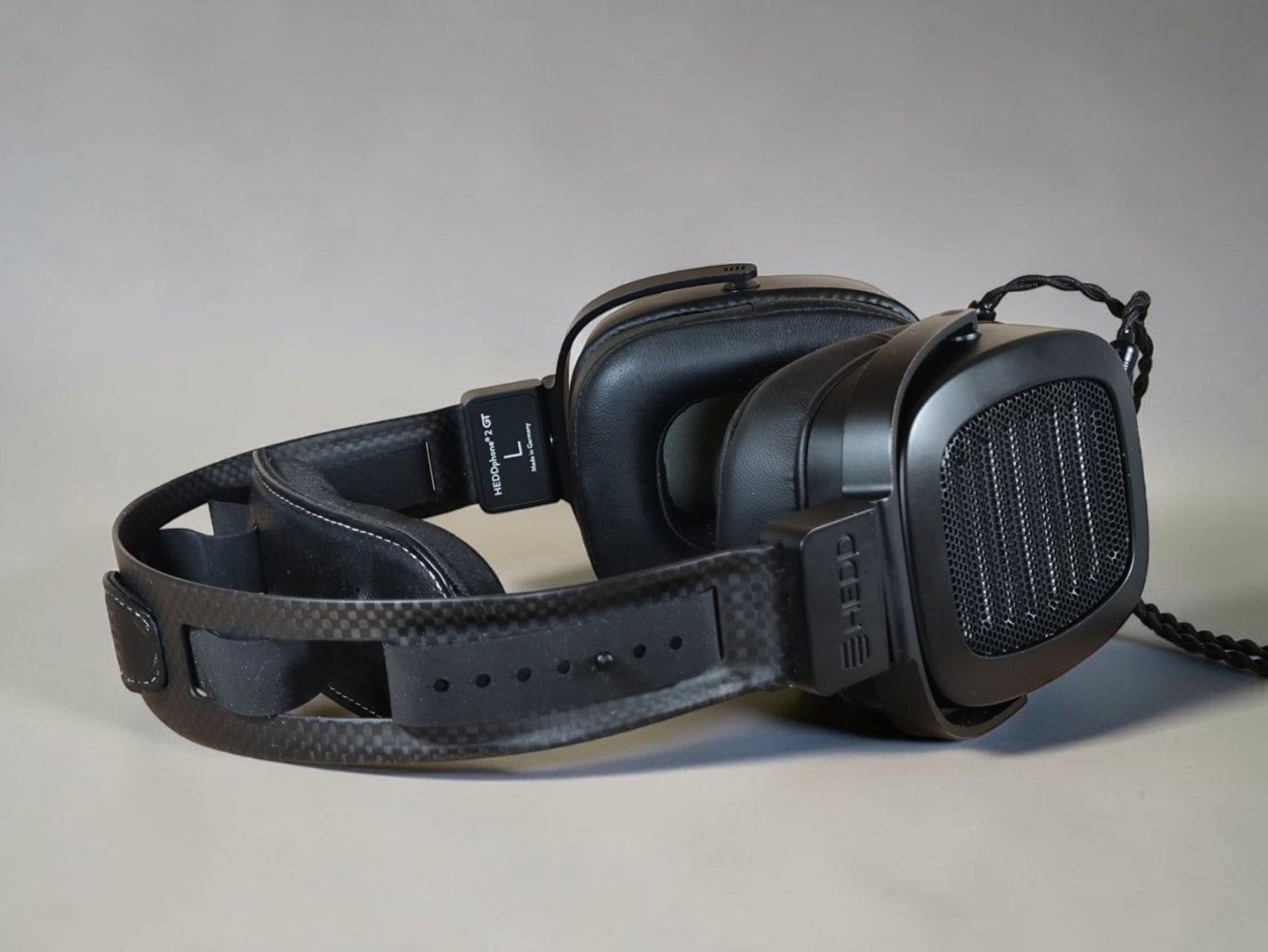
The headband mechanism is quite unique. It’s called the “HEDDband”, and it allows you to adjust height, width, curvature, and clamping pressure. If you figure it out, you can do more with this headband than with most headphones.
While the basics, an outer arc paired with an inner suspension strap, are a usual way to design a headband for headphones, the execution is special. The main strap is suspended by several smaller accent straps, and adjusting the fit is a fully manual process: you must align the straps’ pre-cut holes with a dedicated attachment knob to change the length.
This unique setup isn’t without its quirks. Because the adjustment holes are spaced relatively far apart, finding the perfect sweet spot can be difficult. I had to resort to an asymmetrical setting, using different notches on each side. Though it doesn’t affect the actual feel when worn, it bothers my OCD genes. This mechanism also means the HEDDphone TWO GT isn’t ideal for sharing, e.g. in a studio with many users. Fine-tuning the fit isn’t a quick two-second adjustment you can make on the fly.
That said, when all is adjusted to fit the intended user, the headband, which is also padded, is very comfortable.
CABLES
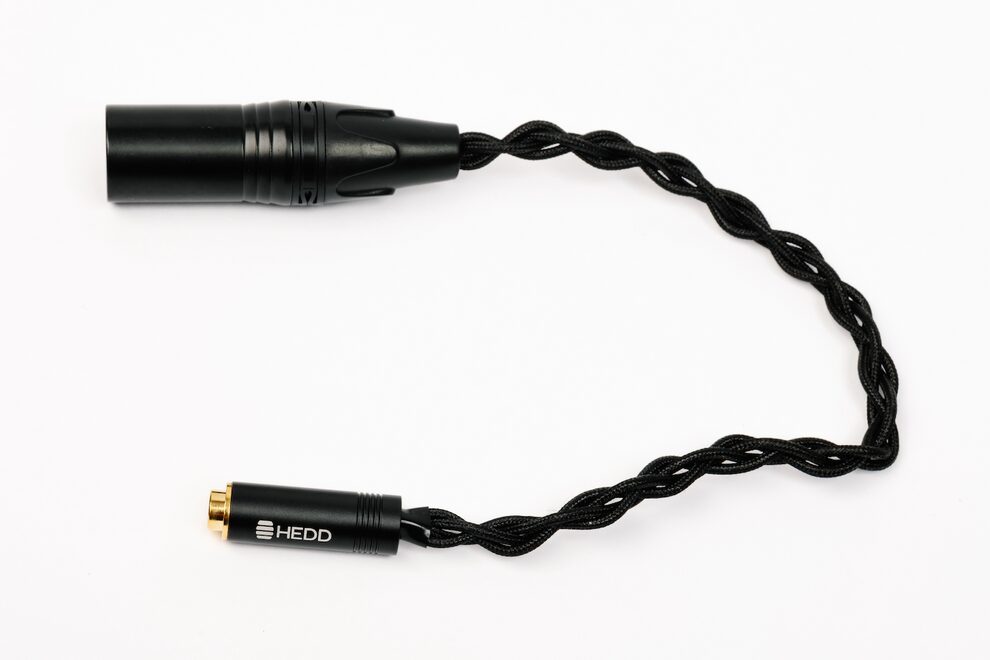
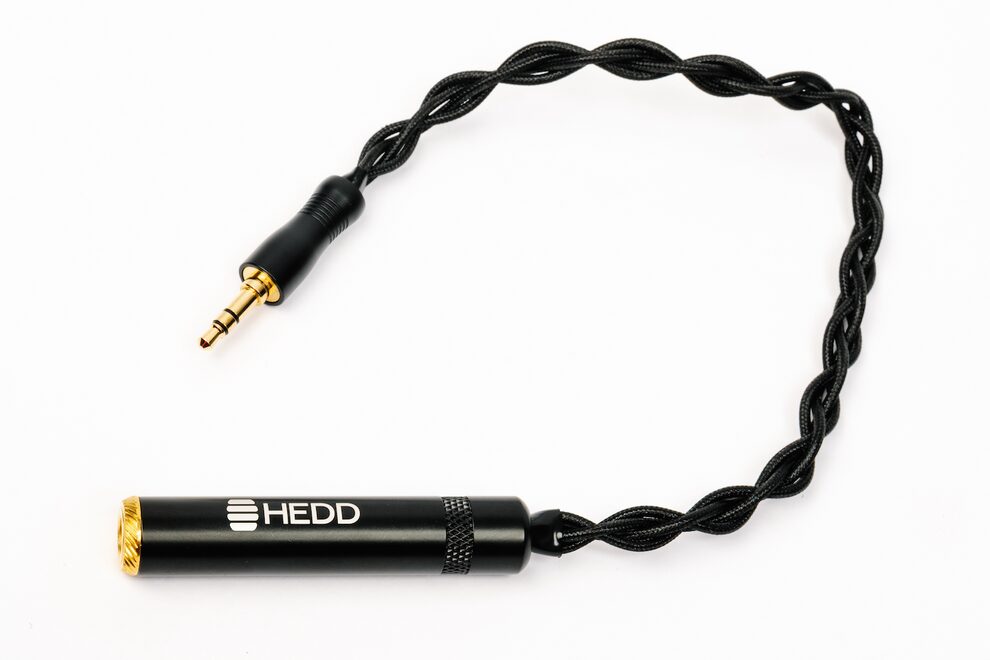
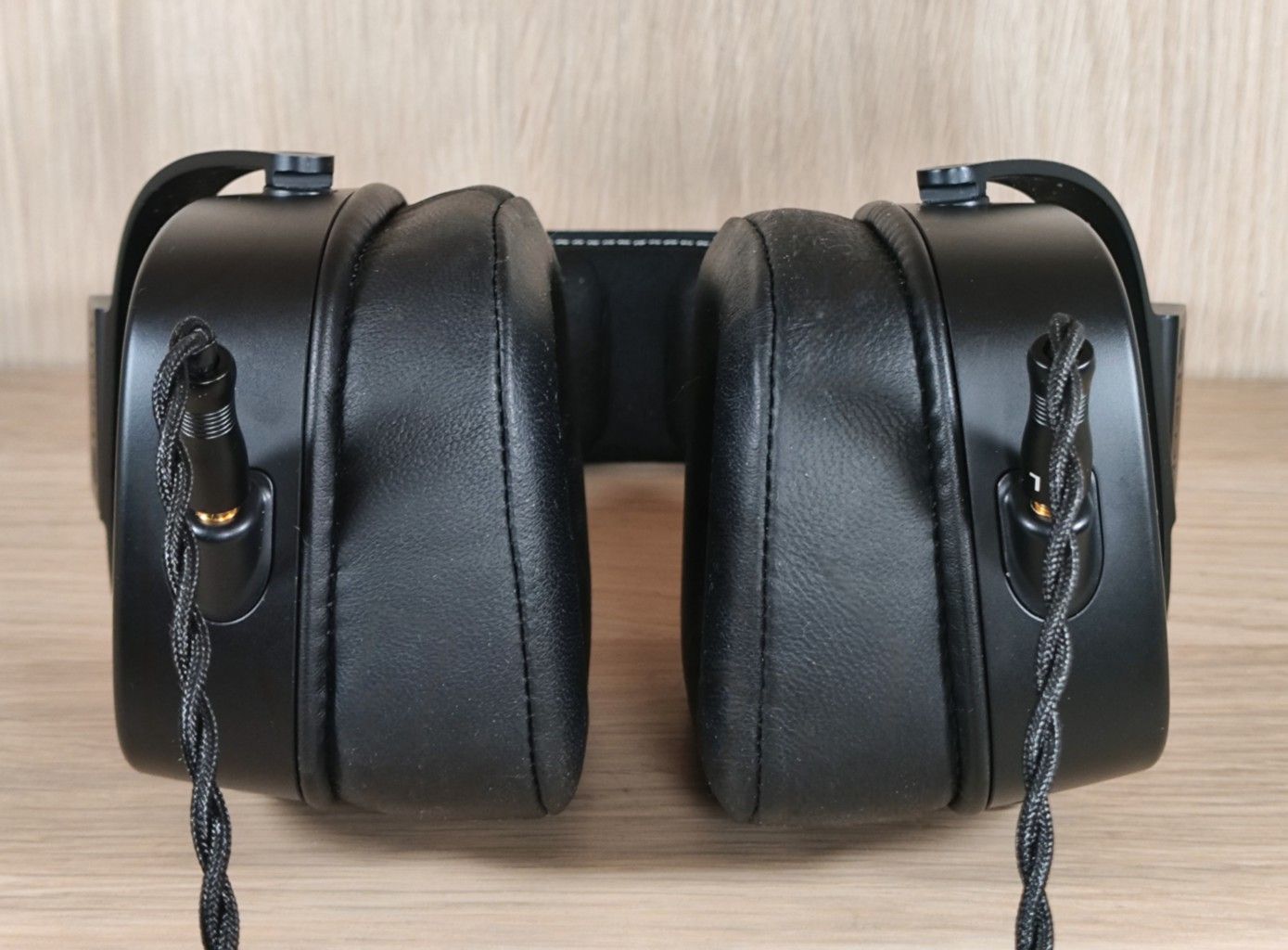
Included with the HEDDphone TWO GT is an extensive cable package with two cables and two adapters:
- 1.6m unbalanced headphone cable with 6.35mm termination
- 1.6m balanced cable with 4.4mm termination
- Unbalanced adapter – 6.35mm to 3.5mm
- Balanced adapter – 4.44mm to XLR 4-pin
The cables are 4-core 5N SPC cables, hand-braided with a woven nylon surface. HEDD also offers a “High-end GTC upgrade cable”, sold separately, which is an 8-core LC OFC cable – also 1.6m long.
The HEDDphone TWO GT uses 3.5mm connectors on the headphone, and it’s compatible with a wide range of aftermarket cables. There are a bunch of cable makers that will make cables to suit your needs.
If you want 1.6 metre cables, then the standard package might be for you, but if you need different lengths, you might as well go for the “Unplugged” version. However, you should be aware that the Unplugged version only comes with the velour pads; the lambskin pads, which I strongly prefer, must then be purchased separately.
THE PADS
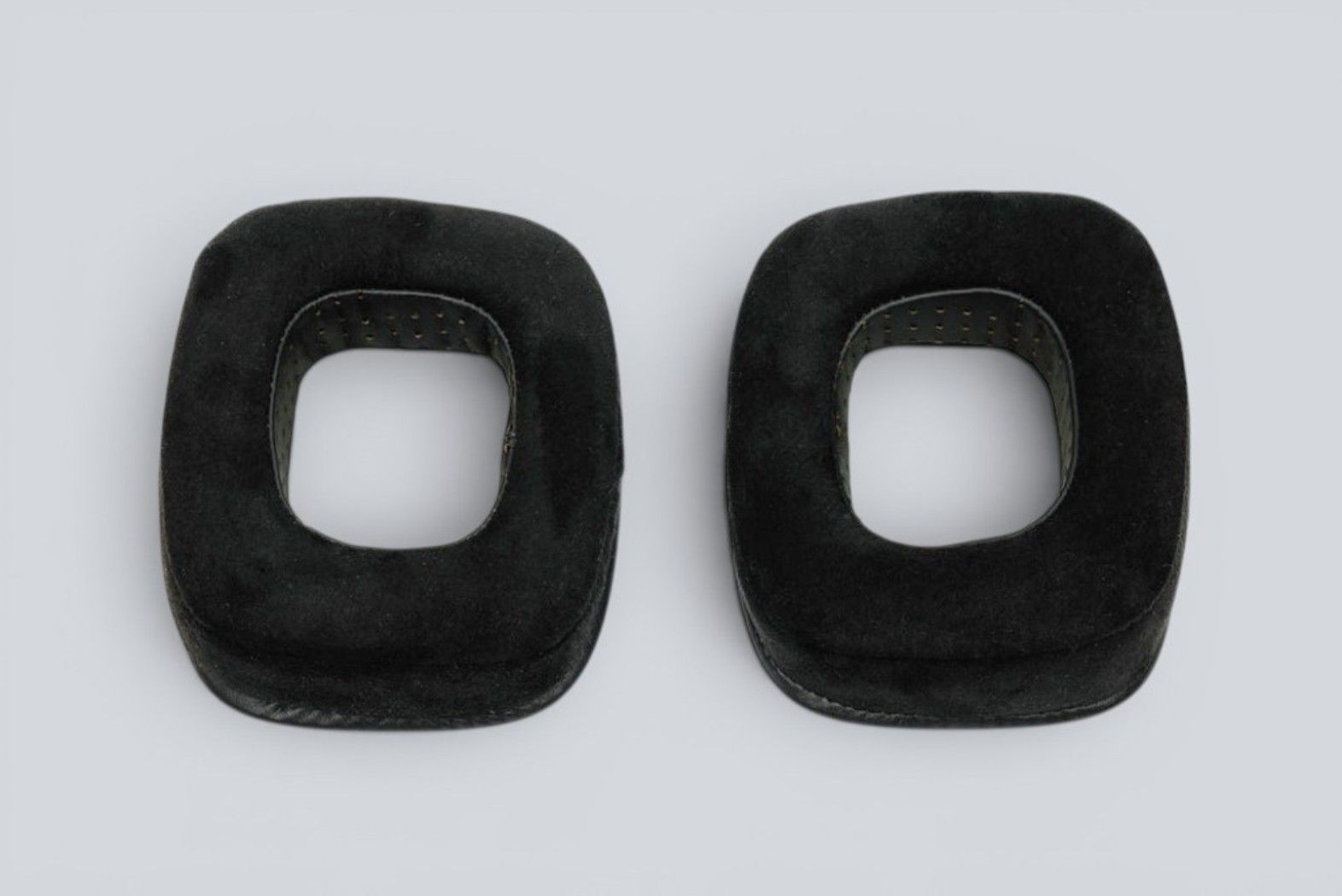
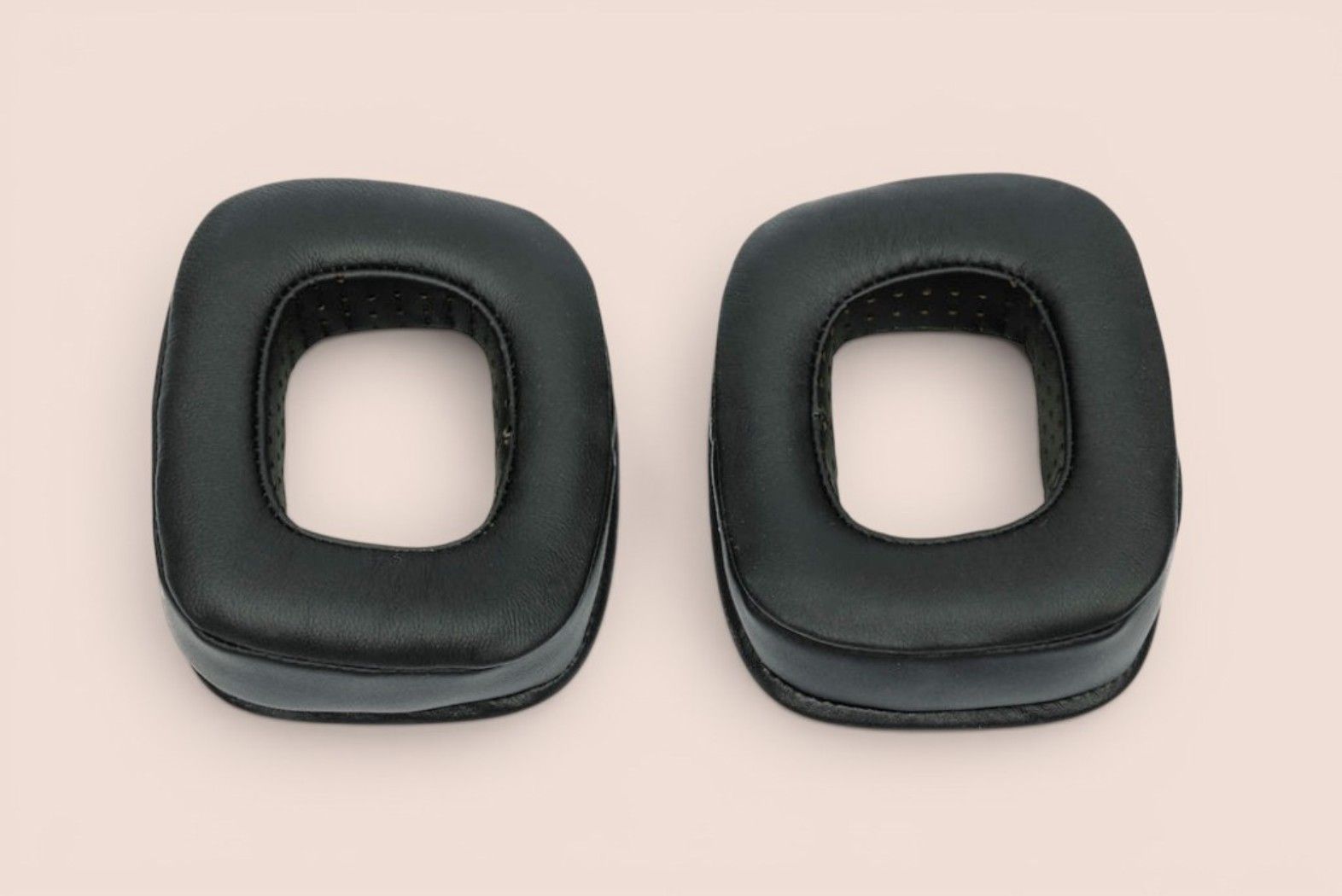
As mentioned, the HEDDphone TWO GT comes with two sets of pads with memory foam:
- Lambskin – full lambskin on the outside and on the face, fenestrated skin on the inside
- Velour – Tightly woven velour on the outside and on the face, fenestrated skin on the inside
Also as mentioned, the Unplugged version only comes with the velour pads, and the standard HEDDphone TWO (non-GT) comes with pleather pads.
The pads use a proprietary system to attach to the cups but are very easy to replace. You just grab the pad and pull it off gently, and to replace it, you just push it into place.
Replace pads: See on YouTube
The pads are rectangular in shape and quite deep, slightly angled with a thicker part at the back than at the front. There is plenty of room for my ears, but this will of course vary from individual to individual. For me at least, they are very comfortable. I like that they’re not covering too much of the side of my head.
The pads make quite a difference to the sound, which should surprise no one who has experimented with pad swapping on headphones. I definetly prefer the leather pads; they make everything smoother and cleaner. I’ll elaborate on this below.
LISTENING IMPRESSIONS
Associated equipment
- Amplifier: Sendy Audio KYLIN (AliExpress /Audio46 )
- DAC: RME ADI-2 DAC FS
- Pads: Velour and lambskin
The HEDDphone TWO GT is dependent on a good, reasonably powerful amp to perform at its best. I have tried many and will elaborate on that later on. For this session, however, I go with the Sendy Audio KYLIN, which is a very good match while still not being a total power beast.
The velour pads are premounted on the HEDDphone TWO GT. I will first comment on those, then on how the lambskin pads compare.
Douö by Renaudin and Cahours
Velour pads: This album sounds excellent with the HEDDphone TWO GT. It’s snappy and energetic with lots of space; it’s crisp and clear without sounding dry or sharp. It’s not too smooth or especially warm; it’s quite neutrally tuned. I have listened to this album a lot, and the HEDDphone TWO GT’s rendition is among my favourites so far.
Lambskin pads: very similar, but even a tad better, with a slightly smoother and somewhat warmer tint.
Birds by Tingvall Trio
Velour pads: This is a great Swedish jazz trio album. It also sounds excellent on the HEDDphone TWO GT. The bass is not overly powerful, but it is there. The GT sounds crisp and clear without being sharp; it’s neutral and expressive with great dynamics.
Lambskin pads: still snappy and clean, but a bit smoother, warmer and lusher – in a very nice way.
Tremors In The Static by Vega Trails
Velour pads: Excellent album with a lot of double bass action. Even though the bass is not boosted, it is certainly present with good detail and texture. Again, the GT is dynamic and expressive, crisp and clear. The soundstage is large, imaging is good, and instrument separation is excellent. It is very easy to hear and follow each and every instrument and separate them from ambient sounds.
Lambskin pads: the double bass is a bit fuller, the saxophone a bit smoother, percussion a bit less crisp but still very snappy.
The Sun Always Shines on TV – MTV Unplugged by a-ha
Velour pads: Both the female and the male vocals are up front and present in a neutral way. The soundstage is open, imaging a bit more left-right than on the best alternatives. The bass is polite, and I’ve definitely heard this track warmer. Again, the HEDDphone TWO GT sounds crisp and clear without being sharp.
Lambskin pads: a bit warmer and smoother delivery in general; vocals are less crisp and smoother.
Eye of the Day by Marta del Grandi
Velour pads: The female vocals are very nuanced and textured. They are upfront and not especially warm or lush. The instruments are clear and dynamic.
Lambskin pads: vocals are a bit warmer, the bass a tad thicker.
Teardrop by Massive Attack
Velour pads: The bass is detailed and textured but not very large in terms of quantity. Vocals are crisp and clear; things are dynamic and expressive.
Lambskin pads: slightly more bass, a bit more warmth in the vocals.
The Hidden Camera by Photek
Velour pads: The bass is tight and clean, the percussion snappy and crisp, and vocals slightly dry. Very good instrument separation and detail.
Lambskin pads: slightly warmer with more bass.
Spontaneous Compositorius by Thomas Agergard
Velour pads: The saxophone timbre is neutral; there’s texture and presence without much lushness. The bright percussion is clean and energetic; it is on the brighter side but not too sharp or piercing. The bass is polite but detailed.
Lambskin pads: the saxophone timbre is slightly warmer, the treble a bit smoother, there’s more bass.
Keeping Company by Bill Laurence
Bonus track with the lambskin pads: This sounds wonderful with the lambskin pads on. Perfectly balanced with great detail, great imaging, and a touch of smoothness and warmth.
WRAPPING IT UP
Sound Signature
Velour pads: The sound signature is quite neutral, with relatively polite bass presence, upfront midrange, and crisp but not piercing highs.
Lambskin pads: The sound signature is still neutral and the tonal balance quite similar, but there is slightly more bass, somewhat lusher mids, and a smoother touch in general.
Treble
Velour pads: The treble is crisp and clear, energetic in presence but not too sharp or piercing. It is highly detailed.
Lambskin pads: The treble is still very clear and quite upfront, but the lambskin pads make it a bit smoother, in a nice way.
Midrange
Velour pads: The midrange is very present and somewhat bright; it is not especially lush or warm. There is lots of texture and detail.
Lambskin pads: the midrange is a bit lusher and smoother, in a good way.
Bass
Velour pads: The bass is polite in presence but very good in quality. It is textured and detailed, and even though it might be a bit reserved, it is quite punchy.
Lambskin pads: slightly more bass quantity, same quality – a positive change in my book.
Soundstage and Imaging
Velour pads: The soundstage is open sounding, but imaging is more left to right than front to back. Instrument separation is very good, and identifying individual instruments is very easy; still, the holographic experience isn’t class leading.
Lambskin pads: the soundstage is similarly large but a tad less open. The imaging feels more precise and there is better image depth. In other words, the imaging becomes more holographic.
Detail, Dynamics, and Timbre
As long as you give the HEDDphone TWO GT a nice, powerful amplifier that matches well, you get a lot of detail and dynamics from these headphones.
For some reason, though, I feel that the headphones are less picky about the amplifier when I use the lambskin pads instead of the velour pads.
Velour pads: The detail level is high; details are articulated and crisp. Dynamics are good, even though the bass quantity is polite. Timbre is neutral to bright, somewhat crisp and upfront.
Lambskin pads: the detail level is similar, but the details are delivered in a slightly smoother manner. Dynamics are a bit improved, mostly because the bass is fuller. The timbre is still neutral, but a bit lusher, smoother and warmer compared to the velour pads.
CONCLUDING ON PADS
Even though the difference is not very large in absolute terms, I strongly prefer the lambskin pads. They keep the HEDDphone TWO GT sounding neutral, but add a slightly lusher, warmer and smoother touch compared to the velour pads. The velour pads are drier and crisper. Some might call them more airy, but I find them just to sound more diffuse: the imaging is better with the lambskin – more holographic.
Keep in mind that both sets of pads have the same material on the inside: fenestrated sheepskin. Because of the proprietary pad system, I cannot try other pads, but I would be very interested to listen to pads that have full lambskin on the inside. I would also like to try a hybrid pads with fenestrated skin on the inside, velour on the face and full lambskin on the outside.
The HEDDphone TWO GT comes with the velour pads pre-mounted, and the Unplugged version comes with the velour pads only. It seems clear that HEDD has chosen the velour pads as the “main pads” for the HEDDphone TWO GT. I think this is the wrong choice from HEDD; I think it should have the lambskin as standard. Don’t get me wrong, the velour pads also sound great, but the lambskin pads are the best.
AMPLIFICATION
The HEDDphone TWO GT benefits from proper amplification, so I spent some time comparing its performance across seven different amplifiers. The lineup consisted of six headphone amplifiers and one speaker amplifier, with the RME ADI-2 DAC FS (USD 1,999) serving as the source for all throughout the evaluation. For amplifiers with built-in DACs, I bypassed the internal DAC section and used only the analog amplifier stage.
The amplifiers with built-in DACs were the Sendy Audio KYLIN, Burson Conductor Voyager, and Violectric V226. In all three cases, the internal DAC section was bypassed. The V226 is otherwise identical to the V222, with the only difference being the addition of an integrated DAC module.
Here is the list of amplifiers included in the comparison, all of which I generally consider to be excellent:
- Mytek Liberty THX AAA (1499 USD / €1495),
- Sendy Audio KYLIN (DAC/Amp 1499 USD)
- Violectric VHA-222/226 (1599 USD / €1399),
- Bryston BHA-1 (2695 USD / €3049),
- Burson Conductor Voyager (DAC/Amp 4299 USD).
- Woo Audio WA22 (2699 USD)
- Schiit Vidar 2 Speaker power amp (799 USD)
Comparing the amplifiers, the first thing that stands out is how similar they are. The differences are generally subtle, and in most cases quite small.
Of the amplifiers tested, I found the Schiit Vidar 2 to deliver the strongest overall performance. It offers greater bass weight along with a cleaner, more open soundstage, resulting in somewhat better imaging and instrument separation.
In terms of bass weight, the KYLIN comes closest to the Vidar 2. It also has a slightly warmer tonal balance, as do to the Bryston BHA-1 and Woo Audio WA22.
The Burson Conductor Voyager, Mytek Liberty THX AAA, and Violectric V222/V226 are all very close to eachother in tonal balance and overall presentation. Their level of detail is likewise very similar. If anything, the Burson may have a slight edge, although the difference is subtle enough that expectation bias cannot be ruled out.
Overall, every amplifier in this comparison provided enough power to drive the HEDDphone TWO GT well. However, the fact that the Schiit Vidar 2 speaker amplifier produced the best result suggests that the HEDDphone TWO GT benefits from an amplifier with some extra power reserves.
Personally I prefer the Vidar 2, but also find the slight warmth of the KYLIN, BHA-1 and WA22 appealing.
Honorary mention: The Ferrum Erco mk2 DAC/Amp
sounds excellent with the HEDDphone TWO GT, and has power to spare. It sounds detailed and dynamic with great imaging and tonality. The Erco is probably my preferred all-in-one of the ones tested.
COMPARISONS
Associated equipment:
- Amplifier: Bryston BHA-1
- DAC/Amp: Ferrum Erco mk2
HEDDphone D1 vs HEDDphone TWO GT
The HEDDphone D1 is a dynamic driver headphone launched in 2025. It is lighter, easier to drive, and more affordable than the TWO GT. It’s priced at 799 USD/€699.
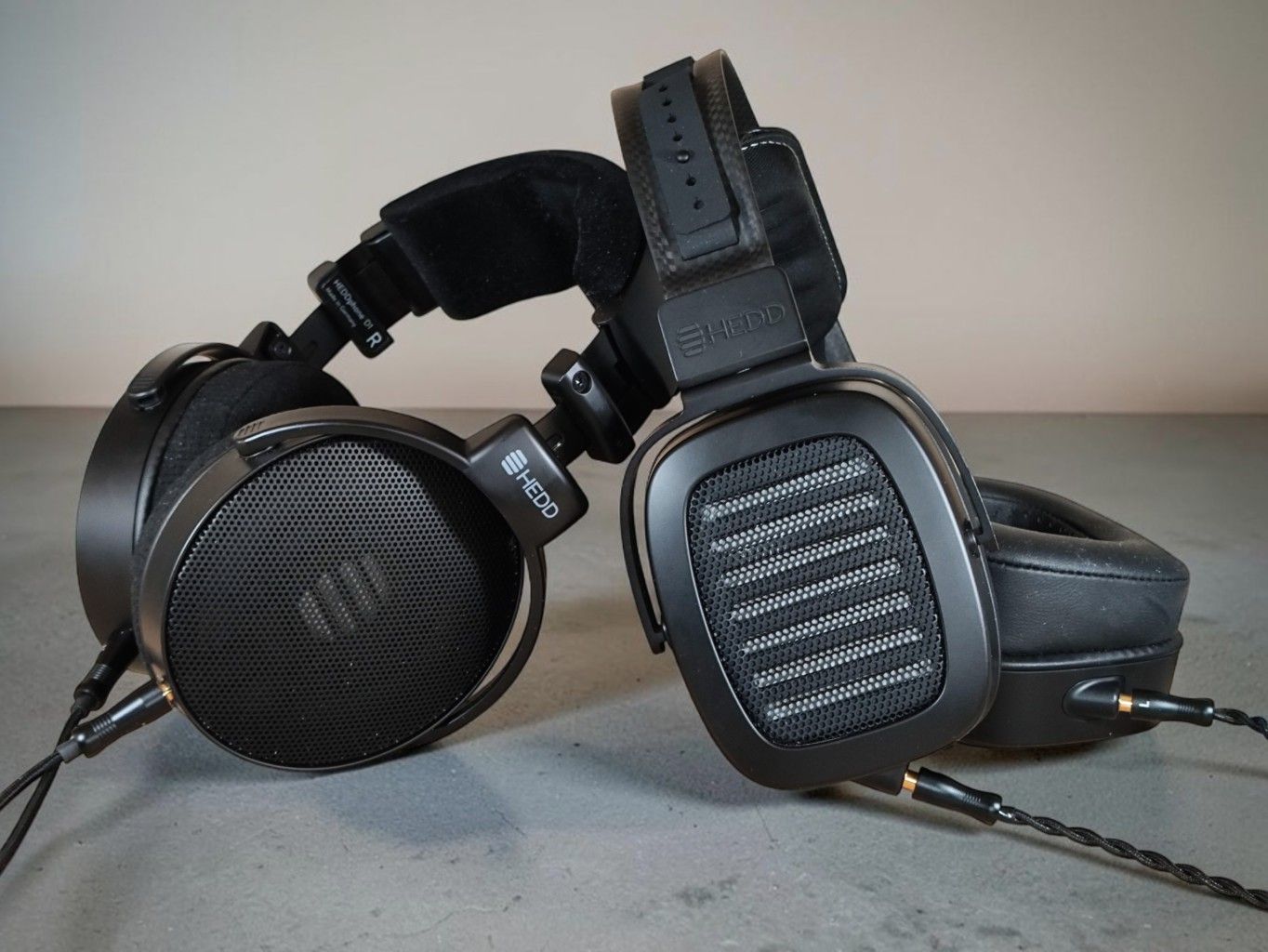
Comparing the D1 and TWO GT, the D1 is more neutral, even though the GT isn’t very far off. I really like the D1, and it offers excellent value for money, but the TWO GT is technically more capable, especially with a good amplifier, and it is also more “fun” to listen to.
Read my full comparison review here:
HEDDphone D1 vs HEDDphone TWO GT
- HEDD: HEDDphone D1
- Audio46: HEDDphone D1
AUDEZE LCD-X vs HEDDphone TWO GT
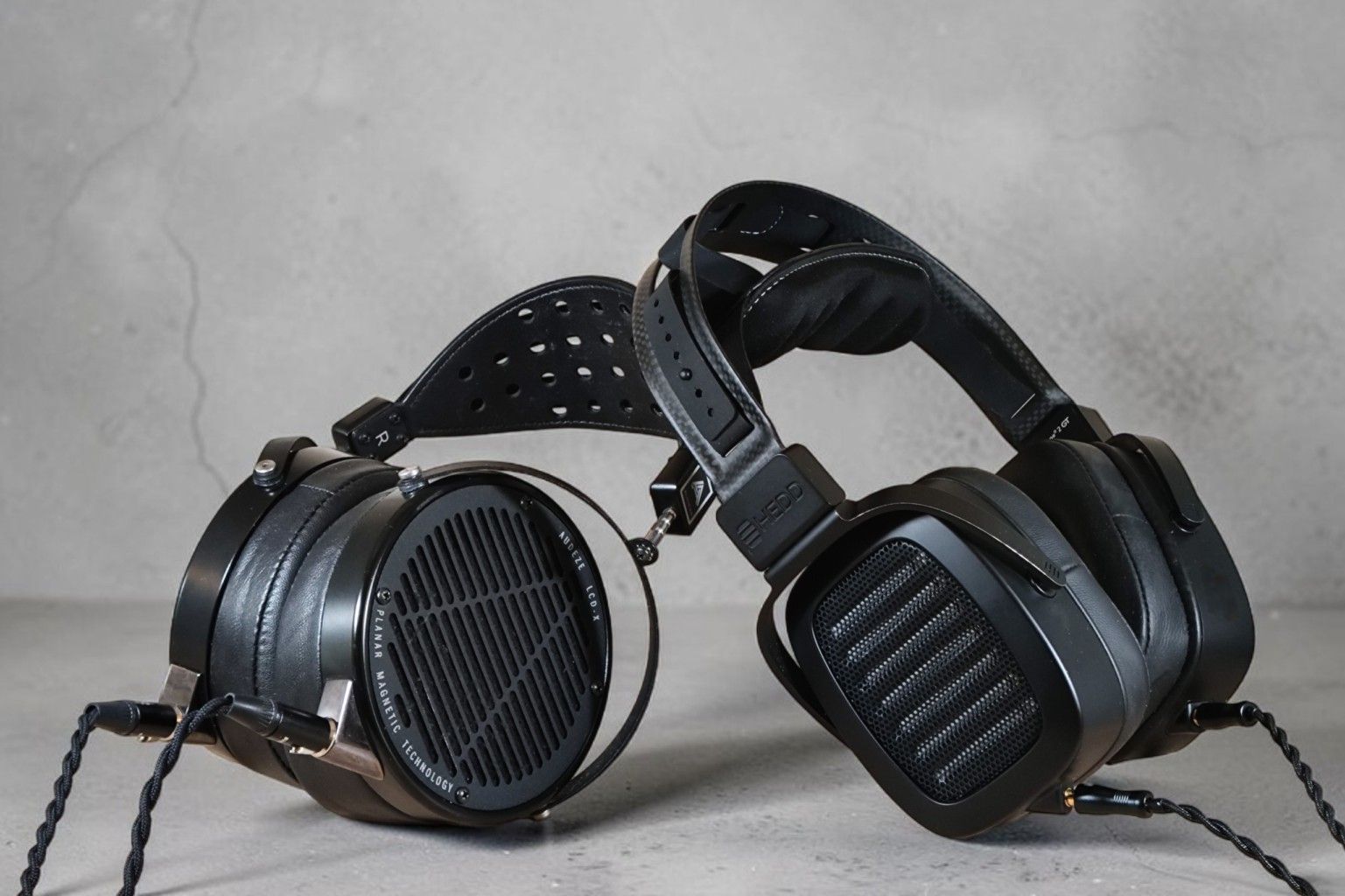
The planar magnetic Audeze LCD-X was launched in 2013. It’s still going strong and popular with both professionals and audiophiles. Over the years, it has received several silent upgrades, with the most important revision done in 2021. My set is from 2023. These days, the LCD-X typically costs 1,199 USD.
Comparing the HEDDphone TWO GT and the LCD-X, they’re obviously tuned to sound rather neutral, but they are different in many ways. The LCD-X is a great headphone, but the HEDDphone TWO GT offers a warmer, richer midrange, punchier bass, better instrument separation and imaging; it’s more dynamic and has more articulate detail across the board. The LCD-X is, however, much less demanding on the amplifier.
Read my full comparison review here:
Audeze LCD-X vs HEDDphone TWO GT
HIFIMAN HE1000SE vs HEDDphone TWO GT
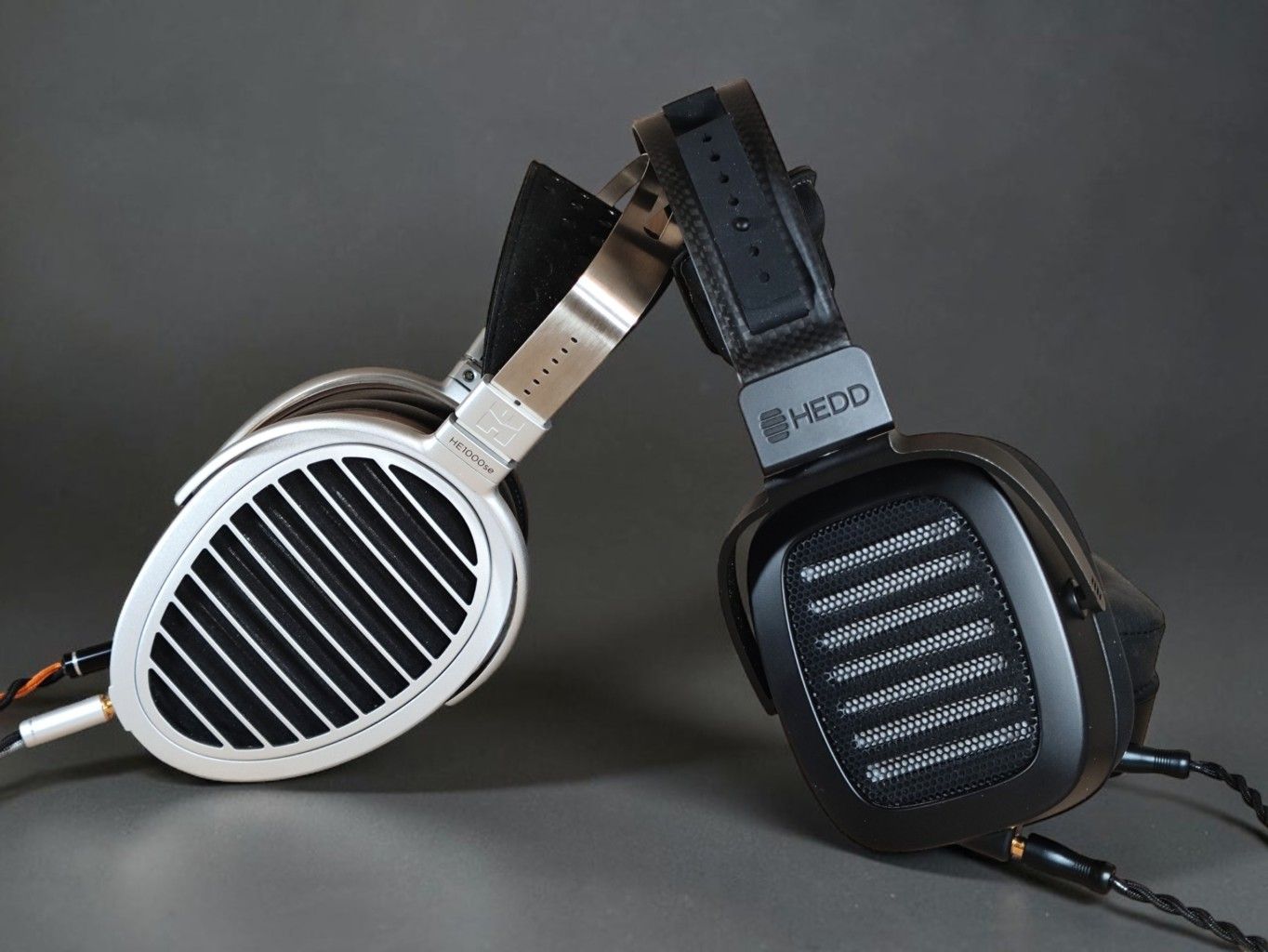
The Hifiman HE1000SE is a planar magnetic headphone that has proven its worth by being in continuous production for 8 years and still counting. It launched in 2018 at 3,499 USD but currently retails for 1,699 USD.
Comparing the HiFiman HE1000SE and HEDDphone TWO GT, it is obvious that both are excellent headphones, but they offer different experiences.
The HE1000SE has a larger soundstage and a brighter, airier, more V-shaped sound signature, while the TWO GT is warmer, bolder, and more neutral, with richer timbre and punchier dynamics. Detail retrieval is comparable on both – broadly speaking.
Read my full comparison review here:
Hifiman HE1000SE vs HEDDphone TWO GT
CONCLUSION
The HEDDphone TWO GT is an excellent-sounding headphone with a relatively neutral tuning that combines impressive detail retrieval with great dynamics, while maintaining a subtly rich and smooth overall character. It does, however, benefit from a capable amplifier, and of the included earpads, I preferred the lambskin pads. They deliver both a smoother and more focused sound.
I can confidently recommend the HEDDphone TWO GT.
Thanks for reading. You can support us by purchasing anything using any of our affiliate links.
- Amazon: HEDDphone TWO GT
- Audio46: HEDDphone TWO GT
- Audio46: HEDDphone TWO GT Unplugged
- HEDD Audio: HEDDphone headphones
Any purchase you make on Amazon, Linsoul , AliExpress or Audio46 with any of our affiliate links will give us a small provision at no cost to you.
We only get a provision for items that are not returned, so there’s no incentive for us to recommend something that’s not good.
Linsoul : Headphones, Earbuds, Wireless Earbuds, Desktop DAC/AMP, Portable DAC/AMP, Digital Audio Players,
Amazon: Headphones, IEMs, Headphone Amplifiers, Home Audio or Anything else.
.
If you enjoyed this article or other content on The Headphoneer, you might consider leaving a small donation to keep this website up and running. No donation is too small. Thanks for supporting us!

If you like our work please follow us on Instagram, Facebook and Twitter , it will help us grow. Sharing is caring 🙂