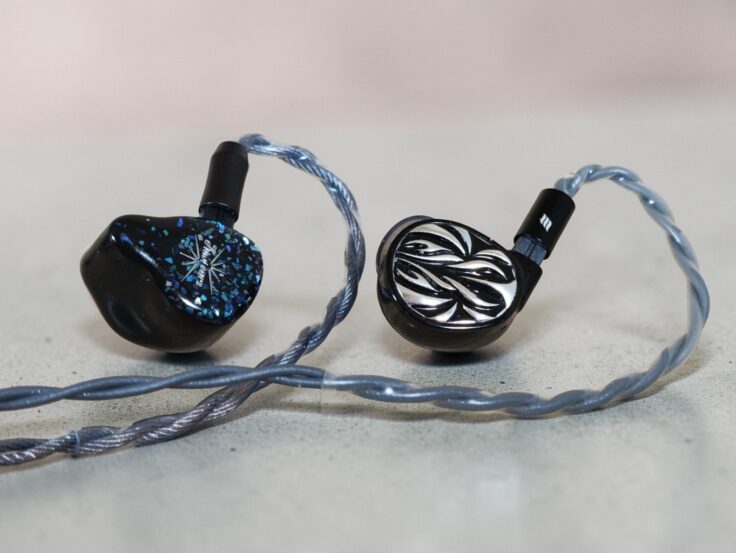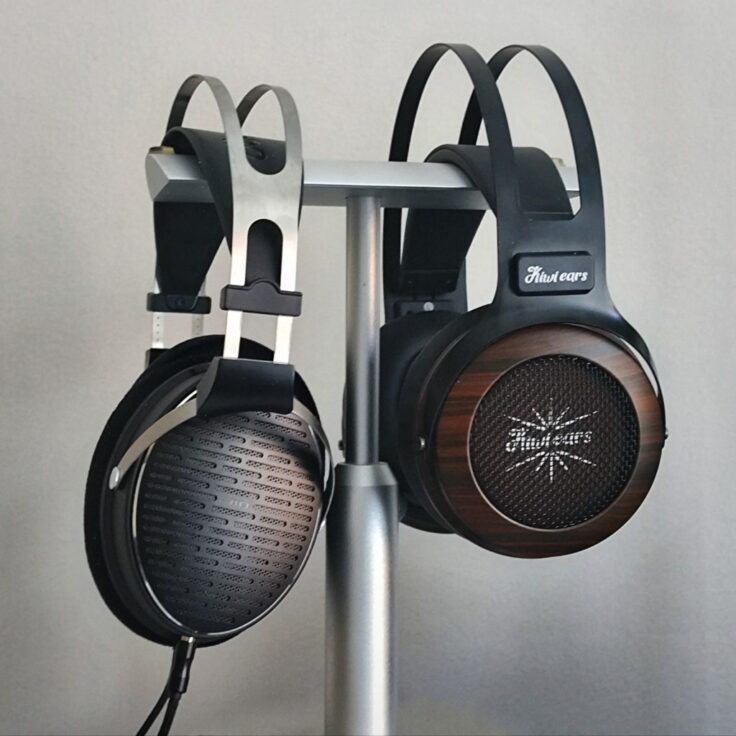

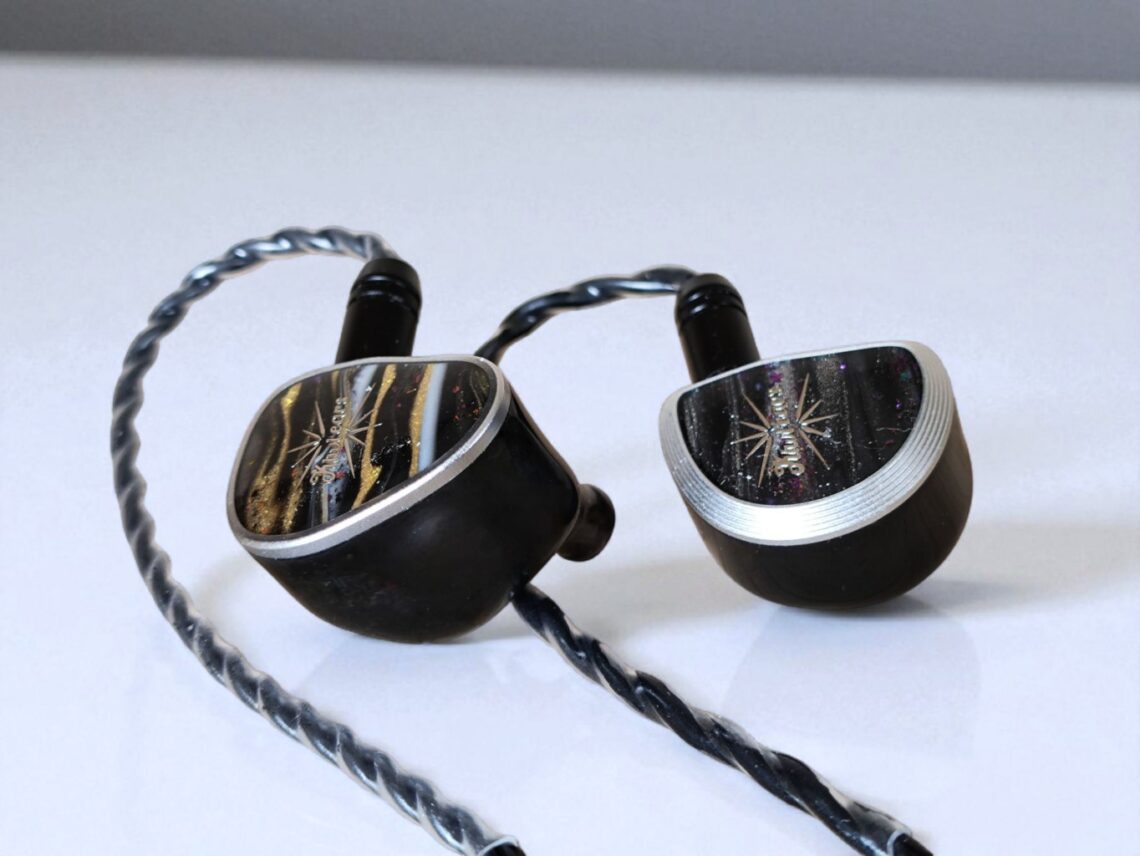
The Étude is a recently released tribrid in-ear monitor from Kiwi Ears, priced at 119 USD ex. tax. It features a 10mm dynamic driver with a crossover at 250 Hz, a single balanced armature for the midrange, and a dual balanced armature tweeter for the highs. It also includes the new KVT (“Kiwi Vibration Transducer”), which adds tactile vibrations to enhance the low-mid acoustics.
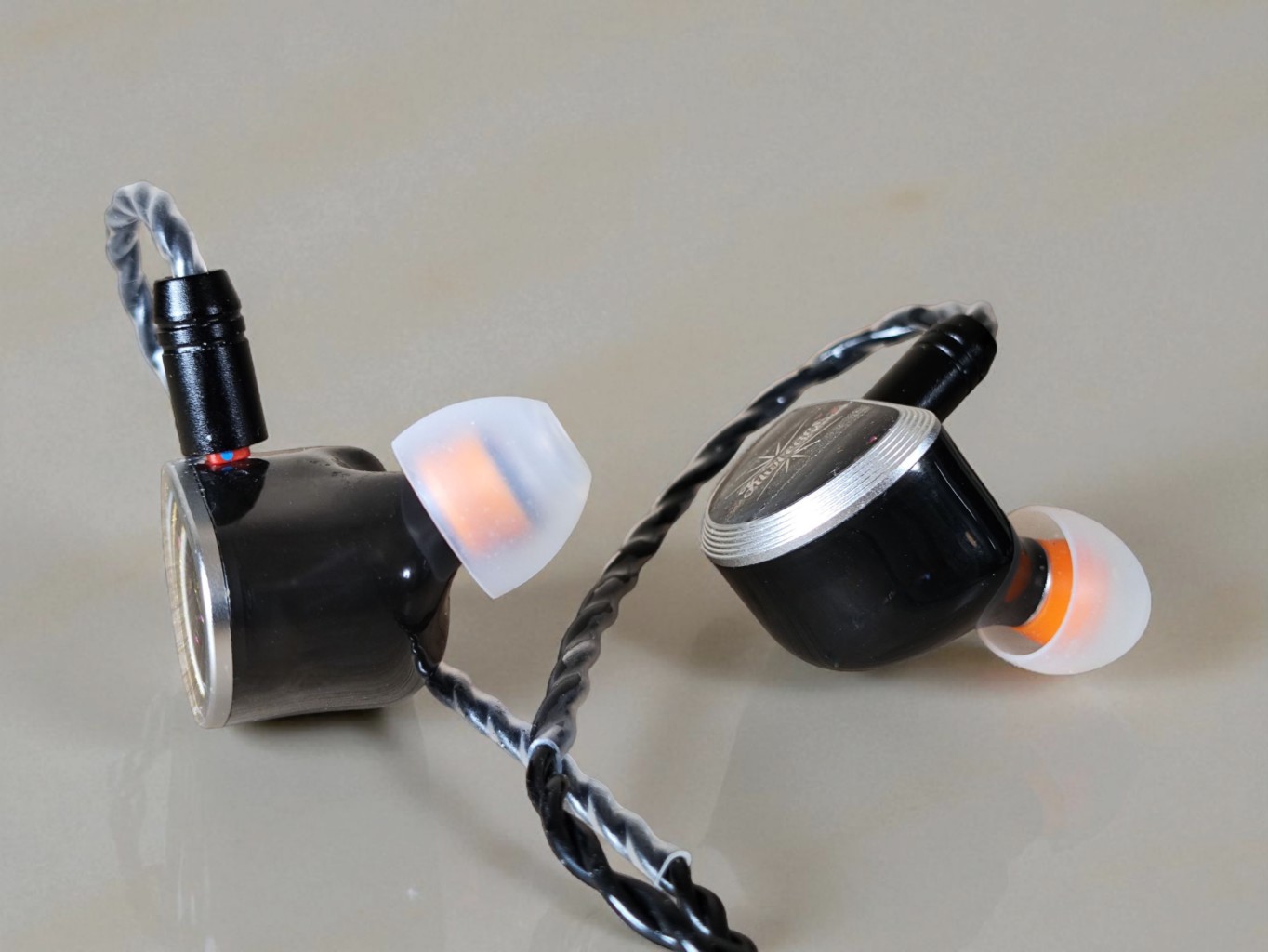
The Aether, released in spring 2025, is a planar magnetic single-driver in-ear monitor—Kiwi Ears’ first of this type—featuring an unusually large 15.3mm driver. It is priced around 150 USD ex. tax.
KIWI EARS ÉTUDE SPECIFICATIONS
- Drivers: 1 Dynamic Driver + 3 Balanced Armatures + 1 Vibration Transducer
- Sensitivity: 104dB SPL/mW
- Impedance: 5 Ohms
- Frequency Response: 20Hz – 20kHz
- Cable connectors: 0.78mm 2-Pin Connector
- Cable Length: 1.2 Meters
- Cable termination: 3.5mm jack.
Current price and availability:
- Amazon: Kiwi Ears Étude
- Linsoul: Kiwi Ears Étude
- Kiwi Ears: Étude
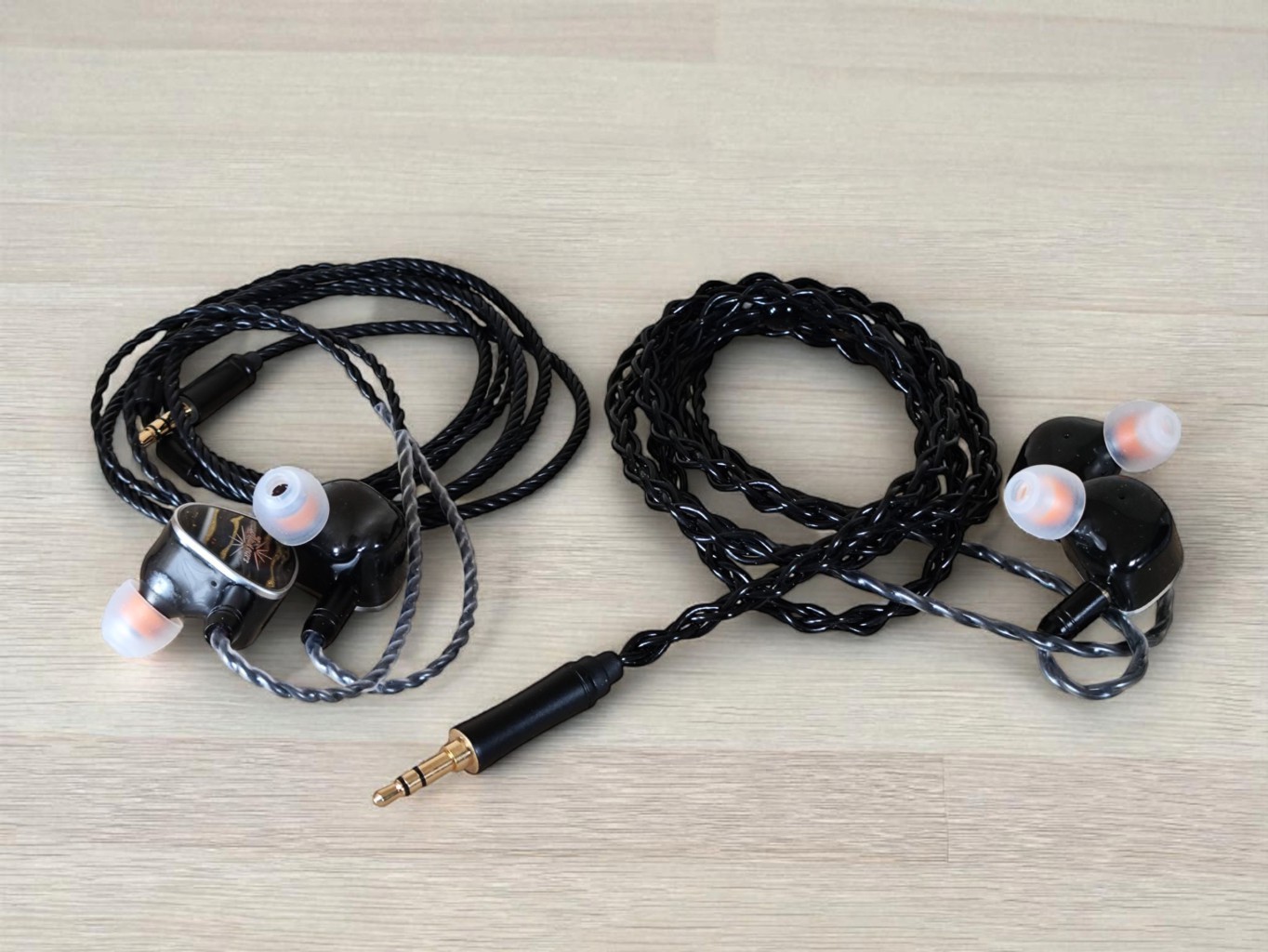
KIWI EARS AETHER SPECIFICATIONS
- Driver: 15.3 planar magnetic
- Impedance: 14 Ohms
- Sensitivity: 105 dB/mW
- Frequency range: 20Hz-20kHz
- Detachable cable: 1.2 m
- Earphone connector type 0.78mm dual pin
- Cable termination 3.5mm TRS jack
Current price and availability:
- Amazon: Kiwi Ears Aether
- Linsoul: Kiwi Ears Aether

BUILD AND COMFORT
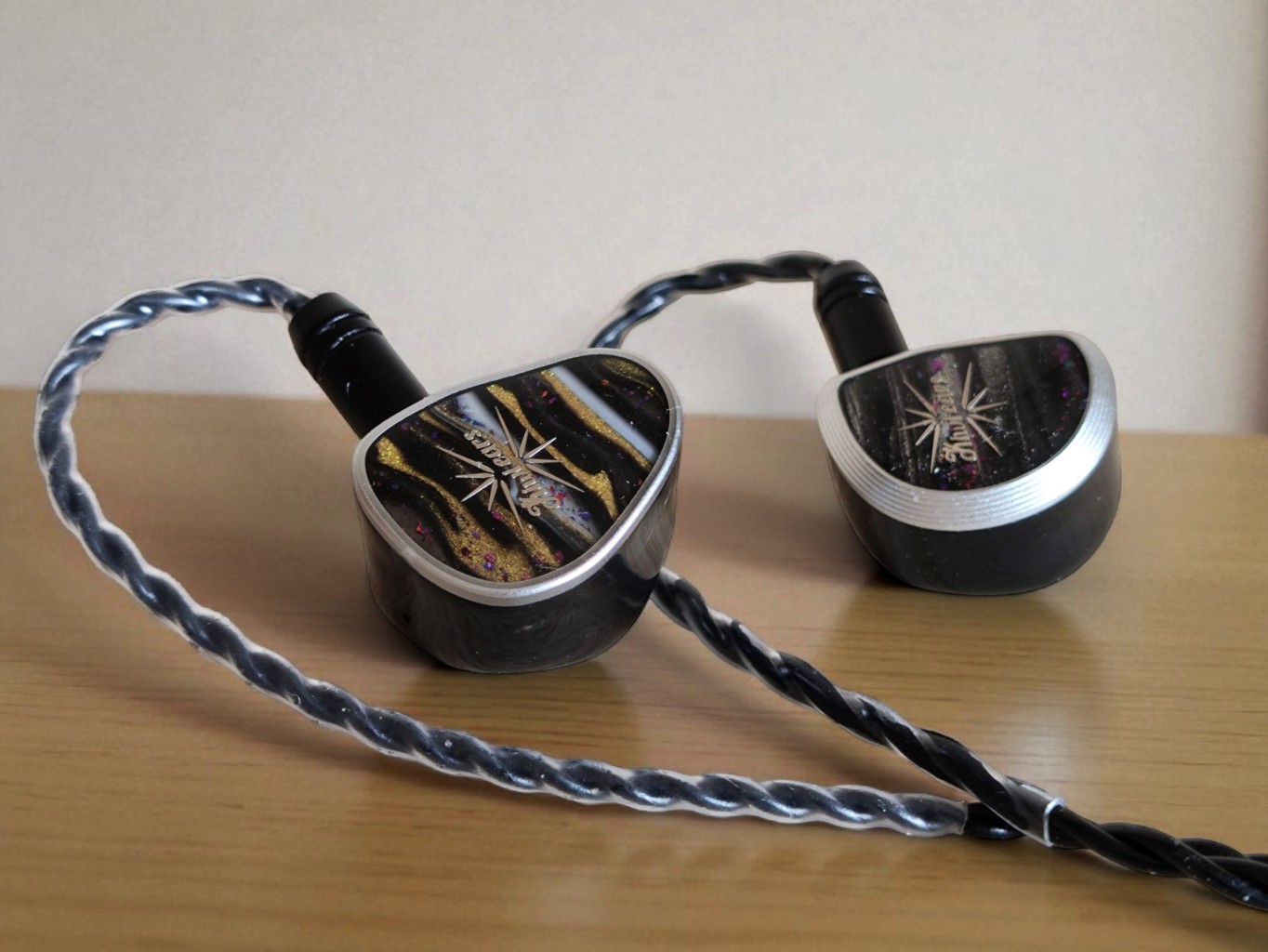
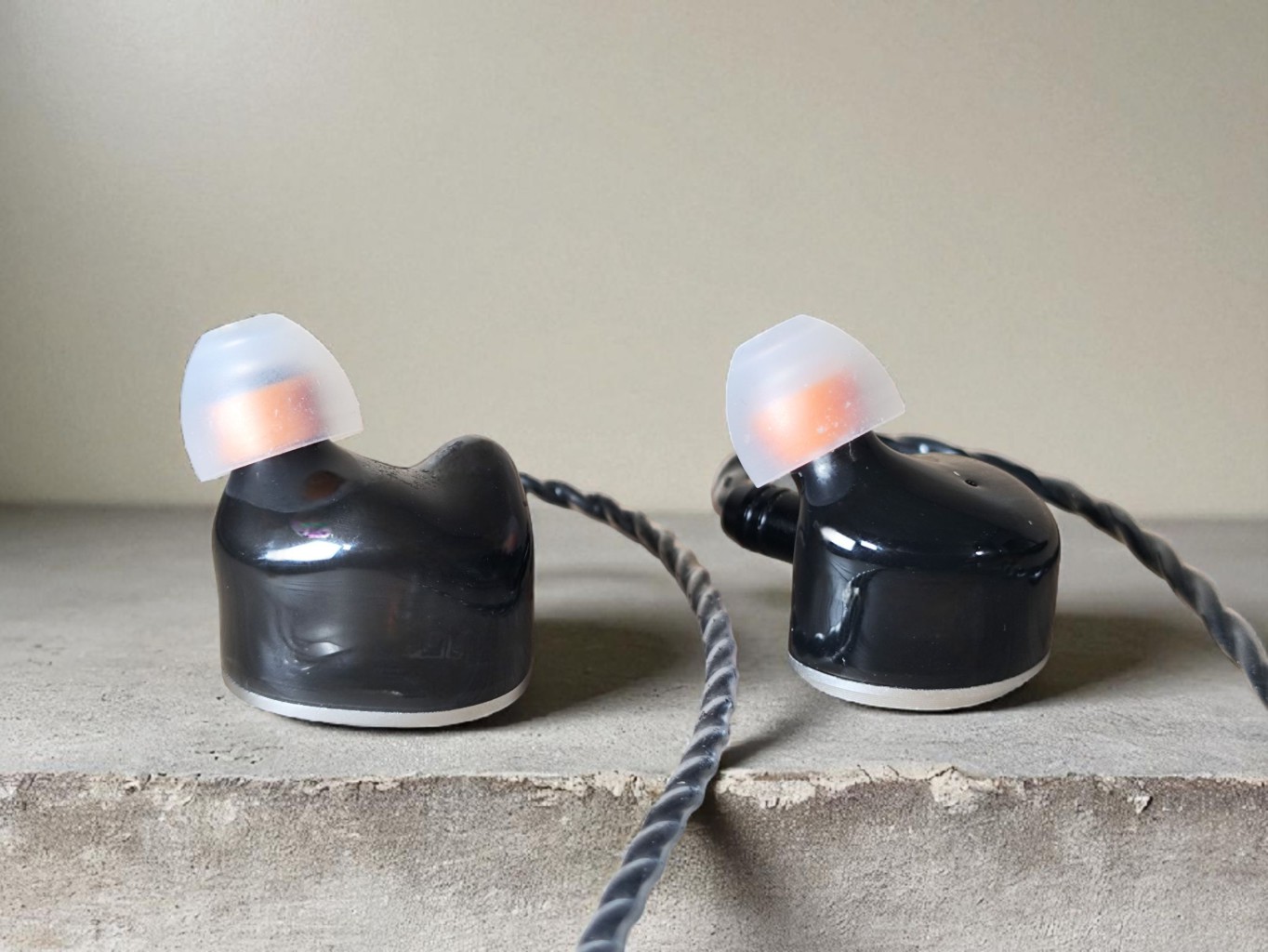
The Étude and Aether look and feel very similar in both size and design. Both are made of resin with decorative faceplates. The Étude has resin nozzles that are a continuation of the shell, while the Aether uses metal tubes with mesh.
Although they are fairly large, both are very comfortable in the ear. The Aether comes with a slightly thicker cable, compared to the quite thin cable on the Étude. However, the thin and light cable works perfectly well, and I have had no issues with either.
LISTENING COMPARISONS
Associated equipment:
- Amplifier: Topping A90
- DAC: RME ADI-2 DAC FS
- Tips: SpinFit CP145
Analogue – MTV Unplugged by a-ha
The Étude is energetic, lively, and natural. The Aether is a bit less dynamic and lush—it isn’t dry, but comparatively drier. Overall, they are quite similar, but I prefer the Étude for its musicality, even though the Aether delivers more detailed bass.
The Sun Always Shines on TV – MTV Unplugged by a-ha
The Aether is more neutral, with less bass and less crisp highs. However, it feels flatter and less dynamic, creating a sense of distance from the music that is absent with the more musical-sounding Étude.
Summer 3 Vivaldi Recomposed by Max Richter
They are very similar here, with the Étude being slightly more energetic and having a somewhat more upfront treble.
Jambi by Tool
The Étude is rich, bold, and very engaging. The vocals remain clear and are not overpowered by the bass, while the guitars have texture and body.
The Aether offers better separation, making the vocals stand out more, with more space between instruments. The bass is tighter, and the overall sound is more neutral, though sibilance can be more noticeable.
Almost Like The Blues by Leonard Cohen
The Étude is warmer, richer, and bolder, while the Aether is more neutral, with less bass and slightly more air. Despite these differences, they are not too dissimilar.
Black Crow by Cassandra Wilson
Here, they are quite similar, but the Aether is more neutral with a slightly airier presentation, while the Étude is more energetic, featuring warmer mids and a bolder low end.
Some Day My Prince Will Come by Coryell Miroslav Quartet
With the Étude, the bass is bold and rich, and the guitar sounds warm. With the Aether, the bass is leaner and more textured, and the guitar is drier, giving a more neutral and flatter overall sound.
As Before by Olga Konkova
With the Aether, the cajón drum has a good punch and excellent texture. The vocals are clear, slightly thin, and a bit dry, but very detailed, with an overall neutral and balanced presentation.
The Étude delivers the cajón with similar punch and a strong sense of reverb. Vocals are warmer but less nuanced, resulting in a natural and highly engaging sound.
It Could Be Sweet by Portishead
The bass with the Aether is excellent, well-textured, and detailed. Vocals are slightly lean and dry but carry plenty of detail and texture, though sibilants can be a bit bothersome.
The Étude offers thicker, bolder bass, warmer vocals, and a generally lusher sound, with sibilants rendered pleasantly sweet.
Escape Route by Boris Blank
With the Étude, the sound is a bit too thick and rich, while the Aether is tighter, offering better instrument separation, more texture, and a greater sense of air.
Spontaneous Compositorius by Thomas Agergard
The Aether feels neutral to dry, with powerful, textured bass and crisp highs. The Étude offers thicker bass, warmer saxophone, and a more liquid-sounding treble.
Mahler’s Symphony No 2 III by Paavo Järvi
The Étude delivers an excellent, warm, and natural sound. Everything flows smoothly, sweet and thick, with full, rich kettle drums.
The Aether also has great bass on the kettle drums, offering slightly more resolution in the bass and mids, better instrument separation, more texture and air, and an overall slightly brighter, very pleasing presentation.
Young Vivaldi by Modo Antiquo
The Aether has a very pleasant, slightly crisp timbre, with excellent separation and layering. The Étude is thicker and bolder—still enjoyable, but I find myself preferring the Aether.
Maple Noise by Greene Serene
On this very dynamic jazz quartet improv, things sound excellent on the Étude, with rich bass, sweet saxophone, massive dynamics, and excellent treble. The Aether also has excellent bass with great texture, but the saxophone is slightly dry and recessed compared to the Étude. Otherwise, they are relatively similar.
Rambling Man by Laura Marling
The Étude sounds very natural, warm, pleasant, musical, and delightful.
The Aether is a bit drier and more neutral, but still very nice, with more texture and a slightly crisp character.
WRAPPING IT UP
Sound Signature
Both have elevated bass without overwhelming the rest. The Étude sounds sweet, lush, and slightly dark, while the Aether is crisper, drier, and more neutral.
Treble
Although they are not radically different in treble detail and weight, the Aether is crisper and drier, while the Étude is strikingly smooth and liquid.
Midrange
The Étude has a warmer, bolder midrange with a thicker tonality, while the Aether offers a more textured and crisp character. In terms of tonal weight, they are quite similar, but the relative impression depends on the track. At times the mids stand out more with the Étude, and at other times with the Aether.
Bass
They both have a plentiful bass in terms of quantity, but the Étude might feel the most bassy. The Aether offers excellent detail and a strong sense of texture, while the Étude presents a bold, lush character.
Soundstage and Imaging
I find the soundstage size and imaging capabilities to be relatively similar, though they vary somewhat from track to track. Often, the Aether provides better instrument separation, and while its imaging is seldom superior, its layering is more refined compared to the Étude.
Detail, Dynamics, and Timbre
In the bass and midrange, the Aether offers more detail, but the treble feels more resolved, or at least more liquid, with the Étude. Both are dynamic, though the Étude tends to be the more expressive and “lively” of the two.
In general, the timbre on the Aether can sound a bit dry at times, but mostly it’s neutral and pleasant. The Étude is leaking more towers warm and rich. The treble on the Étude has an excellent timbre, with a very liquid quality.

CONCLUSION
The Étude delivers a warmer, richer, and more engaging sound with lush mids, bold bass, and liquid treble, making it highly musical and expressive. The Aether is more neutral, textured and detailed, with tighter – but still plentiful – bass, better separation, and a slightly airier, crisper presentation. Both are comfortable and well-built.
Essentially, choosing between the two comes down to whether you prefer the Étude’s musical liveliness and warmth or the Aether’s more neutral and textured presentation.
Thanks for reading. You can support us by purchasing anything using any of our affiliate links.
- Amazon: Kiwi Ears Étude
- Linsoul: Kiwi Ears Étude
- Kiwi Ears: Étude
- Amazon: Kiwi Ears Aether
- Linsoul: Kiwi Ears Aether
Any purchase you make on Amazon or Linsoul with any of our affiliate links will give us a small provision at no cost to you.
We only get a provision for items that are not returned, so there’s no incentive for us to recommend something that’s not good.
Linsoul : Headphones, Earbuds, Wireless Earbuds, Desktop DAC/AMP, Portable DAC/AMP, Digital Audio Players,
Amazon: Headphones, IEMs, Headphone Amplifiers, Home Audio or Anything else.
.
If you enjoyed this article or other content on The Headphoneer, you might consider leaving a small donation to keep this website up and running. No donation is too small. Thanks for supporting us!

If you like our work please follow us on Instagram, Facebook and Twitter , it will help us grow. Sharing is caring 🙂