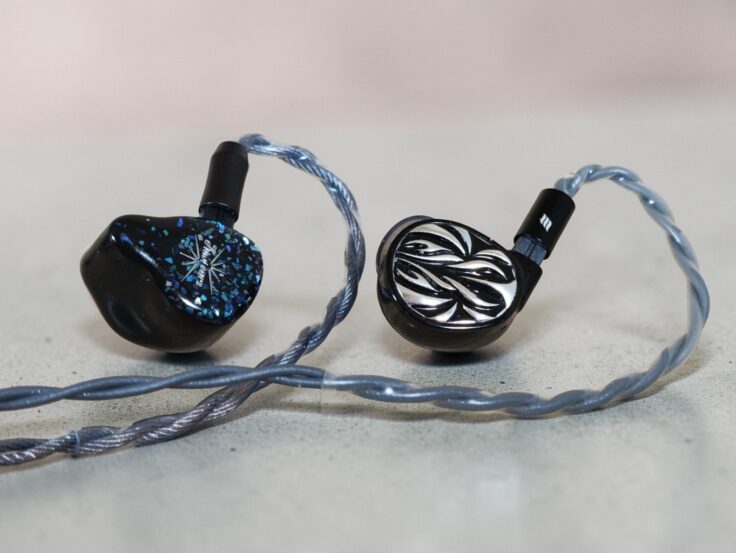

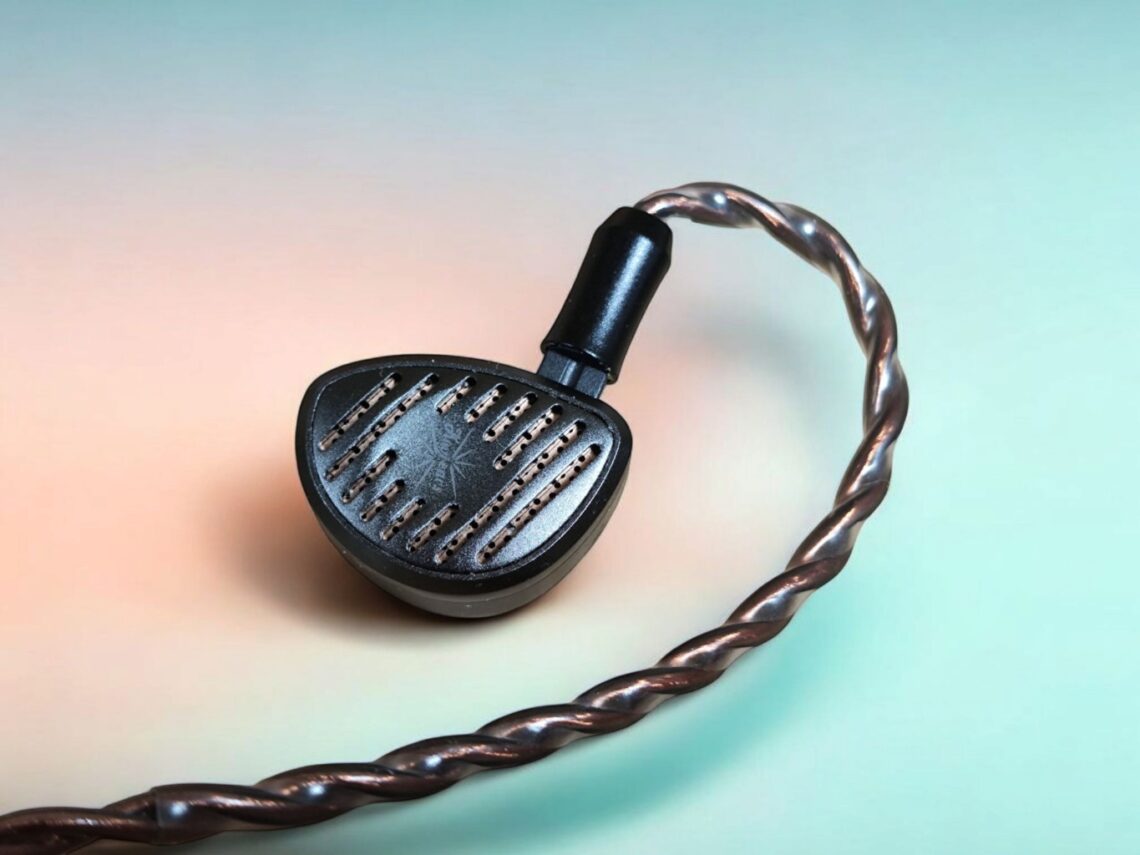
The Kiwi Ears Septet is an open-back, seven-driver hybrid IEM featuring four different driver types, also known as a quad-brid. Priced at $269 / €230 ex. tax, its name “Septet” refers to the seven drivers: one dynamic driver, four balanced armatures, a planar magnetic driver, and a piezoelectric driver.
The Septet’s 10mm composite dynamic driver delivers deep sub-bass response down to 8Hz. The four balanced armatures cover the low mids through mid-treble range, while the micro planar transducer (MPT) serves as the high-frequency tweeter. The piezoelectric (PZT) driver works alongside the MPT to enhance texture and clarity in the upper registers.

KIWI EARS SEPTET SPECIFICATIONS
- Type: Open Back 1DD + 4BA + 1 Planar + 1 PZT Quadbrid IEM
- Drivers: 10mm dynamic driver, 4 balanced armature drivers, 1 micro-planar magnetic tweeter, 1 piezoelectric tweeter
- Crossover: 5-way crossover
- 3 tuning tubes
- Impedance: 15 Ohm (at 1kHz)
- Sensitivity: 95dB SPL/mW (at 1kHz)
- Rated Power: 5mW
- Maximum Power: 10mW
- Frequency Response: 8Hz – 30kHz
- Total Harmonic Distortion <1% (@1kHz)
- Cable: 1.2 m, 5N OCC
- Cable connector: 0.78mm 2 Pin
- Termination plug: 3.5mm & 4.4mm Interchangeable
IN THE BOX
- Kiwi Ears Septet
- 1.2m detachable cable
- 3.5mm and 4.4mm termination plugs
- Ear tips x 6
- Earphone case x1
- Warranty card
Disclaimer: the review sample was sent to us by Kiwi Ears for an honest and unbiased review
Current price and availability:
- Linsoul: Kiwi Septet
- Amazon: Kiwi Septet
- Kiwi Ears: Septet
BUILD AND COMFORT
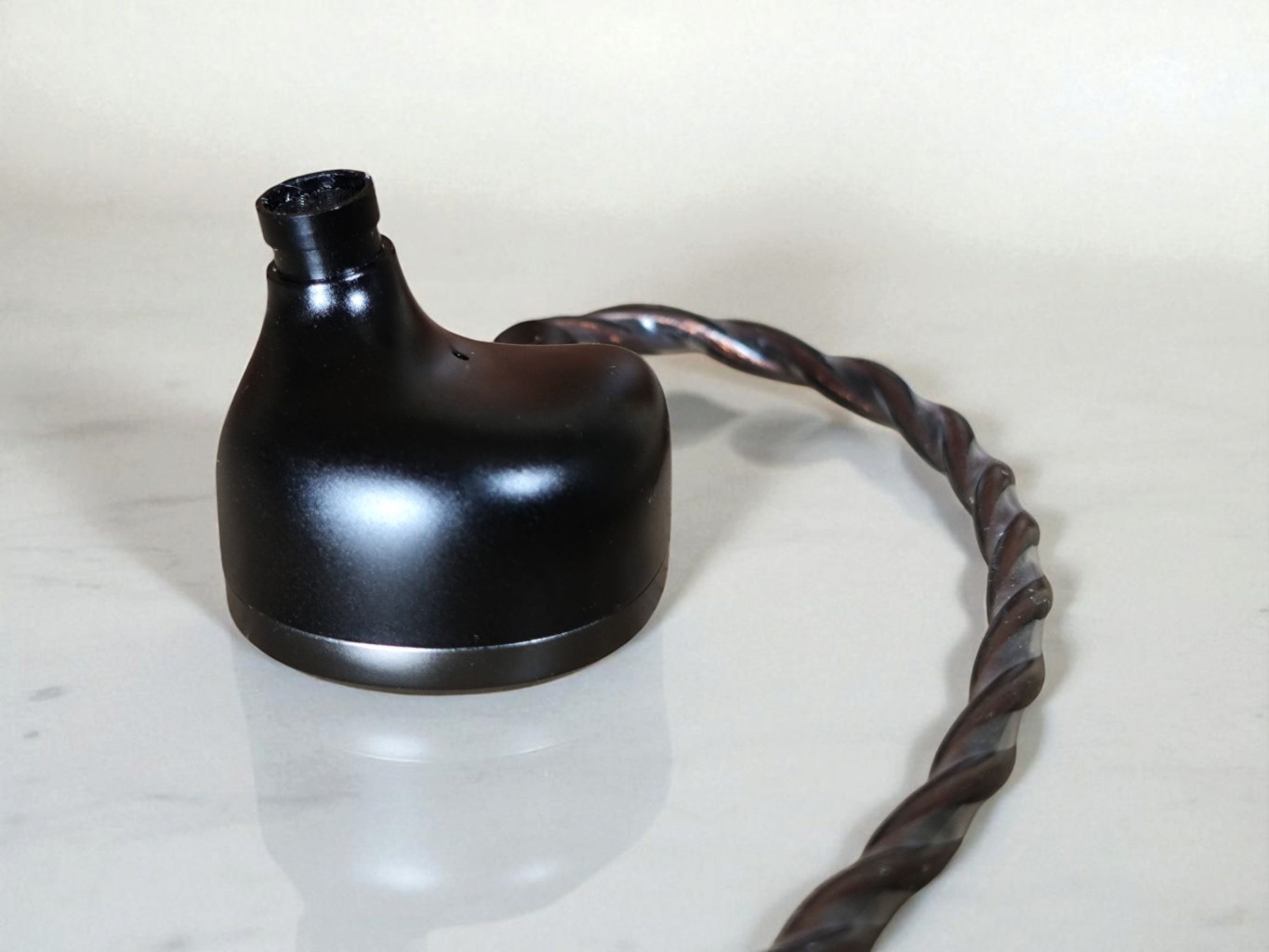
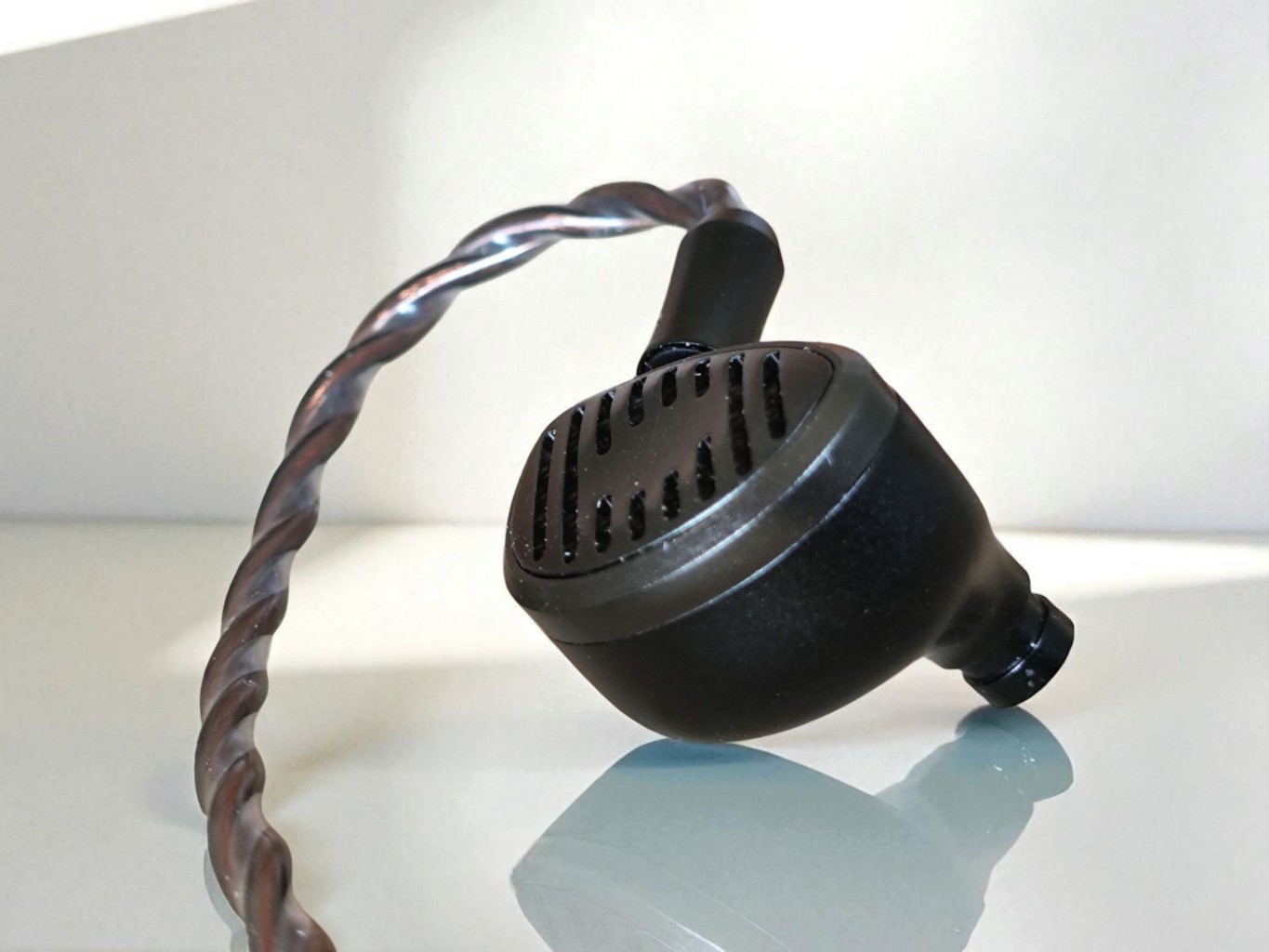
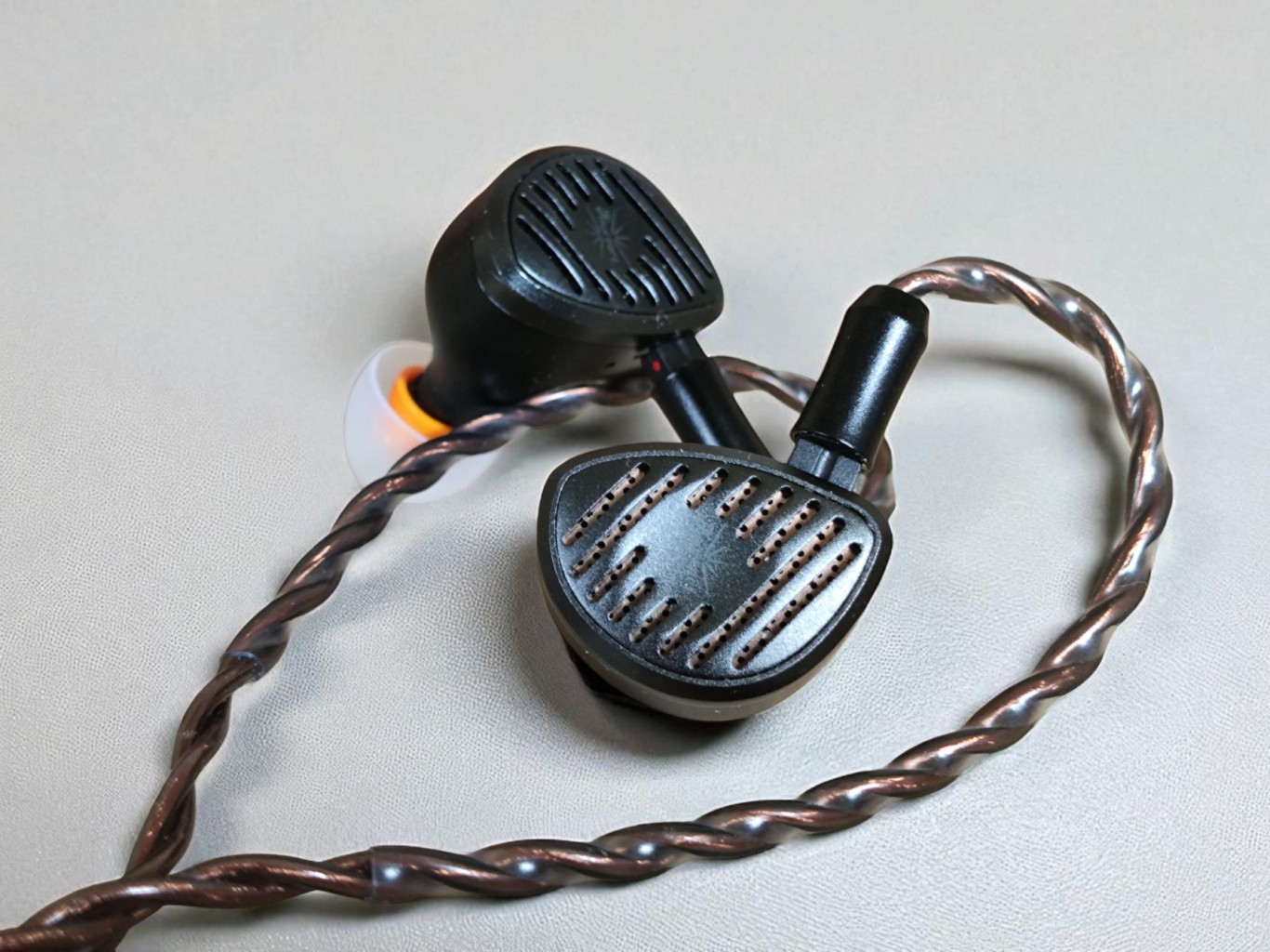
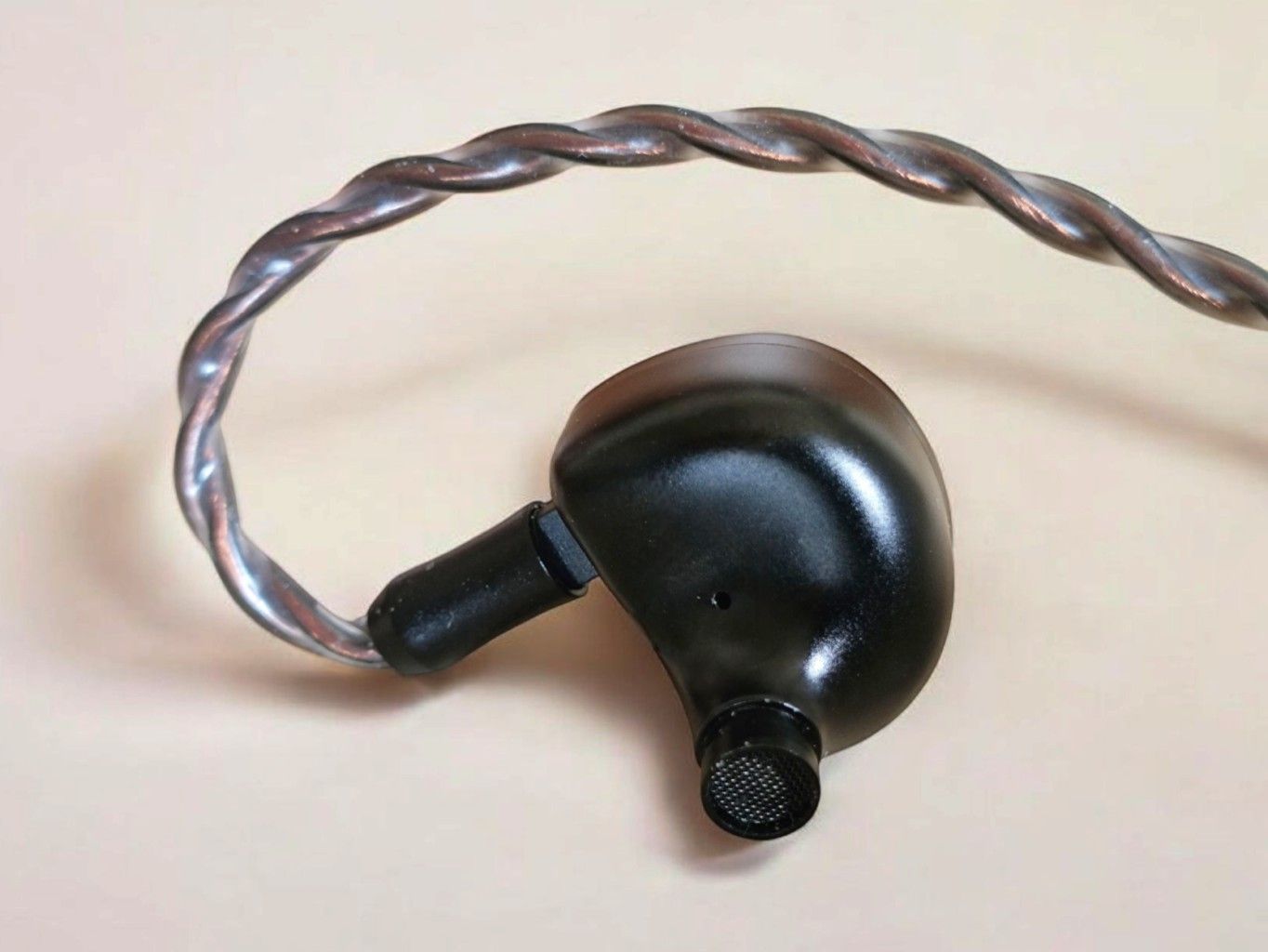
The Septet is an open-back IEM, but that doesn’t mean it leaks much ambient sound—passive noise isolation is surprisingly good, comparable to many standard IEMs. The shells are lightweight yet durable, made from CNC-machined metal with a smooth, semi-custom universal fit. I find them very comfortable. The faceplates feature an open grille design that serves both decorative and protective purposes.
Further, the Septet comes with a high-quality cable that strikes a balance between sturdiness and flexibility. It’s not too thick or too flimsy, with just the right amount of friction to prevent it from slipping around too easily. The cable features Kiwi Ears’ interchangeable jack system, allowing you to switch between 3.5mm unbalanced and 4.4mm balanced terminations. A semi-soft carrying case is also included in the box.
LISTENING IMPRESSIONS
Note: These impressions are based on what I heard using my desktop rig. As you can read further below, the Septet is picky on amps and requires an unusual amount of quality power to perform at its best.
Associated equipment:
- Amplifier: Topping A90
- DAC: RME ADI-2 DAC FS
- SpinFit CP145 tips
Jambi by Tool
The bass is suitably thunderous, the guitars crisp and textured. Vocals stand out nicely, sibilants are well enough behaved, but not all soft. There’s great instrument separation. Overall, a very enjoyable delivery.
Smile by Pearl Jam
The bass and lower mids are full-bodied, with excellent separation and strong dynamics. Vocals aren’t as forward as I’d prefer, and sibilants are definitely present—though not overly harsh. Overall, it’s a solid and engaging performance.
Sunrise by Norah Jones
The bass is powerful, while vocals are nicely present—nuanced with a slightly brittle edge.
Almost Like The Blues
Again, there is a bold, rich, and powerful bass presence. Vocals are rich in detail, but a bit dry in terms of tonality.
Black Crow by Cassandra Wilson
As usual, the bass is full-bodied and rich. Vocals are highly detailed and nicely textured, though slightly laid back in presence. Dynamics and imaging are excellent.
Bored by Deftones
The guitars are rich and textured, the vocals airy, and the bass full and well-rounded.
As Before by Olga Konkova
The cajón drum is very punchy, the piano sounds rich without being overly crisp, and the percussion is both snappy and airy. The vocals are truly captivating—delicate, tender, and touchingly fragile sounding.
It Could Be Sweet by Portishead
The bass is bold and unapologetically powerful, delivering a real punch. Vocals are clear, with only occasional hints of slightly sharp sibilance.
Escape Route by Boris Blank
Once again, the bass is rich and bold. There’s good instrument separation. The trumpet comes through slightly dry and crisp, and the overall presentation has a generous sense of air.
Spontaneous Compositorius by Thomas Agergard
The saxophone is airy and breathy, the percussion crisp and clear, and the double bass rich and bold.
Summer 3 Vivaldi Recomposed by Max Richter
An excellent rendition of the string orchestra. It sounds rich and textured, crisp yet not too bright.
Mahler’s Symphony No 2 III by Paavo Järvi
Very good instrument separation and imaging, with pleasing textures and a slightly dry yet appealing timbre. The kettle drums sound punchy and bold.
Young Vivaldi by Modo Antiquo
The strings have clear attack and bite. They’re upfront, crisp, and textured while maintaining a natural sound.

WRAPPING IT UP
Sound Signature
The Septet delivers a very full-bodied bass, slightly lean and textured mids with an occasionally dry character, and reasonably crisp, detailed highs.
Treble
The treble is highly detailed and textured, with an occasional hint of dryness. While generally smooth, sibilants can sometimes come across as a bit strident.
Midrange
The midrange is nicely present. It may feel slightly restrained in presence compared to the most forward-sounding options, but I would never call it recessed. The Septet’s midrange offers rich texture and detail. It has a delicate character that can occasionally sound a bit dry—though never unnaturally so.
Bass
The bass is rich, bold, and full-bodied—detailed with a rounded character that slightly contrasts with the midrange and treble, yet still maintains a cohesive overall sound. It delivers plenty of punch and clarity. While the dynamic bass driver does a good job, a planar magnetic driver might provide even greater texture, aligning more closely with the character of the mids and highs.
Soundstage and Imaging
The soundstage is spacious for an IEM, offering a strong sense of air and openness. Imaging is very good, with precise instrument separation and placement.
Detail, Dynamics, and Timbre
Detail retrieval is consistently high across the frequency range, with the mids and highs offering more articulate and textured detail, while the bass presents it more smoothly.
Dynamics are excellent, particularly in the bass, which delivers with impressive impact.
Instrument timbre is generally very natural. The bass is rich and warm, while the mids—such as strings and vocals—are slightly thinner and occasionally dry, but in a delicate, sometimes brittle way that avoids sounding harsh. The treble is airy, though it can lean slightly sharp at times, especially with bright percussion and vocal sibilants.
COMPARISONS
Associated equipment:
- Amplifier: Topping A90
- DAC: RME ADI-2 DAC FS
KIWI EARS ORCHESTRA LITE vs SEPTET
Launched in 2023, the $249 Kiwi Orchestra Lite is an all–balanced armature IEM featuring eight custom balanced armature drivers. The configuration is like this: two ultra-tweeters for treble, four midrange drivers for the mids, and two subwoofers dedicated to low frequencies.
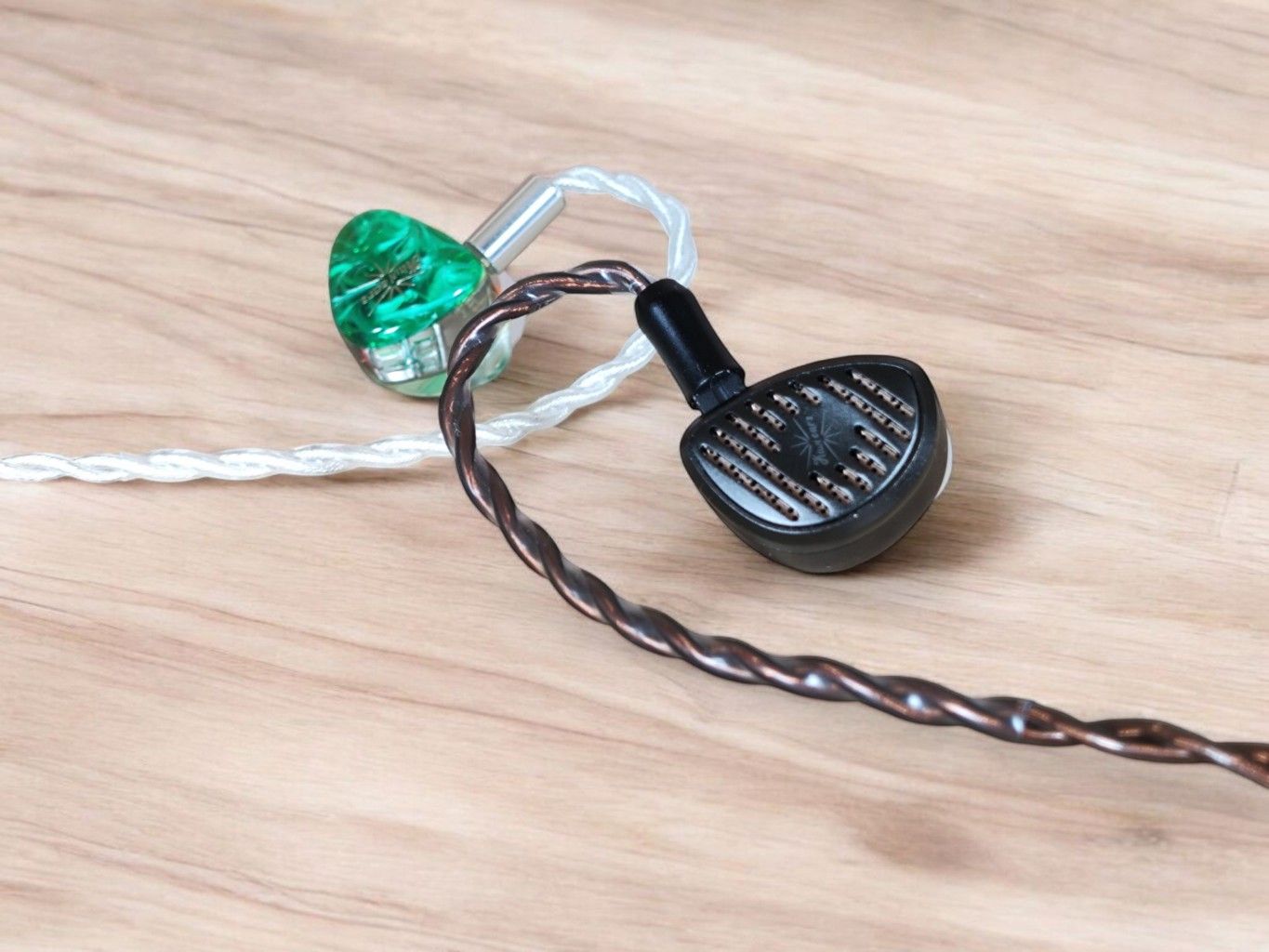
I’ve always liked the Orchestra Lite for its bold yet nuanced presentation. It has a strong presence in the upper mids, which can occasionally come across as slightly strident. Compared to the Orchestra Lite, the Septet offers a touch more detail and a more articulate texture, delivering a crisper sound with darker mids.
Full comparison review: Septet vs. Orchestra Lite
- Linsoul: Orchestra Lite
- Amazon: Orchestra Lite
KIWI EARS QUINTET vs SEPTET
The Quintet is a five-driver IEM priced at $219 and has been a benchmark in its class since its 2023 launch. Like the Septet, it features four different driver types in a rather similar setup: one dynamic driver for bass, two balanced armatures for the mids, a planar magnetic tweeter, and a piezoelectric bone conductor.

Sonically, the Kiwi Ears Quintet and Septet share many similarities, and on initial listen, they can be hard to tell apart on certain tracks. However, with closer attention, the Septet reveals greater detail, dynamics, and articulation, giving it a livelier and more energetic character than the already impressive Quintet. While not officially a successor, the Septet feels like a natural evolution—retaining the Quintet’s strengths while offering subtle improvements.
Full comparison review: Septet vs. Quintet
- Linsoul: Kiwi Quintet
- Amazon: Kiwi Quintet
KIWI EARS ASTRAL vs SEPTET
Like the Septet, the Astral ($299) was launched in the spring of 2025. However, unlike the Septet, it features a more conventional hybrid driver setup. It uses a 10mm dynamic driver for the bass, two dual balanced armature drivers for the mids, and a dual balanced armature tweeter for the highs.

When comparing the Astral and Septet, I find they share essentially identical bass—powerful yet controlled. Both offer forward mids, but the Astral presents them with more boldness and thickness, while the Septet delivers a thinner, more textured midrange. In the treble, the Astral sounds smoother and more polite, whereas the Septet offers a crisper, more energetic presentation.
Full comparison review: Septet vs. Astral
- Kiwi Ears: Astral
- Linsoul: Kiwi Astral
- Amazon: Kiwi Astral
AMPLIFICATION
My go-to for testing is the Topping A90 desktop amp, a powerful, silent, and neutral all-rounder. I did notice that the Septet required a significantly higher volume setting compared to most other IEMs.
However, since most readers are likely more interested in portable setups, here are my findings using the Septet with various dongles and portable sources. Frankly, I was quite disappointed with most of them:
Starting with my POCO F5 phone’s headphone output, the phone just cannot make the Septet loud enough. Further, it doesn’t deliver the goods in terms of clarity and dynamics.
The tiny Jade/FiiO JA11 dongle has plenty to go on, though, in terms of volume, but I’m not happy with the dynamics and detail level.
Kiwi Ears’ own Allegro Mini sounds a lot better; there’s more detail, better dynamics, and more imaging. Everything sounds to flow effortlessly. The Allegro Pro is very similar, maybe a bit more energetic-sounding.
The Letshuoer DT03 works very well with the Septet, but the volume is close to maximum. Usually it offers a slightly warmer tonality, but not with the Septet. It’s very close to the Kiwi Allegros. The xDuoo Link2 Bal2 sounds similar, but it’s still not close to as good as the desktop rig.
Moving on, the THX Onyx is more expensive and sounds a bit better. The Dragonfly Cobalt performs great with the Septet, getting close to my desktop rig, but not quite up there at the same level.
Finally, the Chord Mojo delivers a highly satisfying performance—nearly on par with my desktop rig, with only minor differences. That said, I still slightly prefer the desktop setup overall.
In conclusion, the Septet proves to be fairly demanding when it comes to amplification, requiring a powerful, high-quality source to truly perform at its best.

CONCLUSION
As long as it’s paired with a powerful, high-quality source, the Kiwi Ears Septet delivers excellent sound and stands out as one of my favorites in its price range.It offers powerful, full-bodied bass; present, textured, yet delicate mids; and crisp, well-extended treble that avoids being piercing.
The contrast between the rich and bold low end and the more crisp and fragile-sounding mids and highs creates a compelling sound signature that will likely appeal to many listeners—including myself. Highly recommended.
.
Thanks for reading. You can support us by purchasing anything using any of our affiliate links.
- Linsoul: Kiwi Septet
- Amazon: Kiwi Septet
- Kiwi Ears: Septet
Any purchase you make on Amazon or Linsoul with any of our affiliate links will give us a small provision at no cost to you.
We only get a provision for items that are not returned, so there’s no incentive for us to recommend something that’s not good.
Linsoul : Headphones, Earbuds, Wireless Earbuds, Desktop DAC/AMP, Portable DAC/AMP, Digital Audio Players,
Amazon: Headphones, IEMs, Headphone Amplifiers, Home Audio or Anything else.
.
If you enjoyed this article or other content on The Headphoneer, you might consider leaving a small donation to keep this website up and running. No donation is too small. Thanks for supporting us!

If you like our work please follow us on Instagram, Facebook and Twitter , it will help us grow. Sharing is caring 🙂